Hi @gail_40hotmail-com
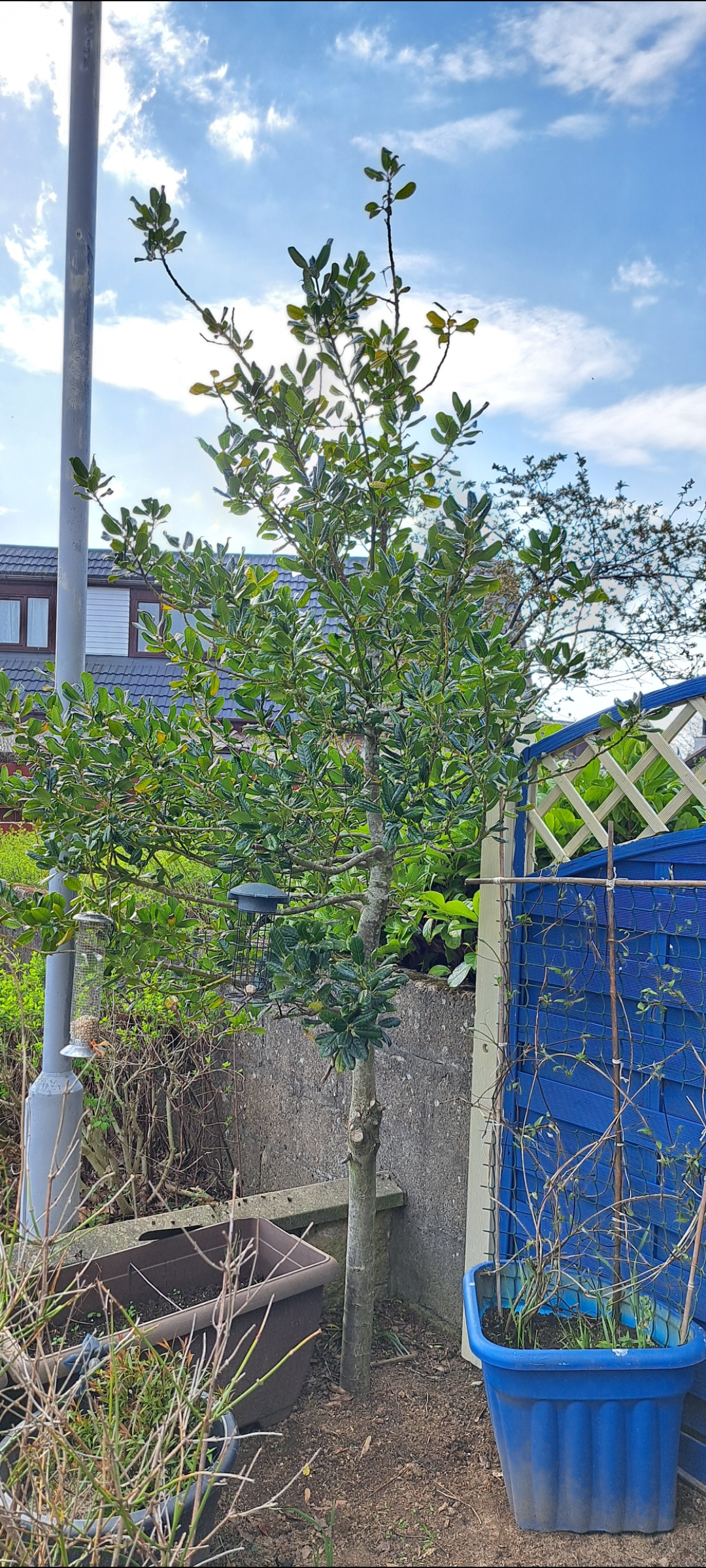
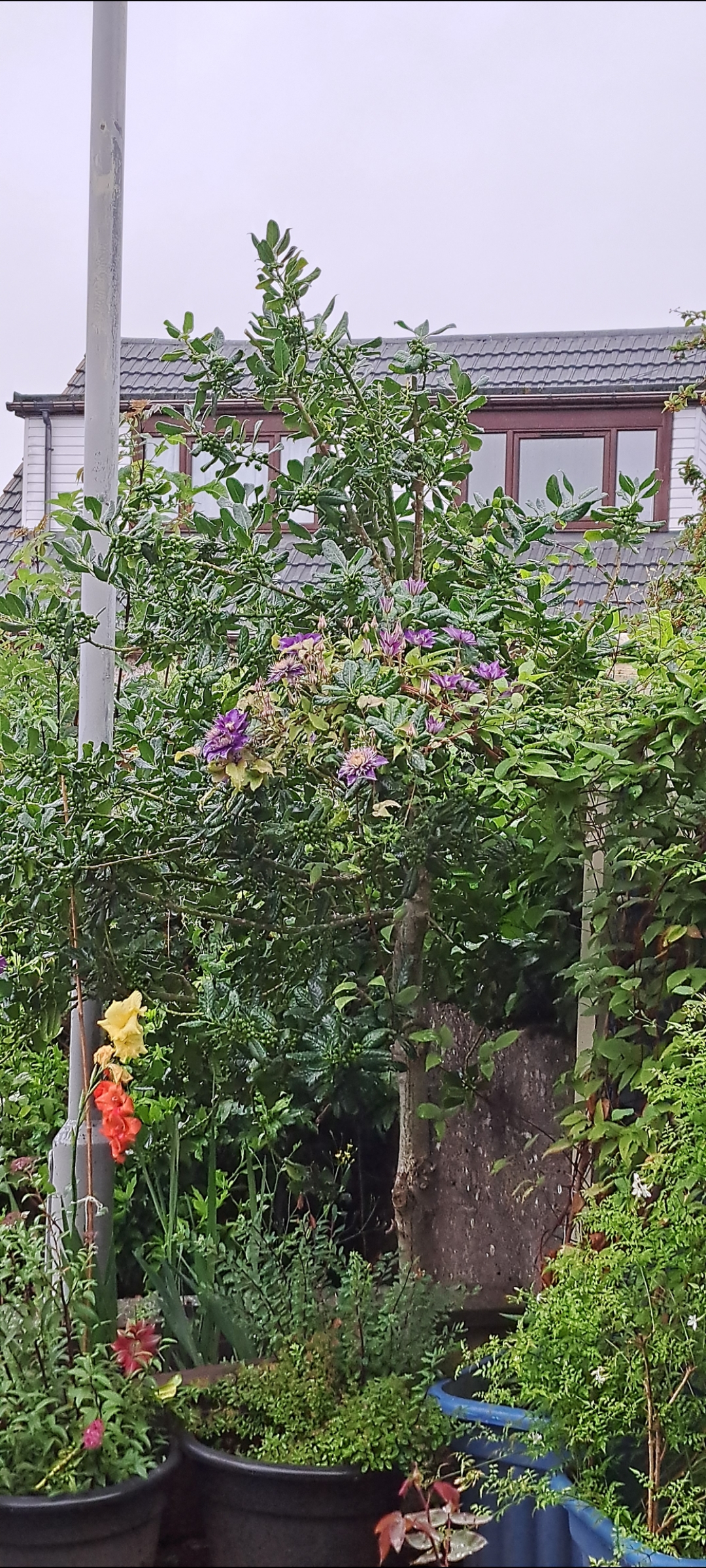
Welcome to the forum and how lovely to have a holly tree in your south facing front garden in Aberdeenshire. They're brilliant plants for Scottish gardens, incredibly tough, great for wildlife, and they look wonderful year round.
What Holly Trees Will and Won't Do
The honest truth about holly is that it responds to pruning rather differently from what most people expect. It's tempting to think that if you cut the top off by a significant amount the plant will respond by throwing out lots of bushy side growth and filling out nicely. Unfortunately, holly trees, like a number of other woody plants, don't really work that way. Hard cutting into the main leader tends to leave you with a flat topped or rather awkward looking tree rather than the nicely bushy specimen you're hoping for, and the regrowth can be slow and sparse rather than the lush flush you might expect.
What I'd Recommend Instead
Rather than lopping the top back by half, I'd suggest a much lighter touch to start with. Nip out the top six inches or so of the leading shoot, no more than that, and lightly tip back any of the longer side branches that are contributing to that lopsided look. This will gently discourage the upward sprint without causing any real stress to the tree, and it gives you a chance to assess how it responds before committing to anything more drastic. Done in late summer, around August, is ideal for hollies as the worst of the growth flush has passed and the cuts heal reasonably well before winter.
Managing Your Expectations
I want to be straightforward with you here because I think it saves disappointment later. A light trim will tidy the holly up and take the edge off the height, but it won't suddenly transform it into a dense bushy specimen. Holly thickens up gradually over years rather than in response to a single hard cut, and in a Scottish garden where the growing season is shorter, that process is even more measured. What you can do is keep on top of it with a light annual tidy each late summer, gradually guiding the shape over time rather than trying to force a dramatic change in one go.
Is It Worth Keeping?
Given it's south facing and already established, I'd be inclined to work with it rather than against it. Holly is genuinely valuable for birds, particularly in winter when the berries provide a vital food source, and a well-established specimen in Aberdeenshire is doing something quite useful as a windbreak for that front garden too. With patient annual trimming you can keep it at a manageable height without losing the character of the plant.
For more on pruning trees and shrubs, do have a look at my pruning guides, which cover timing and technique across a wide range of plants.
Do let us know how you get on with it Gail.
Lee Garden Ninja
Hi @gail_40hotmail-com
Welcome to the forum and how lovely to have a holly tree in your south facing front garden in Aberdeenshire. They're brilliant plants for Scottish gardens, incredibly tough, great for wildlife, and they look wonderful year round.
What Holly Trees Will and Won't Do
The honest truth about holly is that it responds to pruning rather differently from what most people expect. It's tempting to think that if you cut the top off by a significant amount the plant will respond by throwing out lots of bushy side growth and filling out nicely. Unfortunately, holly trees, like a number of other woody plants, don't really work that way. Hard cutting into the main leader tends to leave you with a flat topped or rather awkward looking tree rather than the nicely bushy specimen you're hoping for, and the regrowth can be slow and sparse rather than the lush flush you might expect.
What I'd Recommend Instead
Rather than lopping the top back by half, I'd suggest a much lighter touch to start with. Nip out the top six inches or so of the leading shoot, no more than that, and lightly tip back any of the longer side branches that are contributing to that lopsided look. This will gently discourage the upward sprint without causing any real stress to the tree, and it gives you a chance to assess how it responds before committing to anything more drastic. Done in late summer, around August, is ideal for hollies as the worst of the growth flush has passed and the cuts heal reasonably well before winter.
Managing Your Expectations
I want to be straightforward with you here because I think it saves disappointment later. A light trim will tidy the holly up and take the edge off the height, but it won't suddenly transform it into a dense bushy specimen. Holly thickens up gradually over years rather than in response to a single hard cut, and in a Scottish garden where the growing season is shorter, that process is even more measured. What you can do is keep on top of it with a light annual tidy each late summer, gradually guiding the shape over time rather than trying to force a dramatic change in one go.
Is It Worth Keeping?
Given it's south facing and already established, I'd be inclined to work with it rather than against it. Holly is genuinely valuable for birds, particularly in winter when the berries provide a vital food source, and a well-established specimen in Aberdeenshire is doing something quite useful as a windbreak for that front garden too. With patient annual trimming you can keep it at a manageable height without losing the character of the plant.
For more on pruning trees and shrubs, do have a look at my pruning guides, which cover timing and technique across a wide range of plants.
Do let us know how you get on with it Gail.
Lee Garden Ninja

 Lee Burkhill: Award Winning Designer & BBC 1's Garden Rescue Presenters Official Blog