Hi @drew-cameron
Welcome to the forum, and thank you for the photos and the really useful details about your setup. A Fraser Fir (Abies fraseri) in a whisky barrel is a lovely combination, and it's clear you've been looking after it carefully, so let's work out what's happening here.
What the Photos Are Showing
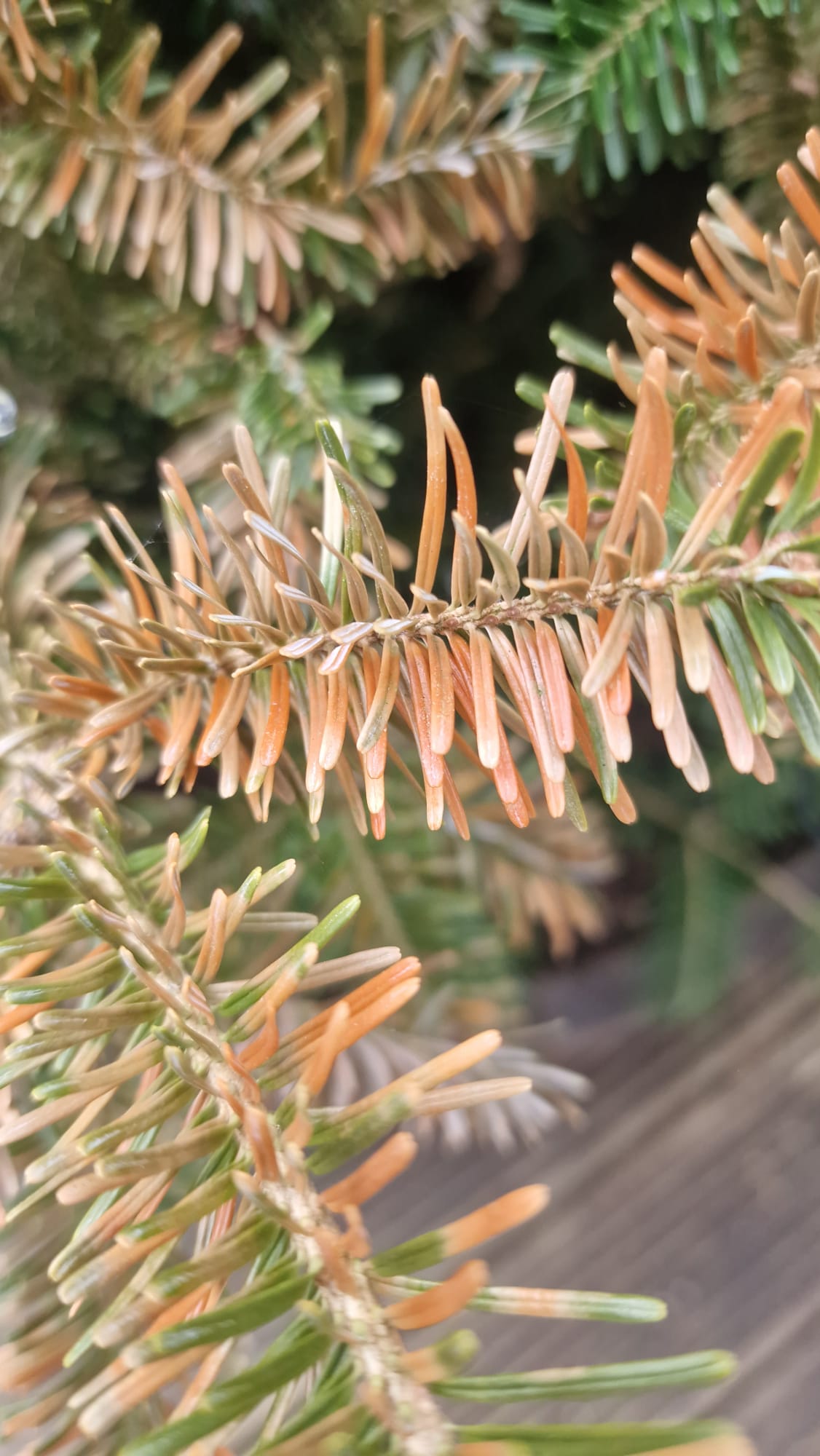
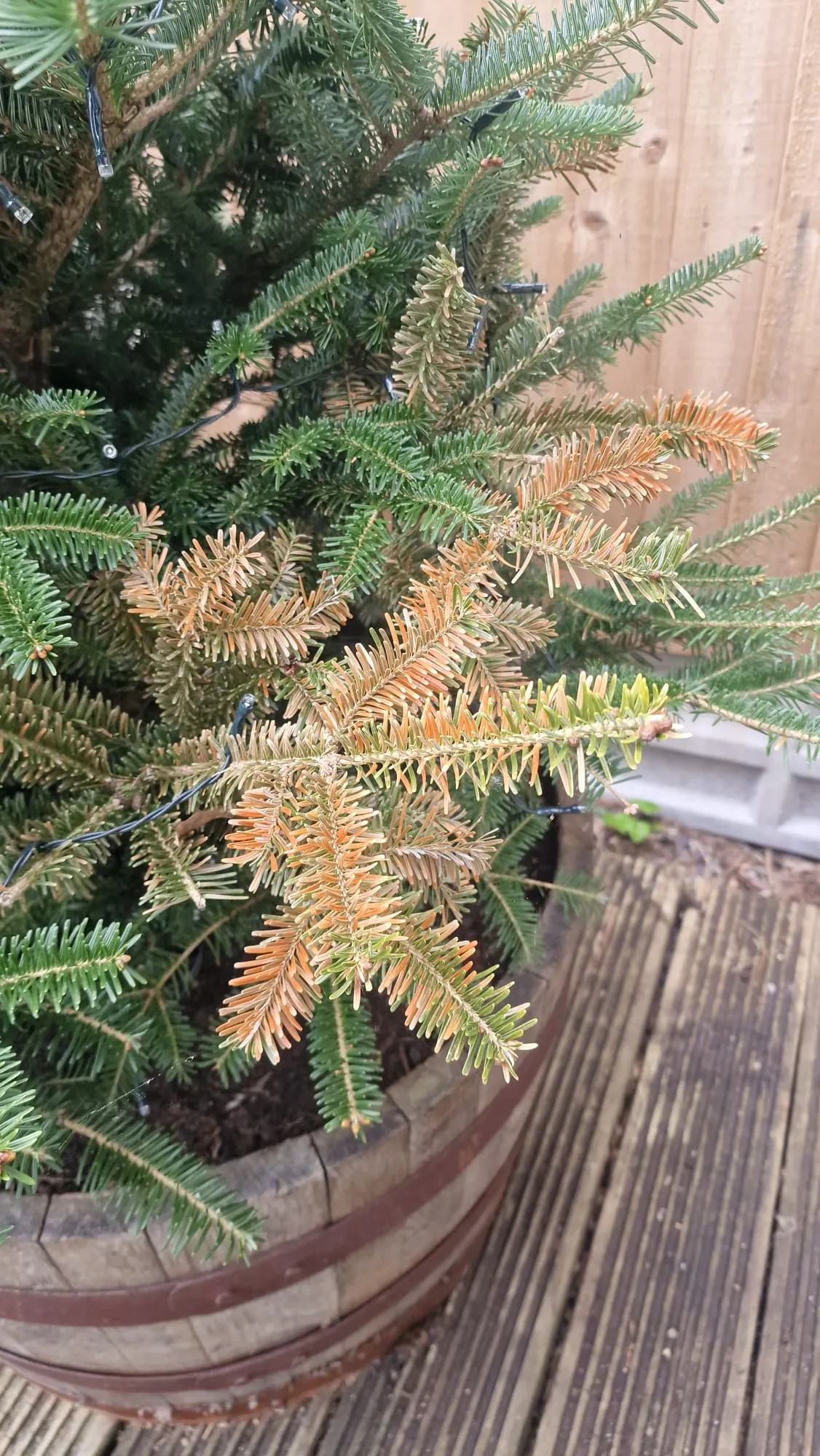
Looking at the browning pattern in your photos, my first instinct is that this is most likely a moisture stress issue rather than a disease. I know your moisture meter is reading mid-range, but this is actually the crux of the problem. A Fraser Fir in a south-facing position, in a container, in a sometimes windy garden, has a significantly higher water demand than the same tree in open ground.
Wind, in particular, is a major factor that most gardeners underestimate, as it dramatically increases the rate at which both the soil and the foliage lose moisture. A reading that looks adequate on the meter may not actually be sufficient to meet the tree's needs in those conditions, particularly as we move into the warmer and windier months of the year.
Why Containers Are Challenging for Conifers
The whisky barrel, while generous compared to most pots, has a finite volume of compost that can only hold so much moisture before it either dries out or becomes exhausted of nutrients. In a south-facing spot, the container itself will be absorbing heat through the sides, which warms the root zone and accelerates moisture loss from below as well as above. The roots of the tree will by now almost certainly be filling a significant proportion of that barrel, leaving less compost volume to act as a moisture reservoir between waterings.
What I'd Do Right Now
The first and most immediately useful thing to try is placing a large saucer or tray underneath the barrel so that any water draining through is retained and can be drawn back up by the roots as needed. This simple change can make a real difference to moisture consistency in a container that is drying out faster than it appears on the surface. Water thoroughly and deeply rather than little and often, making sure water is reaching the full depth of the root ball rather than just dampening the top few centimetres.
If the barrel has been the tree's home for several years and it hasn't been repotted, potting on into a larger container with fresh compost is probably the single most beneficial thing you could do for its long term health. Fresh compost brings renewed nutrients and improved moisture retention, and the extra volume gives the roots more room to function. A very large container or half barrel one size up would be ideal.
Why Conifers Brown and Shed
It is also worth knowing that not all browning on a conifer is cause for alarm. Conifers naturally shed their oldest inner needles every year as part of a normal renewal process, and this internal browning can look alarming if you haven't seen it before. The key distinction is whether the browning is concentrated on the inner older growth closest to the trunk, which is normal shedding, or whether it is affecting the tips of branches and the newer outer growth, which is more concerning and points to stress or disease. From your photos it looks like the latter, which is why I'm pointing to moisture stress as the primary culprit rather than natural shedding.
Could It Be Anything Else?
Wind scorch is another strong possibility given your description of the garden, and it often presents in a very similar way to drought stress because the mechanism is essentially the same. The foliage loses moisture faster than the roots can replace it, and the needles brown and die as a result. Providing some shelter from the prevailing wind, even a temporary windbreak of horticultural fleece during the worst conditions, can help considerably.
My complete guide to why conifers turn brown covers all the possible causes in much more detail and will help you work through the diagnosis systematically to rule out other possibilities, including pests and fungal issues.
Act on the watering and the saucer first, give it two to three weeks, and let us know how it responds. Fingers crossed for your Fraser Fir, Drew.
Lee Garden Ninja
Hi @drew-cameron
Welcome to the forum, and thank you for the photos and the really useful details about your setup. A Fraser Fir (Abies fraseri) in a whisky barrel is a lovely combination, and it's clear you've been looking after it carefully, so let's work out what's happening here.
What the Photos Are Showing
Looking at the browning pattern in your photos, my first instinct is that this is most likely a moisture stress issue rather than a disease. I know your moisture meter is reading mid-range, but this is actually the crux of the problem. A Fraser Fir in a south-facing position, in a container, in a sometimes windy garden, has a significantly higher water demand than the same tree in open ground.
Wind, in particular, is a major factor that most gardeners underestimate, as it dramatically increases the rate at which both the soil and the foliage lose moisture. A reading that looks adequate on the meter may not actually be sufficient to meet the tree's needs in those conditions, particularly as we move into the warmer and windier months of the year.
Why Containers Are Challenging for Conifers
The whisky barrel, while generous compared to most pots, has a finite volume of compost that can only hold so much moisture before it either dries out or becomes exhausted of nutrients. In a south-facing spot, the container itself will be absorbing heat through the sides, which warms the root zone and accelerates moisture loss from below as well as above. The roots of the tree will by now almost certainly be filling a significant proportion of that barrel, leaving less compost volume to act as a moisture reservoir between waterings.
What I'd Do Right Now
The first and most immediately useful thing to try is placing a large saucer or tray underneath the barrel so that any water draining through is retained and can be drawn back up by the roots as needed. This simple change can make a real difference to moisture consistency in a container that is drying out faster than it appears on the surface. Water thoroughly and deeply rather than little and often, making sure water is reaching the full depth of the root ball rather than just dampening the top few centimetres.
If the barrel has been the tree's home for several years and it hasn't been repotted, potting on into a larger container with fresh compost is probably the single most beneficial thing you could do for its long term health. Fresh compost brings renewed nutrients and improved moisture retention, and the extra volume gives the roots more room to function. A very large container or half barrel one size up would be ideal.
Why Conifers Brown and Shed
It is also worth knowing that not all browning on a conifer is cause for alarm. Conifers naturally shed their oldest inner needles every year as part of a normal renewal process, and this internal browning can look alarming if you haven't seen it before. The key distinction is whether the browning is concentrated on the inner older growth closest to the trunk, which is normal shedding, or whether it is affecting the tips of branches and the newer outer growth, which is more concerning and points to stress or disease. From your photos it looks like the latter, which is why I'm pointing to moisture stress as the primary culprit rather than natural shedding.
Could It Be Anything Else?
Wind scorch is another strong possibility given your description of the garden, and it often presents in a very similar way to drought stress because the mechanism is essentially the same. The foliage loses moisture faster than the roots can replace it, and the needles brown and die as a result. Providing some shelter from the prevailing wind, even a temporary windbreak of horticultural fleece during the worst conditions, can help considerably.
My complete guide to why conifers turn brown covers all the possible causes in much more detail and will help you work through the diagnosis systematically to rule out other possibilities, including pests and fungal issues.
Act on the watering and the saucer first, give it two to three weeks, and let us know how it responds. Fingers crossed for your Fraser Fir, Drew.
Lee Garden Ninja
 Lee Burkhill: Award Winning Designer & BBC 1's Garden Rescue Presenters Official Blog