For the garden you’ve already got, not the one you’re starting from scratch. Seven checklists and video lessons from BBC Garden Rescue’s Lee Burkhill, built to help you work out what’s worth keeping before you spend a penny.
69


Quick Answer
Compost is decomposed organic matter you can mix into the soil to improve structure and feed plants but also be used as a mulch. Mulch is any material you spread on top of the soil to suppress weeds, retain moisture and protect the surface. They do different jobs and work brilliantly used together.
The simple answer: Compost is decomposed organic matter that you can either plant directly into or dig into your soil to improve structure, drainage and nutrient content. Mulch is any material you spread on top of soil to suppress weeds, retain moisture and regulate temperature. Compost feeds the soil beneath, whilst mulch protects the soil surface. Compost can be a mulch, but mulch is not always compost.
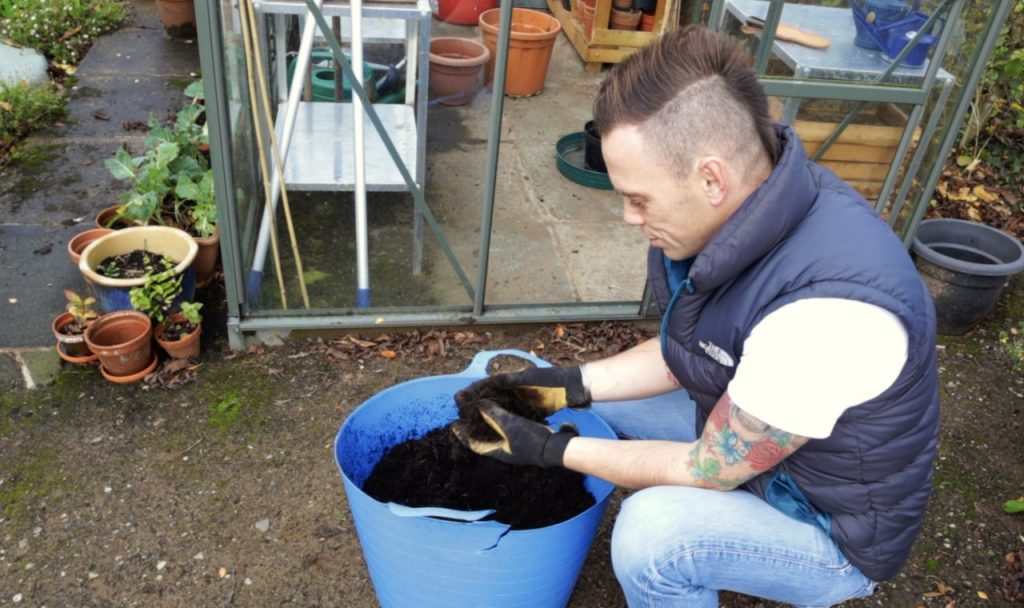
Understanding this difference changes how you approach soil management, so let me walk you through exactly what each does, when to use them, and how my full mulching guide covers the how-to detail this page does not.
This page contains affiliate links for products I use and love. If you take action (i.e. subscribe, make a purchase) after clicking a link, I may earn some gardening commission which helps me keep the Garden Ninja Blog free for all.
Compost is essentially decomposed plant material that’s broken down until it resembles rich, dark, crumbly soil. When you see gardeners banging on about “black gold,” this is what they mean. It is the stuff that makes rubbish soil brilliant and good soil exceptional.
Think of compost as food for your soil, not just for your plants. Yes, it contains nutrients that plants can use, but its real magic happens at the soil level. It improves soil structure in clay soils by breaking up those heavy, compacted particles and creating air pockets. In sandy soils, it works the opposite way, helping bind loose particles together so they actually hold water and nutrients instead of letting everything drain straight through.
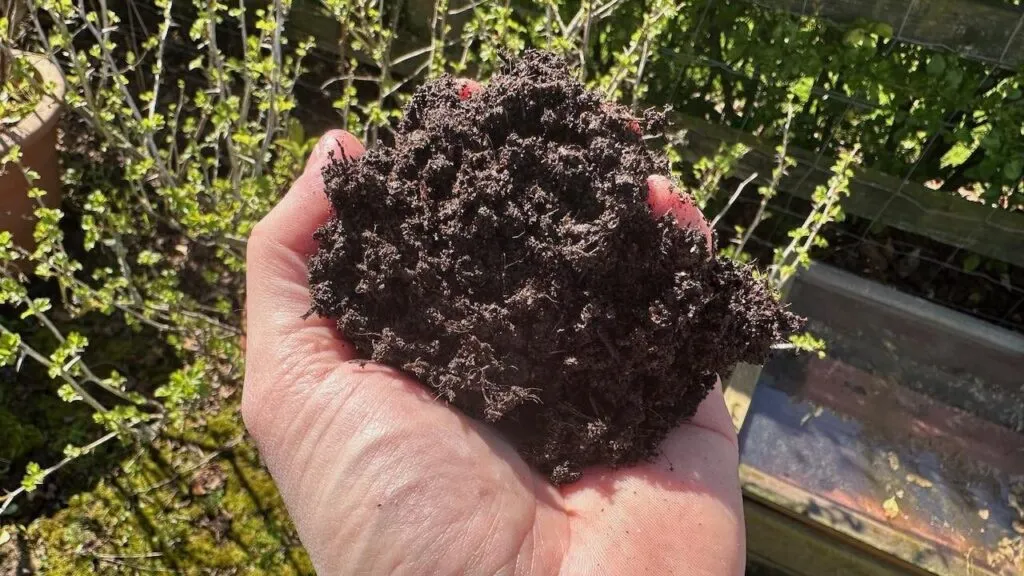
You can make compost yourself from kitchen scraps, grass clippings, dead plants, and woody material, or buy it ready-made. Either way, properly finished compost should smell earthy and pleasant, feel crumbly rather than soggy, and look uniformly dark brown or black. If it smells rank or you can still identify the original ingredient, it needs more time to break down.
Mulch is the protective blanket you spread over your soil. Unlike compost, which goes into the soil, mulch sits on the surface and performs several important functions simultaneously. It blocks light from reaching weed seeds, preventing them from germinating; it slows water evaporation from the soil, so you water less; it moderates soil temperature, keeping roots cooler in summer and warmer in winter; and it prevents rain from compacting the soil surface or washing it away.
Mulch can be organic, meaning it was once living, such as bark chips, wood shavings, leaf mould, straw, or even grass clippings. It can also be inorganic, such as slate, gravel, landscape fabric, or rubber chips. Organic mulches slowly break down over time, adding a small amount of organic matter to the soil, but that is a bonus rather than their main purpose.
The key thing to understand is that mulch works from the top down. It is about surface protection, not soil improvement. For the complete how-to on depth, timing and application, see my full guide to mulching your garden.
This is where beginners get stuck, so let me give you a simple decision process based on what problem you are actually trying to solve.
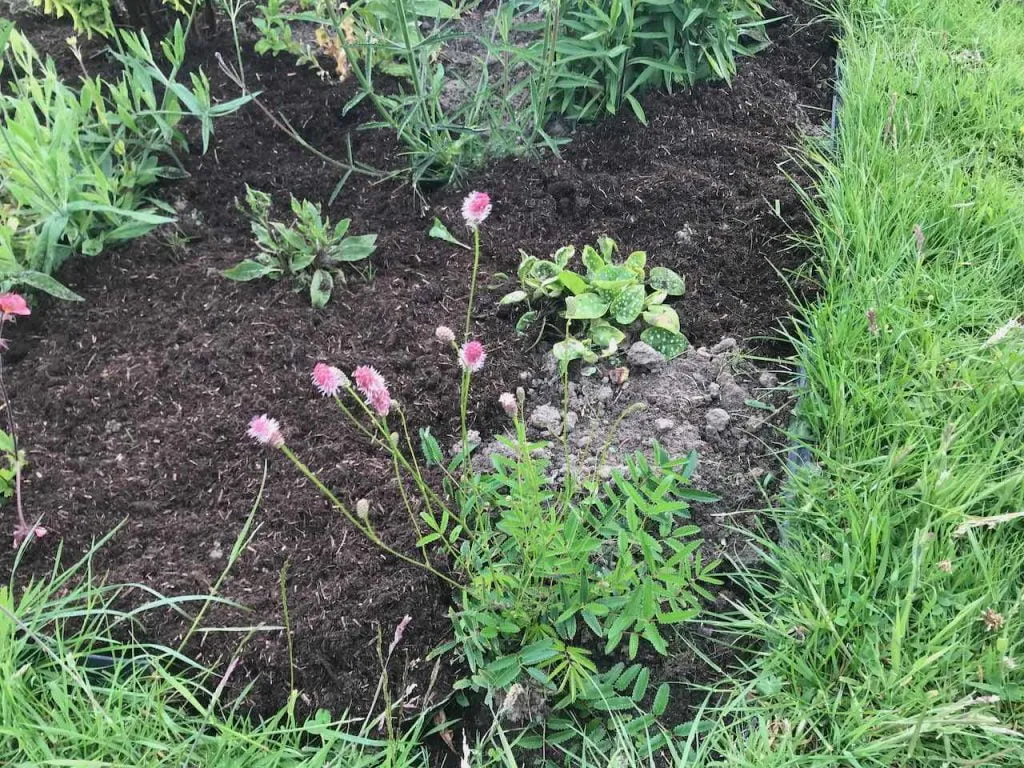
Here is my golden rule: if you can only do one thing to improve your garden soil, choose compost. If you can only do one thing to reduce maintenance, choose mulch. If you can do both, you will have the best garden in your street.
Not all compost is created equal, and what you use depends on what you are trying to achieve and your budget. Homemade compost is free and brilliant if you have the space and patience, taking 6 to 12 months to make properly but giving you complete control over ingredients. Garden centre multi-purpose compost is convenient but expensive for large areas, so it suits containers and small projects rather than whole beds.
Local authority green waste compost is often sold cheaply in bulk by councils; quality varies, but it is usually decent for soil improvement and brilliant value for large quantities. Well-rotted manure is not technically compost, but it works similarly and is gold dust for vegetables once it has rotted for at least a year. Leaf mould is made entirely from decomposed leaves and is lower in nutrients than general com,post it is but exceptional for improving soil structure, particularly in heavy clay.
I go into far more depth on sourcing, testing and choosing between these options, including what I actually use in my own gardens, in my dedicated Best Soil Improvers and Compost UK guide, so head there if you want the full breakdown rather than the summary above.
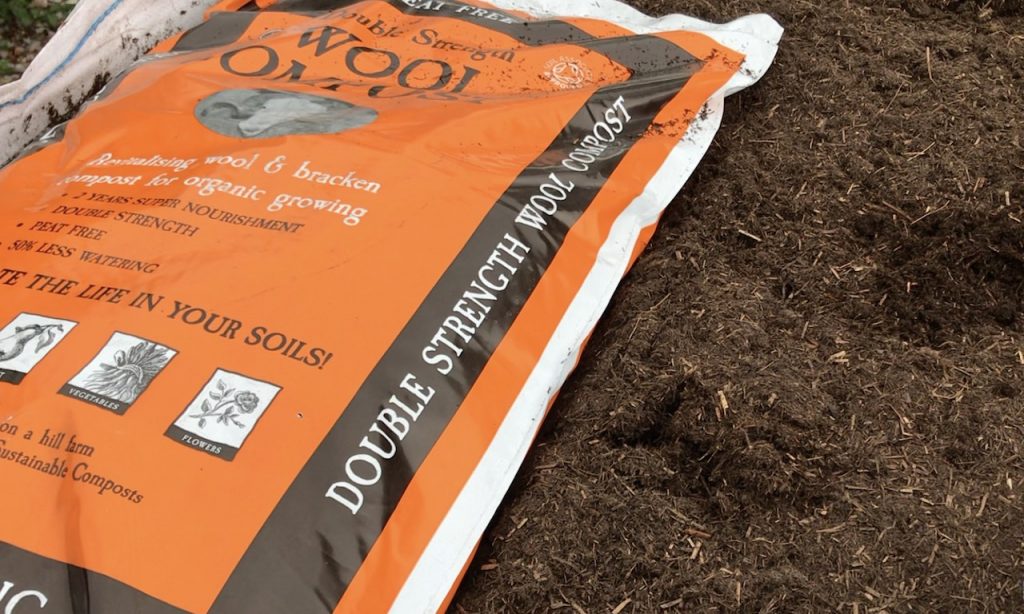
🛒 Buy peat free compost from Amazon UK
Yes, you absolutely can, but here is where it gets nuanced. Compost works as mulch because it is an organic material spread on the soil that suppresses weeds and retains moisture. However, purpose-built mulches generally perform better for weed suppression.
The issue is that compost is fine-textured, so it does not block light as effectively as chunky bark chips, meaning weeds can still push through. When compost dries out, it can form a crust that repels water rather than allowing it to penetrate. And because it is nutrient-rich, any weed seeds that do land on it get a head start.
I sometimes use compost as the bottom layer in a mulching system. Spread 2 to 3cm of compost around plants first; this leaches nutrients down into the root zone when it rains, then top it with 5cm of bark chips or wood mulch. You get the soil-feeding benefits of compost plus the superior weed suppression and moisture retention of proper mulch, the best of both worlds in one bed.
This is probably the most common specific question I get on this topic: people know both materials exist and roughly what they do, but when they are standing in the garden centre faced with a choice between a bag of bark chips and a bag of peat-free compost, they are not sure which to reach for. Let me make this clear once and for all.
They are not interchangeable. They do different jobs. Buying the wrong one for your situation is a frustratingly common and entirely avoidable mistake.
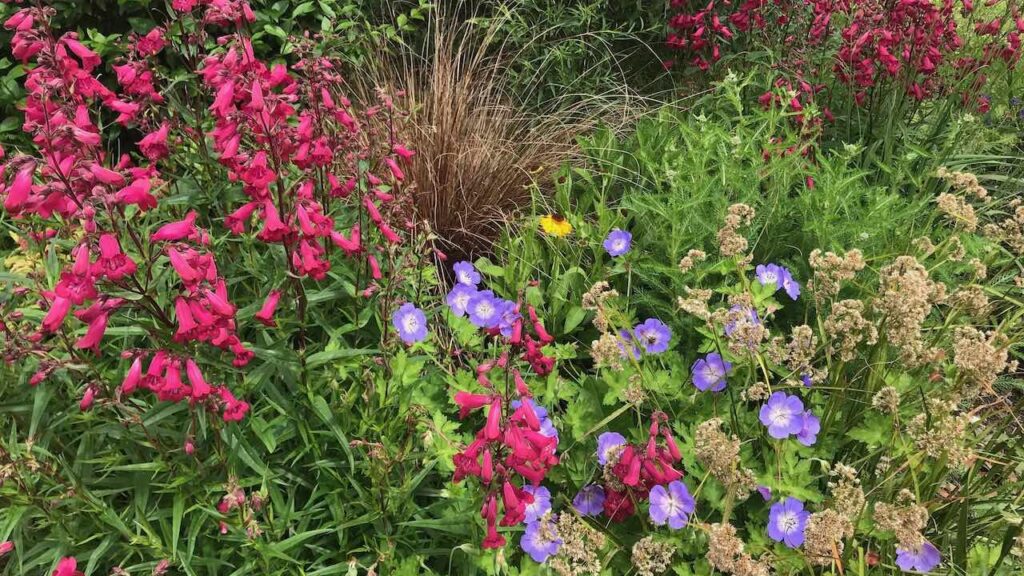
Bark mulch is brilliant at the physical jobs: suppressing weeds by blocking light, retaining moisture by capping the soil surface, and regulating soil temperature over winter. A 7cm layer of bark chips does all three of these things better than a 7cm layer of compost would. The chunky texture means it stays where you put it, resists compaction, and takes two to three years to break down, so it lasts well.
The trade-off is that bark mulch is relatively low in nutrients. It feeds your soil slowly as it decomposes, but it will not give struggling plants a meaningful nutrient boost. If you need to actively improve soil fertility, bark alone will not do the job.
Bark mulch is also initially a nitrogen sink at the surface. As it begins to break down, soil microbes consume nitrogen from the immediate surrounding soil to decompose it. This is rarely a serious problem for an established border, but do not dig bark into your soil expecting it to improve fertility. Use it on top only, as described in the nitrogen-robbing section of my full mulching guide.
🛒 Buy chipped bark mulch from Amazon UK
Compost is a soil improver and a feed. Its job is to increase biological activity in your soil, improve structure by breaking up clay and binding sandy soil, and supply a slow-release range of nutrients as it continues to break down. Fork it in, and over months, your soil becomes measurably better. It is the long-game material.
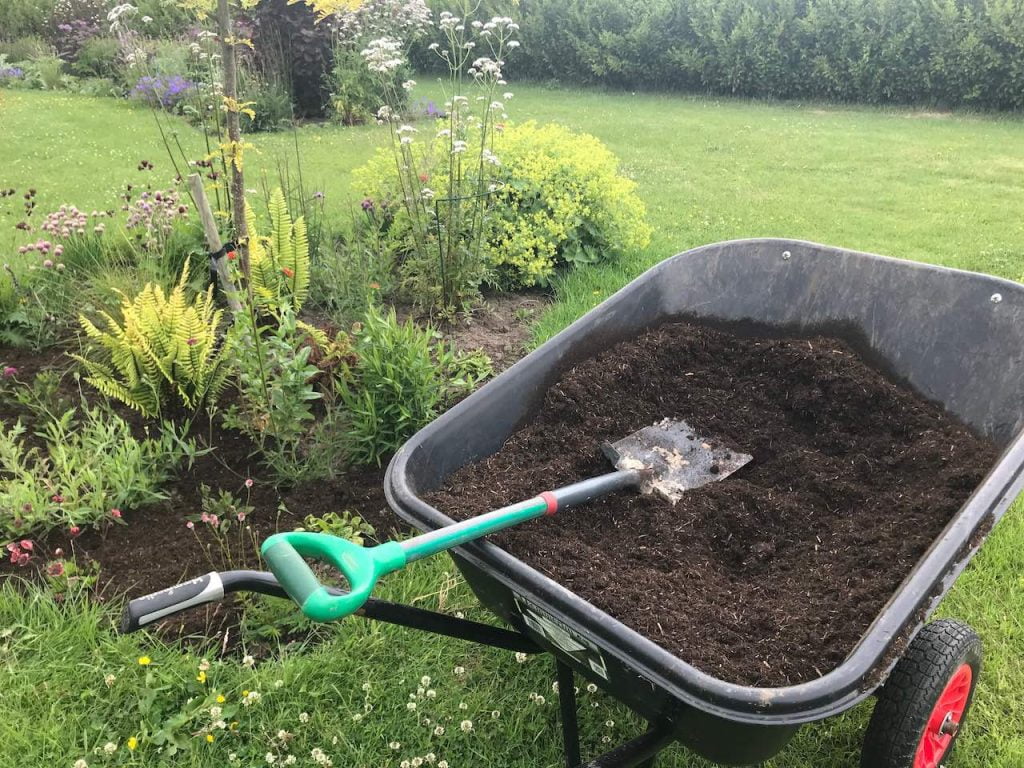
Used as a surface mulch, compost does suppress weeds somewhat and retains moisture reasonably well, but it is not as effective at either as bark chips, because the fine texture lets light through and dries out faster. On the positive side, every time it rains, the nutrients leach down into the root zone, which is a genuine benefit bark mulch cannot offer.
The problem with compost as a standalone mulch is that, because it is nutrient-rich and fine-textured, weed seeds that blow onto it germinate very happily. It is essentially a perfect seedbed for both weeds and your plants.
Here is the method I use in my own garden and recommend to most clients: layer them. Spread 3cm of compost directly around your plants first and let it sit for a week or two so it starts to break down into the soil. Then top it with 5 to 7cm of bark chips. You get the soil-feeding and structure-improving benefits of the compost working down into the root zone, combined with the superior weed suppression and moisture retention of the bark on top.
The bark also protects the compost from drying out and crusting, which is one of the main reasons compost fails as a standalone surface mulch in dry summers. It is the best of both materials working together.
Ninja Rule: Compost goes in the ground or as the bottom layer. Bark goes on top. Never dig bark chips into your soil expecting it to improve it, or you will just create a nitrogen sink.
Use bark mulch when mulching established ornamental borders or around trees and shrubs, where weed suppression and a tidy finish are the priorities. Also use it for paths between raised beds to suppress weeds underfoot. Bark is the low-maintenance, long-lasting choice for permanent plantings.
Use compost when you are preparing a new bed, top-dressing a vegetable patch, improving soil before planting, or top-dressing an established lawn. Compost is an active improvement tool. If your soil is the problem, compost is the solution.
Use both when you want to work smarter. Most ornamental borders benefit from the compost-first, bark-on-top layering method described above. One application typically lasts two full growing seasons before you need to top up the bark layer.
Topsoil is a third material entirely, and it is worth being clear on where it fits, since I get asked about mulch versus compost versus topsoil almost as often as the original comparison. Topsoil is simply the top layer of mineral soil that plants root into, sold in bulk or bags to build up levels, fill raised beds,ds or repair bare patches. It has none of the concentrated organic matter or nutrients that compost has, and it is not spread as a surface protection layer the way mulch is.
Use topsoil when you need to add bulk or volume, such as filling a new raised bed, levelling a dip in the lawn, or building up a border before planting. Use compost when the soil needs feeding or structural improvement,nt rather than simply adding more of it. In practice, the two are often combined: fill the bulk of a raised bed with topsoil, then work a generous layer of compost through the top 20 to 30cm where the roots will actually be growing, since topsoil alone tends to be too poor and too dense to plant straight into with good results.
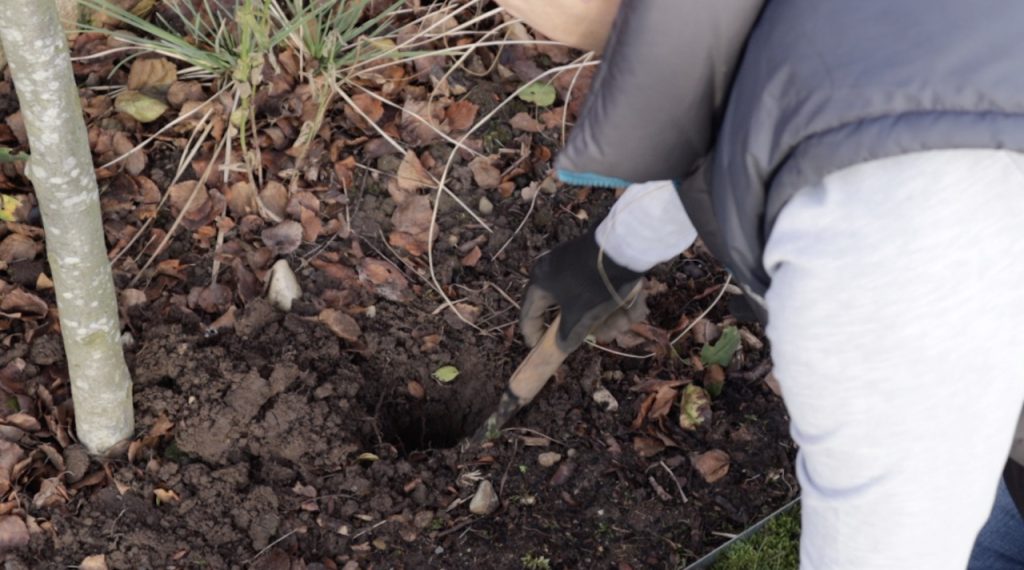
Most gardeners I work with use too little of both. They will sprinkle a token layer of compost that makes no real difference to soil structure, or spread mulch so thinly that weeds push through within weeks. Be generous. Your garden will thank you with significantly less work and much better plant growth.
If you are on a tight budget, prioritise compost for vegetable beds where it directly impacts crop yield, and mulch for ornamental borders where it massively reduces weeding time. You can make both free at home if you are prepared to put in the effort, which makes this one of the best value ways to improve any garden.
The real shift for me was understanding that compost and mulch work together as a system, not as alternatives. Compost builds the foundation by creating healthy soil, and mulch maintains that investment by protecting what you have built. Stop thinking about which one to use and start thinking about how to use both effectively.
Now get out there and start feeding your soil with compost and protecting it with mulch. Six months from now, you will wonder why you did not do this years ago.
No. Compost is decomposed organic matter you dig into the soil to improve structure and add nutrients. Mulch is any material spread on top of the soil to suppress weeds and retain moisture. Compost can be used as a mulch, but the two are not interchangeable terms.
Yes, spread 5 to 7cm over the soil surface. It will suppress some weeds and retain moisture, though not as effectively as bark chips, since its fine texture lets more light through and it can crust over if it dries out. It works best as the bottom layer under a top dressing of bark, as covered in the layering method above.
Both, depending on how you use it. Leaf mould can be dug into the soil like compost to improve structure, or spread on the surface like mulch to suppress weeds and retain moisture. It is lower in nutrients than general garden compost but is one of the best materials going for improving soil structure, particularly in heavy clay.
Ideally both. Work compost into the soil when you first plant or renovate a flower bed, then apply a mulch such as bark or leaf mould on top to suppress weeds and lock in moisture around established plants. If you can only choose one for an established bed that already has reasonable soil, mulch will save you more time day to day.
Compost first, mulch second. Work or spread compost around the root zone so it can start feeding the soil, then top it with your chosen mulch. Applying mulch first and compost on top wastes the compost, since it never makes proper contact with the soil beneath.

Join over 100,000 gardeners on YouTube
Free gardening videos from the Garden Ninja, with 8 million views and counting.
Subscribe on YouTube, it’s freeKnowing the difference between compost and mulch is one small piece of building a garden that looks after itself. My Garden Design for Beginners Course takes that same practical, soil-first thinking and applies it to planning and planting a whole garden, not just feeding and protecting the beds you already have.
With courses starting from just £29, you get the same experience I have built up across hundreds of client gardens and three decades of hands-on horticulture, broken into practical lessons you can put to use straight away.
For the garden you’ve already got, not the one you’re starting from scratch. Seven checklists and video lessons from BBC Garden Rescue’s Lee Burkhill, built to help you work out what’s worth keeping before you spend a penny.
Garden Design Examples for Small Gardens: 30 Design Templates & Planting Plans: In this online gardening course, I’ll walk you through 30 fantastic garden designs, explaining the logic behind the layout, the plant choices, and take-home tips for applying them in your own garden.
Learn how to transform and design your own garden with Lee Burkhills crash course in garden design. Over 5 hours Lee will teach you how to design your own dream garden. Featuring practical design examples, planting ideas and video guides. Learn how to design your garden in one weekend!
Garden Design for Beginners Online Course: If you want to make the career jump to becoming a garden designer or to learn how to design your own garden, this is the beginner course for you. Join me, Lee Burkhill, an award-winning garden designer, as I train you in the art of beautiful garden design.
Happy Gardening!


Lee Burkhill, known as the Garden Ninja, is an award-winning garden designer and horticulturist with over 30 years of gardening experience and 15 years as a professional garden designer. A qualified RHS (Royal Horticultural Society) professional, Lee specialises in sustainable garden design and practical horticultural advice. He designs and presents on BBC1’s Garden Rescue and in leading gardening publications. Lee combines three decades of hands-on gardening knowledge with professional design qualifications to help gardeners create beautiful, functional outdoor spaces.
View all posts by Lee Burkhill







JOIN THE NINJAS

Be the first in line for new Guides, Discount codes and Offers