-
The Complete Flamingo Tree Care Guide: How to Look After Salix integra ‘Hakuro-nishiki’
 Lee Burkhill: Award Winning Designer & BBC 1's Garden Rescue Presenters Official Blog

Wondering how to care for yuor Flamingo tree? Well you're in the right place as this comprehensive guide will show you exactly how to plant, care for, prune and troubleshoot your Salix so it thrives for years to come. I've drawn on dozens of real questions from the Garden Ninja community to address the issues that actually trip people up, rather than just repeating the basics you can find anywhere.
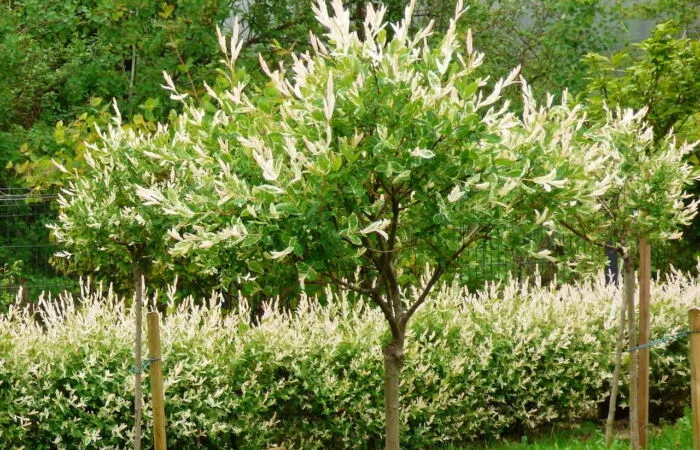
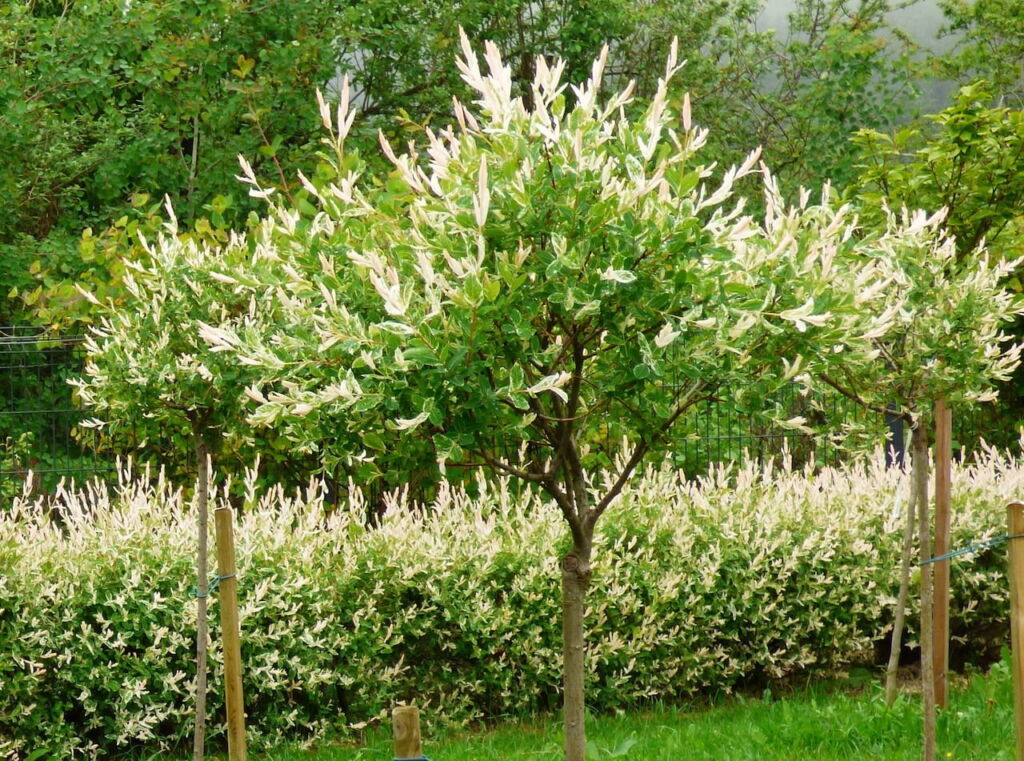
The Flamingo tree (Salix integra ‘Hakuro-nishiki’) is one of the most popular small ornamental trees in British gardens, and it’s easy to see why. With its stunning variegated pink, white and green foliage that resembles flamingo feathers, compact size, and RHS Award of Merit for reliability, it’s the perfect choice for small gardens, patios, and containers.
However, despite their reputation for being tough and low maintenance, I’ve answered countless questions from gardeners struggling with dying flamingo trees, mysterious growth from the trunk, and pruning disasters that have sent their trees into shock.
Jump to:
- What is a Flamingo Tree/ Salix integra?
- Why Flamingo Trees are grafted
- Where & when to plant
- How to look after a Flaminog Tree
- How to prune a Flamingo Tree
- How & when to move a Flamingo Tree
- Troubleshooting & FAQ
What is a Flamingo Tree?
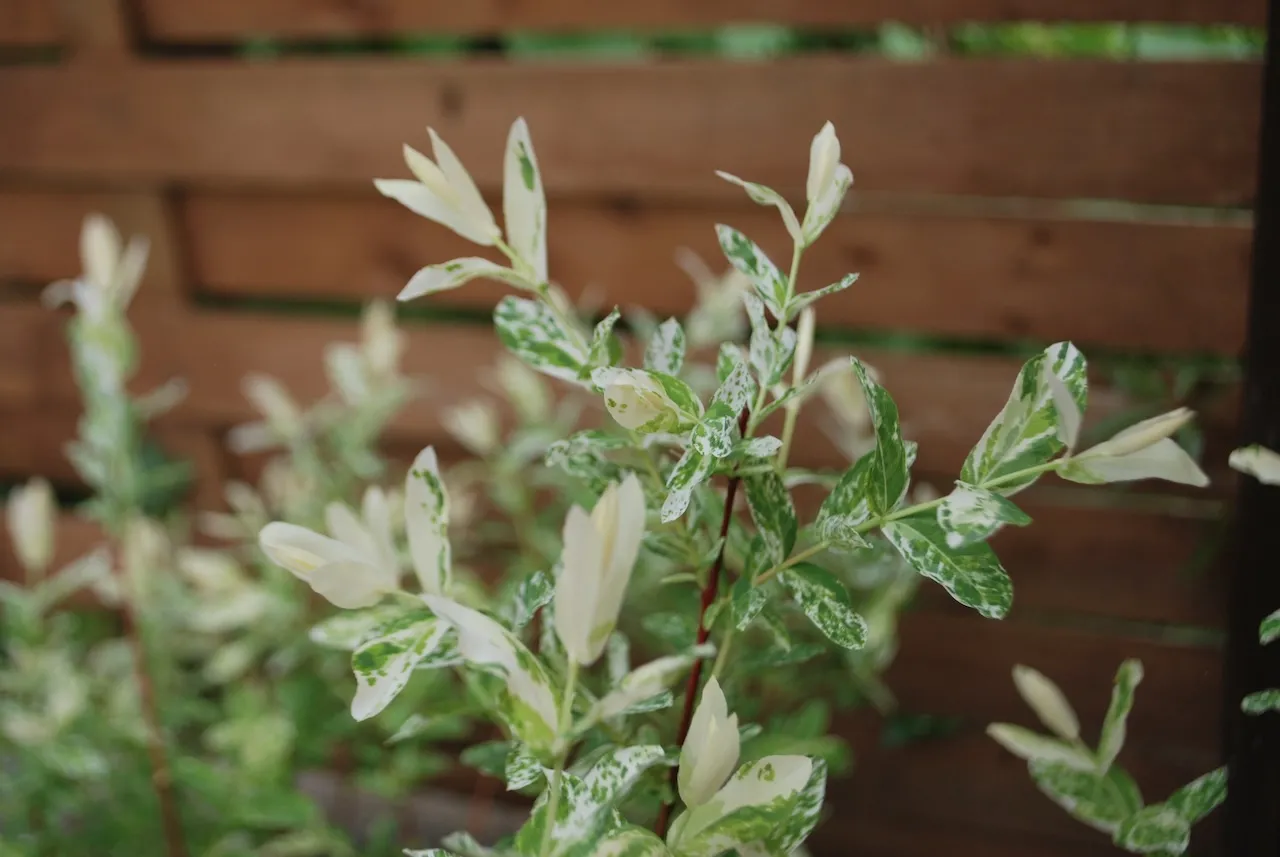
The flamingo tree is a deciduous ornamental willow that’s been grafted onto hardy rootstock to create a stunning small standard tree. The proper botanical name is Salix integra ‘Hakuro-nishiki’, though you’ll often see it sold as flamingo willow, dappled willow, or Japanese willow. The ‘Hakuro-nishiki’ cultivar produces the characteristic variegated foliage with pink-tinged new growth in spring that matures to cream and green through summer.
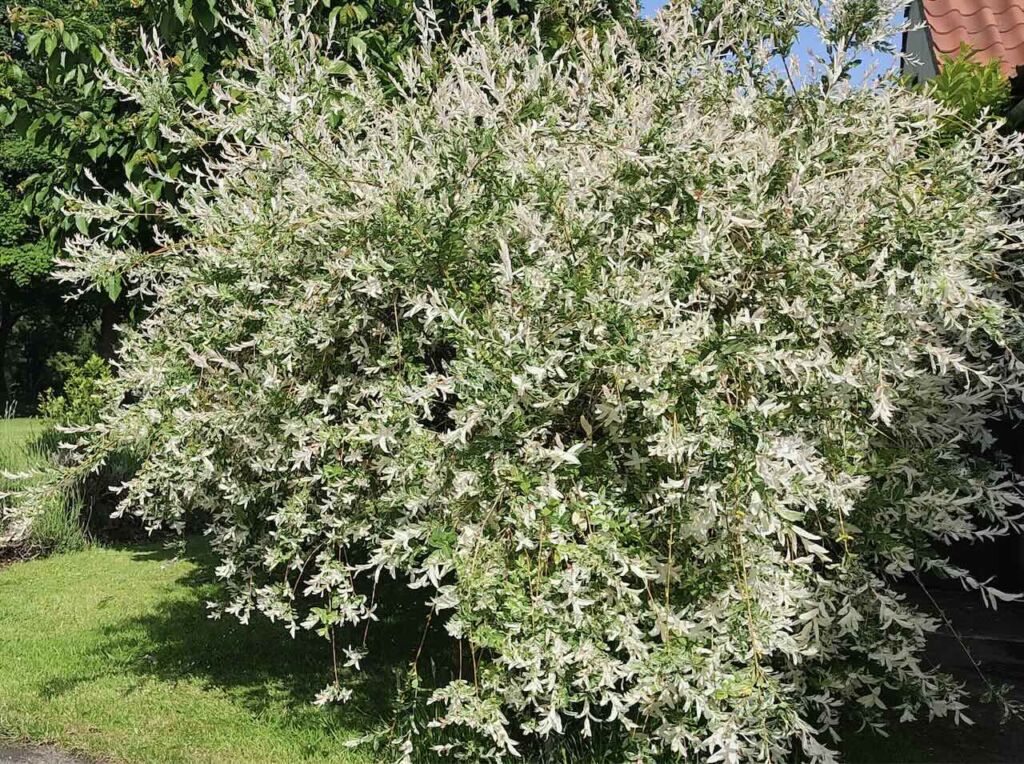
These trees typically grow to around 1.5 to 2 metres tall with a similar spread, making them absolutely perfect for small gardens, courtyard spaces, or large containers. The weeping habit creates an elegant dome shape that works beautifully as a focal point or repeated along a pathway.
Understanding Grafted Trees
This is crucial to understand because it affects everything from feeding to pruning to troubleshooting problems. Your flamingo tree is actually two plants working together. The pretty variegated top growth (the scion) has been grafted onto a hardy willow rootstock. You can usually see the graft union as a slightly swollen, knobbly area on the trunk where the two plants join.
The rootstock provides vigour, disease resistance, and size control, whilst the scion provides the ornamental features we actually want. This grafting is why flamingo trees stay compact and manageable rather than growing into massive willows. However, it also means you need to watch out for suckers (growth from below the graft) and be more careful with transplanting than you would with a non-grafted tree.
Planting Your Flamingo Tree
Choosing the Right Location
Flamingo trees are willows at heart, which gives you an immediate clue about their preferred conditions. They’re riverbank plants that naturally grow in moist, fertile soil with good light. Whilst they’re adaptable and will cope with a range of conditions, getting the location right sets you up for success.
Light Requirements: Full sun to dappled shade works best. They’ll produce the most vibrant pink colouration on new growth in full sun, but they’re perfectly happy with a few hours of shade during the day. Avoid deep shade where the variegation becomes less pronounced, and growth gets leggy.
Soil Conditions: Moist but not waterlogged soil is ideal. They’re far more tolerant of wet conditions than dry, given their willow heritage. Heavy clay that retains moisture suits them beautifully, whilst very free-draining sandy soil will require more watering attention. The key is never letting them dry out completely, especially during the growing season.
Space Considerations: Allow at least 1.5 to 2 metres diameter for the canopy to develop properly. Planting too close to other plants or structures restricts airflow and makes the tree look cramped. Remember that whilst they’re small trees, they still need room to breathe.
Planting in the Ground
The best time to plant flamingo trees is during their dormant period between November and March, with late autumn or early spring being ideal. Avoid planting during hard frosts or when the ground is waterlogged.
Dig a hole approximately twice the width of the root ball but no deeper. You want the tree sitting at exactly the same depth it was in its pot, with the graft union clearly visible above ground level. Planting too deep can cause the graft to fail and encourages suckers from the rootstock.
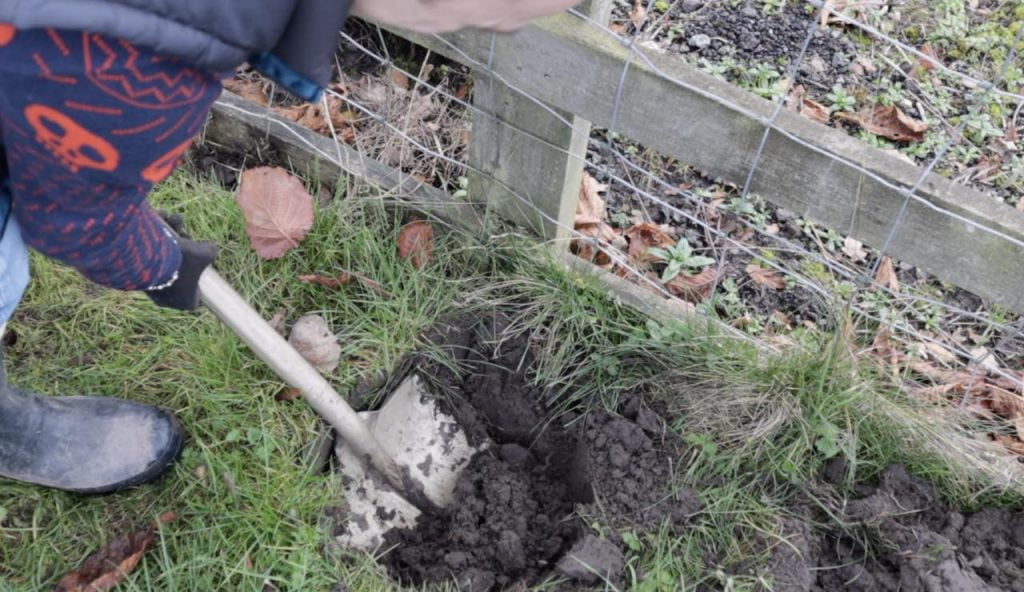
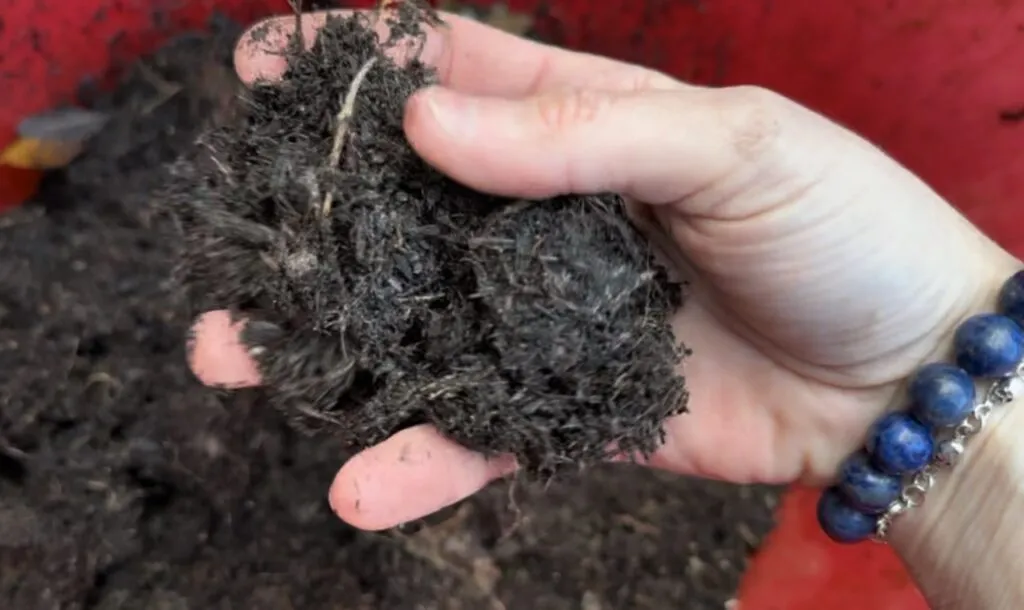
Break up the soil at the bottom and sides of the planting hole to help roots establish outwards. Backfill with the original soil rather than adding lots of compost. Whilst it’s tempting to pamper new trees with rich compost, this can actually discourage roots from spreading into the surrounding soil. Firm the soil gently as you backfill to eliminate air pockets, but don’t compact it so hard that roots can’t penetrate.
Water thoroughly after planting to settle the soil around the roots. Create a shallow saucer around the base of the tree to help direct water to the root zone during the first growing season.
Planting in Containers
Flamingo trees are brilliant in large containers for patios, balconies, or anywhere you want portable focal points. Choose a container at least 45cm to 60cm in diameter with excellent drainage holes. Smaller pots dry out too quickly and restrict root development. My guide on how to choose the right container and material may be useful if you’re planting this way!
Use a soil-based compost like John Innes No. 3 rather than multipurpose compost. Soil-based composts provide better structural stability for top-heavy trees, better nutrient retention, and don’t dry out as catastrophically as peat-free multipurpose composts can in hot weather.

You may want to add drainage material like broken crocks or stones to the bottom of the pot before adding compost. It’s not essential but some gardeners believe this prevents the drainage holes from becoming blocked and ensures excess water can escape. Position the tree at the same depth it was in its original pot, backfill, and firm gently.
Container-grown flamingo trees need more attention than those in the ground. They’ll require regular watering (potentially daily in hot summer weather), feeding twice a year, and repotting every 2 to 3 years when roots become congested. So yes, you can grow them anywhere, but containers will require more attention from you, Ninja, to keep your trees looking fantastic, as the Flamingo tree is completely reliant on you for food and water.
Year Round Care and Maintenance
Watering Requirements
This is where many gardeners go wrong. Flamingo trees are willows, and willows are thirsty plants. They evolved on riverbanks where their roots have constant access to moisture. Letting them dry out, especially during the growing season, causes stress that manifests as leaf drop, poor growth, and susceptibility to problems.
For trees in the ground, water deeply once or twice a week during dry spells in the growing season. A good soak that penetrates 15cm to 20cm deep is far better than frequent light sprinkles that evaporate quickly. During wet weather, you can reduce watering, but keep an eye on them during those deceptive dry spells between rainy periods.
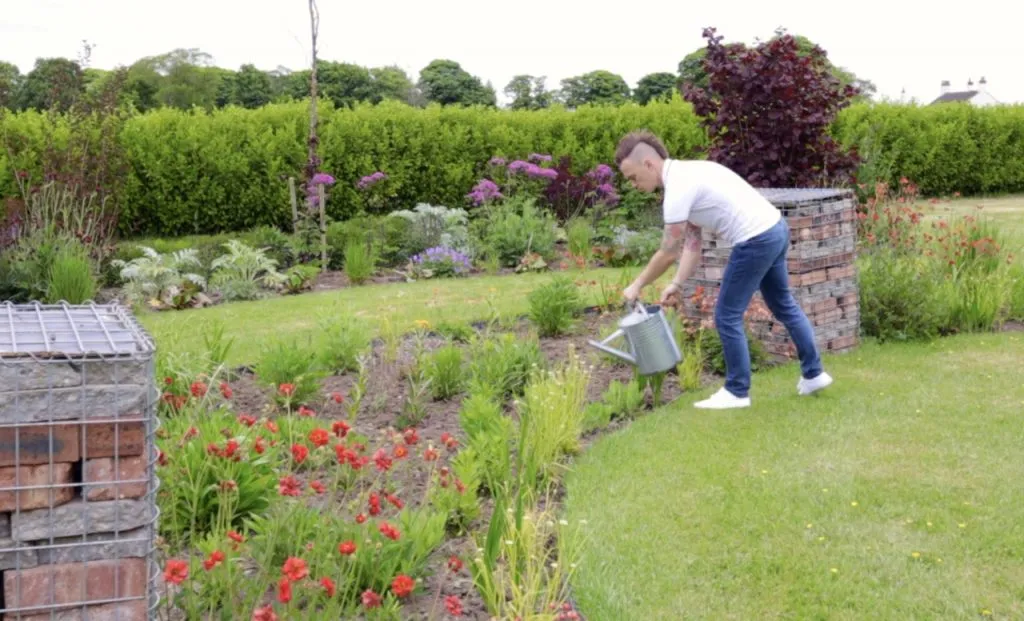
Container-grown trees need far more frequent watering. In summer, you might be watering daily or even twice daily during heatwaves. The soil should never completely dry out. Stick your finger into the compost, if the top 5cm is dry, it’s time to water. If it still feels moist, you can wait.
One common question I get is whether to water in winter. Established trees in the ground generally don’t need supplemental watering during dormancy unless we’re experiencing an unusually dry winter. Container trees may need occasional watering even when dormant if the compost has dried out, but far less frequently than summer.
Feeding Your Flamingo Tree
Flamingo trees aren’t particularly hungry compared to something like roses, but they do benefit from regular feeding to maintain vigorous growth and that stunning variegated foliage.
For container grown trees, feed in spring with a liquid feed as growth starts, or apply a thick mulch of peat free compost in autumn. The spring feed gives them an immediate boost for the growing season, whilst autumn mulching provides slow release nutrients. Comfrey tea is the gold standard for organic liquid feeding if you can make it, otherwise any balanced liquid feed works well.
Trees in the ground are less demanding. An annual mulch of well rotted compost or manure in late winter is usually sufficient. Spread a 5cm to 7cm layer around the base, keeping it away from the trunk itself to prevent rot. This mulch feeds the tree gradually as it breaks down whilst also suppressing weeds and retaining moisture.
If your tree is looking lacklustre or recovering from stress, a liquid feed during the growing season gives it a helpful boost. This is particularly relevant if you’ve had to move your tree and it’s looking sad, or if it’s suffered pruning shock.
Mulching and Weed Control
A good mulch layer around the base of your flamingo tree serves multiple purposes. It suppresses weeds that compete for water and nutrients, retains soil moisture during dry spells, regulates soil temperature, and gradually improves soil structure as it breaks down.
Apply organic mulch like well-rotted compost, leaf mould, or composted bark in late winter before growth starts. Spread it in a circle about 60cm to 80cm in diameter around the tree, but keep it a few centimeters away from the trunk itself. Mulch piled against the trunk can cause rot and encourage pests.
Top up the mulch layer annually as it breaks down and gets incorporated into the soil. This is far easier than weeding and far better for the tree than disturbing shallow roots by hoeing around the base.
Pruning Your Flamingo Tree
This is where the most mistakes happen. I’ve answered questions from gardeners who’ve pruned at the wrong time and sent their trees into shock, from people who’ve never pruned and have an unruly mess, and from folks who’ve accidentally removed the graft and killed their tree. Let’s get this right.
When to Prune
The golden rule for flamingo trees is to prune in the dead of winter when they’re completely dormant, ideally between December and February.
Never prune in autumn or spring. Autumn pruning causes pruning shock because the tree is still physiologically active even though leaves are falling. The wounds don’t heal properly, and the tree struggles through winter. Spring pruning wastes all the energy the tree has put into producing new growth.
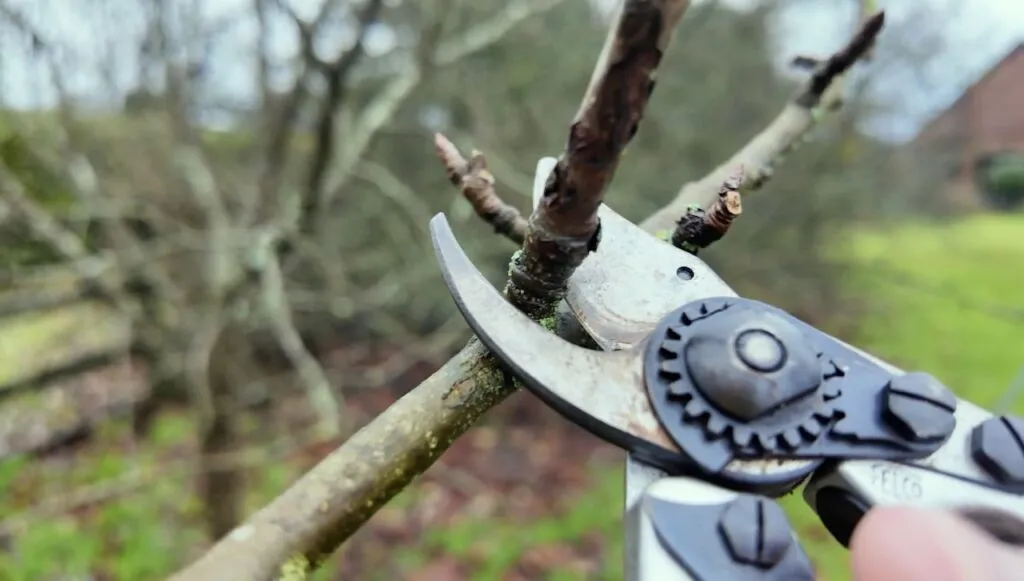
Winter pruning works because the tree is fully dormant with no leaves and minimal sap flow. Wounds heal cleanly when growth resumes in spring, and you’re not removing growth that the tree has already invested energy in producing.
The only exception is removing dead, diseased, or damaged wood, which you can do at any time of year. If a branch snaps in a storm or you spot disease, remove it immediately regardless of season.
How to Prune
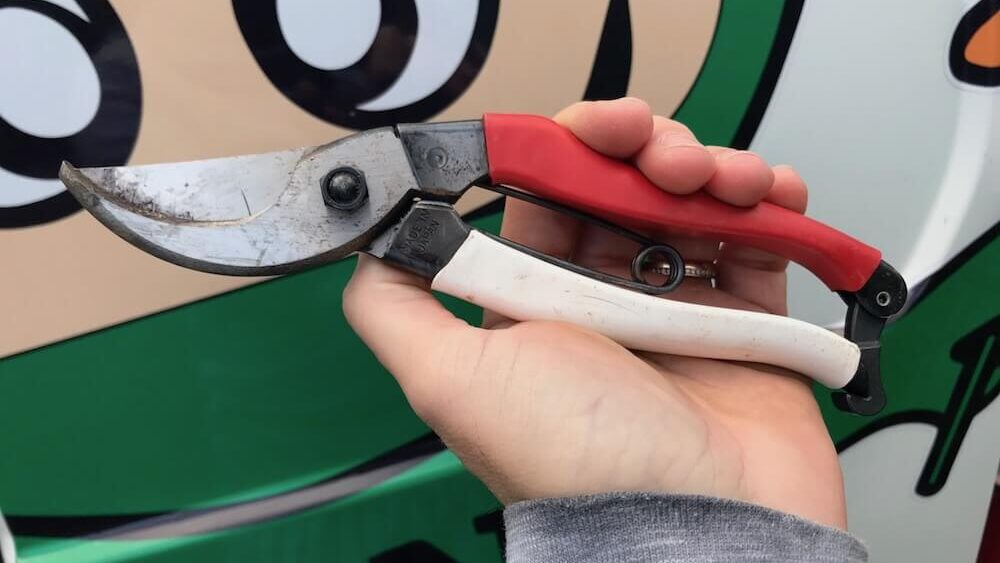
Flamingo trees respond beautifully to pruning and can be kept neat and compact or allowed to grow more naturally. Do make sure you have some decent secateurs because although Salix’s branches are usually quite thin, blunt or rusty secateurs (or snips as we call them in the gardening world) will soon cause infection or browning leaves!
Here’s the step-by-step approach:
A) Remove dead, diseased, or damaged wood first.
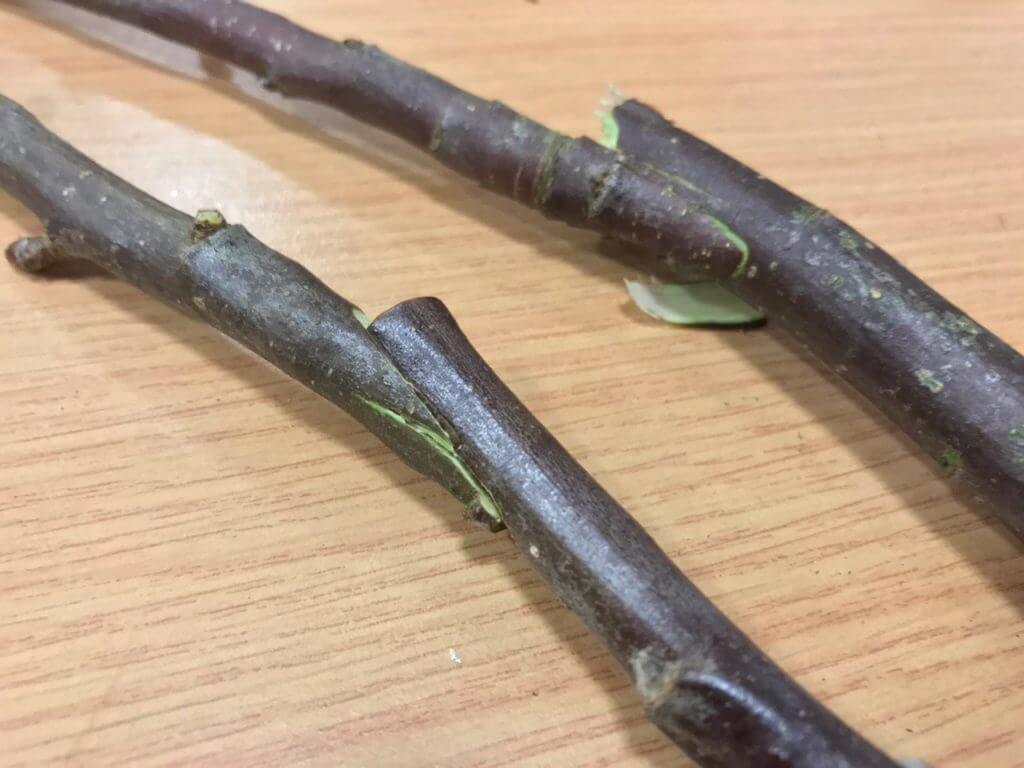
You can identify dead wood by its dark brown or almost charcoal appearance with no buds or new growth. Living wood shows red or green under the bark if you scratch it lightly. Cut dead material back to living wood, making clean cuts just above a healthy bud.
B)Thin out crossing or rubbing branches.
These create wounds where they rub together, providing entry points for disease. Remove the weaker or more awkwardly positioned branch cleanly at its base.
C) Shape the canopy.
Cut back branches to create your desired shape, making cuts just above an outward-facing bud. This encourages new growth to grow outwards rather than into the centre of the tree. For a neat dome shape, aim for an even length all around. For a more relaxed look, allow some variation.
D) Don’t be afraid to prune hard.
If your tree has become overgrown or leggy, you can cut back quite hard to reshape it. Take branches back by one-third to one-half of their length. The tree will respond with vigorous new growth in spring.
Use sharp, clean secateurs for smaller stems and a pruning saw for anything thicker than your thumb. Clean cuts heal far better than ragged tears.
Dealing with Suckers and Rootstock Growth
This is a really common issue that causes confusion. Strange leaves growing from the trunk below the graft union are suckers from the rootstock, not your flamingo tree. These leaves will look completely different from the variegated growth above, usually plain green and often more vigorous. See below for Flamingo suckers as an example!
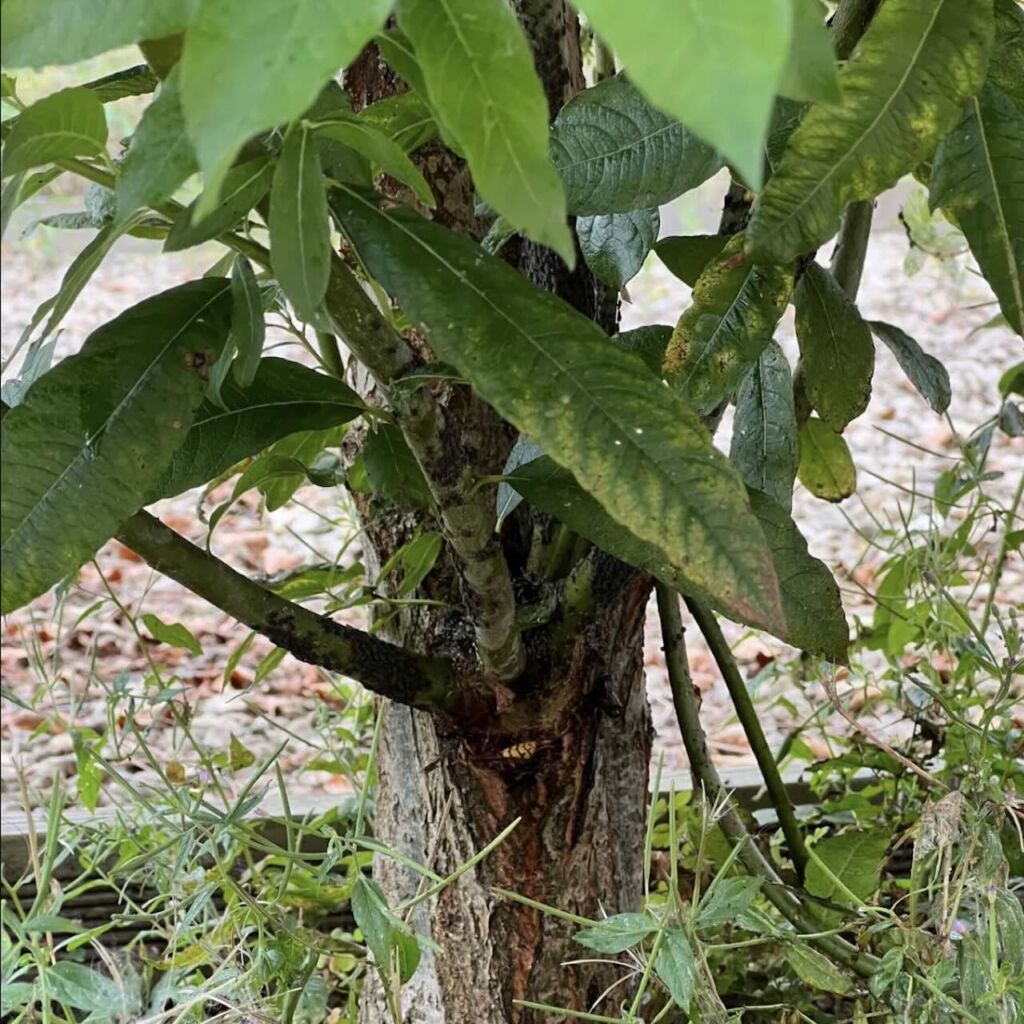
Remove these suckers as soon as you spot them. They’re stealing energy from the ornamental part of your tree, and if left unchecked, will eventually overwhelm it. Cut them off as close to the trunk as possible, or better still, rub them off when they first appear as soft growth.
Suckers often appear after stress, such as transplanting, drought, or damage. If your tree is producing lots of suckers, it’s telling you something is wrong, and the rootstock is trying to take over. Address the underlying stress and keep removing suckers until the tree settles down.
Moving and Transplanting
Sometimes you realise your flamingo tree is in the wrong spot and needs moving. The good news is that they can be successfully transplanted if you follow proper technique and timing. The bad news is that moving them at the wrong time or with poor technique can send them into severe transplant shock that looks like the tree is dying.
When to Move Your Tree
Move flamingo trees during dormancy, between late November and early February. Winter is ideal because the tree isn’t supporting leaves or active growth, so all its energy can go into re-establishing roots rather than being divided between roots and canopy.
Moving a tree in spring, summer, or autumn when it’s in leaf is asking for trouble. The tree simply cannot support the existing leaf canopy whilst simultaneously trying to grow new roots in disturbed soil. Leaves wilt dramatically, the tree looks like it’s dying, and recovery is slow and uncertain.
How to Move Your Tree Successfully
The day before you plan to move your tree, water it thoroughly. You want the rootball properly hydrated before disturbing it. A well-watered tree copes with transplant stress far better than a dry one.
Dig a circle around the tree at least 30cm to 40cm from the trunk for a two to three-year-old tree, or 50cm to 60cm for older specimens. The aim is to preserve as much of the root system as possible. Dig down to 30cm to 40cm depth to get under the main root mass.
Use a sharp spade to make clean cuts through roots rather than tearing them. Slide the spade under the rootball and lift carefully, keeping as much soil attached as possible. The more soil that stays with the roots, the less disturbance and the easier the re-establishment.

If moving more than a few metres, place the rootball on a tarp or old compost bag to transport it. The less time roots spend exposed to air and drying out, the better.
Dig the new hole before lifting the tree so it can go straight in. This may sound obvious, but I see a lot of people digging up an existing shrub or plant and then realising they now have to dig another hole at pace to get it in without it going into shock. The less time your Flamingo tree is out of the ground,the better so:
- Dig the new hole first (or prepare the new container)
- Then lift from the existing ground or container
- Plop straight into its new home and firm in.
The hole should be the same depth as the rootball (never plant deeper than the original level), but about twice as wide. Backfill with the original soil, firming gently to eliminate air pockets.
Water thoroughly after planting and keep a close eye on moisture for the next few weeks. The tree needs consistent moisture whilst roots are re-establishing, but not waterlogging. If the top 5cm of soil feels dry, water deeply.
For comprehensive guidance on moving established plants, my complete guide to lifting and moving shrubs covers all the technical details.
Troubleshooting Common Problems
i) My Flamingo Tree Looks Like It’s Dying
This is the question I get asked most frequently. The tree that was doing brilliantly suddenly looks limp, leaves are wilting or dropping, and the gardener is panicking. There are several common causes:
Transplant shock is the usual culprit if the tree has recently been moved. If you’ve just repositioned your tree and it looks terrible, transplant shock is almost certainly the issue. The roots have been disturbed and cannot yet supply enough water to the canopy. Give it a thorough soak, ensure it doesn’t dry out for the next few weeks, and resist the urge to fuss with it. Most trees recover within a few weeks once roots re-establish.
Drought stress from insufficient watering, particularly in containers or during hot weather. Check the soil moisture by sticking your finger in. If it’s dry, water deeply and immediately, then adjust your watering routine. Remember these are willows and cannot tolerate drying out.
Waterlogging from excessive watering or poor drainage. Whilst flamingo trees like moisture, they still need oxygen at the roots. If soil is constantly saturated and smells sour, you have a drainage problem. For container trees, check drainage holes aren’t blocked. For trees in ground, you may need to improve drainage or move the tree.
Pruning shock from pruning at the wrong time, particularly autumn pruning. If you’ve pruned in autumn and the tree looks awful, unfortunately there’s not much to do except wait for spring and give it a liquid feed to help recovery. Prune properly in winter to tidy up any damage.
Root damage from nearby construction, digging, or lawn mower strikes to the trunk. Flamingo trees have relatively shallow root systems that are easily damaged. If roots have been severed, reduce stress by ensuring adequate water and consider light pruning to reduce the canopy the roots have to support.
ii) Identifying Dead Wood
A common question is how to tell if branches are dead or just dormant, particularly in winter when there are no leaves. Here’s how to check:
Scratch the bark lightly with your fingernail or knife. If you see green or moist tissue underneath, the branch is alive. If it’s brown, dry, and woody all the way through, it’s dead. See the dark brown dead wood below on the Flamingo tree, which all needs pruning out!
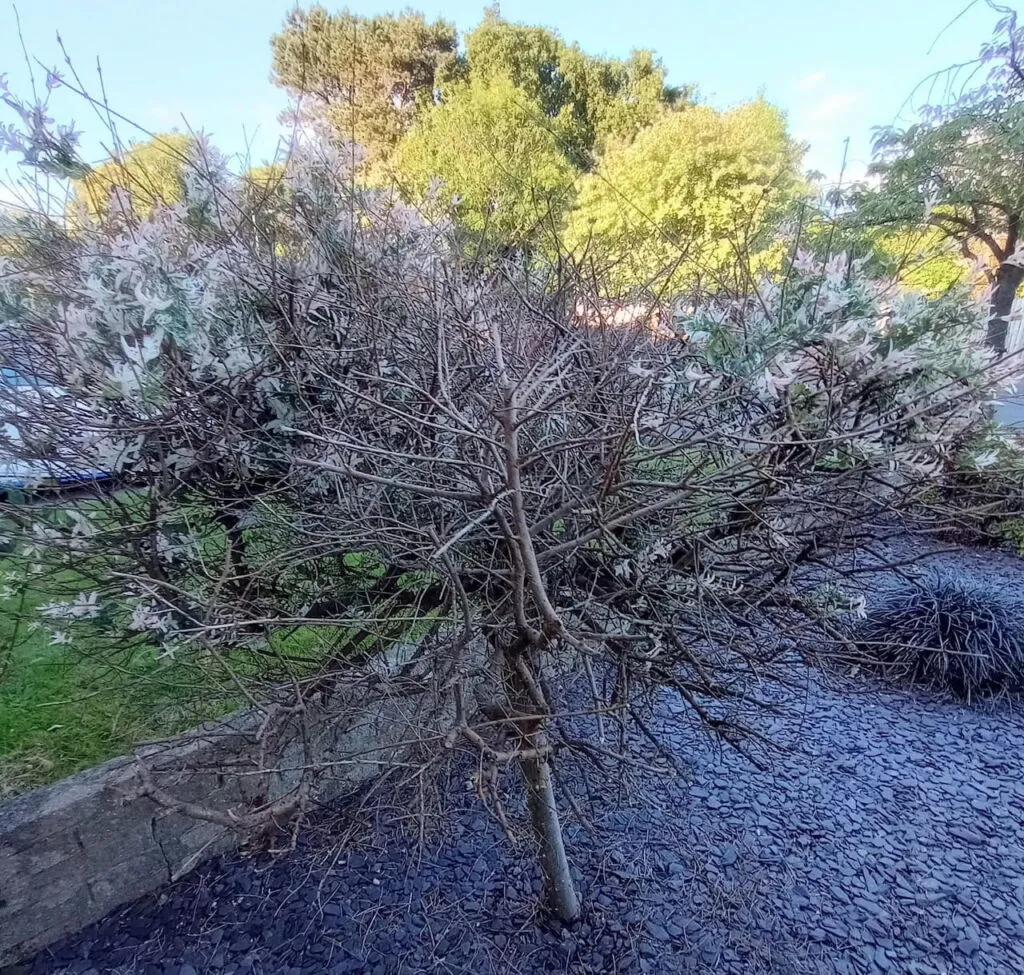
Look at the colour. Dead wood appears very dark brown or almost charcoal black. Living wood has a red or brown colour with visible buds.
Check for buds. Living branches will have buds forming along the stem, even in winter. Dead branches have no buds or only dried shriveled ones.
Flexibility matters too. Living branches retain some flexibility and moisture. Dead branches are brittle and snap easily.
If a large portion of your tree shows these signs of death, particularly if the wood is dark charcoal colour with no new growth, and you can see bright red living stems in contrast, unfortunately, the tree may be beyond saving. Being a grafted tree makes it very difficult to rescue once a major dieback has occurred.
iii) Strange Leaves Growing from the Trunk
If you’re seeing completely different looking leaves sprouting from the trunk below the graft union, these are suckers from the rootstock. They’ll typically be plain green rather than variegated, often more vigorous than the ornamental growth, and emerge from below that knobbly graft union.
Remove these immediately by cutting them off as close to the trunk as possible. They’re stealing vigour from the flamingo willow portion of your tree. If left unchecked, the rootstock can completely take over, and you’ll lose the ornamental tree you actually wanted.
Suckers often appear after stress, such as transplanting, pruning, drought, or damage. If you’re getting lots of suckers repeatedly, it’s a sign that something is stressing the tree and needs addressing.
iv) Recovery from Problems
If your tree has suffered shock, stress, or damage, give it the best possible conditions to recover. Ensure consistent moisture without waterlogging, apply a good quality organic liquid feed during the growing season to support new growth, remove any dead or diseased wood to prevent problems spreading, and resist over-fussing. Sometimes the best thing you can do is provide good basic care and give the tree time to recover naturally.
For trees that have suffered severe dieback or damage, a proper winter prune to remove all dead material and reshape what’s left can sometimes save them. However, if more than half the tree is dead, particularly with a grafted specimen, replacement is often the more sensible option.
Common Questions from the Garden Ninja Community
Throughout this guide I’ve linked to real questions from gardeners in the Garden Ninja community who’ve struggled with various flamingo tree issues. Here’s a quick reference to these helpful threads:
- Flamingo tree looks like it’s dying after moving covering transplant shock and recovery
- Strange leaves growing from the trunk explaining rootstock suckers and why to remove them
- Tree suffering from autumn pruning shock showing what happens when you prune at the wrong time
- Identifying dead wood and severe die back with guidance on when a tree is beyond saving
- What liquid feed to use for recovery recommending comfrey tea and organic alternatives
Final Thoughts
Flamingo trees are genuinely tough, reliable, beautiful small trees that deserve their popularity. The RHS gave them an Award of Merit for good reason. They’re not difficult to grow, but they do have specific requirements that trip people up if ignored.
The key points to remember are: never let them dry out, prune only in winter dormancy, remove rootstock suckers immediately, and move them only during winter dormancy if you must move them at all. Get these basics right, and your flamingo tree will reward you with years of stunning variegated foliage and elegant structure.
For any specific problems or questions, the Garden Ninja community forum is full of helpful advice from both me and experienced gardeners who’ve dealt with similar issues. Don’t struggle alone, and don’t let a preventable problem kill a beautiful tree through lack of information.
Happy gardening!



Lee Burkhill
Lee Burkhill, known as the Garden Ninja, is an award-winning garden designer and horticulturist with over 30 years of gardening experience and 15 years as a professional garden designer. A qualified RHS (Royal Horticultural Society) professional, Lee specialises in sustainable garden design and practical horticultural advice. He designs and presents on BBC1’s Garden Rescue and in leading gardening publications. Lee combines three decades of hands-on gardening knowledge with professional design qualifications to help gardeners create beautiful, functional outdoor spaces.
View all posts by Lee Burkhill







Other posts
-

Start here: to begin your gardening journey! Read more
-
Niwaki Okatsune vs Felco Secateurs: The Complete UK Gardener’s Guide Read more
-
35 Yellow Flowering Plants for UK Gardens: Brighten Your Borders with Bold Sunshine Blooms Read more
-
16 Essential Evergreen Shrubs: for time poor low maintenance gardeners Read more
-
How to Get Rid of Moss in Your Lawn: The UK Complete Guide Read more
-
How to Create a Pond or Water Feature in Your Garden: Ultimate Beginner’s Guide Read more