The Beginner’s Guide to Keeping Bees: UK Gardener Guide
Lee Burkhill: Award Winning Designer & BBC 1's Garden Rescue Presenters Official Blog
Expert level
The honest truth about starting beekeeping in the UK. Keeping bees and creating an apiary is both a rewarding and challenging pursuit. I give you all of my advice as an expert gardener and bee keeper. If you're ready to start your beekeeping journey with realistic expectations and proven strategies this is the guide for you! Let's dive into what it really takes to become a successful beekeeper in the UK.
Quick Answer
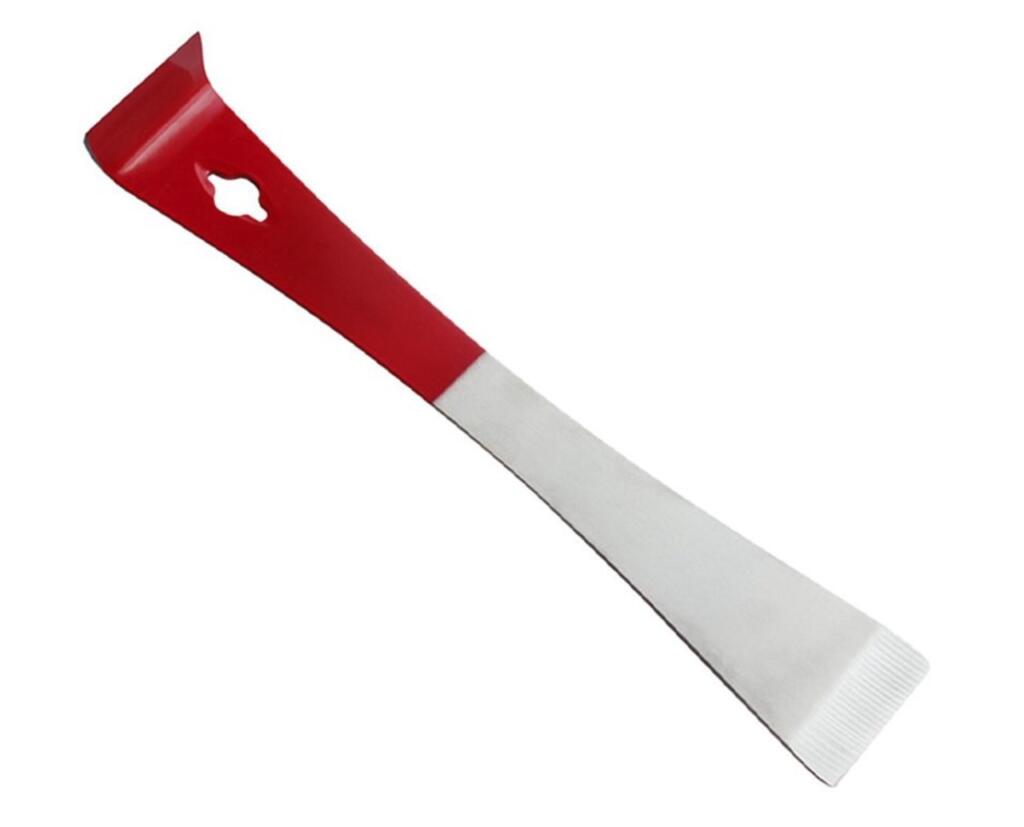
To keep bees in the UK you need a National hive, a bee suit, smoker, and hive tool (budget £500 to £800 to start), plus a nucleus colony of bees from a local association. No licence is required, but you must register your hive free on BeeBase. Join your local BBKA branch before you buy anything.
Let me be completely honest about this from the start. Beekeeping is not what you think it is going to be. It is more complicated, more demanding, and far more rewarding than most people imagine. I have been keeping bees for four years now, and every romantic notion I had about gentle summer days extracting golden honey while wearing a fetching straw hat has been thoroughly crushed by reality.
As an expert horticulturalist and garden designer, I felt like plants, pollen, and the seasons were second nature to me, so how hard could keeping a few hives of honey bees be? Turns out, far more difficult than I anticipated!
I have had queens abscond on me twice (once taking half my honey stores with them, the ungrateful little madam), dealt with more bee diseases than I care to remember, and had harvests so pitiful that I have genuinely considered buying supermarket honey and pretending I made it myself. But here is the thing. Despite all the disasters, setbacks, and moments of complete bewilderment, I absolutely love being a beekeeper.
Let us start with what you are probably dreaming about versus what you are actually likely to get. I certainly fell into this trap spectacularly. The romantic vision is peaceful, well-behaved bees that never sting, perfect weather for every inspection, supers overflowing with liquid gold, and enough honey to supply half the neighbourhood.
What you should actually expect is bees that range from angelic to absolutely furious, sometimes within the same inspection. The weather in the UK seems personally designed to thwart your beekeeping plans. You might get some honey in year one, but probably not enough to recoup your initial investment. You will have several “what on earth is going on?” moments per season, and at least one complete disaster that makes you question your life choices.
The most important thing to understand is that your primary goal for the first season should be getting your bees through winter alive. Everything else, including honey, is a bonus. I learned this the hard way when I lost my first colony in February. All that careful planning and investment, gone because I did not understand the basics of winter preparation.
Why Keep Honey Bees?
Keeping honey bees is an ancient practice, dating back thousands of years, which allows us to interact with, look after, learn from, and harvest honey from these wonderful creatures.
When bees are looked after compassionately and ethically, it is a mutually beneficial arrangement. The honey bees get a safe home, free from disease, with assistance when food stocks are low. In return, the beekeeper gets to witness their fascinating life, see them take part in the pollination cycle of plants, and then, if lucky, harvest some honey each year.
In my opinion, the husbandry of the bees must come first above all else. These creatures work incredibly hard, and we are lucky that they let us witness their industrious and sometimes miraculous lifecycle so closely. The honey really is the icing on the cake. In fact, some beekeepers do not harvest any at all, leaving it entirely for the bees.
How Old Is Beekeeping?
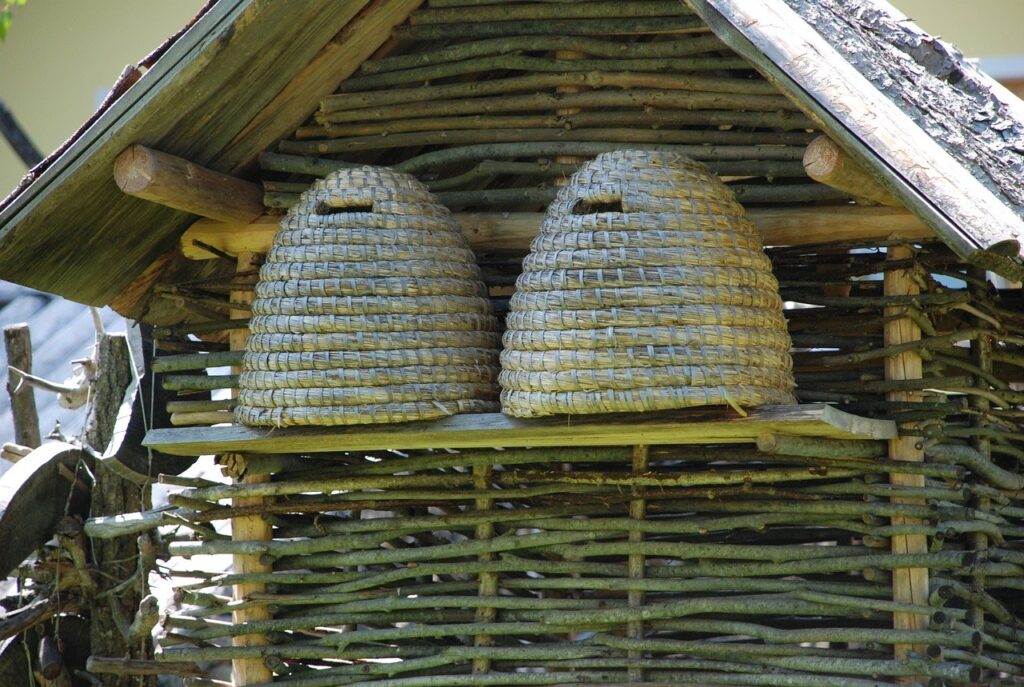
Beekeeping, also known as apiculture, is one of the oldest forms of animal husbandry practised by humans. It is believed that humans began collecting honey from wild bee colonies long before they started keeping bees in managed hives. The earliest evidence of beekeeping can be traced back to ancient civilisations in Egypt, around 4,500 years ago. Egyptian art and hieroglyphics depict scenes of beekeeping and the harvesting of honey, and ancient Egyptians valued both honey and beeswax for culinary, medicinal, and practical purposes.
The Real Costs of Beekeeping
Nobody talks about this honestly enough, so let me break it down for you. Beekeeping is not a cheap hobby, and anyone who tells you it will pay for itself in the first year is either mistaken or selling something.
Initial Setup Costs
For a standard National hive setup, you are looking at a National hive with frames and foundation at around £180 to £220. A decent bee suit is £60 to £150 and this is not the place to economise. I started with a cheap suit and got stung constantly through it. A quality smoker with good bellows runs £25 to £40, and a hive tool is £15 to £25. You will also need an uncapping knife (£20 to £30), a basic manual extractor (£150 to £300), a settling tank (£80 to £120), and miscellaneous items such as gloves, brushes and a queen marking kit at around £50. All in, expect to spend £580 to £1,085 on initial equipment.
On top of the equipment, getting your bees will cost £200 to £300 for a nucleus colony (5-frame nuc) from a reputable local supplier, or nothing if you are lucky enough to collect a swarm, though swarms come with their own unknowns.
Annual Running Costs
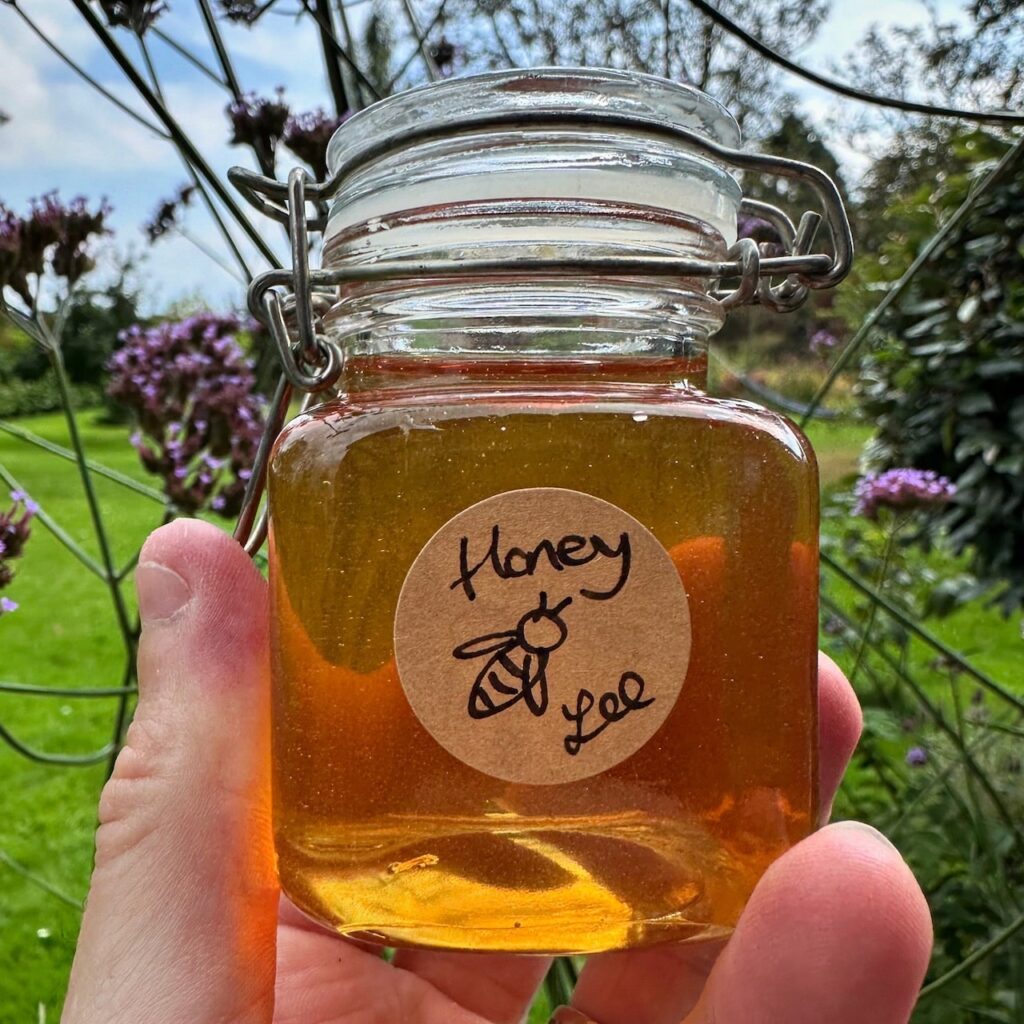
Once set up, plan for varroa treatments at £15 to £30 per hive per year, sugar for winter feeding at £20 to £40, replacement frames and foundation at £30 to £50, association membership at £20 to £40, and additional equipment as your knowledge grows at perhaps £100 to £200. That brings realistic annual costs to around £185 to £360 per hive. As for honey income, in my four years I have had harvests ranging from absolutely nothing to about 30kg in a particularly good year. At £8 to £10 per jar, that is a maximum of £240 to £300. The maths does not lie: do not expect to turn a profit quickly.
Registering on BeeBase: A Legal Requirement
Before you bring any bees home, you must register your hive on BeeBase. This is free, takes around ten minutes, and is a legal requirement for all beekeepers in England and Wales. BeeBase is the National Bee Unit’s online database, and registration serves two critical purposes. It allows bee inspectors from the Animal and Plant Health Agency to contact you if a notifiable disease such as American foulbrood or European foulbrood is detected within 3km of your apiary. It also enables the NBU to map disease patterns nationally, which helps protect beekeeping across the whole country.
💡 Top Tip
Register on BeeBase before your bees arrive. If a disease outbreak is reported in your area and you are not registered, you will receive no warning. Registration is free and takes minutes.
You will also want to look into your local BBKA branch membership, which typically includes third-party liability insurance. This matters enormously if your bees were ever to sting a neighbour or cause an incident in a public space. You can find your nearest branch via the British Beekeepers Association website.
The Honey Bee Lifecycle: A Beginner’s Guide
Understanding the bee lifecycle is not just interesting, it is essential for reading what is happening in your hive during every inspection. Something that seems straightforward until you are standing there with a frame in your hand wondering what you are actually looking at.
The Basic Cast of Characters in a Bee Hive
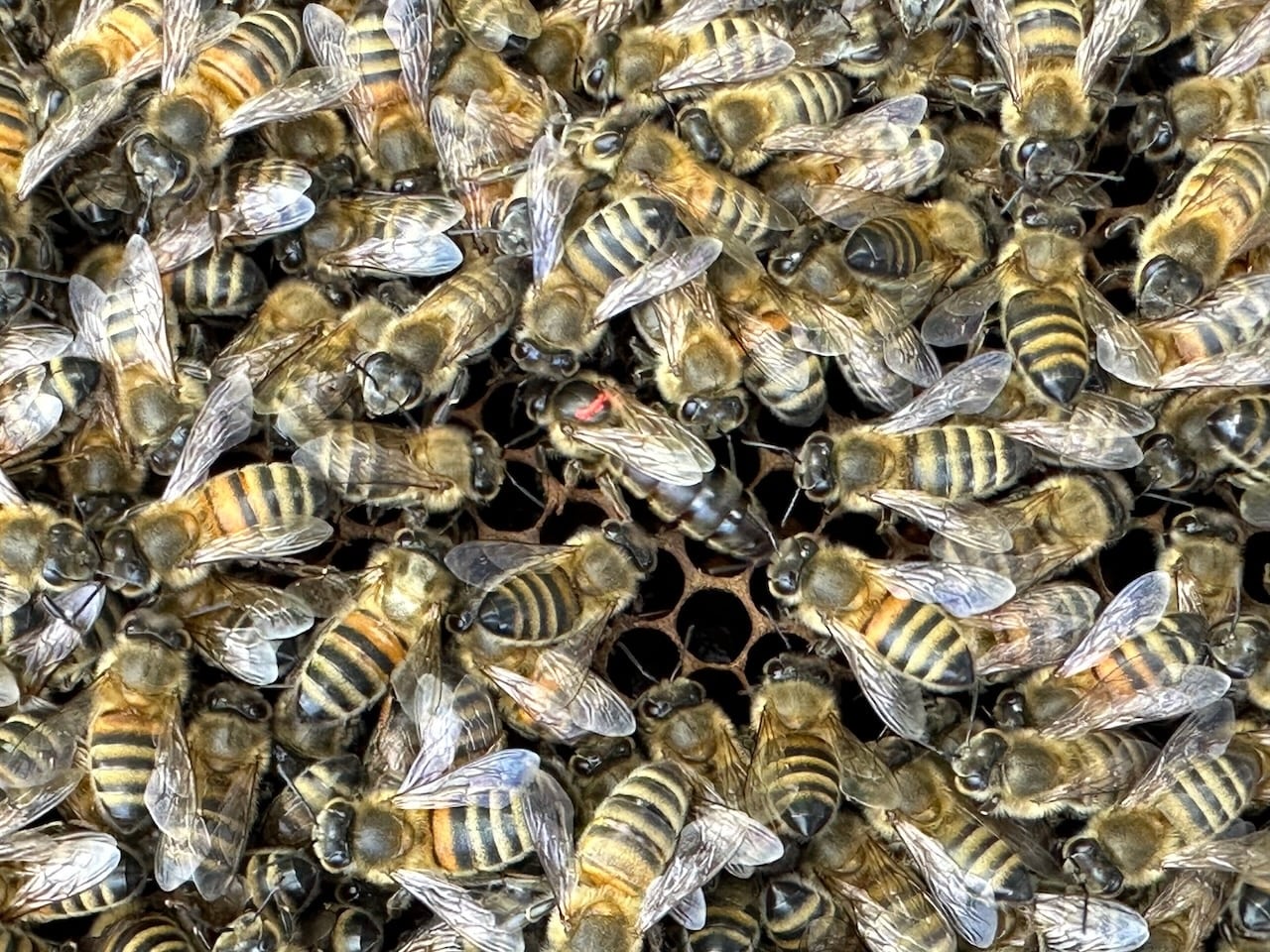
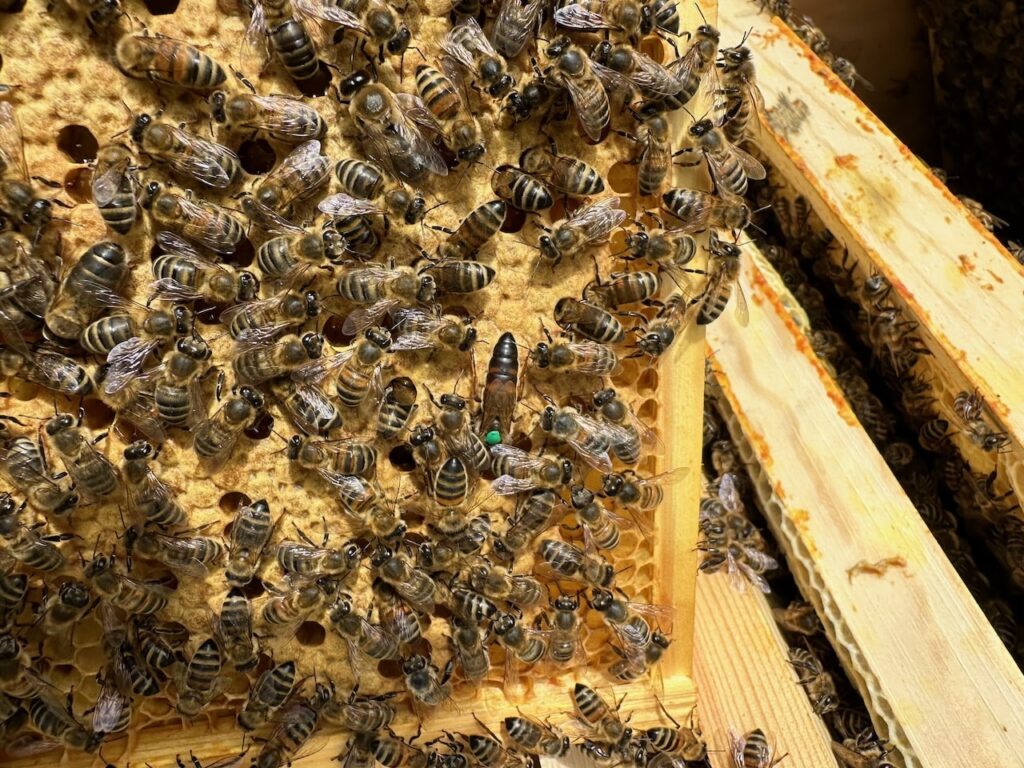
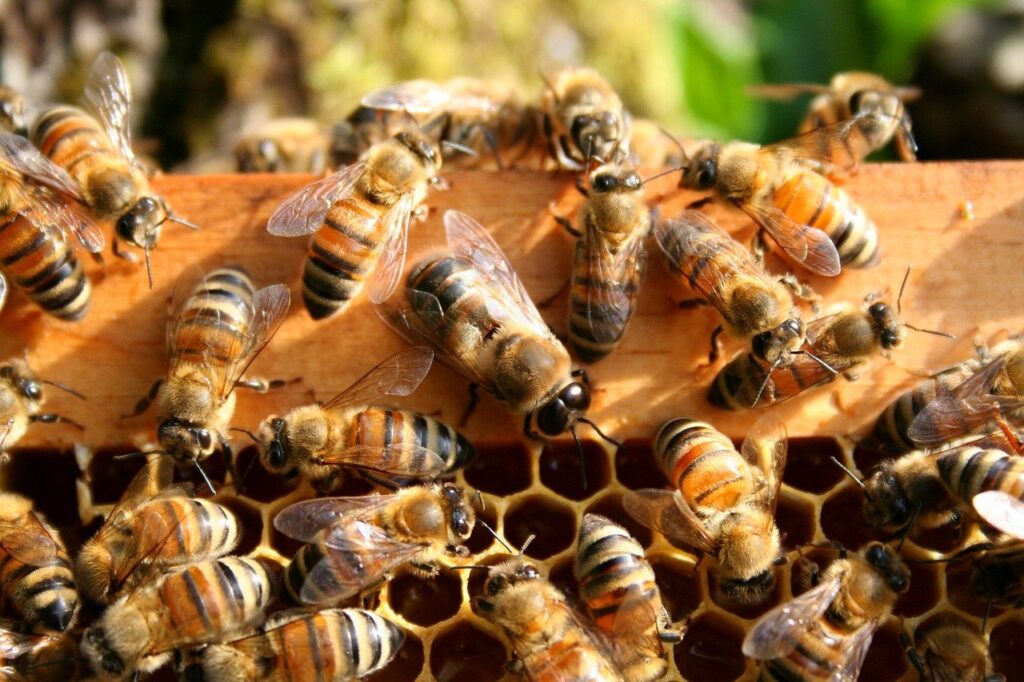
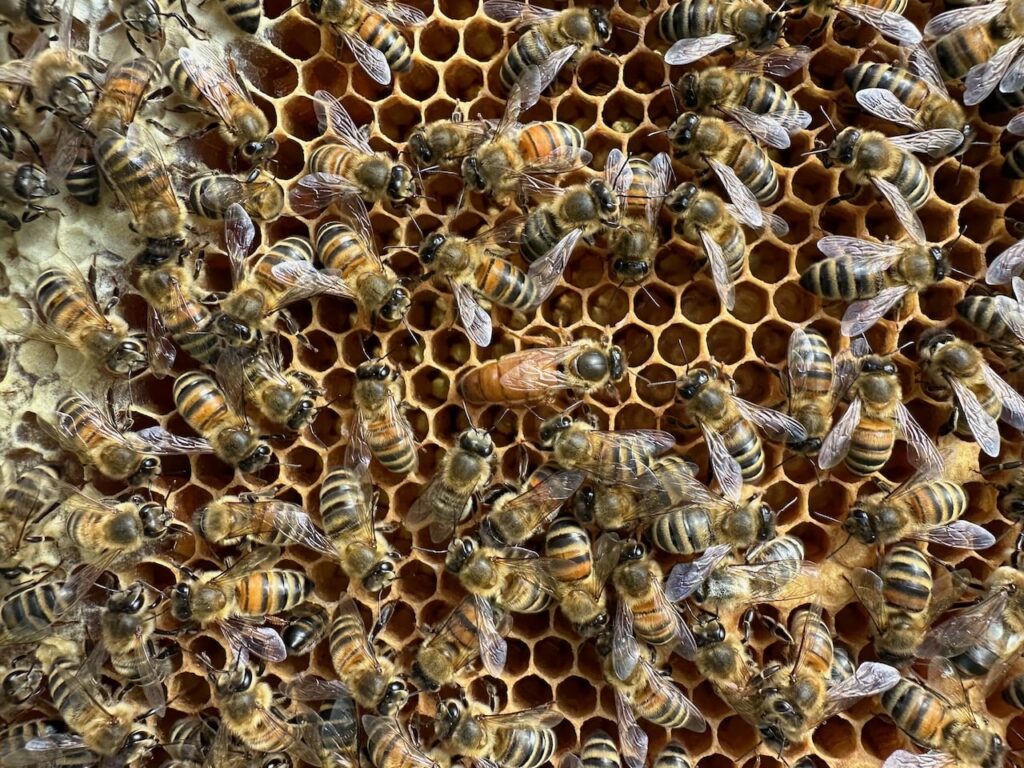
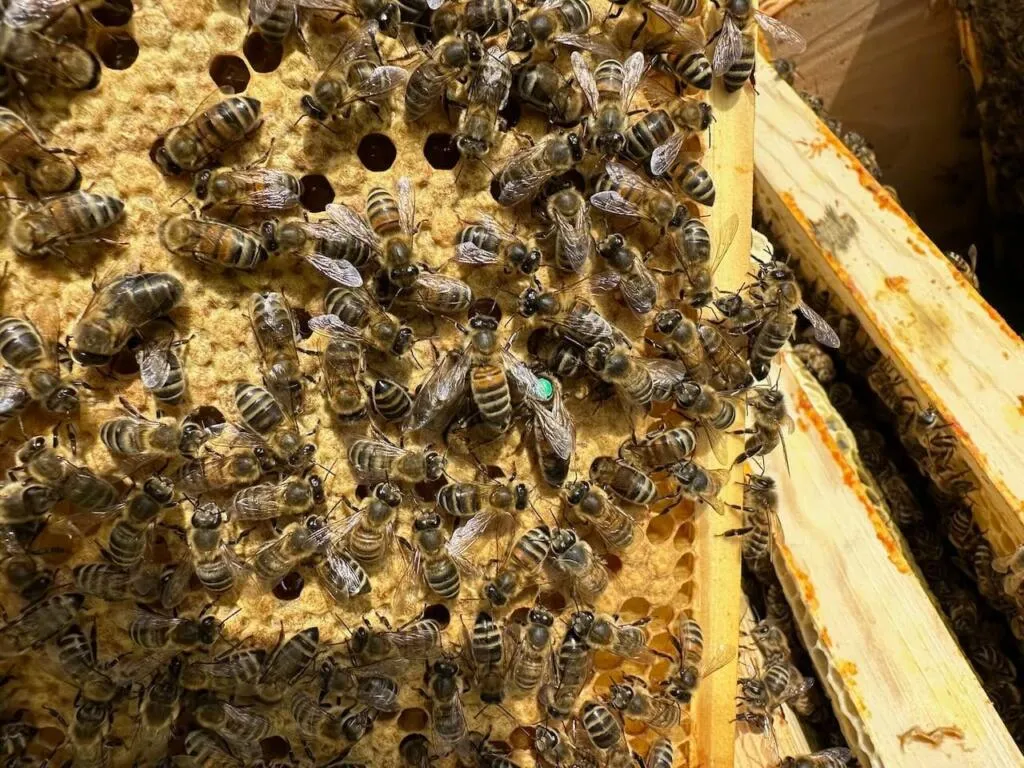
There are three main types of honey bee in a hive. The queen is the most important, and there is one per colony (hopefully). She lives two to five years and can lay up to 2,000 eggs per day at peak season. She is essentially an egg-laying machine with wings. If she dies or goes missing, your colony is in serious trouble. Most beekeepers mark their queens so you can easily spot them during inspections. Queens can only sting other queens, not humans.
Workers are all female and live six weeks in summer (literally worked to death) or six months if they are the winter bees. They do everything: nursing, cleaning, foraging, building comb, and defending the hive. They can sting, and the loss of their sting is fatal to them.
Drones are male and live about eight weeks in summer. They exist purely to mate with virgin queens from other colonies. Your colony will eject them before winter because they are, bluntly, mouths to feed with no useful winter function. Drones have noticeably large, round eyes. They have no stings.
The Development Timeline of Bees
All bees start as eggs (tiny white specks that look like grains of rice), then become larvae (white grubs fed constantly by workers), then pupae (sealed under wax cappings while they transform), then emerge as adult bees. Understanding these timelines is crucial because it helps you work out what is happening in your hive during each inspection.
A queen takes 16 days in total from egg to emergence (3 days as egg, 5 days as larva, 8 days as pupa). A worker takes 21 days (3 days, 6 days, 12 days). A drone takes 24 days (3 days, 7 days, 14 days). No eggs means your queen might be dead or absent. Lots of drone cells can signal preparations for swarming. The key thing to remember is that everything in a hive revolves around the queen and her egg-laying. No queen means no future for the colony.
Life Cycles of Honey Bees
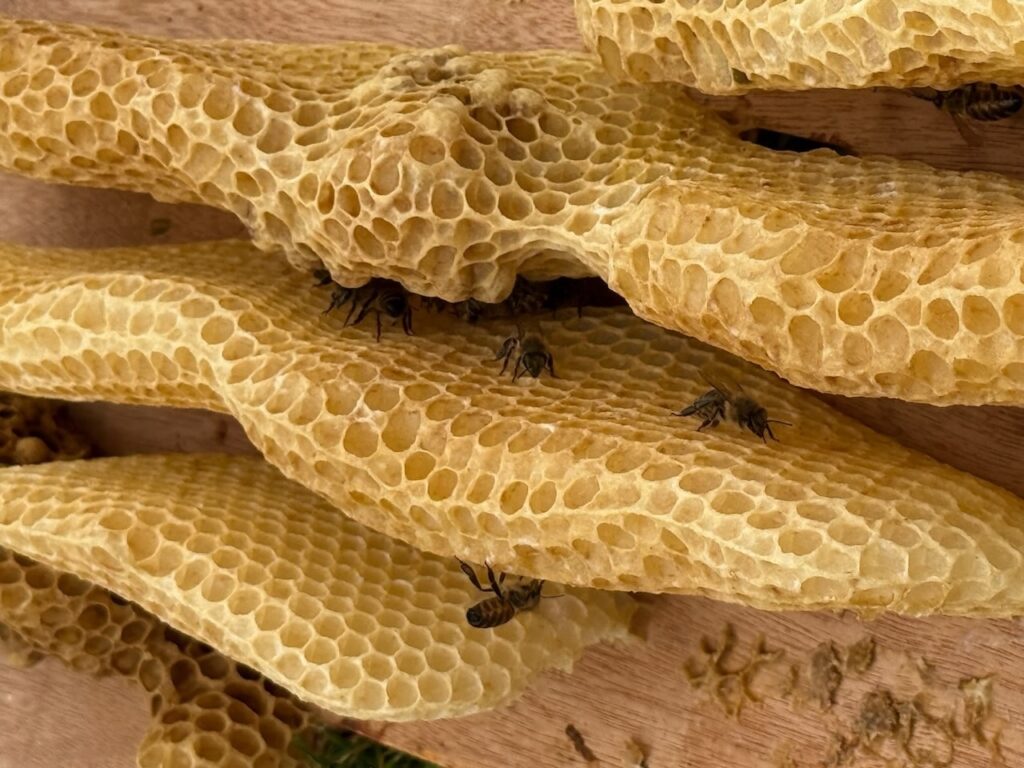
The life cycle of honey bees consists of four main phases. In the egg stage, the queen lays one tiny white egg in each cell of the honeycomb. These hatch after around three days. In the larva stage, worker bees feed the hatched larvae with royal jelly for the first few days. If a larva is destined to become a queen, it receives royal jelly throughout development. Workers and drones are switched to a diet of pollen and nectar after the initial days. In the pupa stage, the larva spins a cocoon and undergoes metamorphosis inside the sealed cell, developing fully formed wings, legs, and body. Finally, in the adult bee stage, the fully developed bee chews its way out of the cell to begin its role in the colony.
Choosing Your Hive Type
In the UK you have several options, but for beginners I would strongly recommend using whatever your local association uses. That said, here is a clear breakdown of the three types you will encounter most often.
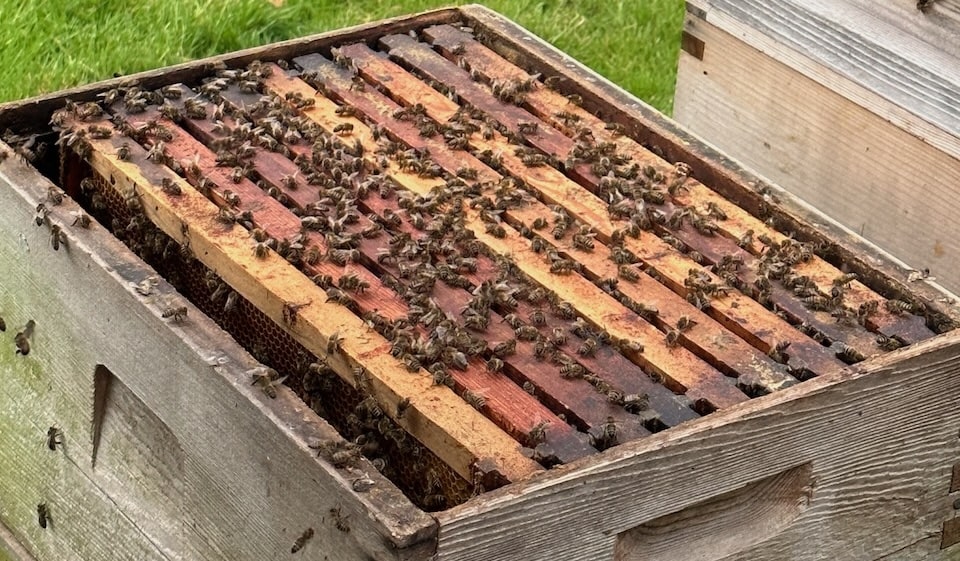
Hives are the homes in which your bees live. The brood area is where the queen, eggs, larvae, developing bees, and food stores all live. The honey supers sit above a queen excluder, so the queen cannot lay eggs in your honey frames.
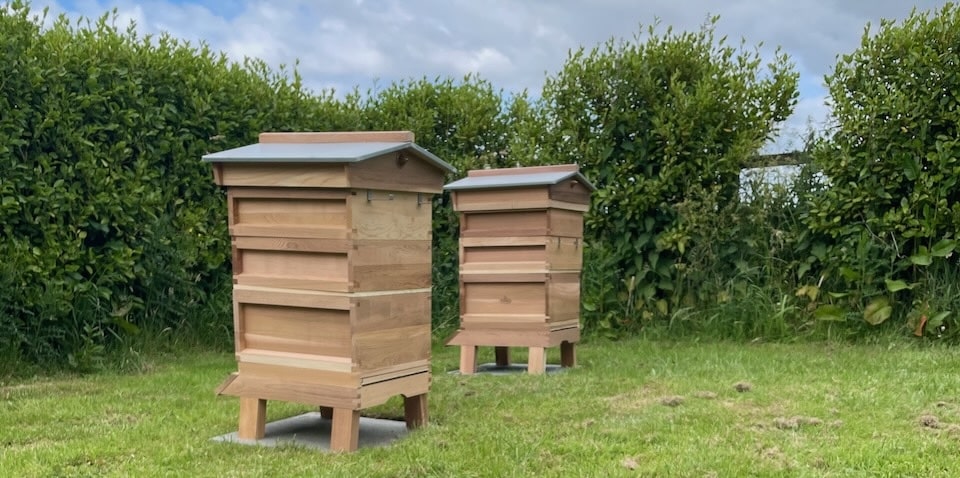
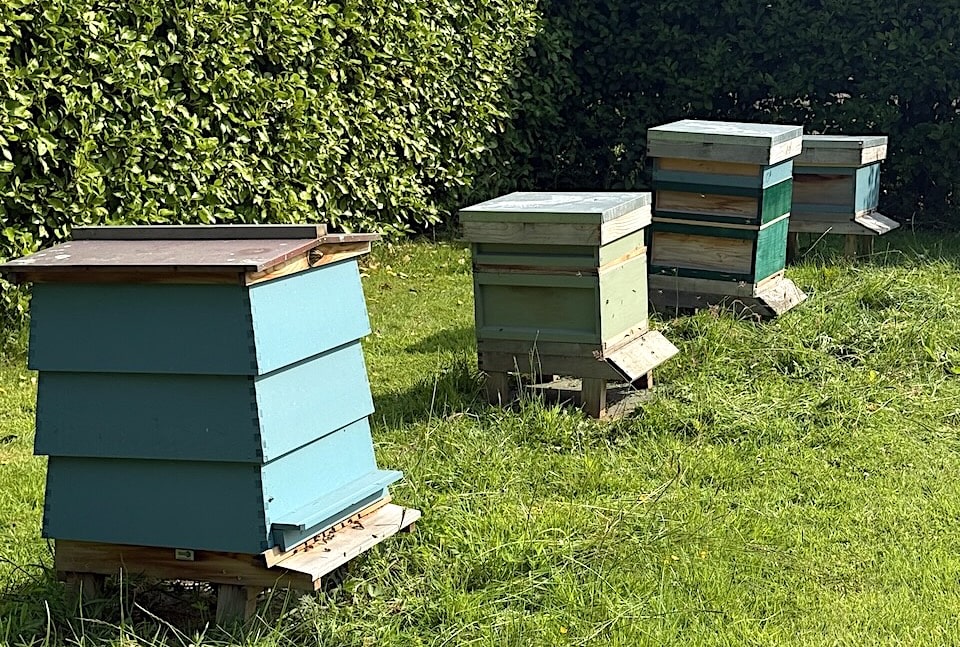
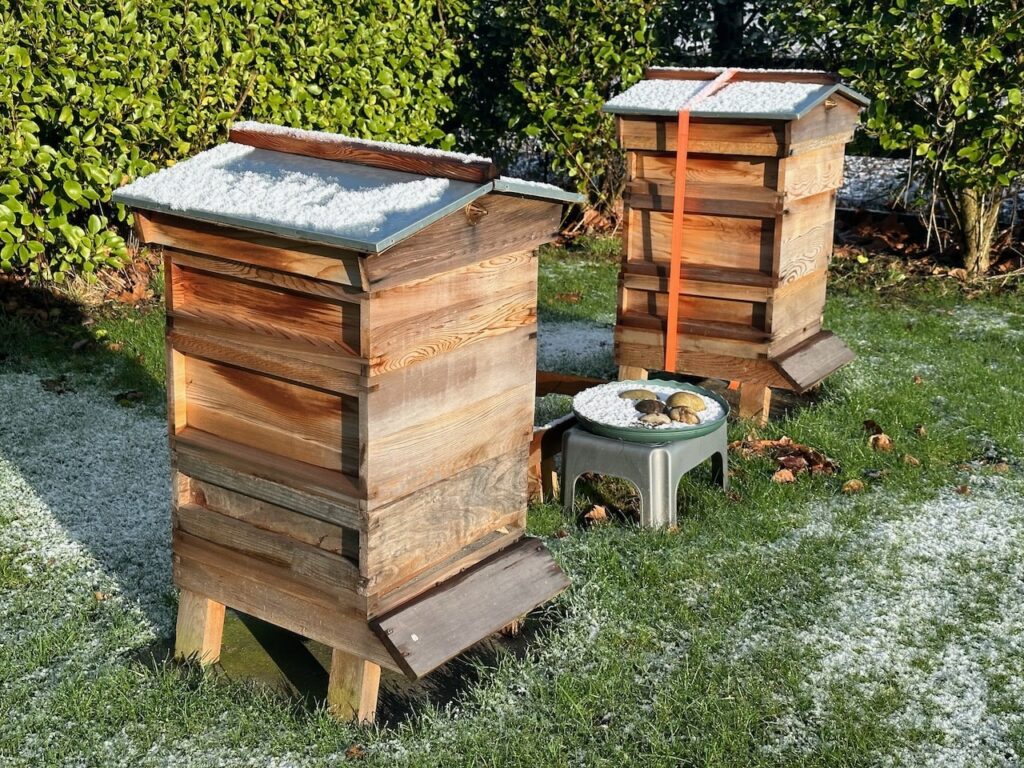
National Hive (British Standard National)
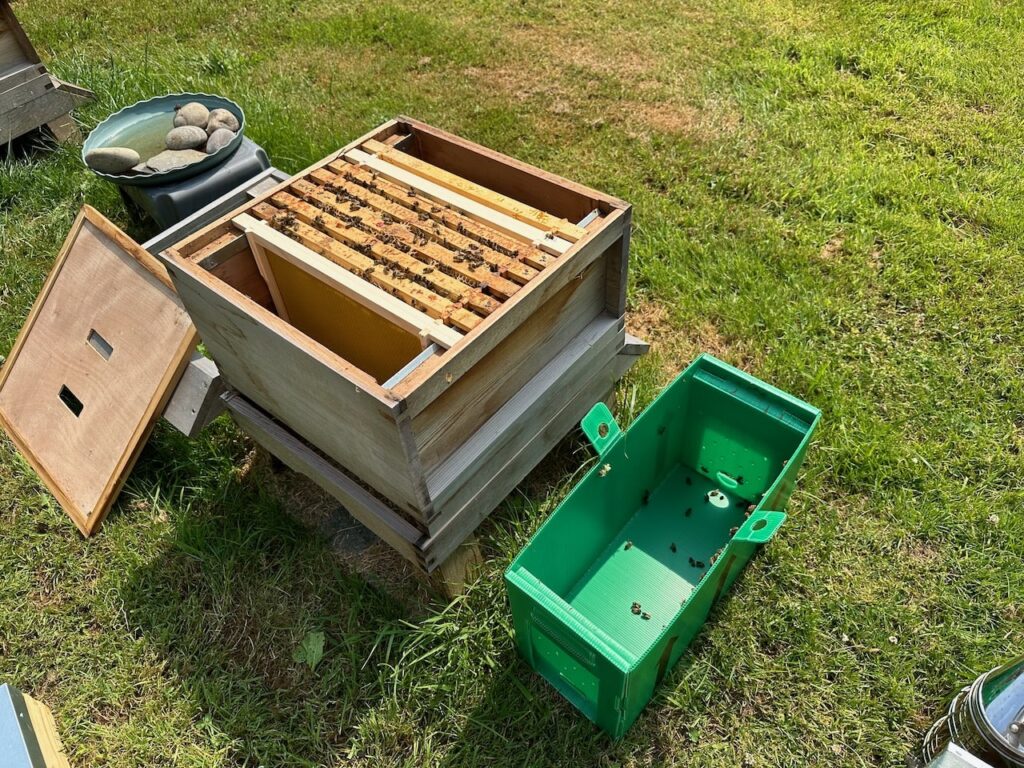
This is the bread and butter of UK beekeeping, and there is a very good reason it became the standard. It is 460mm square externally, with a brood box depth of 225mm and a super depth of 150mm. Many beekeepers use the deeper 14×12 brood box option (318mm deep) for more prolific queens. Each box holds 11 frames.
The benefits are considerable. It is the most widely used design in the UK, so local support and spare parts are everywhere. The grooved handholds are genuinely useful when you are wrestling with a 20kg super. The square design allows frames to run either warm way (parallel to the entrance) or cold way (at right angles), giving you flexibility. The main drawback is that the standard brood box is considered too small for modern prolific bee strains, so many beekeepers run a brood-and-a-half configuration or upgrade to the 14×12 brood box.
The American classic that is gaining popularity with UK commercial beekeepers. It is notably wider at 508mm x 413mm externally, giving a larger brood area for prolific queens and more uniform boxes throughout. The downside for UK beginners is less local support, higher initial cost, heavier boxes (some supers can weigh 30 to 45kg when full), and a design originally intended for American bee strains that are more productive than typical UK bees. My honest advice is to stick with the National and simply upgrade to deeper brood boxes if your queen needs more space.
WBC Hive (William Broughton Carr)
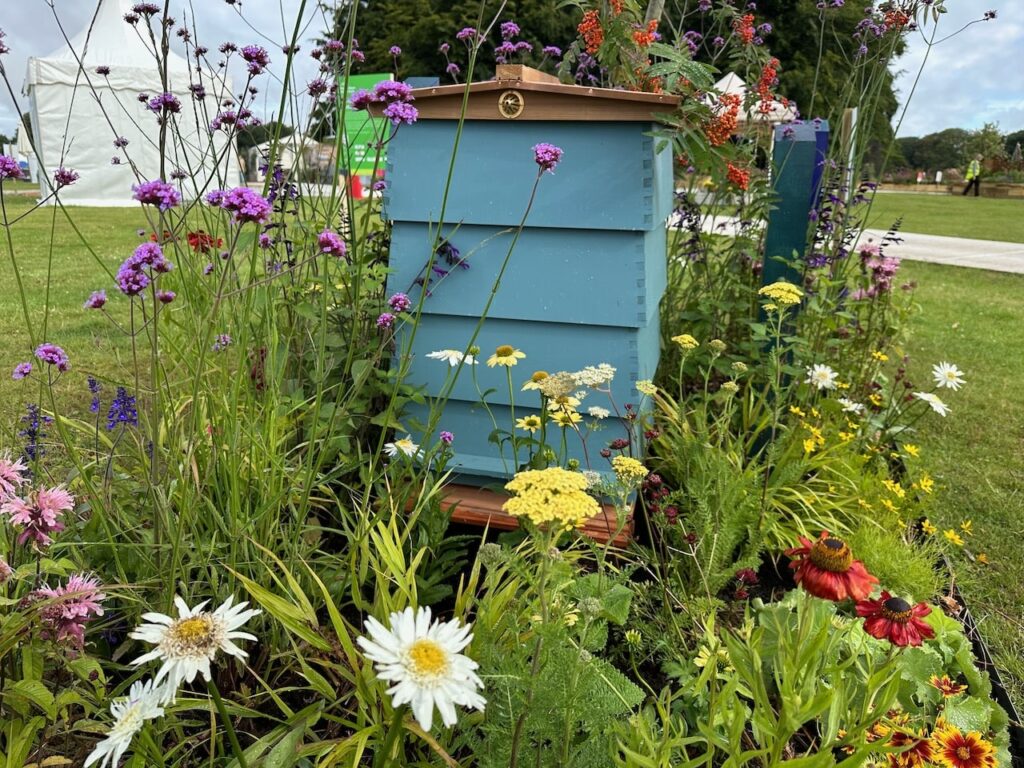
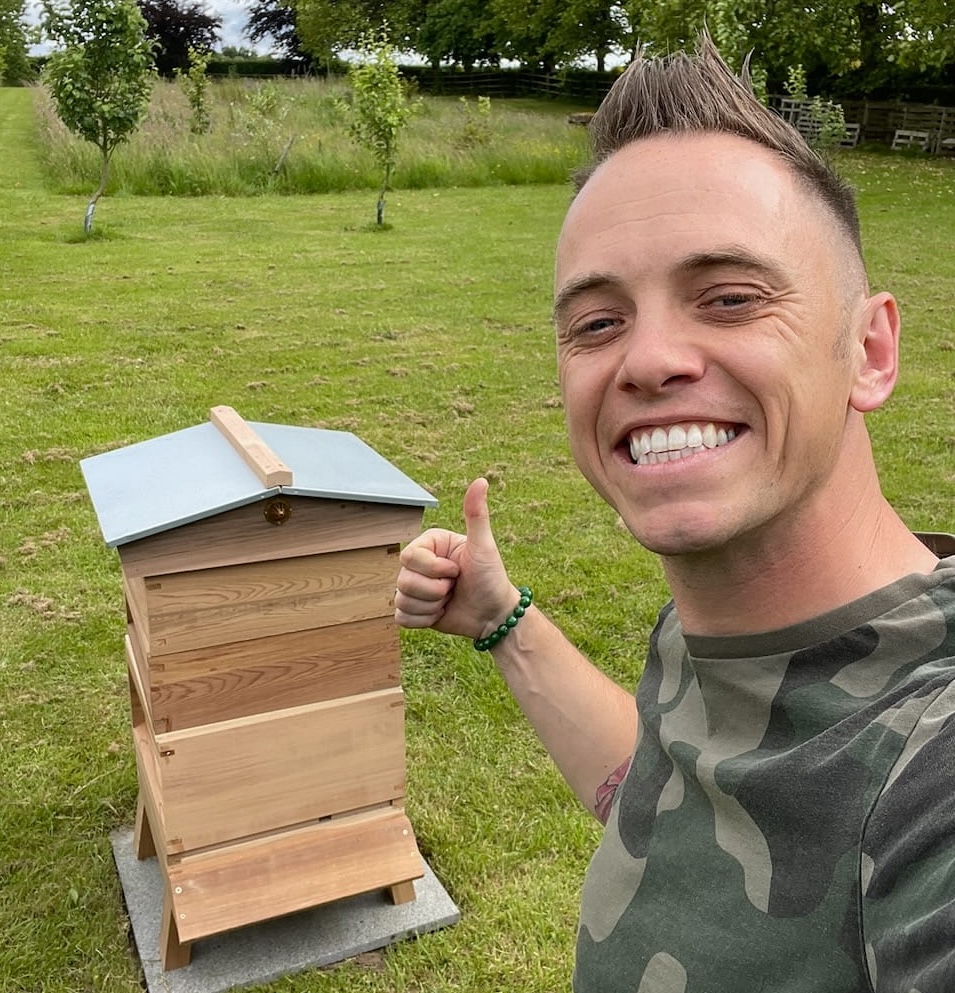
The classic cottage garden hive that looks like something from a children’s book. It uses National frame sizes internally but has an outer shell of overlapping lifts for insulation and weather protection. It is beautiful and undeniably charming, but I cannot recommend it for beginners. The extra effort required to dismantle the outer shell for each inspection made it deeply unpopular with commercial beekeepers and it is more expensive than a National. If you want hives in your garden and aesthetics genuinely matter, the WBC works. Just know you will spend longer on each inspection.
UK Beehive Frame Sizes and Abbreviations
This is where things get properly confusing for beginners. When I started, I spent weeks trying to work out why there were so many different frame codes, and frankly, the suppliers do not make it easy. In a nutshell, there is the standard DN4 and SN4 that all beginner kits come with, and then a whole range of more confusing sizes you will encounter when buying replacement frames, especially second-hand on eBay.
Frame Code Breakdown
Frame Code
Full Name
Hive Type
Depth
Spacing Type
Top Bar Width
Use
DN1
Deep National 1
National/WBC
Standard (216mm)
Requires spacers
Narrow (22.5mm)
Brood box
DN2
Deep National 2
National/WBC
Standard (216mm)
Requires spacers
Wide (27mm)
Brood box
DN4
Deep National 4
National/WBC
Standard (216mm)
Hoffman self-spacing
Narrow (22.5mm)
Brood box
DN5
Deep National 5
National/WBC
Standard (216mm)
Hoffman self-spacing
Wide (27mm)
Brood box
SN1
Shallow National 1
National/WBC
Shallow (140mm)
Requires spacers
Narrow (22.5mm)
Super
SN2
Shallow National 2
National/WBC
Shallow (140mm)
Requires spacers
Wide (27mm)
Super
SN4
Shallow National 4
National/WBC
Shallow (140mm)
Hoffman self-spacing
Narrow (22.5mm)
Super
SN5
Shallow National 5
National/WBC
Shallow (140mm)
Hoffman self-spacing
Wide (27mm)
Super
SN7
Shallow National 7 (Manley)
National/WBC
Shallow (140mm)
Manley self-spacing
Wide (27mm)
Super
14×12
Extra Deep/Jumbo
National/WBC
Deep (305mm)
Usually Hoffman
Wide (27mm)
Large brood box
Commercial and Other Frame Types
Frame Code
Full Name
Hive Type
Dimensions
Notes
16×10
Commercial Brood
Commercial
16″ x 10″
Short lugs, different box design
16×6
Commercial Super
Commercial
16″ x 6″
Short lugs
Lang Deep
Langstroth Deep
Langstroth
19″ x 9 1/8″
American standard
Lang Medium
Langstroth Medium
Langstroth
19″ x 6 1/4″
American standard
DN stands for Deep National and fits standard National and WBC brood bodies. SN stands for Shallow National and fits standard National and WBC supers. The numbering tells you the spacing type: 1 and 2 have straight side bars requiring separate spacers, while 4 and 5 are Hoffman self-spacing. Numbers 1 and 4 have narrow top bars (22.5mm) while 2, 5 and 7 have wide top bars (27mm).
After four years of dealing with various frame types, my honest recommendations are DN4 for brood boxes (self-spacing, less propolising, easier to handle solo) and SN4 for supers (self-spacing makes manipulation easier during harvest). Pick one type for brood and one for supers, then stick with it. Interchangeability across your boxes is genuinely valuable. Avoid mixing frame types in the same box, as you will get more bur comb and nightmare inspections as a result.
This is the single most important step you can take before buying any equipment. I cannot overstate how much difference local support makes, especially in your first season. Your local BBKA branch members know your local conditions, forage, prevalent diseases, and weather patterns. Most importantly, they have made all the mistakes you are about to make and can save you from them.
Most associations run beginner courses from October to March, costing around £80 to £120. You will get theory, practical sessions, and, crucially, a mentor. Having someone you can phone in a panic when your bees are doing something inexplicable is worth its weight in gold. My mentor talked me through many of my first nightmare situations over the phone, including tracking down a replacement queen from another apiarist before my colony collapsed. Find your nearest branch at the British Beekeepers Association website.
Getting Your First Bees
Nucleus Colony (Nuc)
This is your best option as a beginner. A 5-frame nuc from a local beekeeper will cost £150 to £300 but gives you a proven, laying queen, brood at various stages of development, some stores, and a proper age mix of workers. I bought my first nucs from two different beekeepers in my association. It is expensive, but the bees are already adapted to local conditions and the supplier will usually provide ongoing support. The nucs are typically available from late April through June, so you need to get your name on a list in early spring.
Swarms
Free bees sound great, but swarms are essentially homeless refugees. They might be in perfect condition, or they might be carrying diseases, mites, or have a failing queen. You genuinely do not know what you are getting. I have collected a few swarms over the years: two settled beautifully, one absconded after a week, and one turned out to be quite defensive and needed requeening. As a beekeeper, it is hard not to give a swarm a home, but if your budget allows, a nuc is a far more predictable start.
Package Bees
Common in America, less so in the UK. Essentially loose bees with a queen shipped in a box. Several people in my association have tried this approach with mixed results. I would prioritise finding a local nuc supplier first.
Essential Equipment Breakdown
Let me talk you through what you actually need versus what suppliers want to sell you.
Absolute Essentials
Hive: A National hive with one brood box, one super, frames, and foundation. Do not buy a massive setup initially. You probably will not need it in the first year and getting comfortable with one hive is challenge enough.
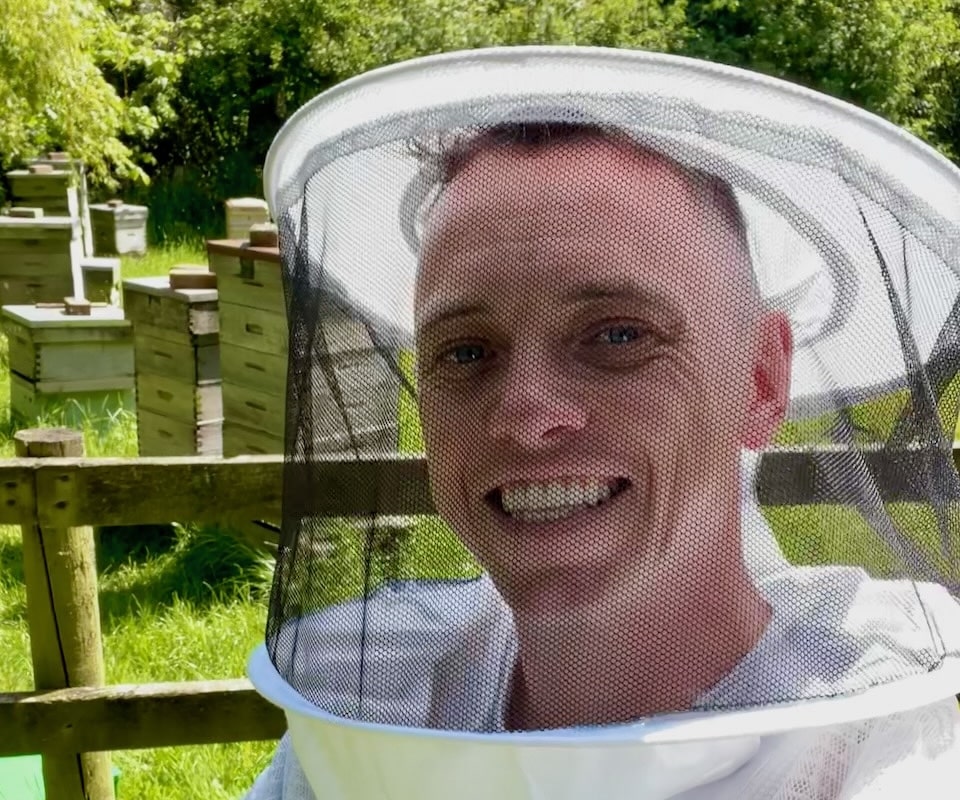
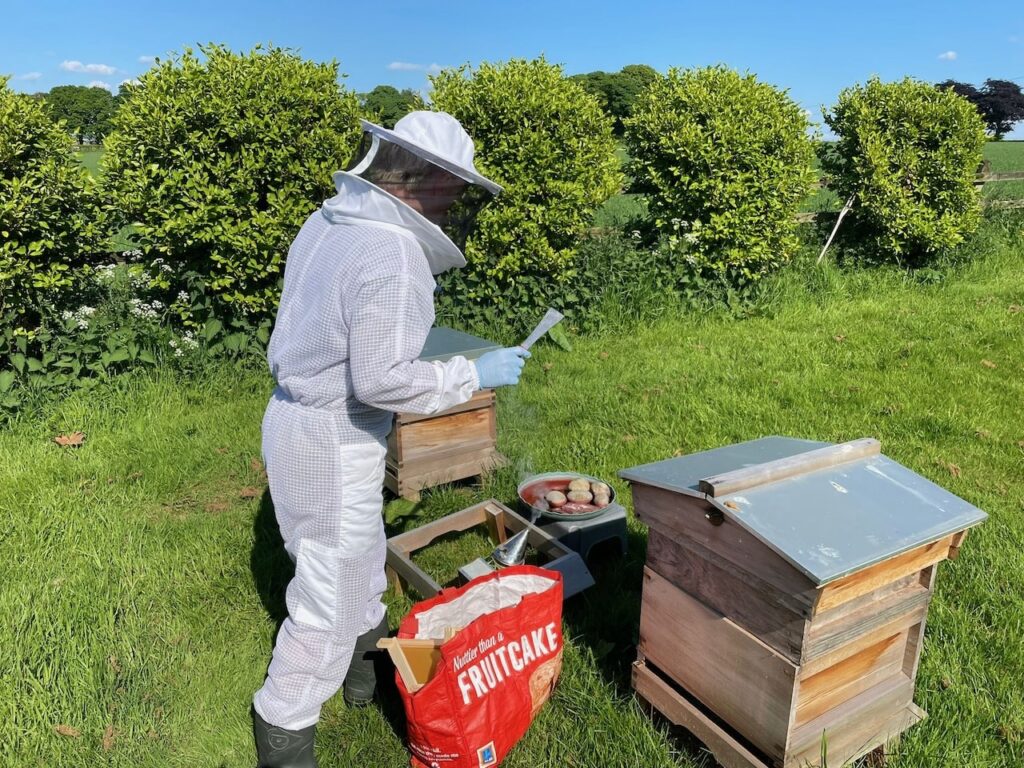
Bee Suit: This is not the place to economise. I started with a decent suit and never got stung regularly through the fabric. Upgrading to a quality suit with an attached round veil was a night-and-day difference. Make sure it fits properly as baggy suits are dangerous because bees find their way inside.
Queen marking kit: Marking your queen makes her infinitely easier to spot during inspections. A simple marking pen and a queen catcher tube are essential kit.
Varroa monitoring board: You will need to monitor varroa levels from day one. A mesh floor with a removable white insert lets you count mite drop, which tells you what is happening in the colony. 🛒 Browse varroa boards on Amazon UK
Useful But Not Essential Initially
Uncapping knife: You can manage with a kitchen knife for small amounts of honey in your first year.
Extractor: Expensive for occasional use, and many associations have one you can borrow or rent for the once-a-year activity.
Your First Year: What to Expect When Keeping Bees
Spring (March to May)
If you are getting a nuc, this is typically when you will collect it, though some nucs are not ready until June. Your first inspections will be nerve-wracking, slow, and you will probably make every mistake in the book. I dropped my first frame of brood, fumbled with my smoker, and spent twenty minutes trying to find the queen who was right in front of me. The bees were remarkably patient with my incompetence.
Your key tasks are weekly inspections (weather permitting above 14 degrees Celsius), checking for queen, eggs, and brood pattern, looking for signs of disease, adding a super when the bees need space, and learning to spot queen cells before they become a problem.
Summer (June to August)
This is when your bees should be building up. You might get some honey, but do not count on it in year one. My first year yielded exactly 3kg, which was disappointing but apparently quite normal. Continue regular inspections, manage any swarm preparations, monitor varroa levels, and if you are lucky, do your first honey harvest.
Autumn (September to November)
Time to prepare for winter. This is absolutely crucial. Treat for varroa (this is essential and cannot be skipped), feed the colony if their stores are insufficient (they need around 20kg to survive winter), reduce the hive entrance to a size the colony can defend, and fit mouse guards once the weather cools in October.
Winter (December to February)
Mostly leaving them alone, but you will worry constantly. Every mild day you will be tempted to open the hive. Do not. Briefly lifting the hive at one corner to check weight (hefting) is a far less disruptive way to check whether stores are sufficient. Clear snow from hive entrances if needed, attend any winter lectures your association runs, and plan for next year.
Swarm Management in May: The Most Critical Month
May is the most important month in the beekeeping calendar for a beginner, and swarm management is the reason why. A colony left unchecked for three weeks in May will almost certainly swarm. Swarming is how honey bee colonies reproduce naturally: the queen and roughly half the colony leave the hive together to establish a new home elsewhere, leaving you with a drastically reduced workforce and potentially no surplus honey that season.
As a beginner, losing a swarm is demoralising and potentially means losing your best bees. As a responsible beekeeper in a suburban area, an unmanaged swarm landing in your neighbour’s garden or settling inside a house wall is not a great outcome either. Weekly inspections throughout swarm season are the key tool, and that means every seven days from late April through to the end of July.
Why Do Bees Swarm?
Swarming is triggered primarily by congestion and the urge to reproduce. As the colony builds up rapidly in spring and early summer, the brood nest can become crowded, the queen’s pheromones become diluted throughout the larger population, and the bees begin to interpret this as a signal to expand. They will start building queen cells in preparation for sending a swarm out. Once those cells are sealed with a virgin queen developing inside, your window to intervene is very narrow.
How to Recognise Swarm Preparations
During your weekly inspections in May and June, look for queen cups first, which are small, empty, acorn-shaped wax structures usually found at the lower edges of frames. These are normal and do not necessarily mean swarming is imminent. What you are watching for is queen cells: cups that have been extended downwards into a peanut-shaped structure and contain an egg or larva (charged cells). A sealed queen cell, with its distinctive textured brown capping, means the colony is committed to swarming and you have a very limited time to act.
💡 Top Tip
Queen cells are most often found on the bottom edges and lower third of frames. During swarm season, systematically check every frame all the way to the bottom bar. New beekeepers often miss cells because they only check the visible face of the frame without turning it over.
What to Do if You Find Queen Cells
If you find charged or sealed queen cells, do not simply destroy them all. This is a common beginner mistake that can leave your colony queenless if the original queen has already left or is failing. The two most practical options for beginners are making an artificial swarm or asking your mentor to help you make a nucleus colony from the frames containing queen cells.
An artificial swarm mimics what the bees are trying to do, but under your control. In essence, you move the original hive to a new position and place an empty hive on the original site. The queen and most flying bees (who return to the original site) end up in the new hive on the old spot, while the nurse bees and brood remain with the queen cells in the moved hive. The bees fulfil their urge to swarm without actually losing half your colony to the sky. This is a technique best learned hands-on with your mentor before you need it.
Providing Space to Prevent Swarming
The simplest preventive measure is adding space before the bees need it. Add a super when the bees are covering seven or eight of the eleven brood frames, not when they are already climbing the walls. A colony without enough space to store incoming nectar will backfill the brood nest and the swarming impulse will intensify rapidly. Always stay one step ahead of a rapidly expanding spring colony.
Common Beginner Mistakes (I Have Made Them All)
Over-Inspecting
Your bees do not need to be checked every few days. Weekly in season is plenty, and less in poor weather. Every inspection stresses the colony and can set them back. If the temperature is below 14 degrees Celsius, leave them alone.
Poor Smoker Technique
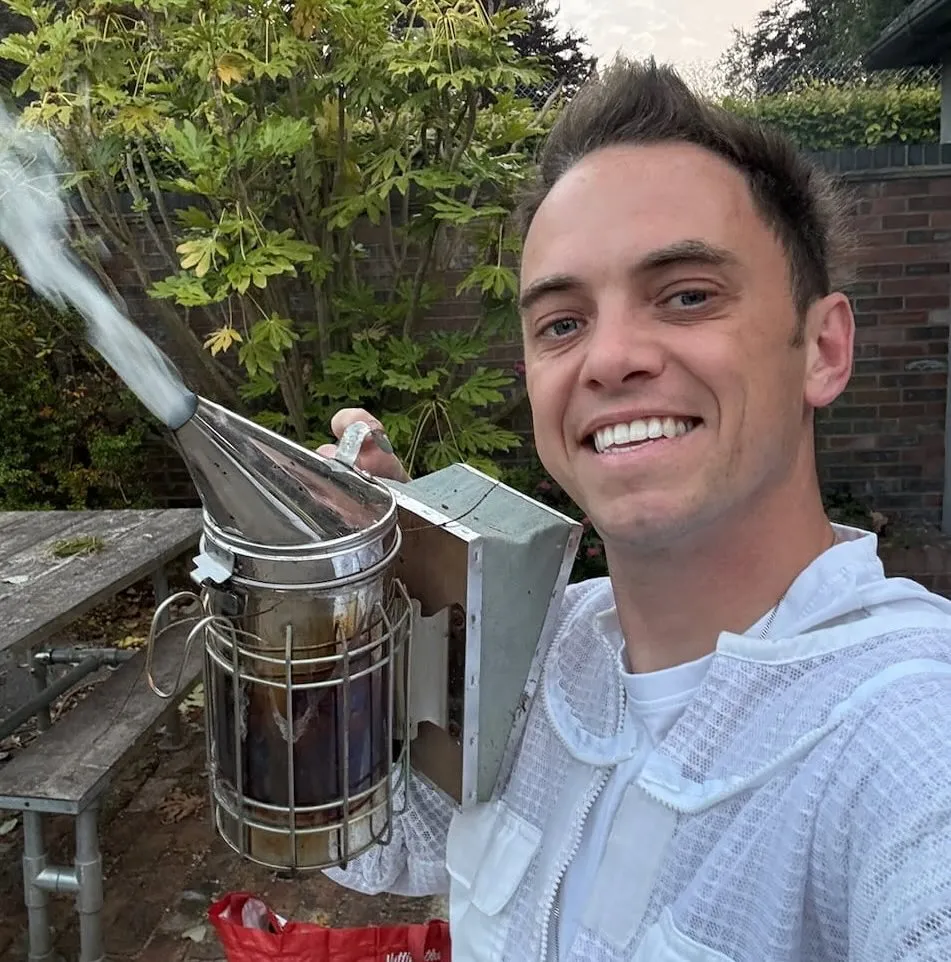
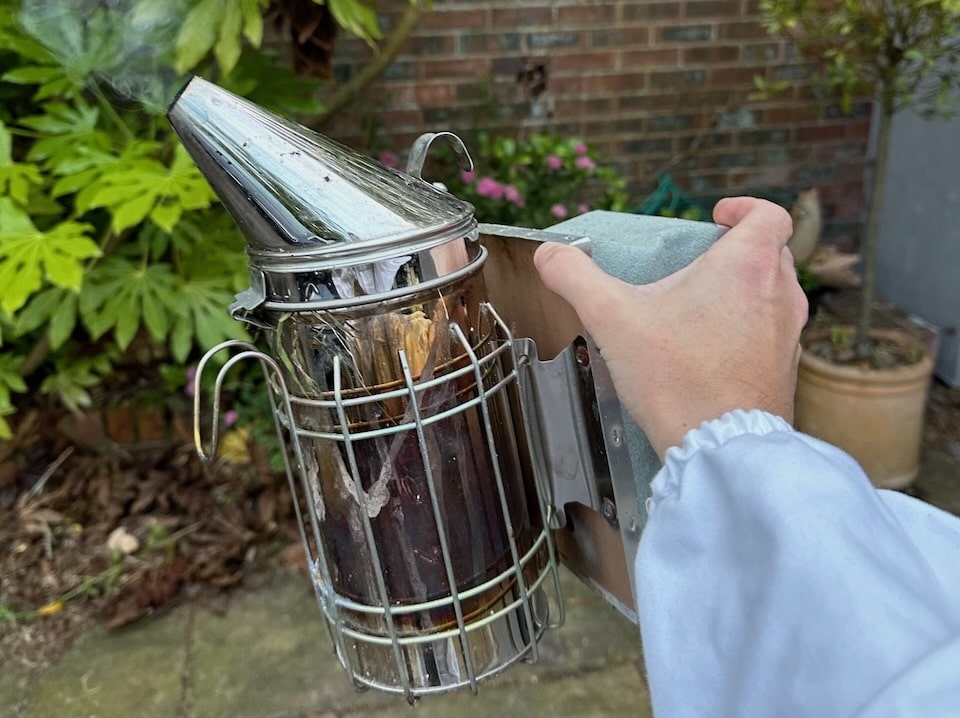
Learn to light your smoker properly and keep it going throughout. A smoker that goes out mid-inspection is useless and potentially dangerous. Pack it well with fuel, get it burning hot before you start, and puff a little smoke at the entrance before you open the hive.
Ignoring Varroa
These parasitic mites will kill your colony if left unchecked. They weaken individual bees, spread viruses, and multiply rapidly during the peak season. Learn to monitor mite levels using a varroa board and treat in late summer before the winter bees are raised. I lost my second colony to varroa because I underestimated how serious the problem was.
Inadequate Winter Preparation
Colonies need around 20kg of stores to survive a UK winter. If the hive feels light when you heft it in September, feed them immediately with a thick 2:1 sugar syrup while temperatures are still warm enough for the bees to process it. Once October arrives, switch to fondant placed directly above the cluster if they still need topping up.
Buying Too Much Equipment Too Soon
Resist the urge to buy everything in the catalogue at once. Start with the basics, get comfortable with one hive, and add equipment as you genuinely need it. The equipment suppliers are very good at making everything look essential.
Harvesting Honey (If You Get Any)
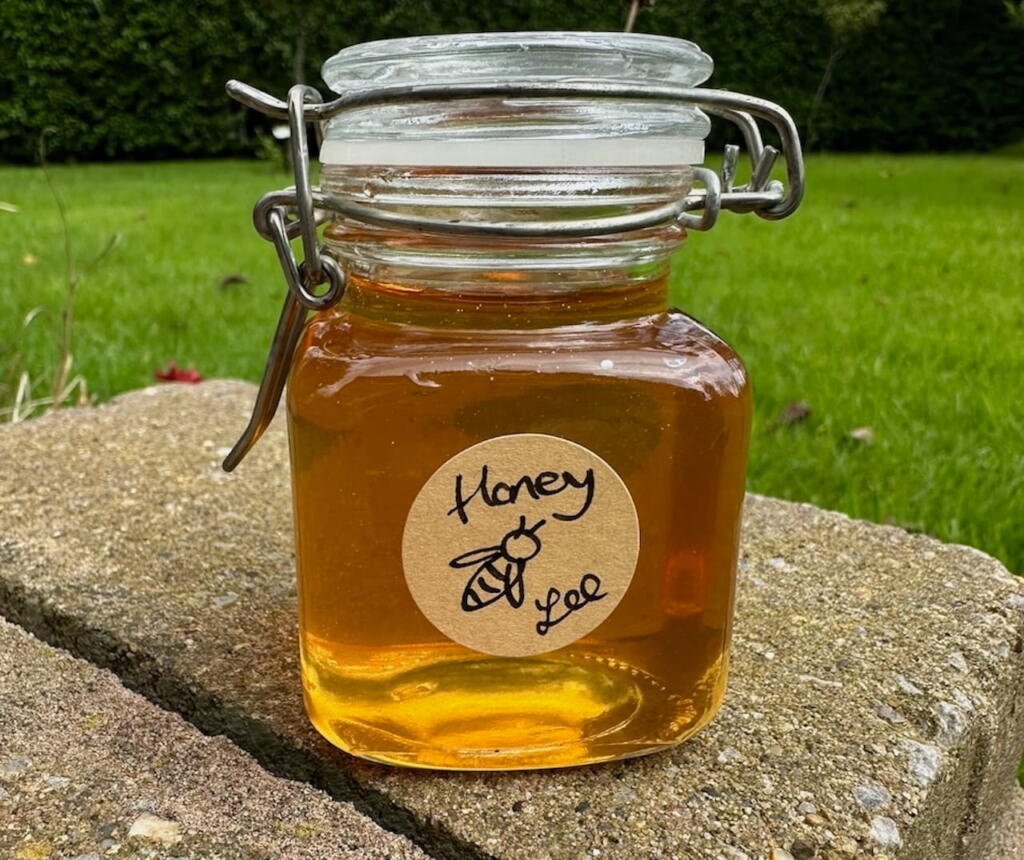
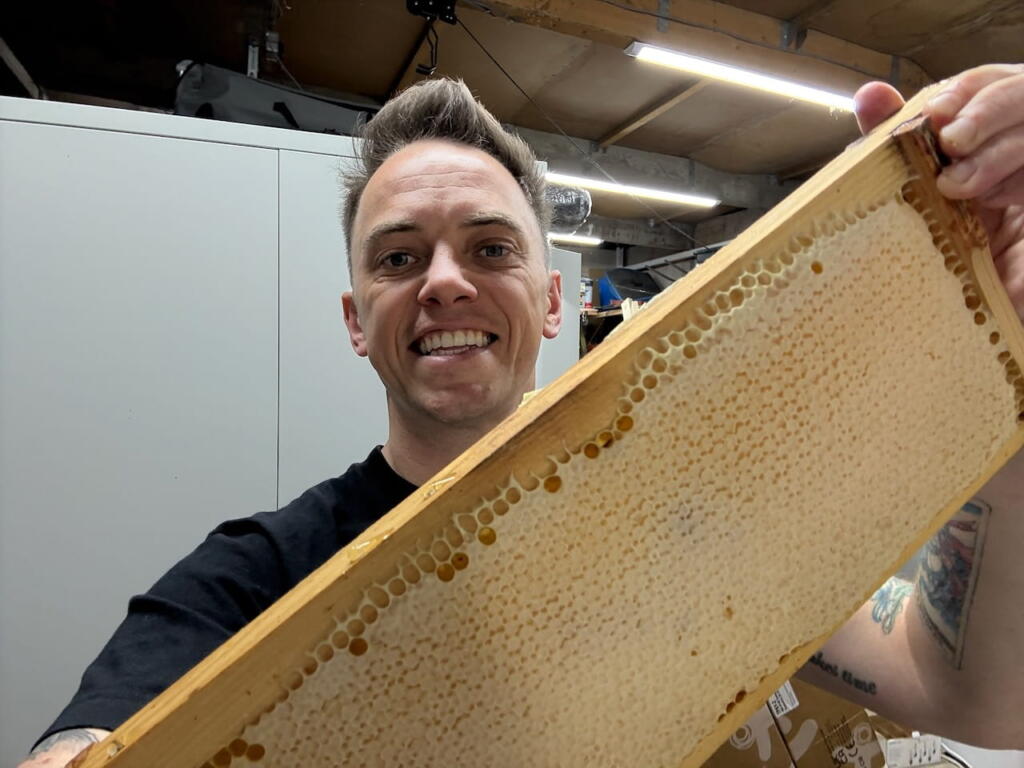
Do not expect much in your first year. I got overly excited about my first 3kg and treated it like liquid gold. Considering the investment, it was essentially that. Supers should be at least 80% capped before harvesting, and always leave the bees enough: they need 20kg of stores for winter. Harvest is usually July to August in most of the UK.
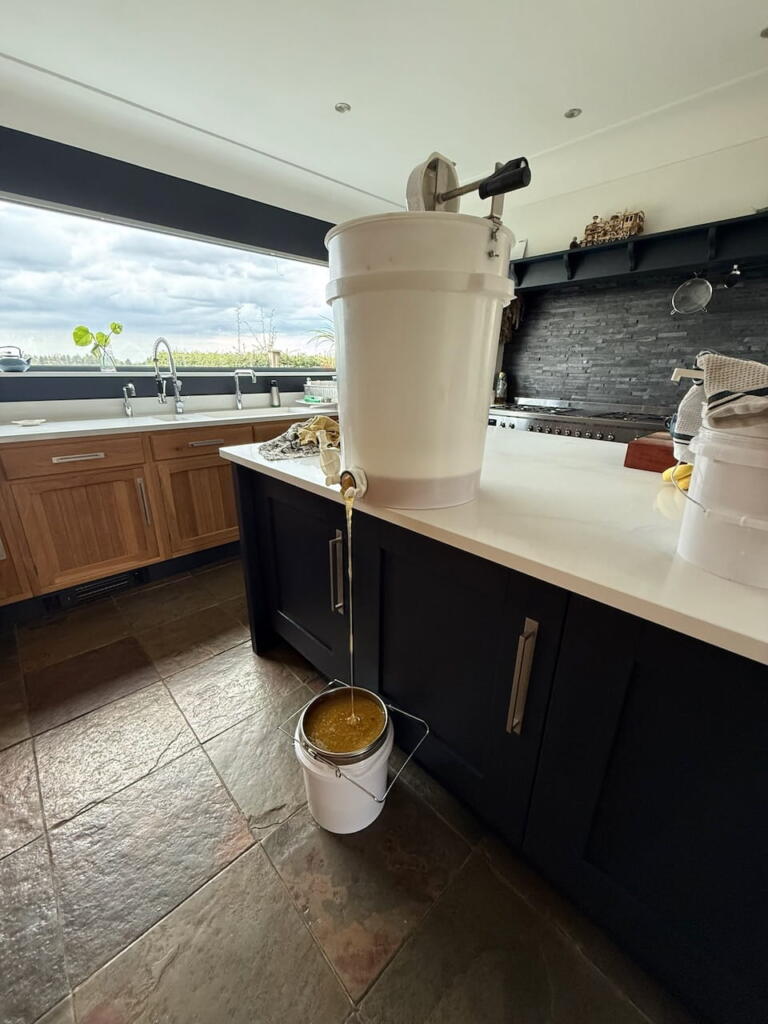
The extraction process involves removing the supers, uncapping the honey with a fork or knife, spinning it in an extractor, straining, settling, then jarring and labelling.
When I first started, I thought beekeeping would be a couple of inspections and lots of patting myself on the back. It turns out that looking after even one hive is a year-long commitment, with the majority of the effort running from March through to the end of September, with weekly inspections throughout that period.
📅 Beekeeping Year at a Glance
March
First inspections on warm days (above 14°C), check for queen and brood, clean up winter debris, assess colony strength
April to May
Weekly inspections, add supers when needed, watch for swarm preparations, monitor varroa, check for queen cells every 7 days
June to July
Peak swarm season, implement swarm control if needed, first honey harvest possible, continue weekly inspections
August
Final honey harvest, begin autumn preparation, open varroa treatment window
September
Essential varroa treatment, winter feeding with 2:1 sugar syrup if stores are low, reduce hive entrance, final brood inspections
October to November
Fit mouse guards, final winter preparations, heft hives to check store weight, stop regular inspections
December to February
Minimal disturbance, clear snow from entrances, heft occasionally, attend winter lectures, plan next season
Disease and Pest Management
This is the bit that keeps most beekeepers awake at night. When I started, I naively thought that if I provided a clean hive and left the bees to it, they would sort themselves out. Modern beekeeping is, in reality, largely about pest and disease management with honey production as a welcome side effect. Your bees face a constant barrage of threats, and ignoring any of them is not an option.
Prevention is cheaper than replacement. A £15 varroa treatment costs a fraction of replacing a dead colony. Most bee diseases and pest problems are manageable if caught early, but wait too long and you may face colony collapse or the need to destroy the hive entirely. Some diseases, like American Foulbrood, are notifiable, meaning you are legally required to report them to the National Bee Unit. Untreated disease in your apiary also poses a risk to neighbouring beekeepers and wild bee populations.
A) Varroa Mites
Your biggest ongoing challenge. These tiny reddish-brown parasites attach to bees, weaken them, and spread viruses. You cannot keep varroa-free bees in the UK: the mite is everywhere. What you can do is manage levels using integrated pest management. Monitor using a varroa board (count natural mite drop over 24 hours), or an alcohol wash or sugar shake to get a percentage infestation rate. Treat using Apiguard (thymol-based, late summer), Apivar (amitraz strips), or oxalic acid treatments in winter when the colony is broodless.
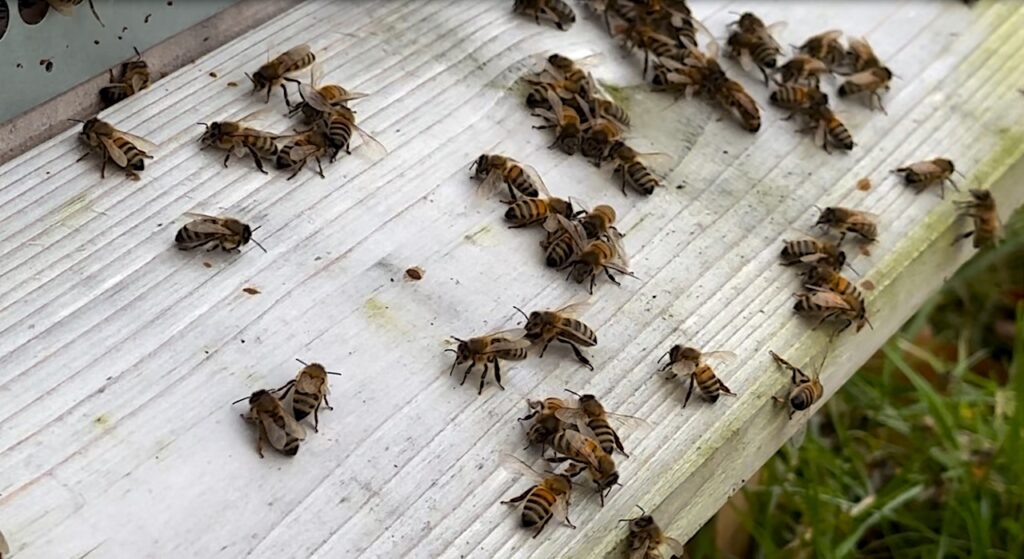
A gut parasite that causes dysentery and general weakening. Often stress-related and more common in colonies that have been confined during a long, wet winter. Look out for brown sticky streaking on the hive landing board and on the tops of frames, which indicates bees unable to make cleansing flights.
C) Chalk Brood
A fungal infection that turns larvae into white or grey chalky mummified masses, often found at the hive entrance. Nearly all colonies will have some chalkbrood at some point and it is not disastrous in small amounts. If it is taking over multiple frames, it usually indicates poor ventilation, a weak colony, or a struggling queen.
D) American and European Foulbrood
The serious ones. Both are bacterial infections affecting larvae. American Foulbrood (AFB) is notifiable and often requires the destruction of the colony and equipment. European Foulbrood (EFB) is less severe, and some colonies can recover with a shook swarm method. If your brood smells genuinely foul, looks sunken, discoloured, or has a ropey consistency when you insert a matchstick, contact your mentor or local bee inspector immediately. You can request a free inspection from the National Bee Unit via BeeBase.
Learning Resources on Beekeeping
Books Worth Reading
The three books I return to most often are “The Beekeeper’s Bible” by Richard Jones and Sharon Swart, “Guide to Bees and Honey” by Ted Hooper (a UK classic that has stayed relevant for decades), and “First Lessons in Beekeeping” by Keith Delaplane for the scientific grounding behind practice.
The Apiarist blog is exceptional for technical, evidence-based beekeeping content. Dave Cushman’s website remains a comprehensive reference despite his passing. The BBKA website is your starting point for finding local associations and beginner courses. And the National Bee Unit (BeeBase) provides all official guidance on disease identification, treatment regulations, and hive registration.
Why Garden Ninja’s Garden Design Courses Will Transform Your Beekeeping
As a beekeeper, you have probably been told to “plant bee-friendly flowers” without anyone explaining which plants actually provide meaningful forage versus those that just look good on Instagram. After four years of keeping bees and watching colonies struggle despite having a garden full of supposedly bee-friendly plants, I have learned the hard way that good intentions are not enough.
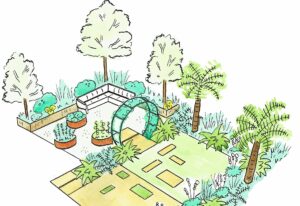
My garden design courses teach plant succession rather than plant lists, so you understand how to provide continuous forage from early spring through late autumn rather than a brief burst of colour in June when your bees have already foraged it clean. I walk you through 30 fantastic garden designs explaining the logic behind the layout and plant choices, so you will finally understand why certain plants work together and how to create genuinely productive bee forage areas. Priced between £29 and £199, it is an affordable way to learn garden design at your own pace, and one successful honey harvest can pay for the course many times over.
29
Garden Design Examples for Small Gardens: 30 Design Templates & Planting Plans
Garden Design Examples for Small Gardens: 30 Design Templates & Planting Plans: In this online gardening course, I’ll walk you through 30 fantastic garden designs, explaining the logic behind the layout, the plant choices, and take-home tips for applying them in your own garden.
Weekend Garden Makeover: A Crash Course in Design for Beginners
Learn how to transform and design your own garden with Lee Burkhills crash course in garden design. Over 5 hours Lee will teach you how to design your own dream garden. Featuring practical design examples, planting ideas and video guides. Learn how to design your garden in one weekend!
Garden Design for Beginners: Create Your Dream Garden in Just 4 Weeks
Garden Design for Beginners Online Course: If you want to make the career jump to becoming a garden designer or to learn how to design your own garden, this is the beginner course for you. Join me, Lee Burkhill, an award-winning garden designer, as I train you in the art of beautiful garden design.
Frequently Asked Questions About Keeping Bees in the UK
Do I need a licence to keep bees in the UK?
No licence, permit, or planning permission is required to keep honey bees anywhere in the UK. You can legally place a hive in your back garden, on an allotment, or on private land without any formal authorisation. However, all beekeepers in England and Wales are required to register their hives free on BeeBase, the National Bee Unit’s database. This is straightforward and takes around ten minutes.
Can I keep bees in a small garden?
Yes, and urban gardens are often surprisingly good for bees because of the diversity of plants and flowering periods available. The key considerations are hive placement and your neighbours. Orienting the hive entrance to face a fence or hedge at least 1.8 metres high forces the bees to gain altitude quickly before flying off, taking them over head height in the surrounding area. Always speak to immediate neighbours before installing a hive, especially in terraced or semi-detached properties where gardens are close together.
How much time does beekeeping take each week?
During the active season from April to September, expect to spend around 30 to 45 minutes per hive per week. This covers the inspection itself and the time to suit up, light the smoker, and make notes afterwards. In winter, beekeeping takes almost no time: perhaps fifteen minutes every few weeks to check external hive weight and clear any snow from the entrance. The learning curve in year one means inspections take longer, but most experienced beekeepers with two to three hives find the whole operation takes a couple of hours on a good inspection day.
How much honey will I get in my first year?
Realistically, you may get very little or nothing at all from a nucleus colony in its first season. The bees need to build up their population, draw out the comb, and establish their stores. Many first-year beekeepers harvest between 0 and 10kg. Do not plan your finances around honey income in year one. By year two or three with an established colony, 20 to 30kg in a good UK summer is achievable.
What is BeeBase and do I have to register?
BeeBase is the National Bee Unit’s free online database for all UK beekeepers. Registration is a requirement for all beekeepers in England and Wales. Once registered, you will be notified of any disease outbreaks within 3km of your apiary, and bee inspectors from the Animal and Plant Health Agency can contact you directly if needed. Register at nationalbeeunit.com.
When is the best time of year to start beekeeping?
The best time to start beekeeping in the UK is spring, from April to June, when nucleus colonies become available from local suppliers, and there is forage available for the bees to build on. However, you should join your local association and attend a beginner course in the preceding winter (October to March) so you are prepared before the bees arrive. Starting your learning in autumn gives you the whole winter to study before your first hive lands in spring.
What happens if my bees swarm?
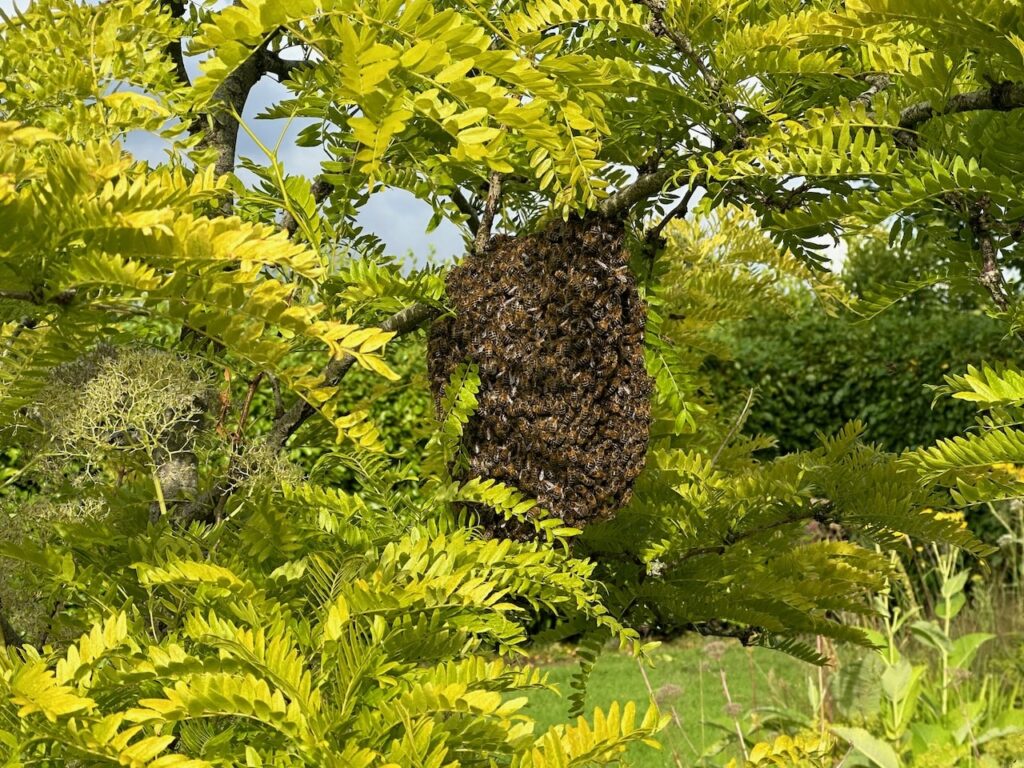
If your colony swarms, the queen and roughly half the bees will leave the hive and cluster temporarily on a branch or structure nearby while scout bees search for a permanent home. This is alarming to witness, but the clustered bees are typically very calm. As a BBKA member, your local association can usually help you collect and re-hive them. Your remaining colony will raise a new queen from any queen cells left behind. The best outcome is to prevent swarming through regular inspections and timely management, but every beekeeper loses a swarm eventually.
Final Thoughts
Beekeeping is simultaneously more difficult and more rewarding than I ever imagined. You will make mistakes, lose colonies, and have moments of complete frustration. But you will also experience the incredible satisfaction of successfully managing a complex superorganism and, hopefully, harvesting your own honey.
The key is to start with realistic expectations, get good local support through your BBKA branch, register on BeeBase before your bees arrive, and be prepared for a steep learning curve. Focus on keeping your bees alive and healthy through that first winter, and everything else will come with time.
Most importantly, do not let setbacks discourage you. Every experienced beekeeper has stories of spectacular failures. The difference is that they learned from them and kept going. After four years, I am still learning something new every season, and I suspect I always will be. The investment is significant, and the learning curve is steep, but if you stick with it, you will join a community of people who understand the peculiar satisfaction of working with these remarkable insects. And maybe, just maybe, you will get some honey out of it too.
Your subscription could not be saved. Please try again.
Your subscription has been successful.
Lee Burkhill
Lee Burkhill, known as the Garden Ninja, is an award-winning garden designer and horticulturist with over 30 years of gardening experience and 15 years as a professional garden designer. A qualified RHS (Royal Horticultural Society) professional, Lee specialises in sustainable garden design and practical horticultural advice. He designs and presents on BBC1’s Garden Rescue and in leading gardening publications. Lee combines three decades of hands-on gardening knowledge with professional design qualifications to help gardeners create beautiful, functional outdoor spaces.