Growing Olive Trees in the UK: The Complete Guide to Pots, Winter Care and Pruning
Lee Burkhill: Award Winning Designer & BBC 1's Garden Rescue Presenters Official Blog
Beginner level
Olive trees have become one of the most requested additions to UK gardens I design, and it is easy to see why. That gnarled, silvery character brings a real sense of Mediterranean holiday to a patio or courtyard, even in the depths of a Yorkshire winter. But I get just as many desperate messages from readers whose olive tree has turned brown, dropped its leaves, or simply refused to fruit as I do requests to plant one. But this guide will show you how to look after them!
Quick Answer
Olive trees grow successfully in the UK in a sunny, sheltered position with free-draining soil or gritty compost. Most varieties tolerate light frost down to around minus five degrees Celsius, but containers should be moved into a porch, greenhouse or against a sheltered wall during hard winters. Prune lightly in spring to maintain shape and remove dead wood. Fruiting is possible but unreliable in the UK climate, so grow olives primarily for their evergreen structure and Mediterranean character rather than for a harvest.
The truth is that growing olives in the UK climate takes a bit more know-how than the glossy garden centre label suggests, and getting the basics wrong is the single biggest reason these trees struggle. In this guide, I am drawing on years of both designing with olives in client gardens and rescuing struggling specimens to give you everything you need, from choosing the right variety and pot through to feeding, pruning, and getting your tree through a proper British winter.
This page contains affiliate links for products I use and love. If you take action (i.e. subscribe, make a purchase) after clicking a link, I may earn some gardening commission which helps me keep the Garden Ninja Blog free for all.
1. Can you grow olive trees in the UK?
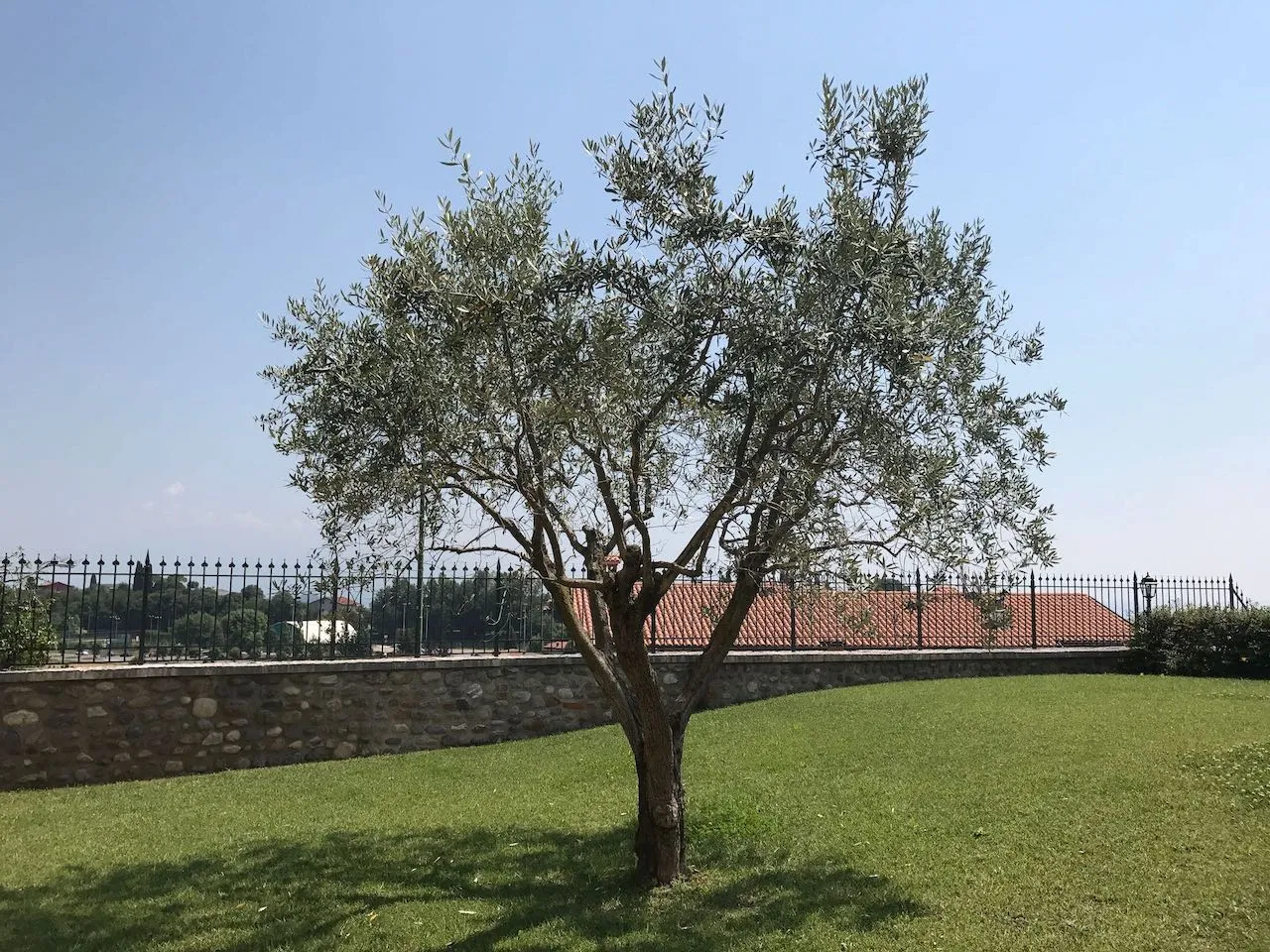
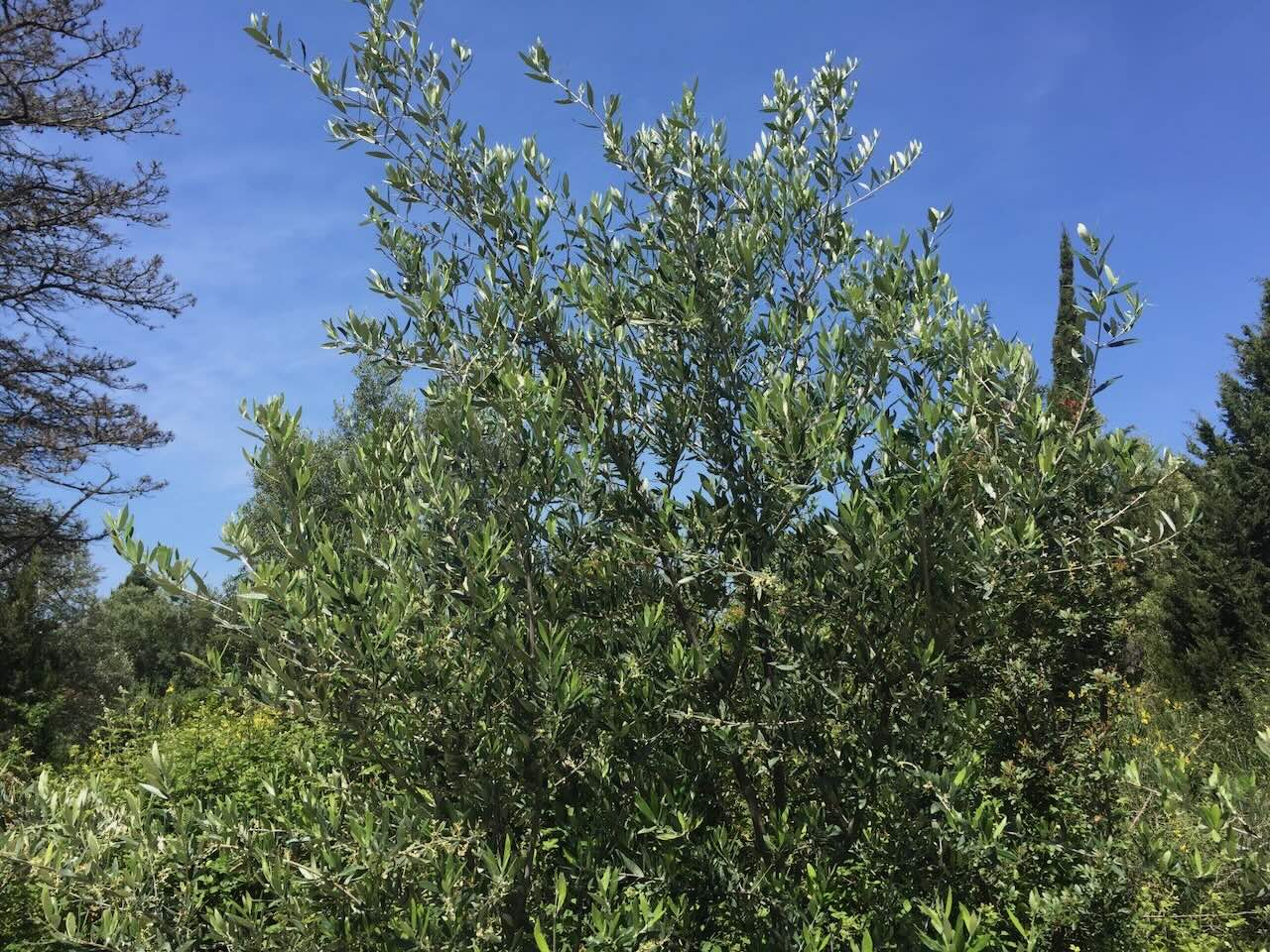
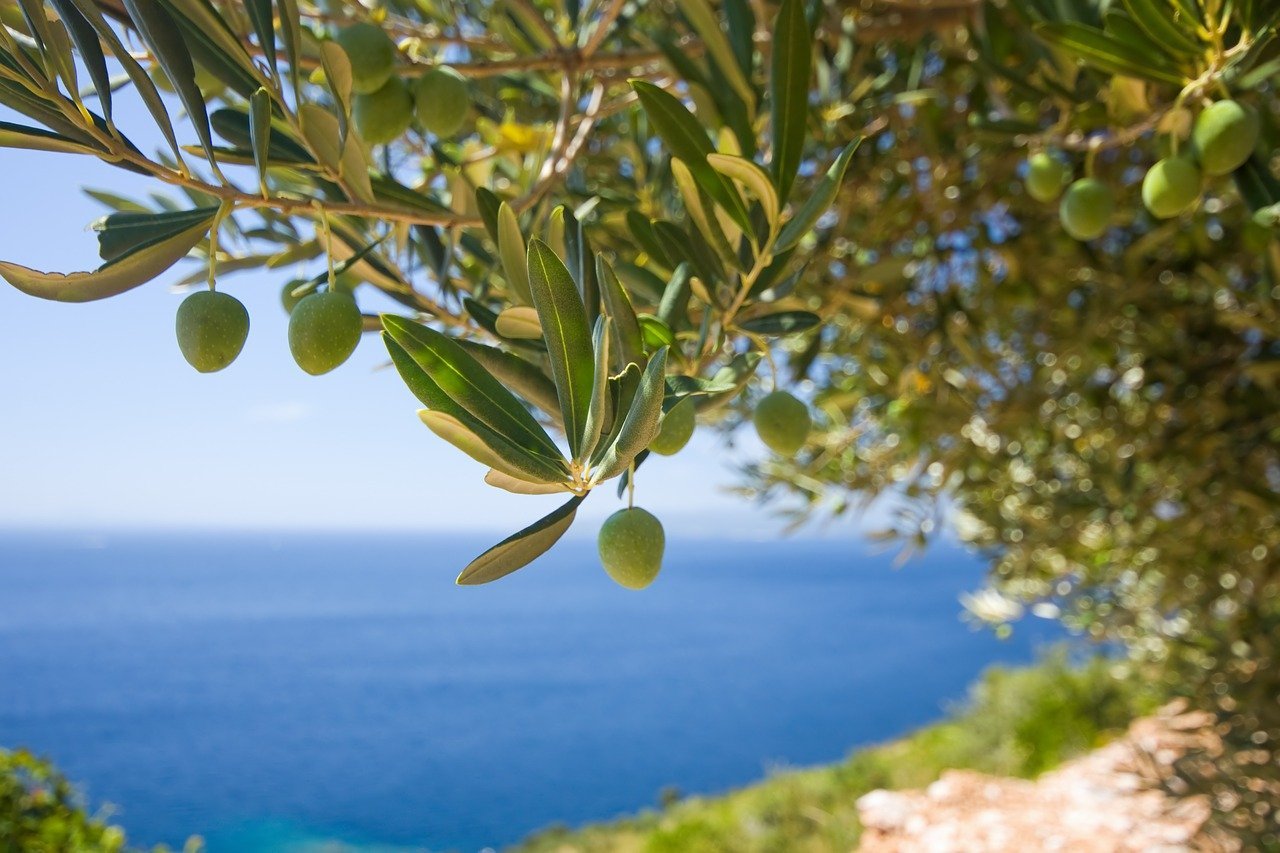
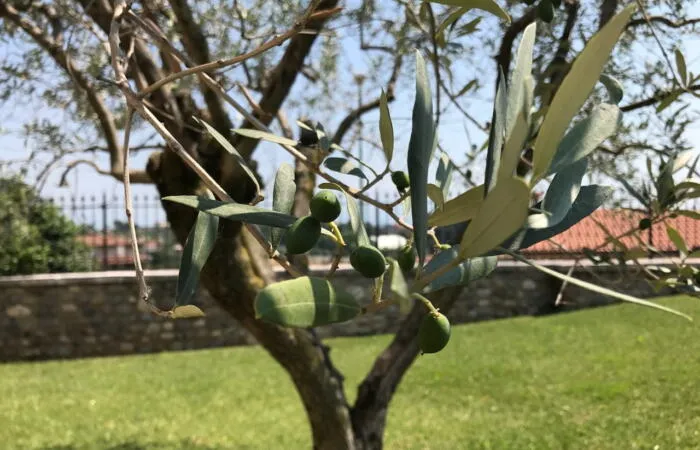
Yes, and reliably so given the right position and a little winter sense. Olea europaea, the common olive, has become one of the most requested architectural plants in my design work over the last decade, and for good reason. It brings an instant sense of Mediterranean holiday to a garden that very few other plants can match, with its silvery-grey foliage, gnarled trunk character, and evergreen presence through every month of the year. The plant itself is considerably tougher than its reputation suggests, and modern cultivars bred for cooler climates have made successful UK cultivation more accessible than it was even fifteen years ago.
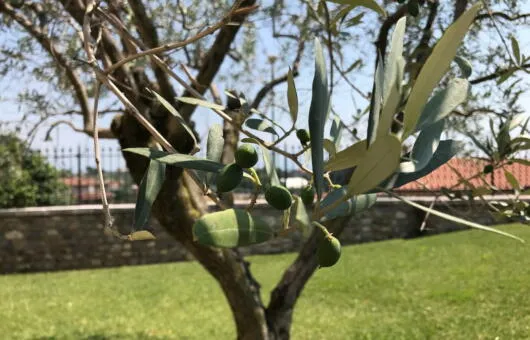
What olive trees are not, in most of the UK, is a reliable fruiting crop. I want to be upfront about that distinction because it shapes the entire growing approach. Grow an olive tree in the UK for its structure, its foliage, its sculptural trunk and its evergreen Mediterranean character. If it fruits as a bonus in a long hot summer, that is a delight. If you are planting one specifically hoping for jars of home-cured olives every year, you will likely be disappointed.
Understanding this distinction from the outset changes how you select, position and care for the tree, and it is the single most important mindset shift for UK olive growing.
H3 to H4 (hardy to around -5°C to -10°C depending on variety and exposure)
Height and Spread
2 to 8m depending on variety and pruning; slow growing
Flowering Period
Early summer (small, insignificant white flowers)
Best Conditions
Full sun, sheltered position, free-draining soil or gritty compost
Key Feature
Silvery evergreen foliage and sculptural gnarled trunk
3. Best olive tree varieties for UK gardens
Not all olive trees sold in the UK are equally suited to our climate. Some are simply the standard Mediterranean nursery stock with no particular cold tolerance bred in, while others have been selected specifically for cooler, wetter growing conditions. Choosing the right variety has a meaningful impact on how easy it is to keep the tree alive through a typical British winter.
‘Picholine’
One of the hardier commercially available olive varieties and a good first choice for UK gardens. ‘Picholine’ is a French variety bred partly with cooler conditions in mind, with a relatively compact, manageable habit and good resistance to the cold spells that catch out more tender Mediterranean stock. It is also self-fertile, which matters if you are hoping for any fruit at all, since some olive varieties need a pollinating partner.
‘Frantoio’
An Italian variety widely used commercially for oil production, ‘Frantoio’ performs reasonably well in sheltered UK gardens and has a slightly more vigorous growth habit than some of the smaller ornamental varieties. It is one of the more commonly available named cultivars in UK garden centres and nurseries, and represents a sensible middle-ground choice between pure ornamental varieties and the more tender traditional Mediterranean fruiting types.
‘Leccino’
Another Italian cultivar, and one that consistently gets picked out by growers for its cold tolerance, which makes it a sensible choice if you are gardening further north or somewhere without the shelter of a warm walled courtyard. ‘Leccino’ has a slightly weeping, graceful habit compared with the more upright growth of ‘Frantoio’, and it copes well with the damper conditions that catch out some of the more traditional Mediterranean stock. It benefits from a pollinating partner nearby if fruiting matters to you, since it is only partially self-fertile.
‘Cipressino’
A naturally compact, upright variety that has become popular for exactly the situations where space is tight, a balcony, a small courtyard, or a pot by a front door. ‘Cipressino’ takes its name from its narrow, almost cypress-like growth habit, and it is one of the more forgiving varieties for container life since it simply does not want to sprawl the way some other cultivars do. Good cold hardiness for an olive, and a sound choice if you want the Mediterranean character without the eventual scale of a specimen tree.
‘Arbequina’
A compact, naturally smaller Spanish variety that produces fruit relatively young compared with some other olives, and copes well in containers because of its restrained habit. Arbequina’ is self-fertile and is one of the varieties I most often specify for client gardens where a smaller specimen tree for a courtyard or terrace is needed rather than a large architectural statement piece.
Mature gnarled specimen trees
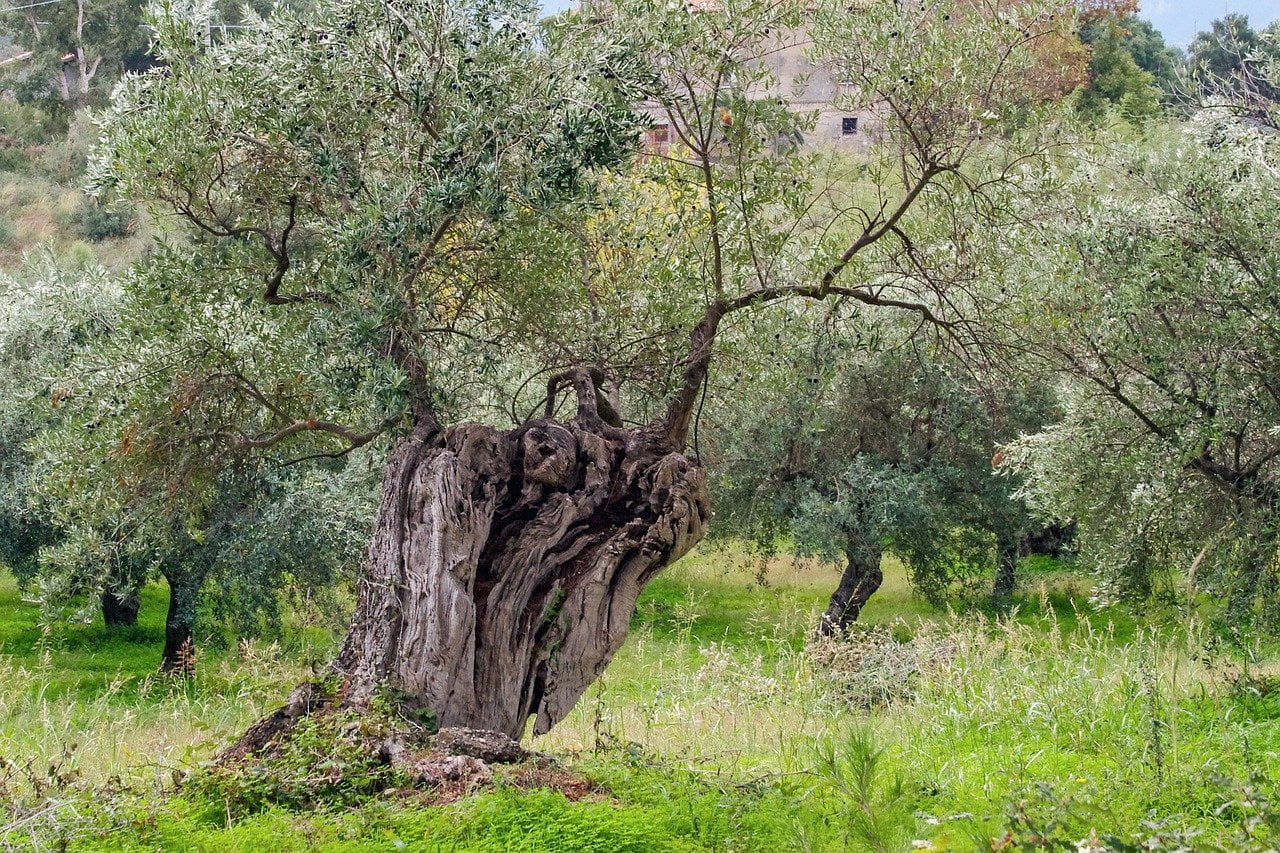
For the dramatic architectural look that has made olive trees so sought after in contemporary garden design, mature specimen trees imported with characterful twisted and gnarled trunks are widely available from specialist nurseries. These are typically unnamed or generically labelled rather than sold under a specific cultivar name, and the emphasis is on the trunk character and overall form rather than fruiting potential or named cold hardiness. They are considerably more expensive than young nursery stock but deliver an instant mature presence that would otherwise take decades to achieve.
Whichever variety you choose, buy from a reputable UK nursery rather than importing a tree directly from southern Europe. Mediterranean olive groves are currently dealing with the spread of Xylella fastidiosa, a serious bacterial disease with no cure, and imported stock carries a genuine risk of bringing it into the country. UK-grown or UK-acclimatised trees from an established nursery are the safer route, and your local supplier should be able to tell you where their stock originated if you ask.
Position is the single most important decision for UK olive success, more so than variety choice or even winter protection routine. Olives are sun-worshippers from a climate of intense, dry heat, and asking them to perform in anything less than the best position your garden offers is setting them up to struggle.
Choose the sunniest, most sheltered spot available: ideally a south or west-facing position against a warm wall, where reflected heat and wind protection combine to create something closer to the microclimate the plant actually wants. A courtyard, walled garden or sheltered urban terrace surrounded by buildings is often a better olive position than an open rural garden with more raw sunshine but considerably more wind exposure. I have seen olives thrive in surprisingly compact London courtyards that retain heat well, and struggle in larger, more exposed gardens further north despite seemingly better light levels.
Free-draining soil is essential. Think the grittier the better in my experience, which often surprises gardeners when planting olives. Olives evolved on the thin, stony, free-draining soils of the Mediterranean basin and have no tolerance whatsoever for waterlogging. So those compost-rich pots you’re about to transplant them into will ultimately lead to the olives’ downfall, killing them with kindness!
On heavy clay soils, container growing is by far the more reliable approach rather than attempting significant soil amendment in the open ground. Wind exposure matters almost as much as cold: a sheltered position out of prevailing winds reduces both physical damage to the foliage and the desiccating effect that, combined with winter cold, causes the most serious damage.
💡 Top Tip
Before committing to a position, watch how the sun moves across that part of your garden through a full day in summer. A spot that looks bright in the morning can be in shade by mid-afternoon once nearby trees, fences or the house itself cast longer shadows. Olives need direct sun for the bulk of the day, not just a sunny morning, to develop the dense, healthy foliage and any chance of decent fruiting.
5. Growing olive trees in containers
For the majority of UK gardeners, particularly those north of London or in exposed or rural positions, container growing is the most reliable and most commonly recommended approach for olive trees. The advantage is straightforward: you have full control over the growing medium, can position the tree in the sunniest available spot regardless of where your border soil happens to be, and crucially, you can move the tree to a sheltered or frost-free position the moment winter turns serious.
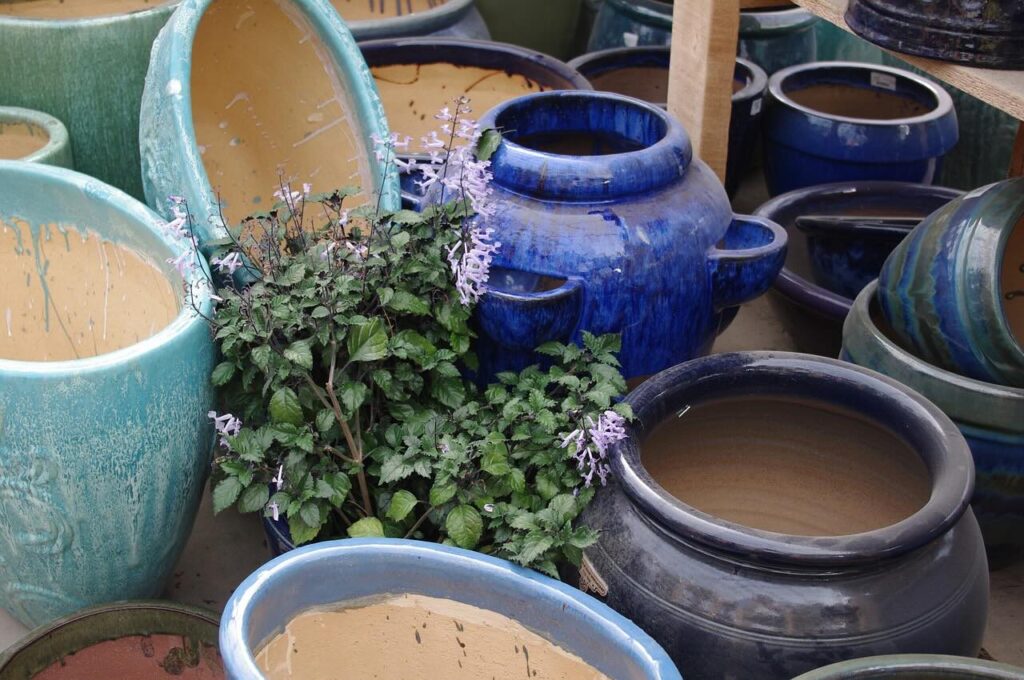
Use a gritty, loam-based compost such as John Innes No.3 mixed with around 20 to 30 percent horticultural grit or perlite for additional drainage. Avoid standard peat-free multipurpose compost on its own, as it retains too much moisture for an olive’s preference and breaks down too quickly to provide the structure these long-lived plants need over several years. Choose a terracotta pot wherever possible: the porous material allows the compost to dry out between waterings far more readily than plastic or glazed ceramic, which suits an olive’s drought-tolerant nature and reduces the risk of root rot considerably.
Select a pot of at least 35 to 45 centimetres in diameter for a young tree, sizing up as the plant matures. Mature olive trees with substantial trunk girth need correspondingly large, heavy pots for both root capacity and stability in windy conditions, since a top-heavy tree in a lightweight pot can blow over in exposed positions. Repot every two to three years into fresh gritty compost, refreshing the top few centimetres annually even in years you do not fully repot.
Planting an olive directly into the ground is viable in the UK, but it is a more committed decision than container growing because moving an established tree later is a major undertaking. This route suits gardeners in the milder south of England and along sheltered coastal stretches more confidently than gardens further north or inland, although a sheltered, sunny urban position can make ground planting feasible well outside the obvious mild zones too.
Before planting in the ground, dig a generous planting hole and work in a substantial quantity of horticultural grit, particularly on anything heavier than a light sandy loam. The aim is to replicate, as closely as practical, the free-draining stony soils olives evolved in. Stake young trees for their first two to three years, since their root systems take time to anchor the tree firmly enough to withstand UK winds without support, and check the stakes and ties regularly to prevent damage as the trunk thickens.
The biggest risk with ground-planted olives is winter wet rather than winter cold in isolation. A well-drained soil and a tree that has had a full growing season to establish its roots before its first hard winter will cope with far more cold than the same tree in waterlogged ground. If your garden has heavy clay or poor natural drainage and you are set on planting in the ground rather than a container, installing a proper drainage soakaway beneath the planting position before you plant is worth the extra effort.
7. How to plant an olive tree
Spring, from April to May, is the best time to plant an olive tree in the UK, whether into the ground or into a final container. This timing gives the tree a full growing season to establish before facing its first UK winter, which makes an enormous difference to how well it copes with cold later in the year. Avoid planting in autumn or winter, when a newly disturbed root system has far less capacity to cope with cold, wet conditions.
For container planting, fill the base of the pot with a layer of broken crockery or coarse grit to assist drainage before adding your gritty compost mix. Position the tree at the same depth it was growing in its nursery pot, never deeper, and firm the compost gently around the roots without compacting it hard. Water thoroughly after planting, then allow the surface to dry out somewhat before watering again, establishing the drier-than-average watering rhythm that olives prefer from the outset.
For ground planting, dig a hole roughly twice the width of the root ball and to the same depth, working plenty of horticultural grit into both the base and the surrounding soil if your ground is anything heavier than a light loam. Stake immediately if the tree has any significant height or canopy, using a stake driven in at an angle away from the prevailing wind direction, with a soft tie that allows a small amount of trunk movement to encourage strong root development.
8. Watering and feeding olive trees
Watering
Olives are drought-tolerant once established and need considerably less water than most UK garden plants. One of the most common mistakes I see is well-meaning gardeners overwatering an olive out of habit, causing root problems as a direct result. Water container-grown olives thoroughly when the top several centimetres of compost have dried out, then leave them alone until the same point is reached again.
In a typical UK summer this might mean watering once a week rather than daily. Ground-planted olives need regular watering only through their first one to two growing seasons while establishing; after that they cope with all but the most extreme drought conditions without intervention.
Feeding
Ground-planted olives in the UK generally need no feeding at all; the modest growth rate and Mediterranean origins mean they thrive in soils that would be considered too lean for most other garden plants. Container-grown olives benefit from an occasional feed since nutrients leach from compost more readily than from open ground.
Apply a balanced liquid feed monthly through the main growing season from April to August, or use a slow-release granular feed applied once in spring. Avoid heavy or frequent feeding, particularly with high-nitrogen products, which produces soft, lush growth that is considerably more vulnerable to cold damage over winter.
Winter management is where most UK olive tree losses actually happen, and almost always from a combination of cold and wet rather than cold alone. Understanding this combination is the key to keeping an olive tree alive through a British winter.
Mild and sheltered gardens (southern England, coastal areas)
In these regions, established olive trees in a properly sheltered, sunny position can often remain outdoors through a typical winter without special protection, particularly ground-planted specimens with several seasons of established root growth behind them. Container-grown plants still benefit from being moved against a sheltered wall during the coldest weeks, since the roots in a pot are considerably more exposed to frost than roots insulated by the mass of open ground.
Northern and inland gardens
In these areas, container-grown olives should be moved into an unheated greenhouse, conservatory, porch or against a heated house wall before the first hard frosts arrive, typically by late October or early November. The aim, as with most overwintering tender plants, is a frost-free environment rather than a warm one: somewhere consistently above freezing is sufficient, and a heated indoor environment can actually do more harm by encouraging premature soft growth that then suffers when the plant goes back outside in spring.
Protecting ground-planted olives
For ground-planted trees that cannot be moved, wrap the canopy loosely in horticultural fleece during the coldest spells, particularly for young or recently planted trees that have not yet built up the resilience of a mature specimen. A thick mulch around the base in late autumn helps protect the root zone from frost penetration. Remove fleece during any mild spells to prevent the foliage becoming too warm and soft, which leaves it more vulnerable when truly cold weather returns.
⚠️ Warning
Reduce watering significantly through winter, whether the tree is indoors or out. Cold, wet compost is a far more common killer of UK olive trees than cold air temperature alone. A tree that has been kept too wet going into winter is considerably more vulnerable to root damage from frost than one whose compost has been allowed to stay on the drier side.
Olive trees need relatively little pruning compared with most fruiting or formally trained garden trees, and the approach is governed by what you want from the tree rather than a strict annual requirement. Prune in early spring, before new growth begins in earnest, which gives any cuts the whole growing season to heal before the next winter.
For most garden olives, pruning is limited to removing dead, damaged or crossing branches, and lightly thinning the canopy to maintain an open, airy structure that allows light and air to reach the centre of the tree. This light annual tidy is usually all that is needed to keep an olive looking its best. For container-grown trees where size needs to be restricted, tip prune the main branches back to a strong replacement shoot each year rather than allowing unchecked growth that will eventually outgrow the available pot and space.
Mature, neglected olive trees with characterful old wood can be pruned hard if necessary, since the species responds well to renovation pruning and will regenerate from old wood far more readily than many other evergreens. This is one of the more forgiving aspects of olive care: even a tree that has been left unpruned for years and has become congested or misshapen can usually be brought back into good shape over a season or two of careful corrective pruning.
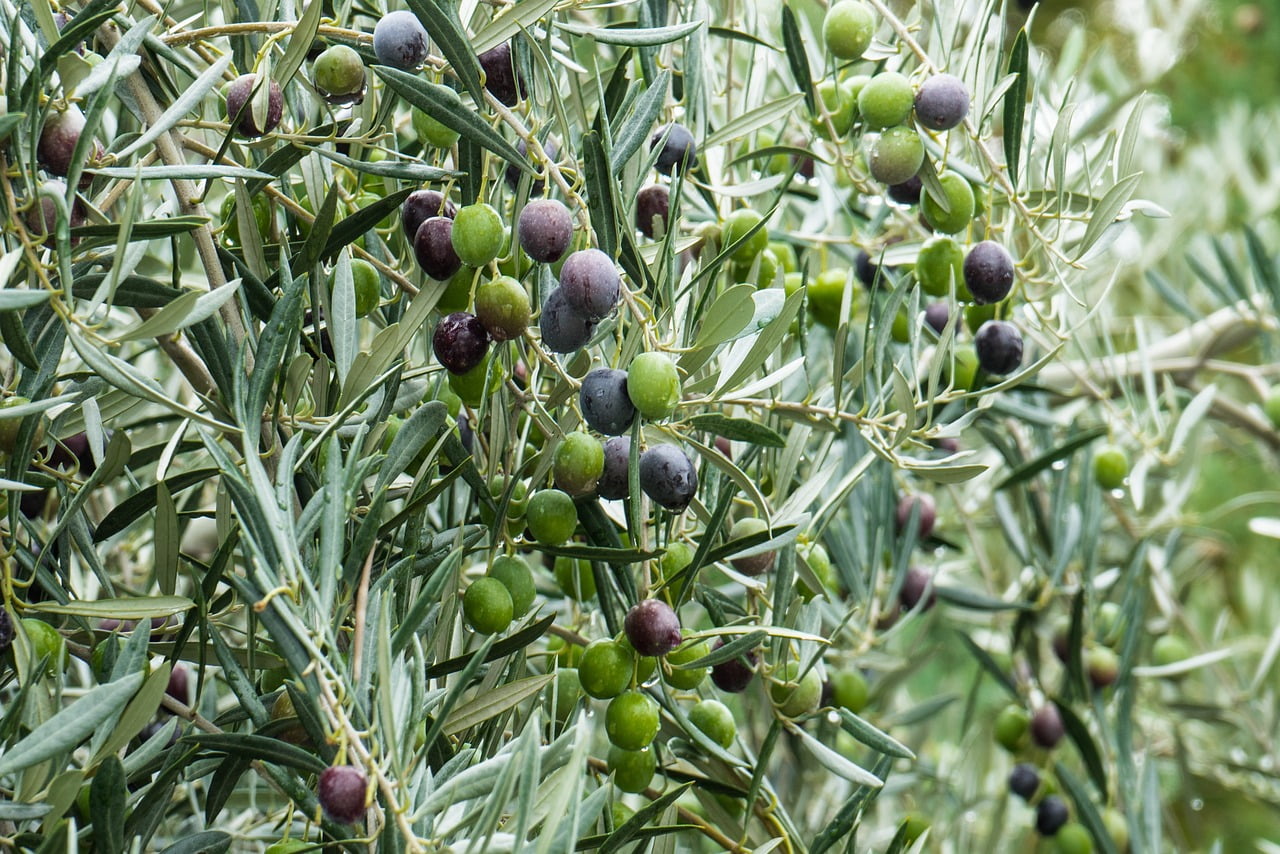
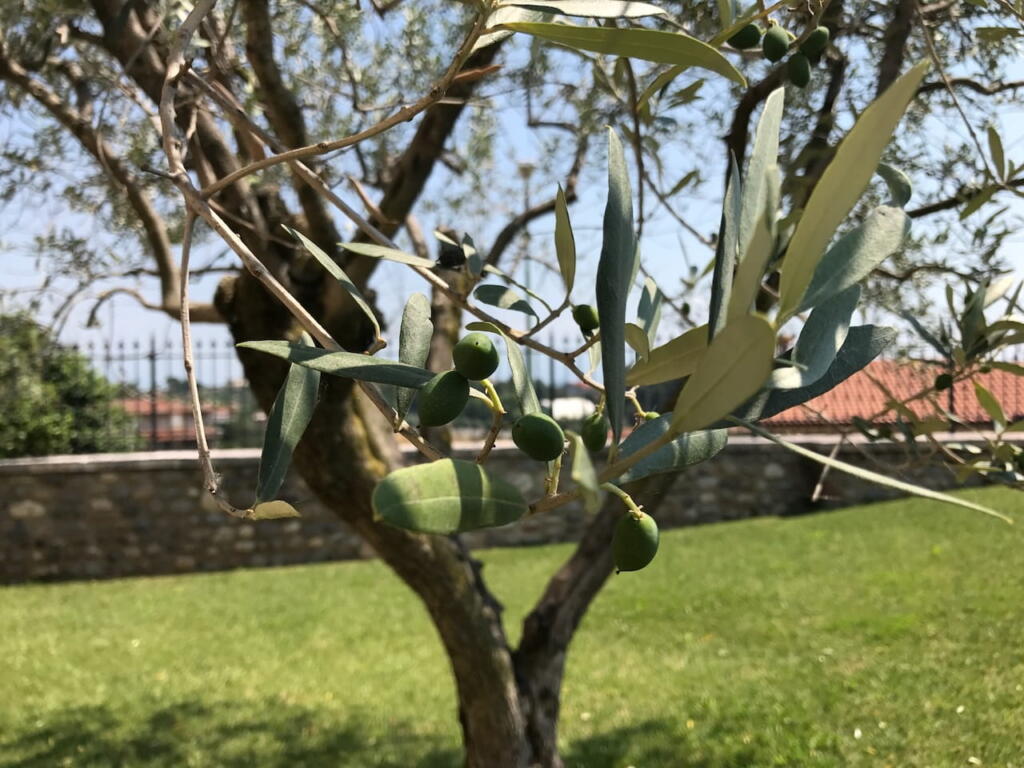
This is the question I am asked most often about olives, and the honest answer requires a little nuance. Olive trees flower in early summer and can set fruit in a warm UK summer, particularly in sheltered southern gardens, but reliable, abundant fruiting in the way you would see in Mediterranean groves is not realistic in our climate. The fruit that does form often fails to ripen fully before autumn cold arrives, and many UK olives never flower or fruit at all, particularly in cooler regions or shadier positions.
If fruiting matters to you, choosing a self-fertile variety such as ‘Picholine’ or ‘Arbequina’ improves your chances, since some olive varieties need a second tree nearby for pollination, which is rarely practical in a typical UK garden. A hot, sunny summer position with maximum reflected heat from a south-facing wall gives the best chance of both flowering and any subsequent fruit ripening. Even then, treat any actual olives as a pleasant bonus rather than the primary reason for growing the tree, and manage your expectations accordingly. The foliage, structure and Mediterranean character are what make olive trees worth growing in the UK; the fruit, when it happens, is the cherry on top.
12. Common olive tree problems
Leaves dropping or turning yellow
The most frequent cause is overwatering rather than underwatering, given that olives are far more drought-tolerant than most UK gardeners initially expect. Check the compost or soil moisture before assuming the tree needs water, and if it is consistently damp, reduce watering frequency and check the drainage of the pot or planting position. Some leaf drop in late winter as the tree renews its foliage is also entirely normal and not a cause for concern, particularly if new growth follows shortly afterwards.
Frost damage
Blackened or brown, crisp foliage following a hard frost is a clear sign of cold damage, particularly on insufficiently protected container trees or young, recently planted specimens. Do not rush to cut away damaged growth immediately; wait until late spring to assess what has actually died back, since olives often regenerate from apparently damaged wood once the growing season resumes. Prune away anything that has not produced new growth by early summer.
Scale insects
Olive trees, particularly those grown in containers or overwintered indoors, can occasionally develop scale insect infestations, visible as small brown bumps on stems and the undersides of leaves, sometimes accompanied by sticky honeydew and subsequent sooty mould. Treat light infestations by wiping affected areas with a soft cloth and soapy water, and more significant infestations with a horticultural oil spray, applied when the plant is not in direct hot sun to avoid leaf scorch.
13. Olive trees in garden design
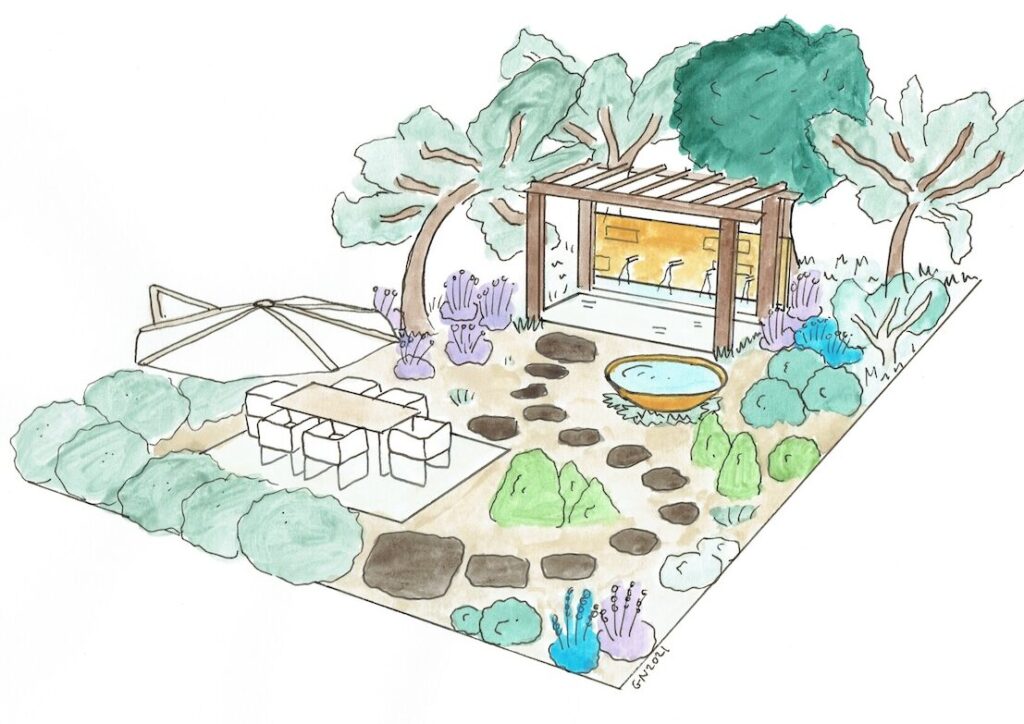
Few plants deliver the instant sense of place that a well-positioned olive tree provides. In professional design work, I most often use olives as a single specimen feature in a courtyard or terrace setting, where the sculptural trunk and silvery canopy can be appreciated against a simple backdrop of paving, gravel, or a rendered wall. The Mediterranean character pairs beautifully with lavender, rosemary, santolina, and ornamental grasses beneath, creating a planting scheme that reads as effortlessly sun-drenched, even on a grey English afternoon.
For smaller gardens, a single olive in a substantial terracotta pot positioned by a doorway or at the corner of a terrace provides year-round structure without the commitment or eventual scale of a ground-planted specimen. For larger schemes, a pair of matched olives flanking an entrance or framing a view brings a formal, considered quality that few other evergreens achieve with the same lightness of touch. The silver-grey foliage colour is also a useful design tool, providing a cooling, calming counterpoint to the more typical greens that dominate most UK planting schemes.
14. Frequently asked questions about growing olive trees in the UK
Can olive trees survive UK winters?
Yes, with a sheltered sunny position and sensible winter management. Most varieties tolerate down to around minus five to minus ten degrees Celsius. Container plants benefit from moving to a frost-free spot during the coldest weeks. Wet compost combined with cold causes more losses than cold alone.
Will my olive tree fruit in the UK?
Possibly, but not reliably. Choose a self-fertile variety such as Picholine or Arbequina and give it the hottest, sunniest position available. Treat any fruit as a bonus rather than the main reason to grow the tree.
Pot or ground: which is better?
Containers are more reliable for most UK gardeners because the tree can be moved to shelter in winter. Ground planting suits sheltered, sunny gardens with free-draining soil, particularly in southern England, but limits winter protection options once established.
Why are my olive tree’s leaves falling off?
Overwatering is the most common cause. Olives need far less water than most garden plants. Check moisture before watering and improve drainage if the compost or soil stays consistently damp.
When should I prune an olive tree?
Early spring, before new growth begins. Remove dead or crossing branches and tip prune container trees to control size. Olives tolerate hard renovation pruning well if needed.
What size pot does an olive tree need?
At least 35 to 45 centimetres in diameter for a young tree, sizing up as it matures. Use a gritty loam-based compost and choose terracotta for the best drainage and stability.
Join over 100,000 gardeners
Free gardening videos from the Garden Ninja, with 8+ million views and counting.
Improve your gardening skills with my online courses
Discover the transformative power of gardening with me, Lee Burkhill, the Garden Ninja.
Enrol in my online garden design courses and learn to create your perfect outdoor oasis from the comfort of your home. With engaging video lessons, interactive quizzes and expert tuition, you will uncover the secrets to designing stunning gardens tailored to your style and space.
Whether you are a beginner looking to develop your green thumb or an experienced gardener seeking fresh inspiration, my courses cater to all skill levels. Gain practical knowledge in layout, plant selection and maintenance, guided by my extensive expertise and passion for sustainable gardening practice.
By joining the Garden Ninja’s courses you will acquire valuable insights and the confidence to transform any outdoor space into a vibrant sanctuary. Connect with a community of garden enthusiasts and embark on a journey to design and nurture a garden that reflects your personality and enhances your lifestyle.
29
Garden Design Examples for Small Gardens: 30 Design Templates & Planting Plans
Garden Design Examples for Small Gardens: 30 Design Templates & Planting Plans: In this online gardening course, I’ll walk you through 30 fantastic garden designs, explaining the logic behind the layout, the plant choices, and take-home tips for applying them in your own garden.
Weekend Garden Makeover: A Crash Course in Design for Beginners
Learn how to transform and design your own garden with Lee Burkhills crash course in garden design. Over 5 hours Lee will teach you how to design your own dream garden. Featuring practical design examples, planting ideas and video guides. Learn how to design your garden in one weekend!
Garden Design for Beginners: Create Your Dream Garden in Just 4 Weeks
Garden Design for Beginners Online Course: If you want to make the career jump to becoming a garden designer or to learn how to design your own garden, this is the beginner course for you. Join me, Lee Burkhill, an award-winning garden designer, as I train you in the art of beautiful garden design.
Olive trees bring a genuine sense of the Mediterranean to a UK garden, and with the right position, free-draining soil or gritty compost, and sensible winter management, they are far easier to keep alive and thriving than their reputation suggests. Choose a hardier variety if you can, give the tree the sunniest, most sheltered spot available, water sparingly, and protect containers from hard frost. Grow it for the silver foliage and sculptural form first, and treat any fruit as a welcome bonus rather than the goal, and an olive tree will reward you with structure and character for decades to come.
Your subscription could not be saved. Please try again.
Your subscription has been successful.
Lee Burkhill
Lee Burkhill, known as the Garden Ninja, is an award winning garden designer and horticulturist with over 30 years of gardening experience and 15 years as a professional garden designer. A qualified RHS (Royal Horticultural Society) professional, Lee specialises in sustainable garden design and practical horticultural advice. He designs and presents on BBC1’s Garden Rescue and in leading gardening publications. Lee combines three decades of hands on gardening knowledge with professional design qualifications to help gardeners create beautiful, functional outdoor spaces.