Hi @ambitioussunrise
Looking at your photos, I can confirm what you’re dealing with here and there’s a lot to say about both the identification and how best to bring it back under control.
Identification
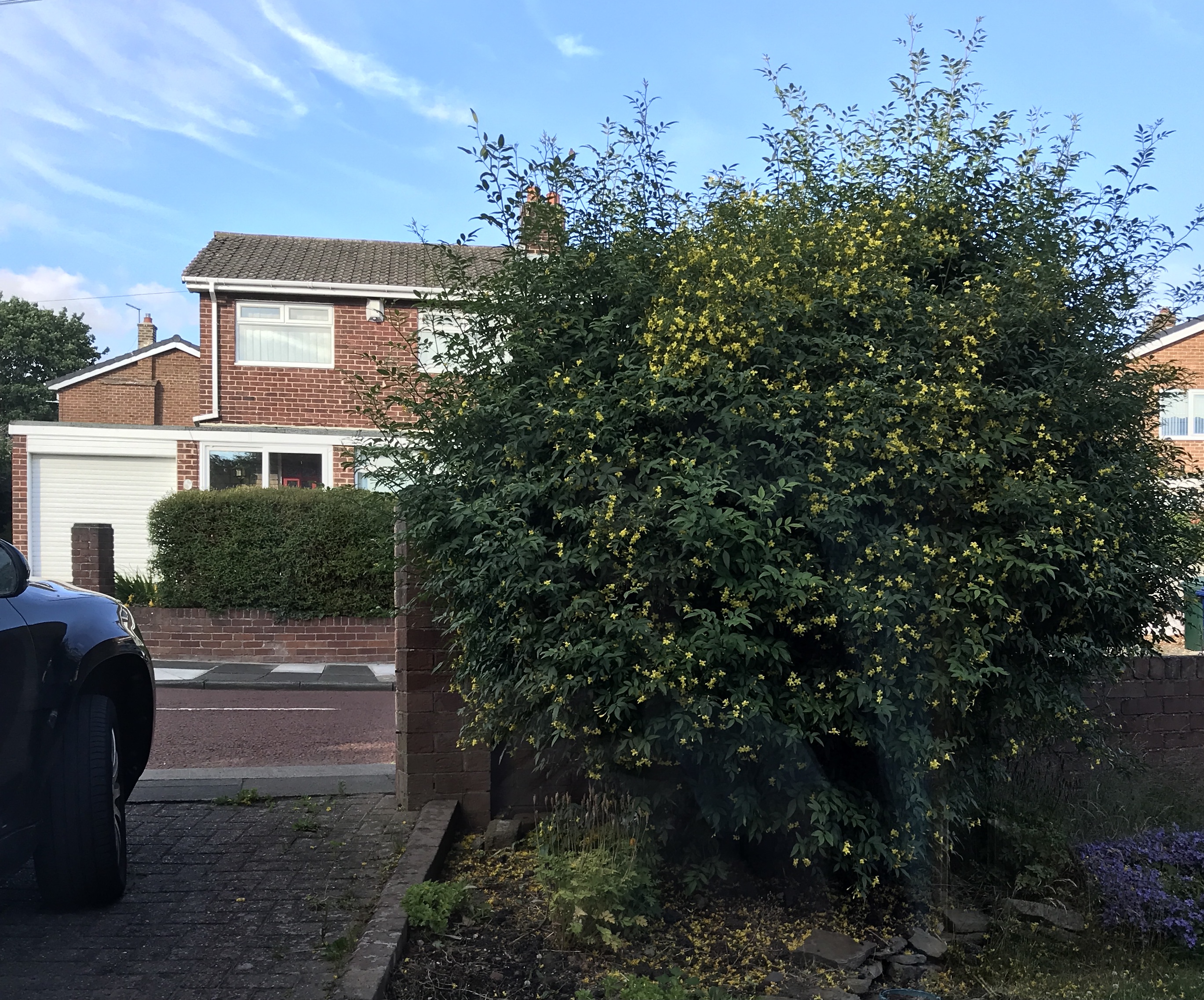
This is indeed Italian yellow jasmine (Jasminum humile, sometimes still sold as Jasminum farreri or under the cultivar name ‘Revolutum’), and looking at the scale and shape in your photo it’s a particularly fine, mature specimen. The fern-like pinnate leaves, the clusters of small bright yellow flowers held just above the foliage rather than hanging in long trails, and that naturally rounded, almost tree-like habit are all textbook for this species. It’s a wonderful plant for fragrance and a long flowering season, and the fact that yours has reached this size tells me it’s been thriving in its position for a good number of years.
Why It’s Sending Out Javelins
Those long, vigorous, whippy shoots you’re describing are completely typical of Jasminum humile and they’re actually a sign of a healthy, well established plant rather than anything going wrong. Jasmine of this type grows from a woody framework but constantly throws out long unbranched extension growth as its primary method of expanding outward and upward in search of light and new territory. Left to its own devices it will keep doing this indefinitely, which is exactly why it has reached the size you’re now dealing with.
Why Your Current Approach is Right, But Needs a Bigger Pruning Percentage
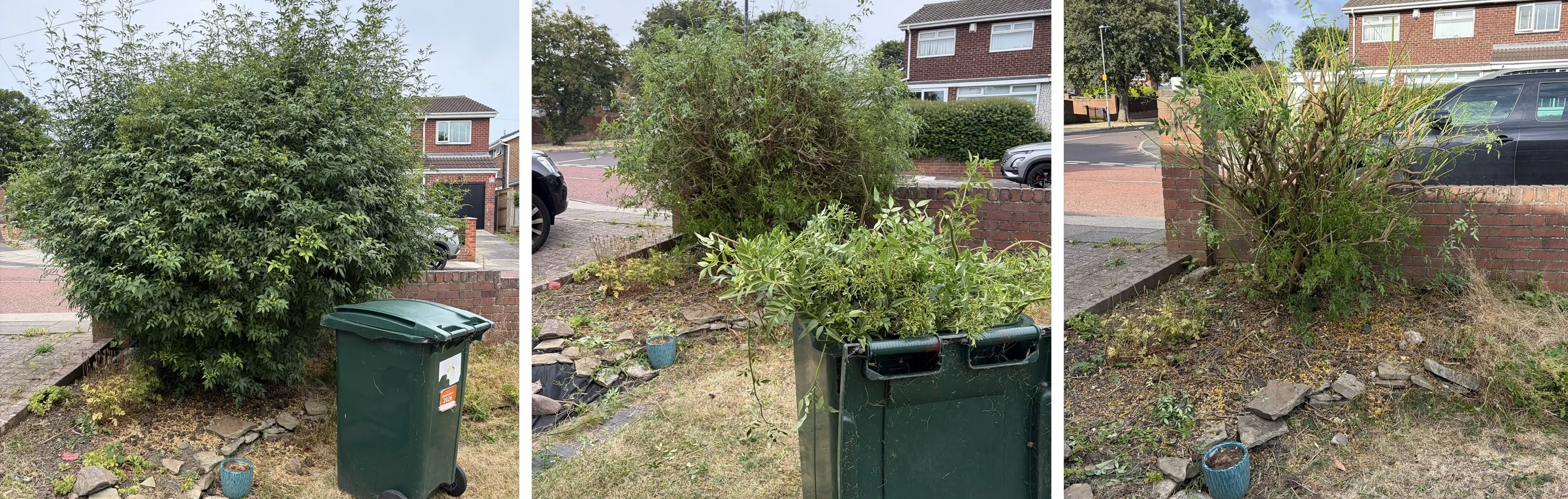
Removing around 20% of old growth each November is sound general maintenance and the kind of steady annual approach I’d usually recommend for most shrubs. However, with a plant of this scale that has clearly got ahead of that gentle annual reduction, a more decisive intervention is going to serve you better than continuing to chip away at the edges. Go for a 50% prune each summer once the flowers finish a bit like Forsythia pruning.
https://youtu.be/tH9vmXWHOtw?si=twG6w22Vv4NlpJ5u
You absolutely can give this a hard prune and it will respond well. Jasminum humile is a robust, vigorous shrub that regenerates readily from old wood, which is precisely why it’s got this big in the first place. I’d suggest doing this directly after flowering finishes, typically late summer into early autumn for this species, which gives the plant the rest of the growing season and a full year ahead to recover before its next flowering display.
Reduce the whole structure back by around a half to two thirds, cutting back into the older woody framework rather than just tipping the long whippy growth. Don’t be afraid of this. A plant this vigorous will respond with exactly the kind of strong regrowth you’re trying to manage, only this time you’ll have the chance to shape that regrowth from a much lower, more manageable framework.
Will It Always Be This Way?
Realistically, yes, to some degree, and that’s worth being honest about. Jasminum humile is simply a vigorous plant by nature and even after a hard prune it will want to throw out that same long extension growth again as it recovers. What changes is your relationship with it going forward.
After the hard prune, commit to a proper annual maintenance regime rather than the lighter touch you’ve been doing. Each year after flowering, remove the oldest and longest unbranched shoots right back into the framework, thin out crowded growth at the centre to maintain airflow, and lightly shape the outer profile. Done annually and decisively rather than as an occasional light trim, you’ll keep it at a height and spread that suits your garden without losing the framework you’ve spent years building.
A Word on Shape
I’d gently steer you away from any temptation to box this off into a neat rectangular or egg shaped form once you’ve brought it back under control. Shrubs like jasmine simply do not look right forced into geometric shapes, the way box or yew can be clipped into formal topiary. The natural arching, slightly informal habit is part of what makes this plant beautiful and what gives it that wonderful relaxed character in a border.
A tightly clipped rectangle on a plant like this looks stiff, unnatural, and frankly fights against everything the plant wants to do, which means you end up working harder rather than less to maintain an effect that never quite looks right anyway. Aim instead for a loosely rounded, naturalistic profile that follows the plant’s own growth habit, just at a scale you can manage. It will look better and be considerably less work to maintain in the long run.
The fragrance you mention is genuinely one of the loveliest of any spring flowering shrub, so it’s well worth the effort of bringing this back under control rather than removing it entirely.
Lee Garden Ninja — Garden Ninja
Hi @ambitioussunrise
Looking at your photos, I can confirm what you’re dealing with here and there’s a lot to say about both the identification and how best to bring it back under control.
Identification
This is indeed Italian yellow jasmine (Jasminum humile, sometimes still sold as Jasminum farreri or under the cultivar name ‘Revolutum’), and looking at the scale and shape in your photo it’s a particularly fine, mature specimen. The fern-like pinnate leaves, the clusters of small bright yellow flowers held just above the foliage rather than hanging in long trails, and that naturally rounded, almost tree-like habit are all textbook for this species. It’s a wonderful plant for fragrance and a long flowering season, and the fact that yours has reached this size tells me it’s been thriving in its position for a good number of years.
Why It’s Sending Out Javelins
Those long, vigorous, whippy shoots you’re describing are completely typical of Jasminum humile and they’re actually a sign of a healthy, well established plant rather than anything going wrong. Jasmine of this type grows from a woody framework but constantly throws out long unbranched extension growth as its primary method of expanding outward and upward in search of light and new territory. Left to its own devices it will keep doing this indefinitely, which is exactly why it has reached the size you’re now dealing with.
Why Your Current Approach is Right, But Needs a Bigger Pruning Percentage
Removing around 20% of old growth each November is sound general maintenance and the kind of steady annual approach I’d usually recommend for most shrubs. However, with a plant of this scale that has clearly got ahead of that gentle annual reduction, a more decisive intervention is going to serve you better than continuing to chip away at the edges. Go for a 50% prune each summer once the flowers finish a bit like Forsythia pruning.
https://youtu.be/tH9vmXWHOtw?si=twG6w22Vv4NlpJ5u
You absolutely can give this a hard prune and it will respond well. Jasminum humile is a robust, vigorous shrub that regenerates readily from old wood, which is precisely why it’s got this big in the first place. I’d suggest doing this directly after flowering finishes, typically late summer into early autumn for this species, which gives the plant the rest of the growing season and a full year ahead to recover before its next flowering display.
Reduce the whole structure back by around a half to two thirds, cutting back into the older woody framework rather than just tipping the long whippy growth. Don’t be afraid of this. A plant this vigorous will respond with exactly the kind of strong regrowth you’re trying to manage, only this time you’ll have the chance to shape that regrowth from a much lower, more manageable framework.
Will It Always Be This Way?
Realistically, yes, to some degree, and that’s worth being honest about. Jasminum humile is simply a vigorous plant by nature and even after a hard prune it will want to throw out that same long extension growth again as it recovers. What changes is your relationship with it going forward.
After the hard prune, commit to a proper annual maintenance regime rather than the lighter touch you’ve been doing. Each year after flowering, remove the oldest and longest unbranched shoots right back into the framework, thin out crowded growth at the centre to maintain airflow, and lightly shape the outer profile. Done annually and decisively rather than as an occasional light trim, you’ll keep it at a height and spread that suits your garden without losing the framework you’ve spent years building.
A Word on Shape
I’d gently steer you away from any temptation to box this off into a neat rectangular or egg shaped form once you’ve brought it back under control. Shrubs like jasmine simply do not look right forced into geometric shapes, the way box or yew can be clipped into formal topiary. The natural arching, slightly informal habit is part of what makes this plant beautiful and what gives it that wonderful relaxed character in a border.
A tightly clipped rectangle on a plant like this looks stiff, unnatural, and frankly fights against everything the plant wants to do, which means you end up working harder rather than less to maintain an effect that never quite looks right anyway. Aim instead for a loosely rounded, naturalistic profile that follows the plant’s own growth habit, just at a scale you can manage. It will look better and be considerably less work to maintain in the long run.
The fragrance you mention is genuinely one of the loveliest of any spring flowering shrub, so it’s well worth the effort of bringing this back under control rather than removing it entirely.
Lee Garden Ninja — Garden Ninja
 Lee Burkhill: Award Winning Designer & BBC 1's Garden Rescue Presenters Official Blog