Hi @bradgarwood
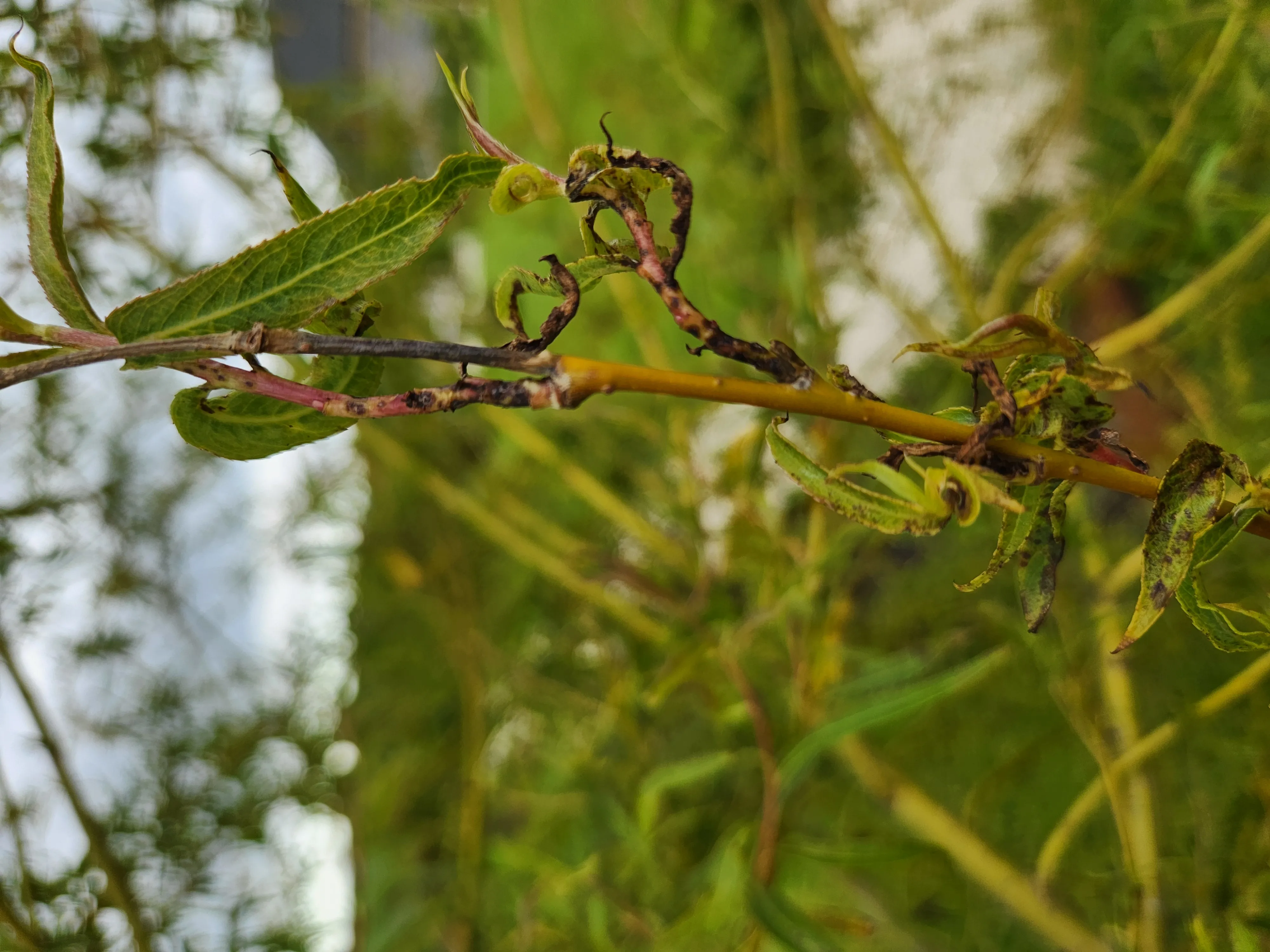
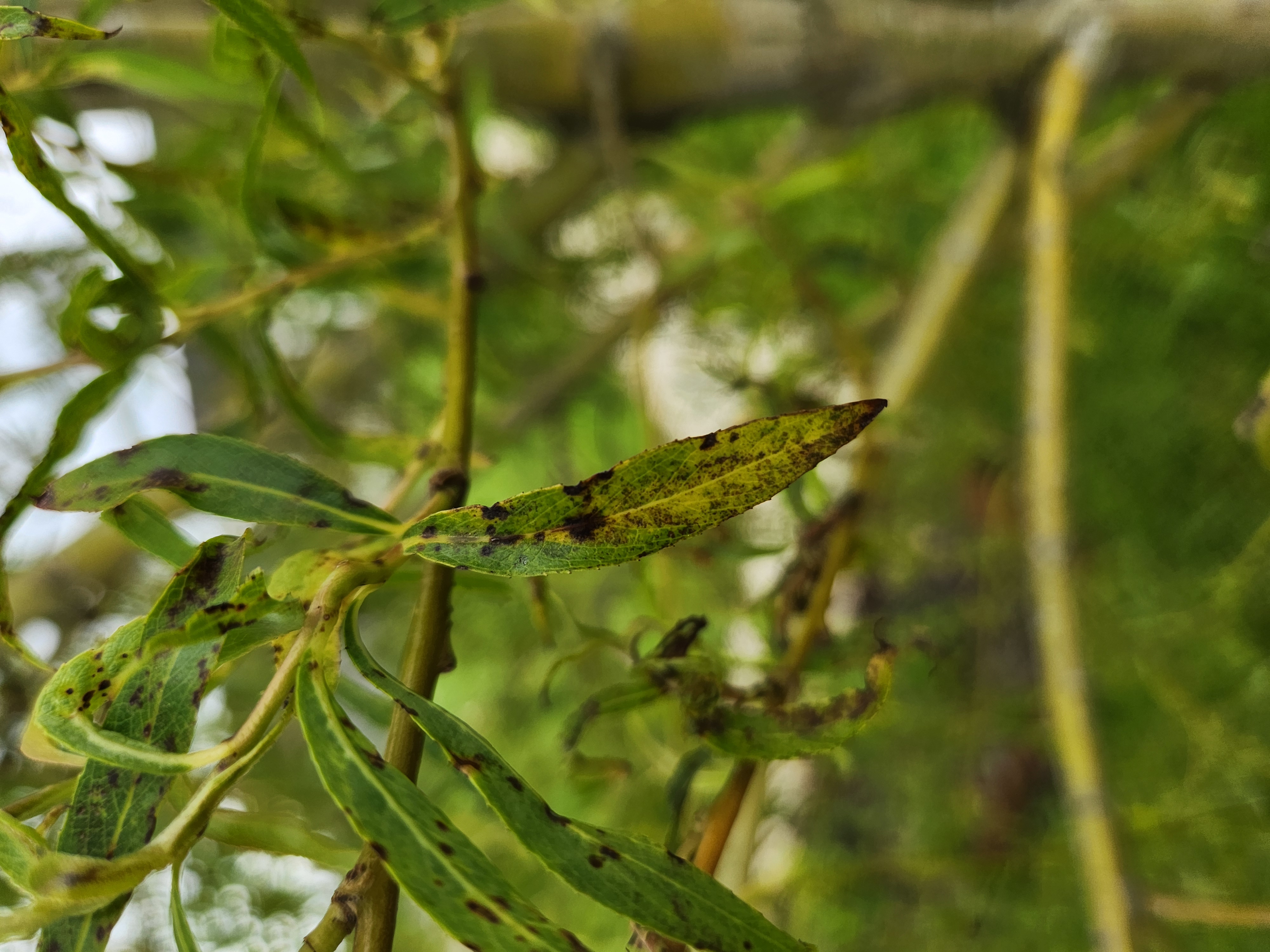
thank you for posting and for sharing those photos. I can see exactly what you’re describing and I want to give you an honest answer here rather than false hope, because I think you deserve a straight assessment of what you’re looking at.
What the Photos Are Showing Me
The black spotting, the twisting and distortion of the leaves, and the speed at which this has spread through the tree this season are consistent with a serious fungal infection, most likely willow anthracnose (Marssonina salicicola) combined with possible willow scab (Venturia saliciperda), both of which can work together to devastate a willow in a single season when conditions are right. The wet spring many parts of the UK have experienced this year has been almost perfect for these fungal diseases to spread rapidly, and a weeping willow with its dense, pendulous canopy trapping humidity around the foliage is particularly vulnerable.
The copper fungicide you’ve applied was the right instinct but as you’ve suspected yourself, at this stage of infection and with this level of spread through the tree it is very unlikely to turn things around. Fungicides work best as a preventative or at the very earliest stages of infection. When the majority of the canopy is already affected, the fungal load in and around the tree is simply too established for a surface treatment to address.
I want to be straightforward with you because I think it’s kinder than offering false hope. When a five year old willow has lost the majority of its canopy to fungal disease in a single season, with only the very top branches showing healthy growth, the prognosis for meaningful recovery is poor. Willows are vigorous trees and in some cases they can push through a bad season of anthracnose and come back the following year, but the level of infection you’re describing, and crucially the evidence that there were already signs of it last year, suggests this is an established and progressive problem rather than a one-off bad season.
Why Removal is the Responsible Course of Action
My honest recommendation here is to lift and remove the entire tree and to dispose of it by burning rather than composting or chipping. I know that’s a hard thing to hear about a tree you’ve grown for five years, but there are important reasons to act decisively here.
The fungal spores that are causing this problem are present in every affected leaf, in the bark of infected stems, and in the soil and leaf litter around the base of the tree. Every gust of wind through that canopy is dispersing spores onto neighbouring plants and into the surrounding garden. Willows are members of the Salicaceae family and the diseases affecting your tree can spread to other willows and related trees in the vicinity, including neighbouring gardens. Leaving a heavily infected tree in place through another full season significantly increases the risk of spreading the problem beyond your own garden.
Burning the removed material is important precisely because composting, even hot composting, may not reliably destroy the fungal spores, and chipping the wood creates a large volume of potentially infected material that would need to be disposed of very carefully.
What to Plant Instead
If you love the character and movement that a weeping willow brings to a garden, there are alternatives worth considering that are considerably more disease resistant. Salix integra Hakuro-Nishiki, the flamingo willow, is a much smaller and more manageable ornamental willow that can be kept as a standard and is far less susceptible to the diseases that have affected your tree. For a larger statement plant, Betula pendula (silver birch) gives you beautiful weeping form with far greater resilience, and Pyrus salicifolia (weeping silver pear) is another elegant alternative for a smaller space.
Before replanting in the same spot, give the area a full growing season to allow any residual fungal material in the soil to break down, and incorporate plenty of fresh organic matter into the planting hole when you do plant again.
I’m sorry this isn’t the answer you were hoping for, but acting decisively now is the kindest thing you can do for the rest of your garden.
Lee Garden Ninja
Hi @bradgarwood
thank you for posting and for sharing those photos. I can see exactly what you’re describing and I want to give you an honest answer here rather than false hope, because I think you deserve a straight assessment of what you’re looking at.
What the Photos Are Showing Me
The black spotting, the twisting and distortion of the leaves, and the speed at which this has spread through the tree this season are consistent with a serious fungal infection, most likely willow anthracnose (Marssonina salicicola) combined with possible willow scab (Venturia saliciperda), both of which can work together to devastate a willow in a single season when conditions are right. The wet spring many parts of the UK have experienced this year has been almost perfect for these fungal diseases to spread rapidly, and a weeping willow with its dense, pendulous canopy trapping humidity around the foliage is particularly vulnerable.
The copper fungicide you’ve applied was the right instinct but as you’ve suspected yourself, at this stage of infection and with this level of spread through the tree it is very unlikely to turn things around. Fungicides work best as a preventative or at the very earliest stages of infection. When the majority of the canopy is already affected, the fungal load in and around the tree is simply too established for a surface treatment to address.
I want to be straightforward with you because I think it’s kinder than offering false hope. When a five year old willow has lost the majority of its canopy to fungal disease in a single season, with only the very top branches showing healthy growth, the prognosis for meaningful recovery is poor. Willows are vigorous trees and in some cases they can push through a bad season of anthracnose and come back the following year, but the level of infection you’re describing, and crucially the evidence that there were already signs of it last year, suggests this is an established and progressive problem rather than a one-off bad season.
Why Removal is the Responsible Course of Action
My honest recommendation here is to lift and remove the entire tree and to dispose of it by burning rather than composting or chipping. I know that’s a hard thing to hear about a tree you’ve grown for five years, but there are important reasons to act decisively here.
The fungal spores that are causing this problem are present in every affected leaf, in the bark of infected stems, and in the soil and leaf litter around the base of the tree. Every gust of wind through that canopy is dispersing spores onto neighbouring plants and into the surrounding garden. Willows are members of the Salicaceae family and the diseases affecting your tree can spread to other willows and related trees in the vicinity, including neighbouring gardens. Leaving a heavily infected tree in place through another full season significantly increases the risk of spreading the problem beyond your own garden.
Burning the removed material is important precisely because composting, even hot composting, may not reliably destroy the fungal spores, and chipping the wood creates a large volume of potentially infected material that would need to be disposed of very carefully.
What to Plant Instead
If you love the character and movement that a weeping willow brings to a garden, there are alternatives worth considering that are considerably more disease resistant. Salix integra Hakuro-Nishiki, the flamingo willow, is a much smaller and more manageable ornamental willow that can be kept as a standard and is far less susceptible to the diseases that have affected your tree. For a larger statement plant, Betula pendula (silver birch) gives you beautiful weeping form with far greater resilience, and Pyrus salicifolia (weeping silver pear) is another elegant alternative for a smaller space.
Before replanting in the same spot, give the area a full growing season to allow any residual fungal material in the soil to break down, and incorporate plenty of fresh organic matter into the planting hole when you do plant again.
I’m sorry this isn’t the answer you were hoping for, but acting decisively now is the kindest thing you can do for the rest of your garden.
Lee Garden Ninja
 Lee Burkhill: Award Winning Designer & BBC 1's Garden Rescue Presenters Official Blog