Welcome to the Garden Ninja Gardening Forum! If you have a gardening question that you can't find answers to then ask below to seek help from the Garden Ninja army! Please make your garden questions as specific and detailed as possible so the community can provide comprehensive answers in the online forum below.

Welcome to the ultimate beginner gardening and garden design forum! Where no gardening question is too silly or obvious. This online gardening forum is run by Lee Burkhill, the Garden Ninja from BBC 1’s Garden Rescue and a trusted group of experienced gardeners.

Whether you are a beginner or an expert gardener, it’s a safe place to ask garden-related questions for garden design or planting. If you have a problem in your garden or need help, this is the Garden Forum for you! (See forum rules & moderation policy here)
Garden Ninja forum ask a question

Posting Rules: This space is open for all garden-related questions. Please be polite, courteous and respectful. If you wouldn’t say it to your mum’s face, then don’t post it here. Please don’t promote, sell, link spam or advertise here. Please don’t ask for ‘cheeky’ full Garden redesigns here. They will be deleted.

If you need a garden design service, please use this page to book a design consultation. I will block anyone who breaks these rules or is discourteous to the Garden Ninja Community.

Join the forum below with your gardening questions!

Please or Register to create posts and topics.

How to get rid of Sycamore seeds?

Hi Lee and everyone

My garden backs into a park and in that park there are a number of large sycamore trees. In the last few days the trees have shed their little yellow flowers and my garden is absolutely covered, including be all over my new raised beds. I've not noticed the flowers before - probs because they've fallen in the grass and not on top of the brown compost of the beds! 

I removed most from one of the beds, covered it but some still found their way in again! Do I need to worry about them and remove them/cover the beds? Not sure if they are seeds/turn into seeds and I'm going to end up growing a sycamore forest instead of veg! 

Many thanks, Emily 

Hi @erobinson

What a great question, and one that I suspect a lot of gardeners with trees nearby will recognise completely. The good news is that you can breathe a sigh of relief because what has landed all over your raised beds is not seeds at all.

What You're Seeing Right Now

Those little yellow clusters are the flowers of the sycamore (Acer pseudoplatanus), and at this stage they are purely the flowering parts of the tree doing their pollination work. They have no seeding potential in themselves and will simply break down into the compost over time if left, adding a small amount of organic matter to your beds in the process. So no, you are not about to accidentally grow a sycamore forest from this particular shower of yellow fluff.

What Sycamore Seeds Actually Look Like

The seeds are a very different thing entirely and you'll know them when you see them. Sycamore seeds come in pairs joined together and each seed has a distinctive papery wing attached to it, forming that characteristic helicopter or propeller shape that spins as it falls from the tree. They are sometimes called samaras or, more affectionately, helicopters or spinning jennies. They are considerably larger than the flowers currently covering your beds and completely unmistakable once you've seen them. These winged seeds typically fall from late summer through to autumn, so you have several months before that becomes something to think about.

When to Act and How

When the helicopters do start arriving later in the season, that is the point to be vigilant, particularly in your raised beds where the loose, rich compost gives sycamore seedlings exactly the conditions they love to germinate in. The window between seed landing and seedling emerging can be surprisingly short in warm weather, so a quick weekly check and weed of your beds through late summer and autumn will catch them before they get established.

The easiest time to remove sycamore seedlings is when they are very young, at the seed leaf stage, when the root system is minimal and they pull out cleanly with almost no effort. Leave them a few more weeks and you'll find they develop a surprisingly tenacious root for such a young plant, particularly if the taproot has had a chance to get down into your compost.

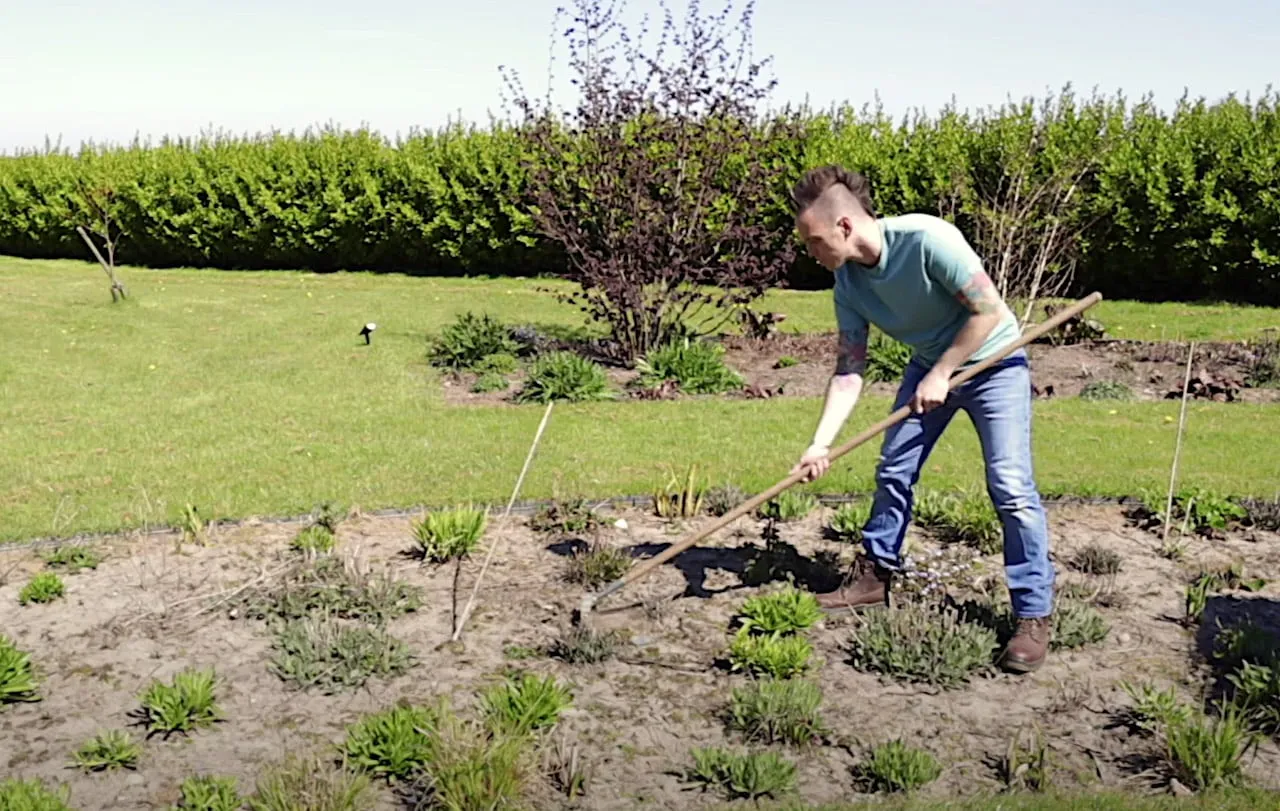
An oscillating hoe is genuinely one of the best tools for this job. Rather than pulling seedlings out by hand one by one, a good oscillating hoe, (This page contains affiliate links for products I use and love. If you take action (i.e. subscribe, make a purchase) after clicking a link, I may earn some gardening commission, which helps me keep the Garden Ninja Blog free for all.

Sometimes called a stirrup hoe or hula hoe, cuts through seedlings just below the soil surface on both the push and pull stroke, making light work of a bed full of young weed seedlings in a fraction of the time. The blade works with a back and forth motion that severs the roots cleanly without disturbing the soil too much, which also avoids bringing buried seeds up to the surface where they'd germinate.

It's a tool I use constantly through the growing season and it makes a real difference to how quickly you can keep on top of things. 

Little and often is the approach that keeps sycamore seedlings manageable. A five-minute pass with the hoe every week or two through late summer and autumn will keep your beds clear with minimal effort compared to letting them get established.

A covering of fine mesh or fleece over your beds during the main seed fall period in autumn can also intercept a lot of them before they reach the soil surface, which is worth considering, given how many trees you have backing onto the garden.

For now though, enjoy the spring growth and don't worry about the yellow flowers. Your raised beds are safe for the time being.

Lee Garden Ninja

Online garden design courses
Your subscription could not be saved. Please try again.
Your subscription has been successful.

Get My Free Garden Design Starter Checklist

The exact questions I work through at the start of every garden design project — free, straight to your inbox. Plus weekly gardening guides, seasonal tips, and exclusive course discount codes.

Lee Burkhill - Garden Ninja

Lee Burkhill

Lee Burkhill, known as the Garden Ninja, is an award-winning garden designer and horticulturist with over 30 years of gardening experience and 15 years as a professional garden designer. A qualified RHS (Royal Horticultural Society) professional, Lee specialises in sustainable garden design and practical horticultural advice. He designs and presents on BBC1’s Garden Rescue and in leading gardening publications. Lee combines three decades of hands-on gardening knowledge with professional design qualifications to help gardeners create beautiful, functional outdoor spaces.

Share this now!