Hi @michael-sharp
What a frustrating discovery, especially when the trees were looking so promising just a few weeks ago. Looking at your photos carefully, I can see some important clues about what's happened here.
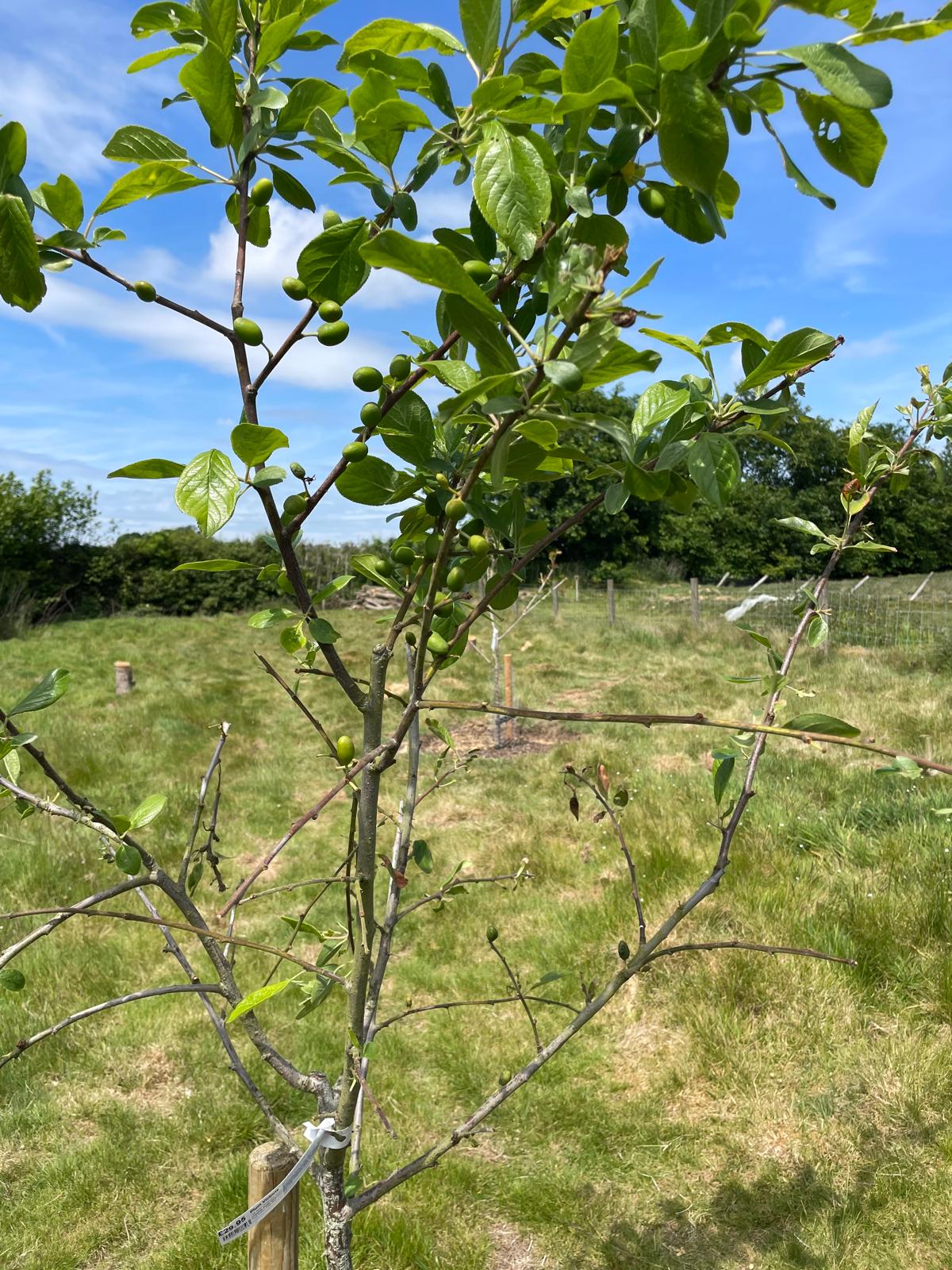
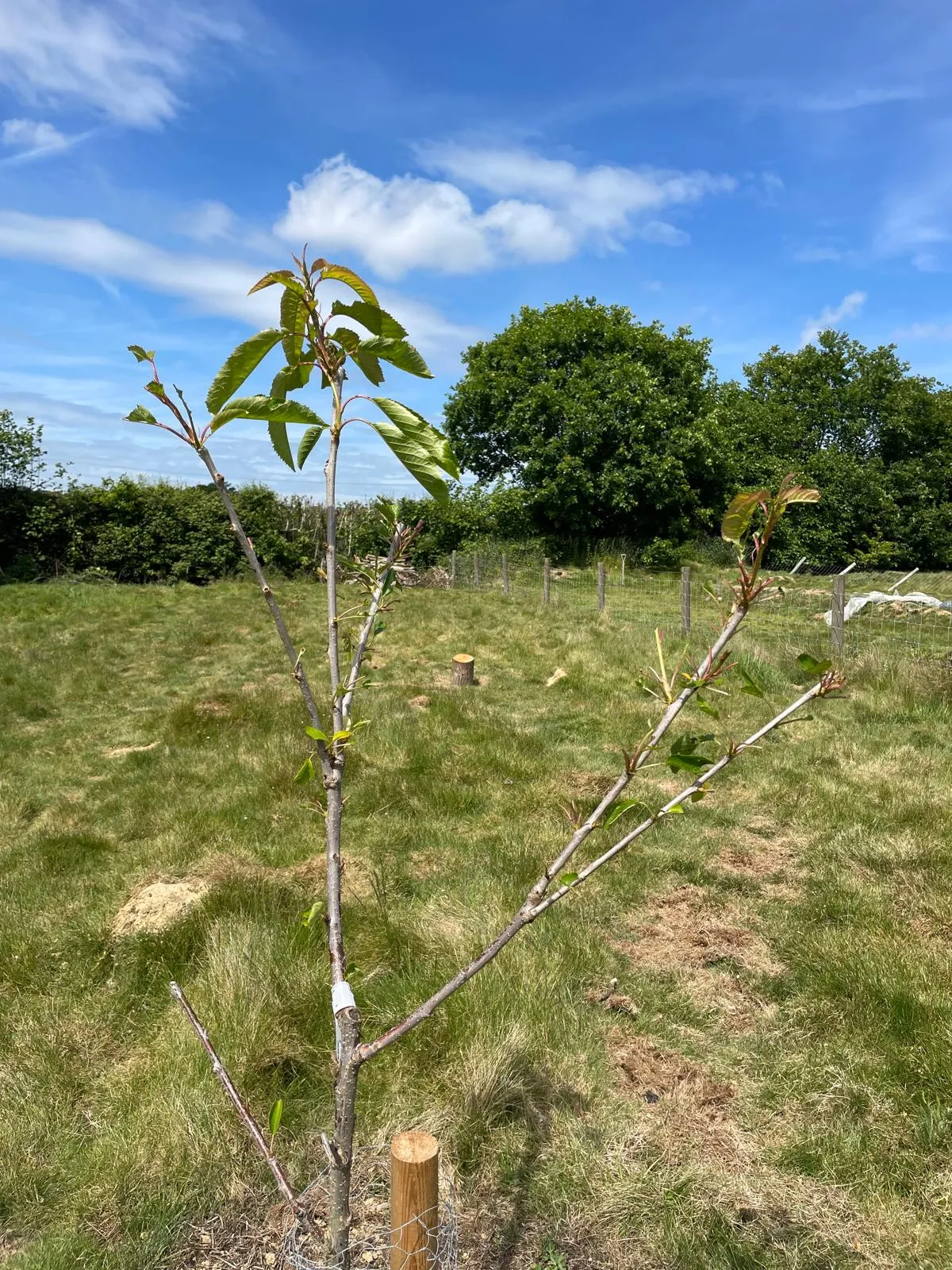
The pattern of damage in your photo is very characteristic. The branches have been stripped of leaves and young shoots in a way that suggests large-animal browsing rather than insect damage or disease. You're in what looks like an open field or paddock setting, with post-and-wire fencing visible in the background, which significantly increases the likelihood of animal damage. The height at which the stripping has occurred and the relatively clean nature of the damage is important here.
The Most Likely Culprit
Given your location and the open field setting, deer is my strongest suspicion. Deer damage on woody stems often results in a ragged cut end, where a deer has bitten partway through the stem and then tugged the leafy shoot off. Cherry and plum are particularly attractive to them.
Cherry and plum trees of all kinds are popular food for deer, and with both blossom and young fruit present, your trees would have been an irresistible target. The speed at which this has happened, going from full blossom and healthy leaves to stripped bare in a matter of weeks, is also consistent with deer repeatedly returning to a food source they've discovered.
A horse browsing over a fence line is another strong possibility given the field setting, and horses will absolutely strip young fruit tree growth given the opportunity, often causing very similar damage at a consistent height along a fence line.
Rabbit damage on younger trees is generally recognised by a clean cut as they have teeth in both the upper and lower jaw, and tends to occur lower down near the base of the tree rather than higher up the canopy. If you're seeing damage higher up the stem that points more firmly towards deer or a larger animal.
What to Do Now
The first priority is protecting what remains. Young fruit trees can recover from browsing damage if the main structural stems and the graft union at the base are intact, but they cannot recover if the same thing happens again next season. Individual tree guards or spiral rabbit and deer guards fitted around each tree will protect the lower stems. For deer specifically, a proper deer fence needs to be at least 1.8 metres high to be effective, as roe and fallow deer can clear a standard stock fence with ease.
Check the base of each tree carefully. If the bark around the trunk has been gnawed or stripped in a ring all the way around, which is called girdling, that tree's long term survival is unfortunately in serious doubt as it interrupts the flow of water and nutrients between roots and canopy. If the girdling is only partial, on one side rather than all the way round, the tree has a much better chance of pulling through.
Remove any completely stripped and dead stems with clean cuts back to healthy wood, which will encourage the tree to put energy into the remaining viable growth rather than trying to sustain dead material. Then give each tree a good feed with a balanced slow release fertiliser to support recovery, and water well through any dry spells this summer.
Going Forward
If this is an ongoing deer or horse pressure issue, it is worth considering whether the current fencing arrangement is giving the trees adequate protection for the long term. Young fruit trees in exposed field settings are genuinely vulnerable until they develop thicker, rougher bark on their lower stems, and even then, deer will readily browse new growth in the canopy if they can reach it.
Do let us know what you find when you inspect the base of the trees and whether you can identify tracks or droppings nearby that might confirm the culprit.
Lee Garden Ninja
Hi @michael-sharp
What a frustrating discovery, especially when the trees were looking so promising just a few weeks ago. Looking at your photos carefully, I can see some important clues about what's happened here.
The pattern of damage in your photo is very characteristic. The branches have been stripped of leaves and young shoots in a way that suggests large-animal browsing rather than insect damage or disease. You're in what looks like an open field or paddock setting, with post-and-wire fencing visible in the background, which significantly increases the likelihood of animal damage. The height at which the stripping has occurred and the relatively clean nature of the damage is important here.
The Most Likely Culprit
Given your location and the open field setting, deer is my strongest suspicion. Deer damage on woody stems often results in a ragged cut end, where a deer has bitten partway through the stem and then tugged the leafy shoot off. Cherry and plum are particularly attractive to them.
Cherry and plum trees of all kinds are popular food for deer, and with both blossom and young fruit present, your trees would have been an irresistible target. The speed at which this has happened, going from full blossom and healthy leaves to stripped bare in a matter of weeks, is also consistent with deer repeatedly returning to a food source they've discovered.
A horse browsing over a fence line is another strong possibility given the field setting, and horses will absolutely strip young fruit tree growth given the opportunity, often causing very similar damage at a consistent height along a fence line.
Rabbit damage on younger trees is generally recognised by a clean cut as they have teeth in both the upper and lower jaw, and tends to occur lower down near the base of the tree rather than higher up the canopy. If you're seeing damage higher up the stem that points more firmly towards deer or a larger animal.
What to Do Now
The first priority is protecting what remains. Young fruit trees can recover from browsing damage if the main structural stems and the graft union at the base are intact, but they cannot recover if the same thing happens again next season. Individual tree guards or spiral rabbit and deer guards fitted around each tree will protect the lower stems. For deer specifically, a proper deer fence needs to be at least 1.8 metres high to be effective, as roe and fallow deer can clear a standard stock fence with ease.
Check the base of each tree carefully. If the bark around the trunk has been gnawed or stripped in a ring all the way around, which is called girdling, that tree's long term survival is unfortunately in serious doubt as it interrupts the flow of water and nutrients between roots and canopy. If the girdling is only partial, on one side rather than all the way round, the tree has a much better chance of pulling through.
Remove any completely stripped and dead stems with clean cuts back to healthy wood, which will encourage the tree to put energy into the remaining viable growth rather than trying to sustain dead material. Then give each tree a good feed with a balanced slow release fertiliser to support recovery, and water well through any dry spells this summer.
Going Forward
If this is an ongoing deer or horse pressure issue, it is worth considering whether the current fencing arrangement is giving the trees adequate protection for the long term. Young fruit trees in exposed field settings are genuinely vulnerable until they develop thicker, rougher bark on their lower stems, and even then, deer will readily browse new growth in the canopy if they can reach it.
Do let us know what you find when you inspect the base of the trees and whether you can identify tracks or droppings nearby that might confirm the culprit.
Lee Garden Ninja

 Lee Burkhill: Award Winning Designer & BBC 1's Garden Rescue Presenters Official Blog