Hi @wendywoo
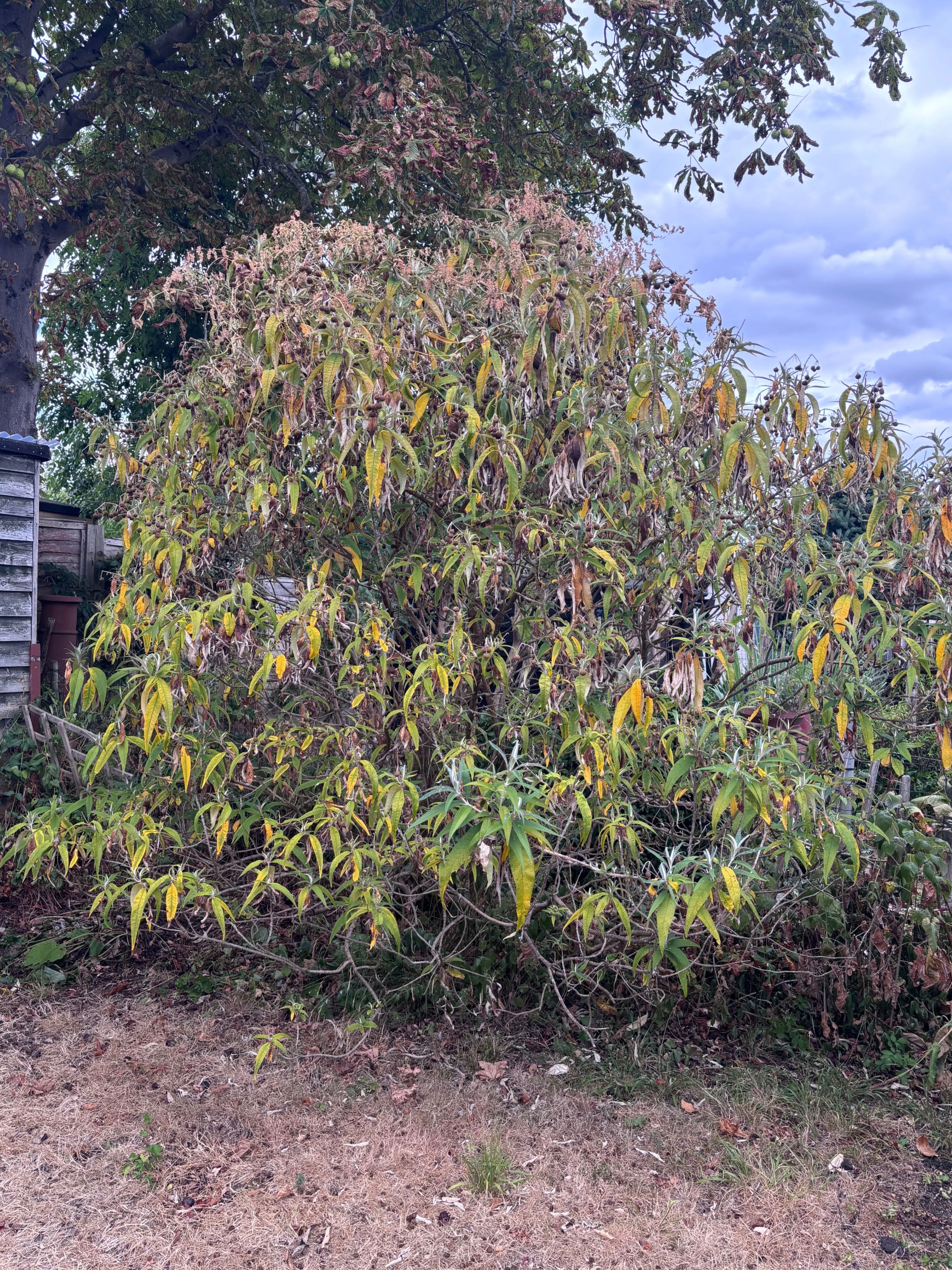
Great to hear from you again, and what a wonderful plant to have in the garden! Those bees are absolutely onto something, because what you have is Buddleja globosa, the proper botanical name for what most people call the orange ball tree or orange ball bush. That common name couldn't be more fitting given those perfectly round, golden-orange flower heads that appear in late spring and early summer. A cracking shrub and well worth keeping.
Buddleja globosa is Different to Most Buddlejas
This is where many gardeners get stuck, so pay close attention to this bit. Buddleja globosa behaves completely differently from the familiar purple butterfly bush (Buddleja davidii) that gets cut back hard every spring. Buddleja globosa flowers on old wood rather than new growth, so pruning it in spring the way most people prune buddleja will remove next year's entire flower display in one fell swoop.
Your concern about being left with bare wooden stems is completely valid, and it shows you've been watching this plant closely. Those long, spindly stems with leaves only at the tips are very typical of a mature, unpruned Buddleja globosa. The good news is that the solution is straightforward once you know the timing.
When to Prune It
Prune Buddleja globosa immediately after flowering finishes, which usually means June or early July once those orange balls have gone over. That window straight after flowering is your annual opportunity to take it in hand without losing next year's display. Cutting back at this point gives the shrub the whole of summer and early autumn to put on new growth, and it's that fresh growth which carries the flower buds for the following year.
Take out the stems that have just flowered, cutting back to a strong sideshoot or pair of leaves lower down. You don't need to go right back to the base the way you would with Buddleja davidii. A reduction of roughly a third to half the overall size each year keeps it at a manageable scale without stripping it back to bare wood in one go. On an overgrown specimen like yours, you can be a bit more assertive, but spread the renovation over two seasons rather than tackling everything at once, taking the oldest and woodiest stems out first.
What About Those Bare Stems
On an established Buddleja globosa that hasn't been pruned for a while, some bare wood lower down is normal and won't fully fill in overnight. The key is to work gradually rather than panicking and removing everything. Each year after flowering, remove the worst offenders, and the plant will gradually build a better framework of younger, leafier stems closer to the base.
Keep the bees happy, and my full buddleja pruning guide covers all the varieties and their different needs in detail:
How and When to Prune Buddleja: The Complete Beginner's Guide
Happy gardening Wendy!
Hi @wendywoo
Great to hear from you again, and what a wonderful plant to have in the garden! Those bees are absolutely onto something, because what you have is Buddleja globosa, the proper botanical name for what most people call the orange ball tree or orange ball bush. That common name couldn't be more fitting given those perfectly round, golden-orange flower heads that appear in late spring and early summer. A cracking shrub and well worth keeping.
Buddleja globosa is Different to Most Buddlejas
This is where many gardeners get stuck, so pay close attention to this bit. Buddleja globosa behaves completely differently from the familiar purple butterfly bush (Buddleja davidii) that gets cut back hard every spring. Buddleja globosa flowers on old wood rather than new growth, so pruning it in spring the way most people prune buddleja will remove next year's entire flower display in one fell swoop.
Your concern about being left with bare wooden stems is completely valid, and it shows you've been watching this plant closely. Those long, spindly stems with leaves only at the tips are very typical of a mature, unpruned Buddleja globosa. The good news is that the solution is straightforward once you know the timing.
When to Prune It
Prune Buddleja globosa immediately after flowering finishes, which usually means June or early July once those orange balls have gone over. That window straight after flowering is your annual opportunity to take it in hand without losing next year's display. Cutting back at this point gives the shrub the whole of summer and early autumn to put on new growth, and it's that fresh growth which carries the flower buds for the following year.
Take out the stems that have just flowered, cutting back to a strong sideshoot or pair of leaves lower down. You don't need to go right back to the base the way you would with Buddleja davidii. A reduction of roughly a third to half the overall size each year keeps it at a manageable scale without stripping it back to bare wood in one go. On an overgrown specimen like yours, you can be a bit more assertive, but spread the renovation over two seasons rather than tackling everything at once, taking the oldest and woodiest stems out first.
What About Those Bare Stems
On an established Buddleja globosa that hasn't been pruned for a while, some bare wood lower down is normal and won't fully fill in overnight. The key is to work gradually rather than panicking and removing everything. Each year after flowering, remove the worst offenders, and the plant will gradually build a better framework of younger, leafier stems closer to the base.
Keep the bees happy, and my full buddleja pruning guide covers all the varieties and their different needs in detail:
How and When to Prune Buddleja: The Complete Beginner's Guide
Happy gardening Wendy!
 Lee Burkhill: Award Winning Designer & BBC 1's Garden Rescue Presenters Official Blog