Hi @ellie-moore
Welcome to the Garden Ninja community!
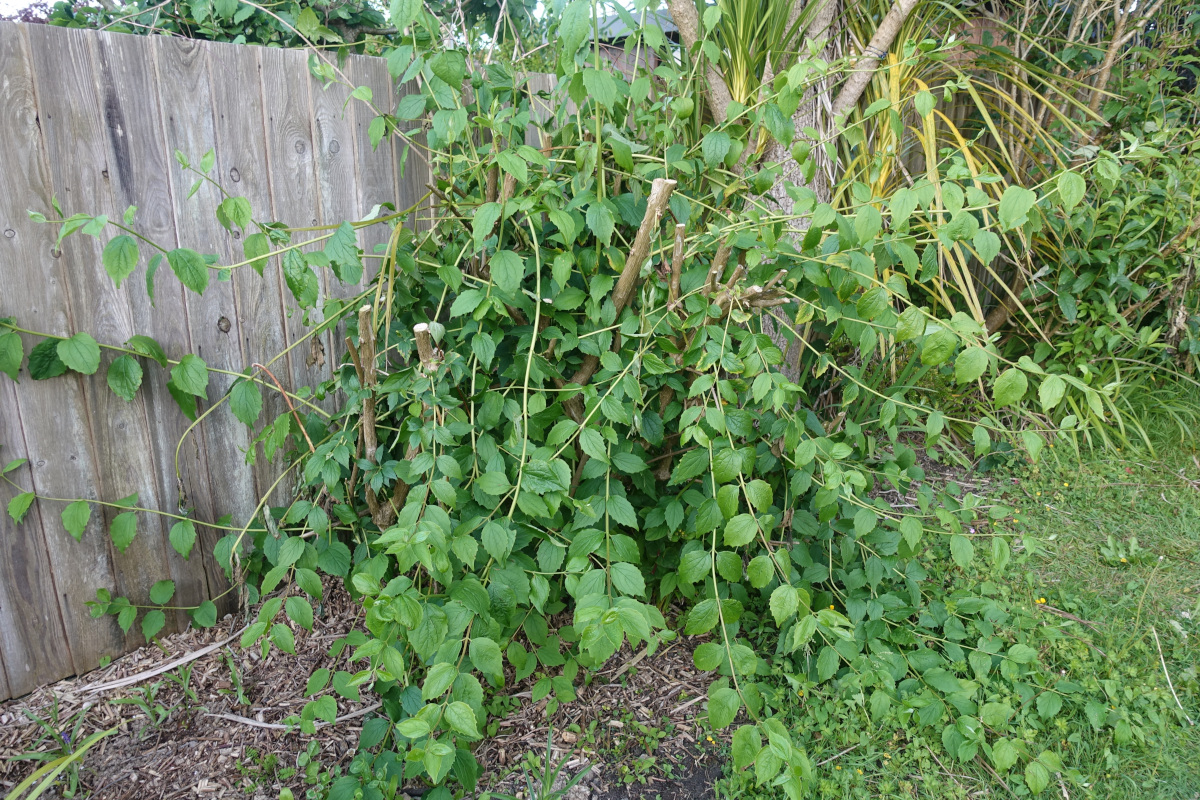
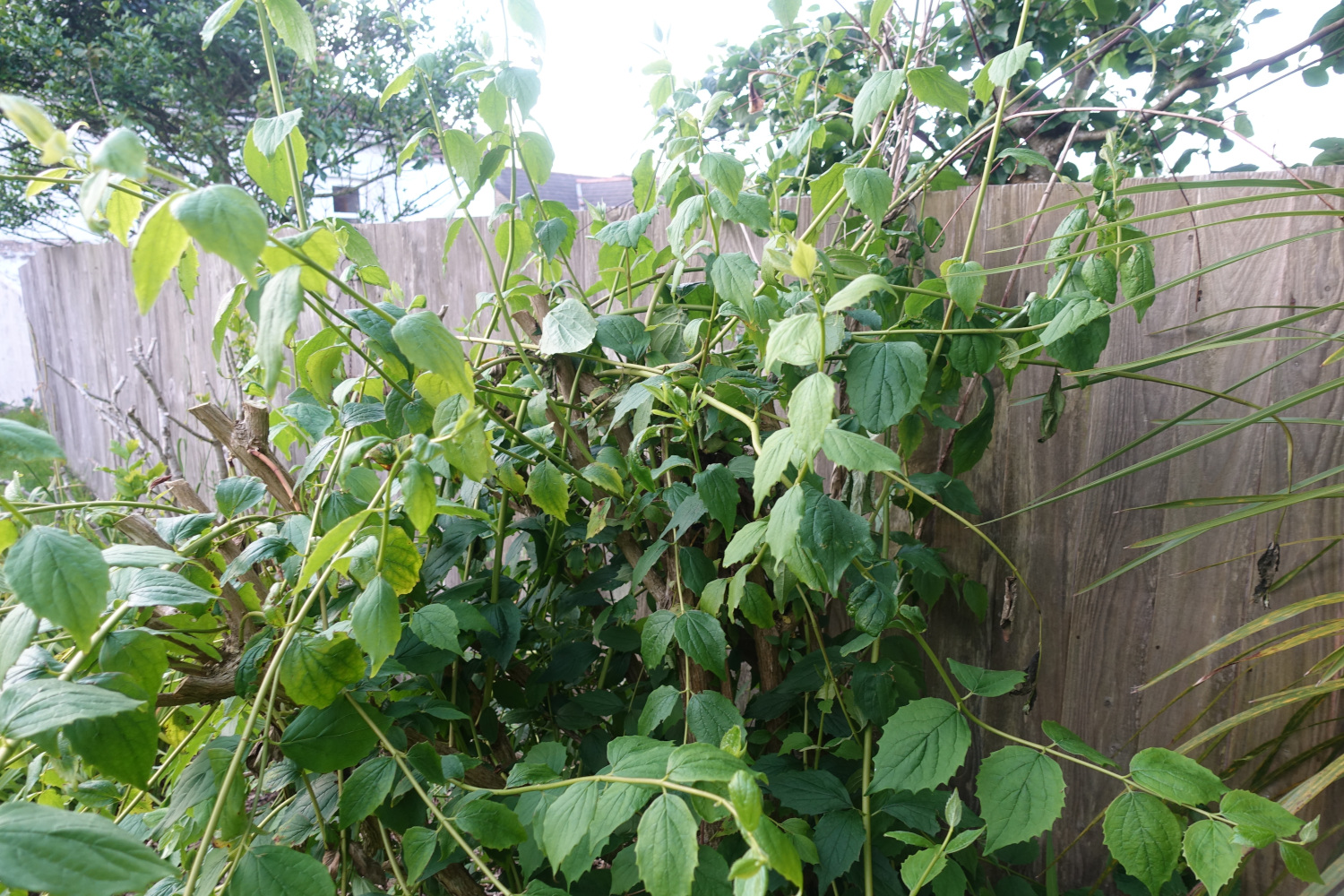
Honestly, don't worry, this is a really common situation when you inherit a garden you didn't plant yourself, and mock orange (Philadelphus) is notorious for doing exactly this once it gets going again after a hard chop. From your photo, what you're seeing is fairly classic regrowth: lots of vigorous, whippy new shoots shooting up and then arching back down under their own weight because they haven't had a season or two to thicken up and support themselves yet. Nothing here looks diseased or in trouble, it just needs some shape.
Timing, and why you've got a free pass this year
You've worked this out brilliantly yourself. Philadelphus flowers on growth made the previous year, so it sets next year's flower buds in the second half of this summer. Because yours was cut hard back in January, there's no old wood left to flower from, which is exactly why you're not seeing buds in June. That means you have a window now where you can prune without sacrificing a flower display, because there isn't one to lose this year. I'd still aim to get any reshaping done in the next few weeks though, rather than leaving it right through summer, so the plant has time to put on some growth afterwards and start building next year's flowering wood.
Dealing with the downward and crossing growth
Yes, go ahead and remove the branches that are arching right down to the ground, along with anything dead, damaged, or crossing through the middle of the shrub. Cut these back to a healthy bud or junction rather than leaving long stubs. Removing the worst offenders first will open the whole thing up, improve airflow, and make it much easier to see what you're actually working with underneath all that floppy growth.
Training growth upwards with your cuts
There is a simple trick here. When you cut a stem back, look for a bud on the upper, outward-facing side of the shoot just below your cut. New growth tends to head off in the direction that bud is pointing, so cutting just above an upward-facing bud encourages the replacement shoot to grow up rather than flopping straight back down again. It won't guarantee perfectly upright growth on a naturally arching shrub like Philadelphus, but it does help nudge things in the right direction.
The floppy baby shoot
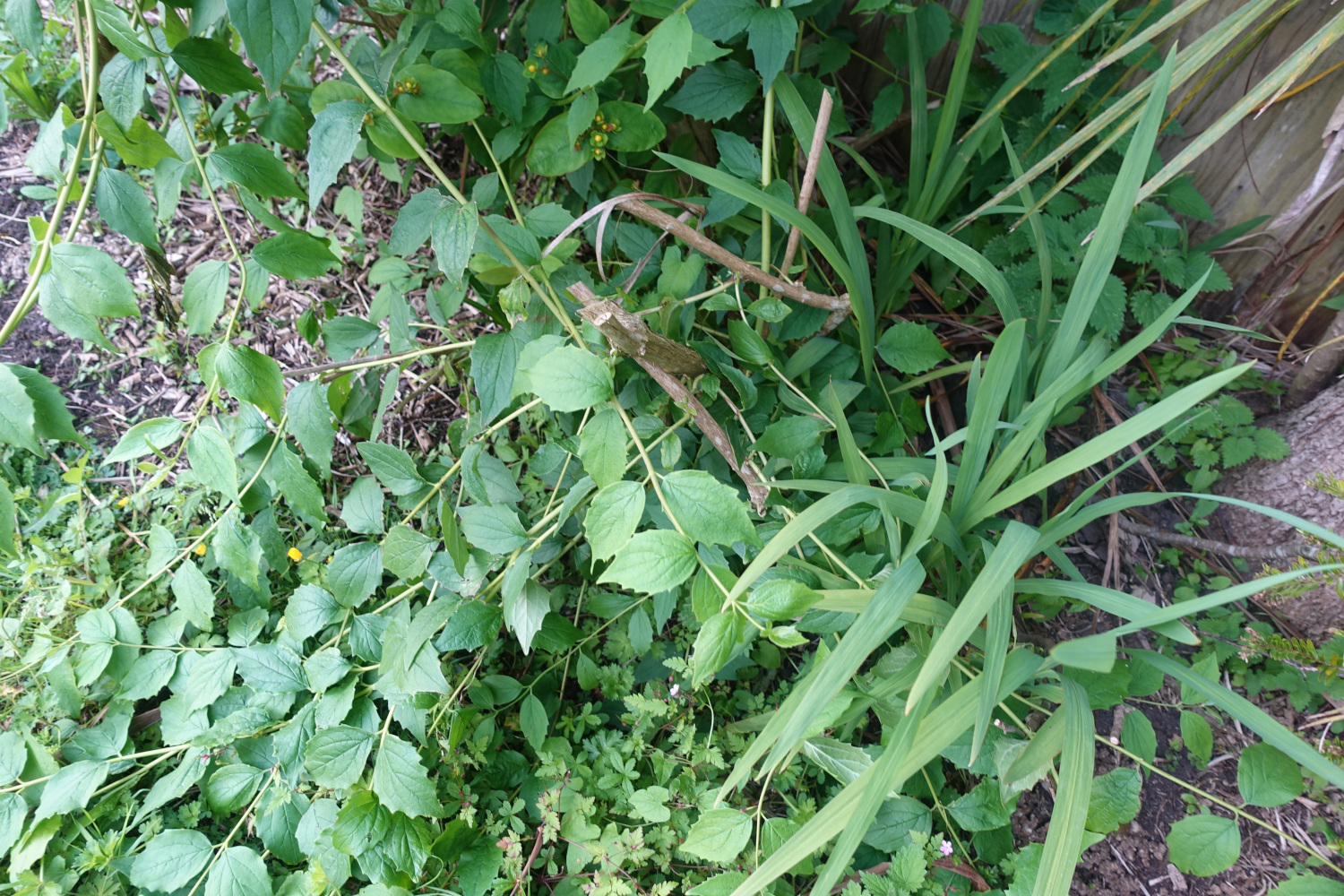
For the smaller one flopping over completely, cutting it back by around half is a sensible approach. This reduces the weight on the end of the stem, which is often what's dragging it down in the first place, and encourages stronger, sturdier regrowth lower down rather than another long whippy shoot. It also gives you the chance to choose a bud facing the direction you'd like it to head next.
For next time
Once a Philadelphus has been hard pruned like yours was, the trick is to catch the regrowth a little earlier, ideally giving it a light tidy and removing the weakest, most congested shoots while they're still small and easy to handle, rather than letting everything get away at once. After flowering each year going forward, taking out a portion of the oldest stems right down to the base keeps the whole shrub renewing itself and stops it getting leggy and floppy like this again.
You haven't left it too late, and it sounds like you're approaching this exactly the right way for a rental garden: sensible, low risk pruning now, building confidence as you go. I've got a full step by step guide on timing and technique here that should help: How and When to Prune Philadelphus (Mock Orange), and since you mentioned you're renting and trying to bring the beds back into shape generally, you might also find this useful: How to Design a Garden for a Rental Property.
Good luck with the bindweed too, that's always the real battle.
Happy gardening!
Lee Garden Ninja
Hi @ellie-moore
Welcome to the Garden Ninja community!
Honestly, don't worry, this is a really common situation when you inherit a garden you didn't plant yourself, and mock orange (Philadelphus) is notorious for doing exactly this once it gets going again after a hard chop. From your photo, what you're seeing is fairly classic regrowth: lots of vigorous, whippy new shoots shooting up and then arching back down under their own weight because they haven't had a season or two to thicken up and support themselves yet. Nothing here looks diseased or in trouble, it just needs some shape.
Timing, and why you've got a free pass this year
You've worked this out brilliantly yourself. Philadelphus flowers on growth made the previous year, so it sets next year's flower buds in the second half of this summer. Because yours was cut hard back in January, there's no old wood left to flower from, which is exactly why you're not seeing buds in June. That means you have a window now where you can prune without sacrificing a flower display, because there isn't one to lose this year. I'd still aim to get any reshaping done in the next few weeks though, rather than leaving it right through summer, so the plant has time to put on some growth afterwards and start building next year's flowering wood.
Dealing with the downward and crossing growth
Yes, go ahead and remove the branches that are arching right down to the ground, along with anything dead, damaged, or crossing through the middle of the shrub. Cut these back to a healthy bud or junction rather than leaving long stubs. Removing the worst offenders first will open the whole thing up, improve airflow, and make it much easier to see what you're actually working with underneath all that floppy growth.
Training growth upwards with your cuts
There is a simple trick here. When you cut a stem back, look for a bud on the upper, outward-facing side of the shoot just below your cut. New growth tends to head off in the direction that bud is pointing, so cutting just above an upward-facing bud encourages the replacement shoot to grow up rather than flopping straight back down again. It won't guarantee perfectly upright growth on a naturally arching shrub like Philadelphus, but it does help nudge things in the right direction.
The floppy baby shoot
For the smaller one flopping over completely, cutting it back by around half is a sensible approach. This reduces the weight on the end of the stem, which is often what's dragging it down in the first place, and encourages stronger, sturdier regrowth lower down rather than another long whippy shoot. It also gives you the chance to choose a bud facing the direction you'd like it to head next.
For next time
Once a Philadelphus has been hard pruned like yours was, the trick is to catch the regrowth a little earlier, ideally giving it a light tidy and removing the weakest, most congested shoots while they're still small and easy to handle, rather than letting everything get away at once. After flowering each year going forward, taking out a portion of the oldest stems right down to the base keeps the whole shrub renewing itself and stops it getting leggy and floppy like this again.
You haven't left it too late, and it sounds like you're approaching this exactly the right way for a rental garden: sensible, low risk pruning now, building confidence as you go. I've got a full step by step guide on timing and technique here that should help: How and When to Prune Philadelphus (Mock Orange), and since you mentioned you're renting and trying to bring the beds back into shape generally, you might also find this useful: How to Design a Garden for a Rental Property.
Good luck with the bindweed too, that's always the real battle.
Happy gardening!
Lee Garden Ninja

 Lee Burkhill: Award Winning Designer & BBC 1's Garden Rescue Presenters Official Blog