Hi @bat135
Great question, and I'm glad you're being so thorough about your approach to removing dead wood and sanitising your tools. That instinct is always sound practice regardless of what you're dealing with.
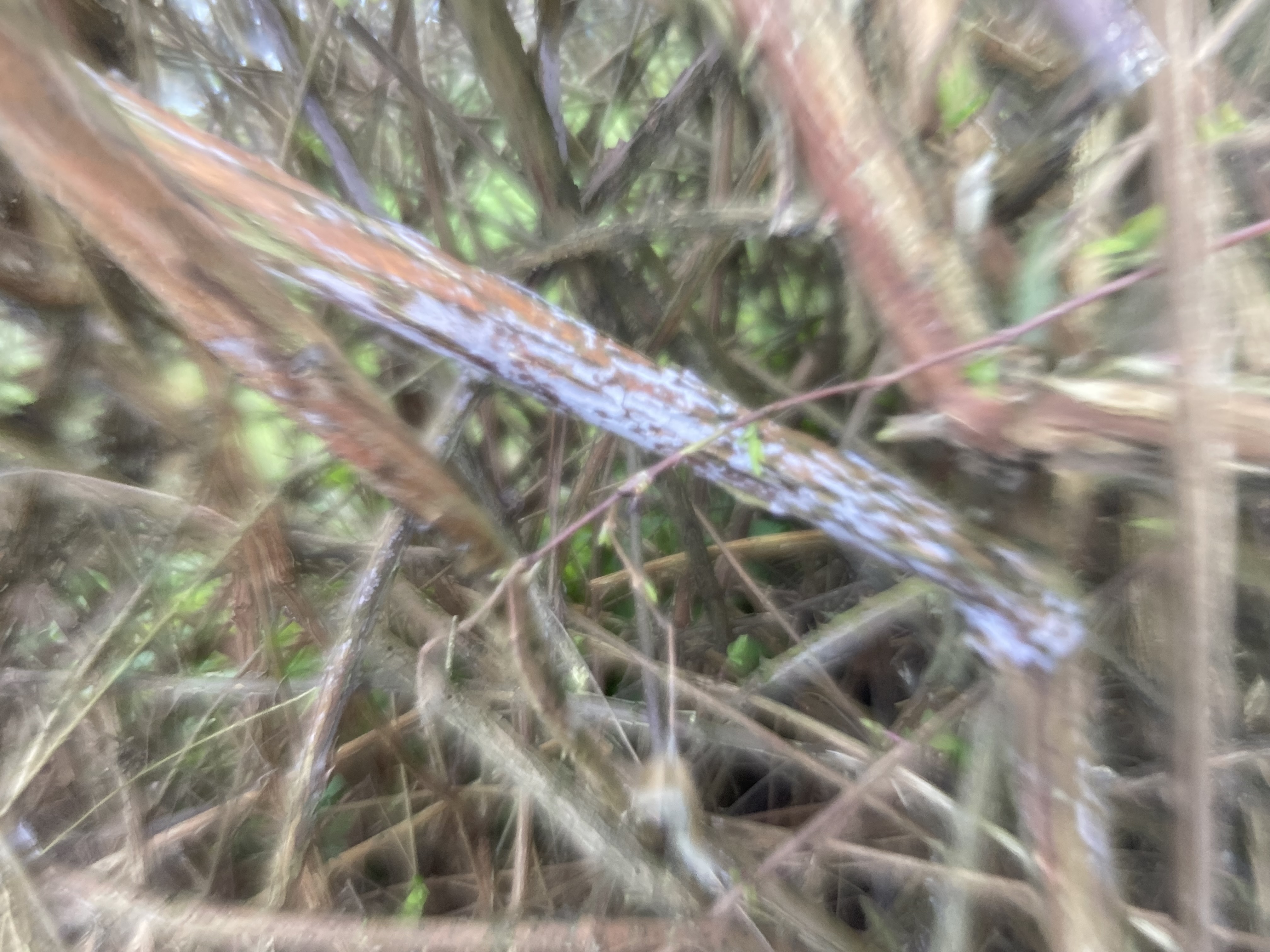
From what you've described, a white or almost silver fungal growth appearing on the stems themselves rather than causing the classic silvery sheen on the leaf surface, I'd say this is very unlikely to be silver leaf (Chondrostereum purpureum). Silver leaf disease is a serious fungal infection that affects trees primarily from the Prunus genus, including plums, cherries, apricots, and damsons, and it typically presents as a silvery discolouration spreading across the leaf surface rather than a visible fungal growth on the stems. It also tends to affect fruit trees and ornamentals in the Prunus family specifically, so if your shrub is something unrelated to that genus, silver leaf becomes even less likely. You can read more about how to identify it properly over in my full silver leaf guide.
What you're describing sounds much more like one of several white fungal growths that commonly appear on woody shrub stems, most of which are cosmetic rather than harmful.
What Could This White Fungus Actually Be?
There are a few candidates worth considering when you see a white or silvery fungal growth on shrub stems:
- Lichen is one of the most common culprits. It forms a pale, almost crusty silver or white coating on older or stressed stems and is completely harmless to the plant. It tends to appear more on stems that have slowed in growth or on shaded sides of the plant.
- Powdery mildew can appear as a white, dusty or almost fluffy coating on stems as well as leaves. It's more common in dry summers with humid nights and rarely kills a healthy shrub, though it does indicate the plant may be stressed or in poor airflow.
- Coral spot fungus (Nectria cinnabarina) can initially present with pale growth before the characteristic pink or orange pustules appear, and while it does colonise dead wood, it very seldom causes serious damage to otherwise healthy living tissue.
- White rot or mycelium threads can appear on older, dying stems as a visible white fungal mat, often in damp conditions. Again, this is almost always a secondary coloniser rather than the cause of any problem.
Should You Still Prune It Out?
Yes, and your instinct to remove affected stems is exactly right even if the fungus turns out to be benign. Here's how I'd approach it:
- Remove any dead or dying stems back to healthy wood, making your cut just above a bud or back to the main framework.
- Sterilise your secateurs between cuts using a dilute bleach solution or methylated spirits, which you're already planning to do.
- Dispose of the removed material responsibly. Burning is ideal where permitted, or binning in your general waste rather than the compost heap.
- Improve airflow through the centre of the shrub by removing crossing stems. Better airflow reduces the damp, still conditions that most surface fungi love.
- Hold off on heavy feeding until you know the plant is otherwise healthy, as a sudden flush of soft growth can actually make things worse for powdery mildew types.
If you can get a clearer photo of the affected stems or identify the shrub, I'd be happy to narrow it down further. A white fungal coating on non-Prunus shrubs is almost always manageable, and your practical approach to dealing with it is already exactly what I'd recommend.
Lee Garden Ninja
Hi @bat135
Great question, and I'm glad you're being so thorough about your approach to removing dead wood and sanitising your tools. That instinct is always sound practice regardless of what you're dealing with.
From what you've described, a white or almost silver fungal growth appearing on the stems themselves rather than causing the classic silvery sheen on the leaf surface, I'd say this is very unlikely to be silver leaf (Chondrostereum purpureum). Silver leaf disease is a serious fungal infection that affects trees primarily from the Prunus genus, including plums, cherries, apricots, and damsons, and it typically presents as a silvery discolouration spreading across the leaf surface rather than a visible fungal growth on the stems. It also tends to affect fruit trees and ornamentals in the Prunus family specifically, so if your shrub is something unrelated to that genus, silver leaf becomes even less likely. You can read more about how to identify it properly over in my full silver leaf guide.
What you're describing sounds much more like one of several white fungal growths that commonly appear on woody shrub stems, most of which are cosmetic rather than harmful.
What Could This White Fungus Actually Be?
There are a few candidates worth considering when you see a white or silvery fungal growth on shrub stems:
- Lichen is one of the most common culprits. It forms a pale, almost crusty silver or white coating on older or stressed stems and is completely harmless to the plant. It tends to appear more on stems that have slowed in growth or on shaded sides of the plant.
- Powdery mildew can appear as a white, dusty or almost fluffy coating on stems as well as leaves. It's more common in dry summers with humid nights and rarely kills a healthy shrub, though it does indicate the plant may be stressed or in poor airflow.
- Coral spot fungus (Nectria cinnabarina) can initially present with pale growth before the characteristic pink or orange pustules appear, and while it does colonise dead wood, it very seldom causes serious damage to otherwise healthy living tissue.
- White rot or mycelium threads can appear on older, dying stems as a visible white fungal mat, often in damp conditions. Again, this is almost always a secondary coloniser rather than the cause of any problem.
Should You Still Prune It Out?
Yes, and your instinct to remove affected stems is exactly right even if the fungus turns out to be benign. Here's how I'd approach it:
- Remove any dead or dying stems back to healthy wood, making your cut just above a bud or back to the main framework.
- Sterilise your secateurs between cuts using a dilute bleach solution or methylated spirits, which you're already planning to do.
- Dispose of the removed material responsibly. Burning is ideal where permitted, or binning in your general waste rather than the compost heap.
- Improve airflow through the centre of the shrub by removing crossing stems. Better airflow reduces the damp, still conditions that most surface fungi love.
- Hold off on heavy feeding until you know the plant is otherwise healthy, as a sudden flush of soft growth can actually make things worse for powdery mildew types.
If you can get a clearer photo of the affected stems or identify the shrub, I'd be happy to narrow it down further. A white fungal coating on non-Prunus shrubs is almost always manageable, and your practical approach to dealing with it is already exactly what I'd recommend.
Lee Garden Ninja
 Lee Burkhill: Award Winning Designer & BBC 1's Garden Rescue Presenters Official Blog