Hi @philcas
Is Your Pear Tree Actually a Horse Chestnut?
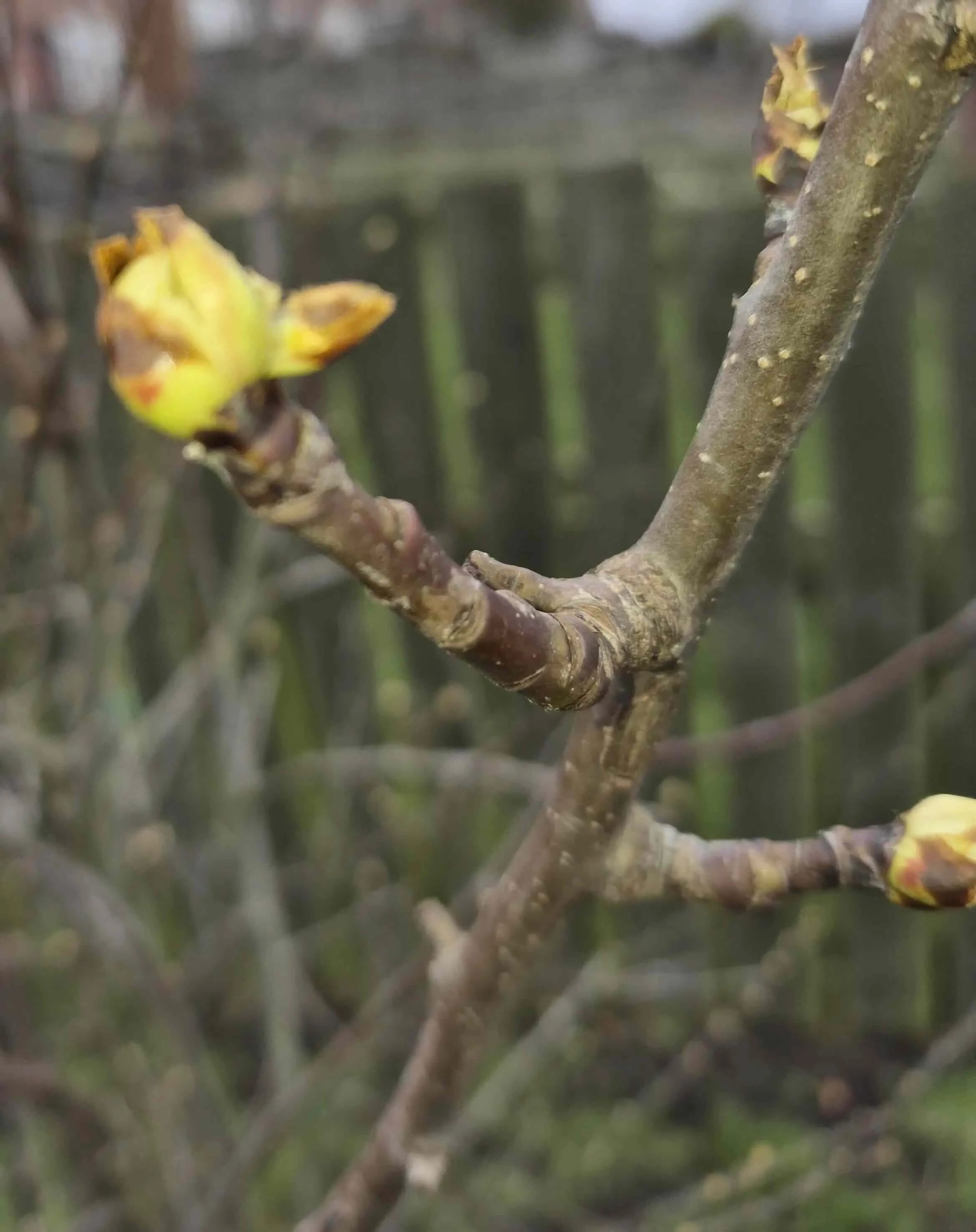
Thanks for your question, and I can see exactly what's happened here. Looking at those sticky buds and the bark texture in your photos, I'm afraid the plant identification app is absolutely correct: that's a horse chestnut sapling (Aesculus hippocastanum), not a pear tree. I know that's probably not what you wanted to hear, but at least you've caught it relatively early before it turns into a whopping great tree that's completely unsuitable for most gardens.
How to Spot a Horse Chestnut
Horse chestnuts have some really distinctive features that make them quite easy to identify once you know what you're looking for. The giveaway in your case is those sticky buds, which are one of the most characteristic features of Aesculus hippocastanum. In late winter and early spring, horse chestnut buds are large, glossy, and covered in a sticky resin that's unmistakable when you touch them. Pear trees, by contrast, have much smaller, neater buds that are never sticky.
https://youtu.be/abE5LlAkFB8
The bark on your sapling also looks like horse chestnut. Even on young specimens, you can see that slightly corky, greyish brown texture that becomes more pronounced and flaky as the tree matures. Pear tree bark tends to be much smoother when young, developing into a blocky, almost scaly pattern as it ages, but it never has that distinctive horse chestnut character.
As your tree matures (and horse chestnuts grow bloody quickly, which explains why it's shot up to 8 feet in a year), you'd see the classic palmate leaves, those distinctive compound leaves with five to seven leaflets arranged like fingers on a hand. Pear trees have simple, oval leaves with serrated edges. Come spring, if you'd left it in, you'd have got spectacular candle-like flower spikes rather than the delicate white pear blossoms you were probably hoping for.
The Reality of Plant Identification Apps
Now, let's talk about plant ID apps and tools like Google Lens, because this is a conversation every gardener needs to have. These apps are genuinely useful tools, but they're far from infallible, and understanding their limitations can save you a lot of frustration and misidentification.
In my experience, plant identification apps will typically get you about 75% of the way towards correctly identifying a plant. They're remarkably good at narrowing down the genus (the broader plant family group), but they struggle significantly with species identification and are virtually useless for identifying specific cultivars or varieties. This matters enormously because the difference between, say, a compact ornamental cherry and a 40 foot wild cherry is massive for your garden, even though they're the same genus.
https://youtu.be/Z_QqwySxpTc
Why Apps Struggle With Accuracy
The fundamental problem with these apps is that they're trying to identify plants from photographs, often taken in less than ideal conditions, with varying light, angles, and image quality. They're comparing your photo against enormous databases of reference images, but those databases are only as good as the images that were used to train them. If a particular species, cultivar, or growth stage isn't well represented in the training data, the app will make its best guess, which can be wildly off.
Apps also struggle with seasonal variation. A plant photographed in winter with bare stems and buds looks completely different to the same plant in full leaf or flower. The algorithms might correctly identify a mature specimen in bloom but completely miss a young sapling or a plant that's been pruned hard. Your horse chestnut sapling is a perfect example: the app got it right because those sticky buds are so distinctive, but if you'd photographed it in summer with young leaves, it might have suggested several different species.
Context is another huge issue. Apps can't tell whether a plant is growing in appropriate conditions, whether it's healthy or diseased, or whether what you're showing it is actually the plant you think it is. In your case, you assumed you were photographing a pear tree because that's what you thought you'd planted, which probably made you second guess the app's correct identification initially.
The Cultivar and Species Problem
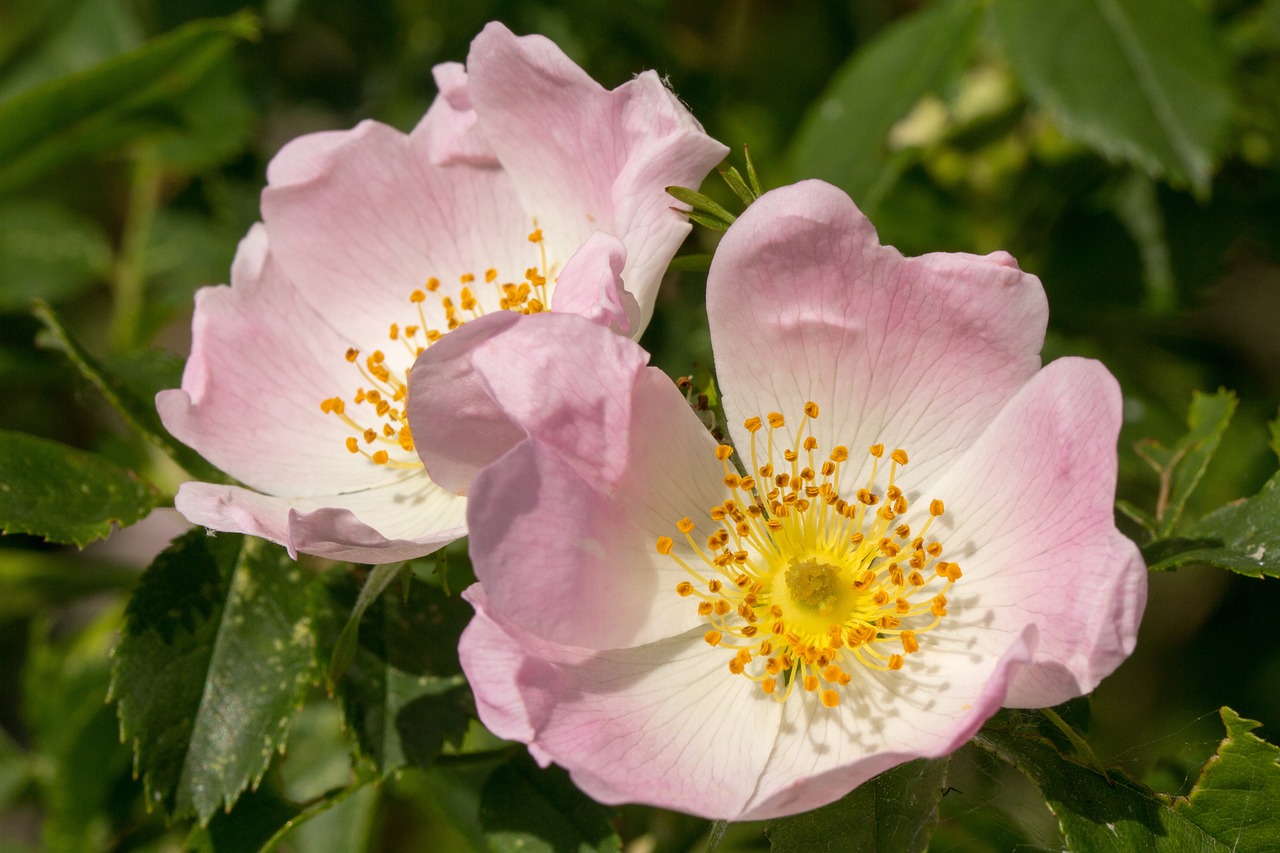
This is where apps really fall down. Let's say the app correctly identifies your plant as a rose (Rosa species). Great, but which rose? There are thousands of rose cultivars, from tiny ground cover varieties to massive climbers, and the difference between them is critical for garden planning. The app might tell you it's Rosa 'something', but that 'something' could be one of dozens of similar looking varieties, and without seeing the plant at multiple growth stages, in different lighting, and ideally with flowers, you're essentially guessing.
The same applies to fruit trees, ornamental shrubs, herbaceous perennials, basically anything where breeding has produced multiple cultivars. An app might tell you it's a Hydrangea macrophylla, which is helpful, but is it 'Annabelle', 'Endless Summer', or one of fifty other varieties? Each has different pruning requirements, cold hardiness, and growth habits. The app simply can't tell you.
How to Use Apps Effectively
Rather than treating plant ID apps as definitive answers, think of them as helpful starting points that need verification. When an app suggests a plant identification, that's your cue to do a deep dive into that genus or species. Look up multiple images of the suggested plant at different growth stages. Read detailed descriptions of the leaves, bark, buds, flowers, and fruit. Check the typical growing conditions and mature size. Compare all of this against what you're actually seeing in your garden.
For your situation, once the app suggested horse chestnut, the next step would have been to search for "horse chestnut buds", "horse chestnut sapling", "horse chestnut bark young tree", and compare those images against your actual plant. You'd quickly see that sticky bud confirmation and the bark characteristics that match perfectly.
I also recommend cross referencing with multiple apps. If three different apps all suggest the same genus, you're probably on the right track. If they're all over the place with wildly different suggestions, you need to gather more information, photograph different parts of the plant, or wait for flowers or fruit to appear, which are often much more distinctive than leaves or bark alone.
Why This Matters for Your Garden
The reason I'm labouring this point about app accuracy is that misidentification can have serious consequences. A horse chestnut is a massive, spreading tree that can reach 25 metres tall with a huge canopy. It's glorious in parks and large gardens, but it's completely unsuitable for most domestic plots. If you'd trusted the original "pear tree" label and ignored the app's correction, you'd have ended up with a monster tree that would eventually dominate your entire garden and cost a fortune to remove.
Conversely, if you'd been trying to identify a rare ornamental cultivar and the app gave you a generic species name, you might prune it incorrectly, plant it in the wrong conditions, or fail to give it the specific care it needs. Getting the identification right, or at least as close as possible, is fundamental to successful gardening.
The Supermarket Plant Mystery
I'm genuinely curious about how you ended up with a horse chestnut when you bought a pear tree. It's possible the supermarket genuinely supplied the wrong plant (mistakes happen), or perhaps there was a labelling error at the nursery. Alternatively, and this happens more often than you'd think, there might have been a horse chestnut seedling growing in the pot alongside your pear tree, and the vigorous chestnut simply outcompeted the pear. Horse chestnut seeds (conkers) germinate readily and grow incredibly quickly, so a stray conker that fell into a pot at the nursery could easily have produced the sapling you're now looking at.
If you've still got the original pot or root ball, it might be worth checking whether there's actually a second, much smaller plant hiding in there that could be your actual pear tree. It's a long shot, but worth investigating before you resign yourself to having planted the wrong species entirely.
What to Do Next
Given that horse chestnuts are unsuitable for most gardens and you were hoping for a fruit tree, I'd recommend removing this sapling and starting again with a proper pear tree from a reputable nursery. At 8 feet, it's still manageable to remove without hiring tree surgeons. If you leave it much longer, the root system will become substantial and removal will be far more difficult and expensive.
When you buy your replacement pear tree, go to a proper garden centre or specialist fruit tree nursery rather than a supermarket. You'll pay a bit more, but you'll get accurately labelled stock, advice on pollination requirements and suitable varieties for your area, and the confidence that what's on the label is actually what's in the pot. It's a lesson learned the expensive way, but at least you caught it before that horse chestnut took over your entire garden.
The Bottom Line on ID Apps
Plant identification apps are brilliant tools that can point you in the right direction, but they're not infallible oracles. Treat them as helpful suggestions that get you roughly 75% of the way there, then do your own research to confirm the identification properly. Look at multiple sources, compare detailed descriptions, and don't be afraid to ask for help from gardening communities like this forum when you're unsure.
In your case, the app was absolutely right, and those sticky buds are the dead giveaway. Better to know now than in five years when you've got a 15 metre tree casting your entire garden into shade and dropping hundreds of conkers every autumn. Get that sapling out, replace it with a proper pear tree, and you'll be harvesting your own fruit in a few years rather than dodging conker bombs every September.
Let us know how you get on, and if you need recommendations for reliable pear varieties that'll actually fruit well in UK conditions, just ask. We've all made plant identification mistakes (I once spent six months nurturing what I thought was a rare shrub that turned out to be a particularly vigorous weed), so you're in good company here.
Lee Garden Ninja
Hi @philcas
Is Your Pear Tree Actually a Horse Chestnut?
Thanks for your question, and I can see exactly what's happened here. Looking at those sticky buds and the bark texture in your photos, I'm afraid the plant identification app is absolutely correct: that's a horse chestnut sapling (Aesculus hippocastanum), not a pear tree. I know that's probably not what you wanted to hear, but at least you've caught it relatively early before it turns into a whopping great tree that's completely unsuitable for most gardens.
How to Spot a Horse Chestnut
Horse chestnuts have some really distinctive features that make them quite easy to identify once you know what you're looking for. The giveaway in your case is those sticky buds, which are one of the most characteristic features of Aesculus hippocastanum. In late winter and early spring, horse chestnut buds are large, glossy, and covered in a sticky resin that's unmistakable when you touch them. Pear trees, by contrast, have much smaller, neater buds that are never sticky.
The bark on your sapling also looks like horse chestnut. Even on young specimens, you can see that slightly corky, greyish brown texture that becomes more pronounced and flaky as the tree matures. Pear tree bark tends to be much smoother when young, developing into a blocky, almost scaly pattern as it ages, but it never has that distinctive horse chestnut character.
As your tree matures (and horse chestnuts grow bloody quickly, which explains why it's shot up to 8 feet in a year), you'd see the classic palmate leaves, those distinctive compound leaves with five to seven leaflets arranged like fingers on a hand. Pear trees have simple, oval leaves with serrated edges. Come spring, if you'd left it in, you'd have got spectacular candle-like flower spikes rather than the delicate white pear blossoms you were probably hoping for.
The Reality of Plant Identification Apps
Now, let's talk about plant ID apps and tools like Google Lens, because this is a conversation every gardener needs to have. These apps are genuinely useful tools, but they're far from infallible, and understanding their limitations can save you a lot of frustration and misidentification.
In my experience, plant identification apps will typically get you about 75% of the way towards correctly identifying a plant. They're remarkably good at narrowing down the genus (the broader plant family group), but they struggle significantly with species identification and are virtually useless for identifying specific cultivars or varieties. This matters enormously because the difference between, say, a compact ornamental cherry and a 40 foot wild cherry is massive for your garden, even though they're the same genus.
Why Apps Struggle With Accuracy
The fundamental problem with these apps is that they're trying to identify plants from photographs, often taken in less than ideal conditions, with varying light, angles, and image quality. They're comparing your photo against enormous databases of reference images, but those databases are only as good as the images that were used to train them. If a particular species, cultivar, or growth stage isn't well represented in the training data, the app will make its best guess, which can be wildly off.
Apps also struggle with seasonal variation. A plant photographed in winter with bare stems and buds looks completely different to the same plant in full leaf or flower. The algorithms might correctly identify a mature specimen in bloom but completely miss a young sapling or a plant that's been pruned hard. Your horse chestnut sapling is a perfect example: the app got it right because those sticky buds are so distinctive, but if you'd photographed it in summer with young leaves, it might have suggested several different species.
Context is another huge issue. Apps can't tell whether a plant is growing in appropriate conditions, whether it's healthy or diseased, or whether what you're showing it is actually the plant you think it is. In your case, you assumed you were photographing a pear tree because that's what you thought you'd planted, which probably made you second guess the app's correct identification initially.
The Cultivar and Species Problem
This is where apps really fall down. Let's say the app correctly identifies your plant as a rose (Rosa species). Great, but which rose? There are thousands of rose cultivars, from tiny ground cover varieties to massive climbers, and the difference between them is critical for garden planning. The app might tell you it's Rosa 'something', but that 'something' could be one of dozens of similar looking varieties, and without seeing the plant at multiple growth stages, in different lighting, and ideally with flowers, you're essentially guessing.
The same applies to fruit trees, ornamental shrubs, herbaceous perennials, basically anything where breeding has produced multiple cultivars. An app might tell you it's a Hydrangea macrophylla, which is helpful, but is it 'Annabelle', 'Endless Summer', or one of fifty other varieties? Each has different pruning requirements, cold hardiness, and growth habits. The app simply can't tell you.
How to Use Apps Effectively
Rather than treating plant ID apps as definitive answers, think of them as helpful starting points that need verification. When an app suggests a plant identification, that's your cue to do a deep dive into that genus or species. Look up multiple images of the suggested plant at different growth stages. Read detailed descriptions of the leaves, bark, buds, flowers, and fruit. Check the typical growing conditions and mature size. Compare all of this against what you're actually seeing in your garden.
For your situation, once the app suggested horse chestnut, the next step would have been to search for "horse chestnut buds", "horse chestnut sapling", "horse chestnut bark young tree", and compare those images against your actual plant. You'd quickly see that sticky bud confirmation and the bark characteristics that match perfectly.
I also recommend cross referencing with multiple apps. If three different apps all suggest the same genus, you're probably on the right track. If they're all over the place with wildly different suggestions, you need to gather more information, photograph different parts of the plant, or wait for flowers or fruit to appear, which are often much more distinctive than leaves or bark alone.
Why This Matters for Your Garden
The reason I'm labouring this point about app accuracy is that misidentification can have serious consequences. A horse chestnut is a massive, spreading tree that can reach 25 metres tall with a huge canopy. It's glorious in parks and large gardens, but it's completely unsuitable for most domestic plots. If you'd trusted the original "pear tree" label and ignored the app's correction, you'd have ended up with a monster tree that would eventually dominate your entire garden and cost a fortune to remove.
Conversely, if you'd been trying to identify a rare ornamental cultivar and the app gave you a generic species name, you might prune it incorrectly, plant it in the wrong conditions, or fail to give it the specific care it needs. Getting the identification right, or at least as close as possible, is fundamental to successful gardening.
The Supermarket Plant Mystery
I'm genuinely curious about how you ended up with a horse chestnut when you bought a pear tree. It's possible the supermarket genuinely supplied the wrong plant (mistakes happen), or perhaps there was a labelling error at the nursery. Alternatively, and this happens more often than you'd think, there might have been a horse chestnut seedling growing in the pot alongside your pear tree, and the vigorous chestnut simply outcompeted the pear. Horse chestnut seeds (conkers) germinate readily and grow incredibly quickly, so a stray conker that fell into a pot at the nursery could easily have produced the sapling you're now looking at.
If you've still got the original pot or root ball, it might be worth checking whether there's actually a second, much smaller plant hiding in there that could be your actual pear tree. It's a long shot, but worth investigating before you resign yourself to having planted the wrong species entirely.
What to Do Next
Given that horse chestnuts are unsuitable for most gardens and you were hoping for a fruit tree, I'd recommend removing this sapling and starting again with a proper pear tree from a reputable nursery. At 8 feet, it's still manageable to remove without hiring tree surgeons. If you leave it much longer, the root system will become substantial and removal will be far more difficult and expensive.
When you buy your replacement pear tree, go to a proper garden centre or specialist fruit tree nursery rather than a supermarket. You'll pay a bit more, but you'll get accurately labelled stock, advice on pollination requirements and suitable varieties for your area, and the confidence that what's on the label is actually what's in the pot. It's a lesson learned the expensive way, but at least you caught it before that horse chestnut took over your entire garden.
The Bottom Line on ID Apps
Plant identification apps are brilliant tools that can point you in the right direction, but they're not infallible oracles. Treat them as helpful suggestions that get you roughly 75% of the way there, then do your own research to confirm the identification properly. Look at multiple sources, compare detailed descriptions, and don't be afraid to ask for help from gardening communities like this forum when you're unsure.
In your case, the app was absolutely right, and those sticky buds are the dead giveaway. Better to know now than in five years when you've got a 15 metre tree casting your entire garden into shade and dropping hundreds of conkers every autumn. Get that sapling out, replace it with a proper pear tree, and you'll be harvesting your own fruit in a few years rather than dodging conker bombs every September.
Let us know how you get on, and if you need recommendations for reliable pear varieties that'll actually fruit well in UK conditions, just ask. We've all made plant identification mistakes (I once spent six months nurturing what I thought was a rare shrub that turned out to be a particularly vigorous weed), so you're in good company here.
Lee Garden Ninja
 Lee Burkhill: Award Winning Designer & BBC 1's Garden Rescue Presenters Official Blog