Hi @deepthought
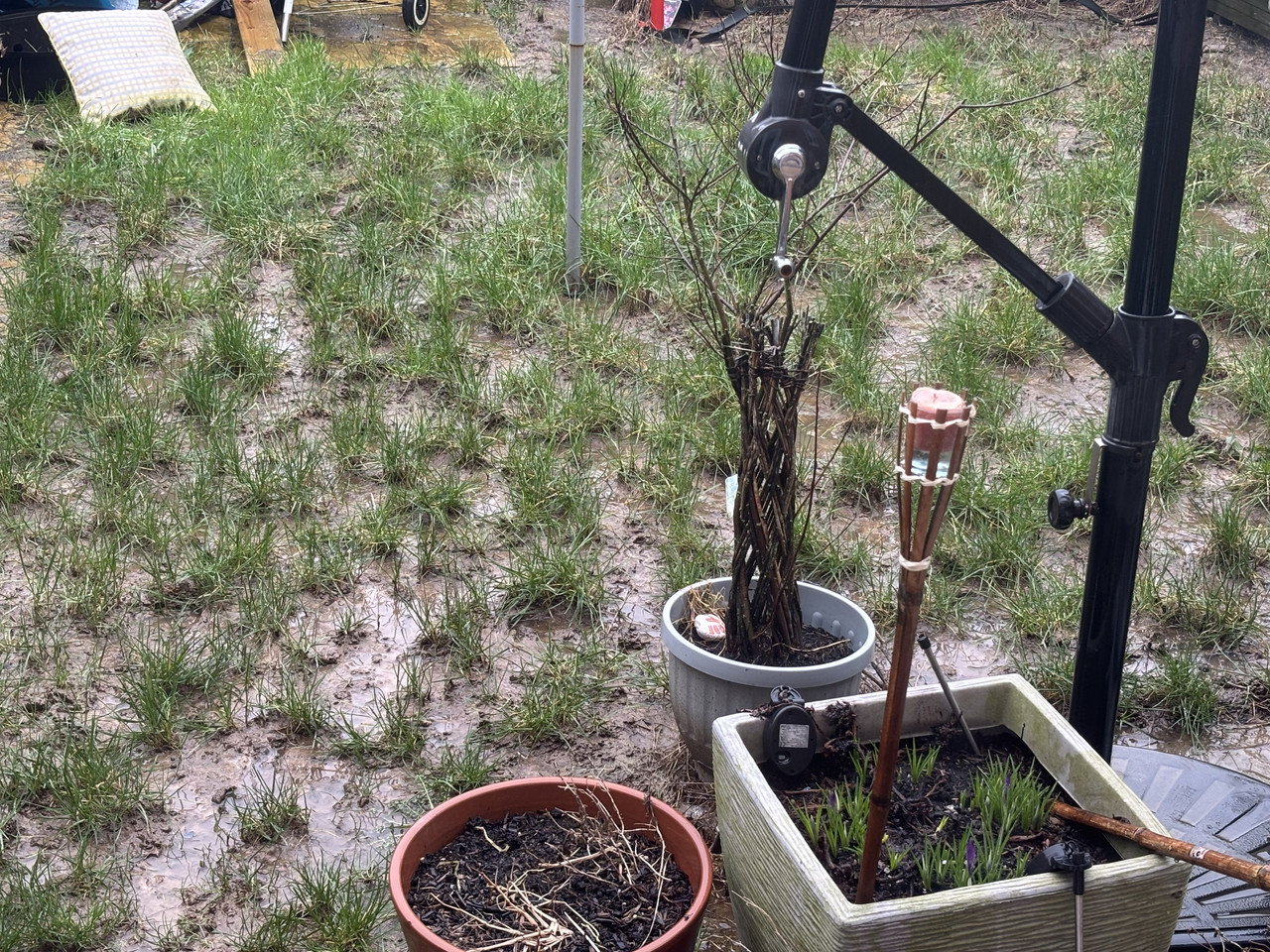
Wow, thats some serious clay compaction and water logging. This, unfortunately, is a common issue with new build housing developers, not considering garden drainage when they build and site their homes, hence me getting hundreds of these queries each year.
I completely sympathise with your situation, and you're absolutely right to feel frustrated. What you're dealing with isn't actually a lawn problem that can be fixed with seed mixes or feeding schedules; it's a fundamental drainage and soil structure issue that's incredibly common on new build developments. The honest truth is that no amount of clay-tolerant grass seed is going to solve what you're facing here.
The core issue is twofold: firstly, your soil is severely compacted from construction traffic, and secondly, there's clearly inadequate or non existent drainage. When developers lay turf directly onto compacted clay subsoil, they're essentially creating a sealed surface that can neither drain nor support healthy root growth. Your lawn is suffocating, and the fact that even weeds won't colonise it tells you everything you need to know about how hostile that growing environment has become.
Why New Build Gardens Are Often Nightmares
New build developments have become notorious among gardeners for leaving homeowners with utterly dreadful growing conditions, and it's worth understanding why this keeps happening. During construction, heavy machinery repeatedly compacts the clay subsoil to a density that's almost concrete like.
Developers then scrape off the valuable topsoil (often selling it elsewhere), dump any subsoil and rubble around the plot, and finish with either the thinnest possible layer of imported topsoil or, as in your case, turf laid straight onto that compacted clay base.
https://youtu.be/SL8qCL_fGeM
This approach might look acceptable for the first viewing, but it's horticultural malpractice that sets homeowners up for years of failure and expense. Heavy clay soil, when properly managed, can actually be wonderfully fertile and moisture-retentive.
But when it's been compacted by diggers and rollers, it becomes an impermeable barrier that holds water on the surface in winter (creating anaerobic conditions that kill grass roots) and sets like concrete in summer, cracking and pulling apart. The grass you started with simply couldn't establish deep enough roots to survive, and now you're left with bare clay that's probably as hard as the car park down your street.
Why Grass Seed Won't Work Here
I know clay tolerant seed mixes sound promising, but they're designed for established clay soils with reasonable structure and drainage, not compacted construction sites masquerading as gardens. Even the toughest grass cultivars need their roots to penetrate the soil, access oxygen, and establish properly. Broadcasting seed onto your current surface would be like trying to grow plants in a clay pot with no drainage holes; the seeds might germinate during a wet spell, but they'll never develop the root systems needed for long term survival.
Top dressing with a topsoil and compost mix would help marginally if you were dealing with a thin, struggling lawn, but when you're starting with bare, compacted clay, you'd need such a thick layer to make any difference that you might as well be rebuilding the whole thing anyway. You'd be throwing good money after bad.
What You Actually Need to Do
Your garden needs proper drainage installation and a realistic reassessment of what surface will actually work in this space. If this area sees regular foot traffic or sits in a naturally low lying spot where water collects, grass was probably never the right choice, even with perfect soil preparation.
A French drain system installed beneath the problem area would channel water away from the surface and prevent that winter waterlogging that's been killing your lawn. This involves digging a trench, laying perforated pipe surrounded by gravel, and giving the water somewhere to drain to (either a soakaway, surface water drain, or lower area of the garden). It's not a small job, but it addresses the actual problem rather than papering over it with seed.
Alternatively, and this might be the more practical solution for your situation, consider whether this area would be better served by a hard surface altogether. A properly laid patio, gravel area, or permeable paving would give you a usable outdoor space that doesn't require the drainage, soil depth, and maintenance that a lawn demands. Many new build gardens simply aren't set up to support healthy grass, and there's no shame in acknowledging that and choosing a surface that actually works with what you've got.
However, that water still has to go or sit somewhere!!
More Help With New Build Lawn Problems
You're definitely not alone in dealing with this nightmare. I've written extensively about lawn problems on heavy clay and new build gardens because it's such a common issue. Here are some other forum discussions that might help you see what others have tried and what's actually worked:
Your instinct about this being beyond salvation for a traditional lawn is probably correct. But that doesn't mean your garden is hopeless; it just means you need a different approach than the one the developer's token turf promised you. Proper drainage or a sensible alternative surface will give you an outdoor space you can actually use and enjoy, rather than one that's perpetually disappointing you every spring.
Sorry to not have better news Ninja!
Lee Garden Ninja
Hi @deepthought
Wow, thats some serious clay compaction and water logging. This, unfortunately, is a common issue with new build housing developers, not considering garden drainage when they build and site their homes, hence me getting hundreds of these queries each year.
I completely sympathise with your situation, and you're absolutely right to feel frustrated. What you're dealing with isn't actually a lawn problem that can be fixed with seed mixes or feeding schedules; it's a fundamental drainage and soil structure issue that's incredibly common on new build developments. The honest truth is that no amount of clay-tolerant grass seed is going to solve what you're facing here.
The core issue is twofold: firstly, your soil is severely compacted from construction traffic, and secondly, there's clearly inadequate or non existent drainage. When developers lay turf directly onto compacted clay subsoil, they're essentially creating a sealed surface that can neither drain nor support healthy root growth. Your lawn is suffocating, and the fact that even weeds won't colonise it tells you everything you need to know about how hostile that growing environment has become.
Why New Build Gardens Are Often Nightmares
New build developments have become notorious among gardeners for leaving homeowners with utterly dreadful growing conditions, and it's worth understanding why this keeps happening. During construction, heavy machinery repeatedly compacts the clay subsoil to a density that's almost concrete like.
Developers then scrape off the valuable topsoil (often selling it elsewhere), dump any subsoil and rubble around the plot, and finish with either the thinnest possible layer of imported topsoil or, as in your case, turf laid straight onto that compacted clay base.
This approach might look acceptable for the first viewing, but it's horticultural malpractice that sets homeowners up for years of failure and expense. Heavy clay soil, when properly managed, can actually be wonderfully fertile and moisture-retentive.
But when it's been compacted by diggers and rollers, it becomes an impermeable barrier that holds water on the surface in winter (creating anaerobic conditions that kill grass roots) and sets like concrete in summer, cracking and pulling apart. The grass you started with simply couldn't establish deep enough roots to survive, and now you're left with bare clay that's probably as hard as the car park down your street.
Why Grass Seed Won't Work Here
I know clay tolerant seed mixes sound promising, but they're designed for established clay soils with reasonable structure and drainage, not compacted construction sites masquerading as gardens. Even the toughest grass cultivars need their roots to penetrate the soil, access oxygen, and establish properly. Broadcasting seed onto your current surface would be like trying to grow plants in a clay pot with no drainage holes; the seeds might germinate during a wet spell, but they'll never develop the root systems needed for long term survival.
Top dressing with a topsoil and compost mix would help marginally if you were dealing with a thin, struggling lawn, but when you're starting with bare, compacted clay, you'd need such a thick layer to make any difference that you might as well be rebuilding the whole thing anyway. You'd be throwing good money after bad.
What You Actually Need to Do
Your garden needs proper drainage installation and a realistic reassessment of what surface will actually work in this space. If this area sees regular foot traffic or sits in a naturally low lying spot where water collects, grass was probably never the right choice, even with perfect soil preparation.
A French drain system installed beneath the problem area would channel water away from the surface and prevent that winter waterlogging that's been killing your lawn. This involves digging a trench, laying perforated pipe surrounded by gravel, and giving the water somewhere to drain to (either a soakaway, surface water drain, or lower area of the garden). It's not a small job, but it addresses the actual problem rather than papering over it with seed.
Alternatively, and this might be the more practical solution for your situation, consider whether this area would be better served by a hard surface altogether. A properly laid patio, gravel area, or permeable paving would give you a usable outdoor space that doesn't require the drainage, soil depth, and maintenance that a lawn demands. Many new build gardens simply aren't set up to support healthy grass, and there's no shame in acknowledging that and choosing a surface that actually works with what you've got.
However, that water still has to go or sit somewhere!!
More Help With New Build Lawn Problems
You're definitely not alone in dealing with this nightmare. I've written extensively about lawn problems on heavy clay and new build gardens because it's such a common issue. Here are some other forum discussions that might help you see what others have tried and what's actually worked:
Your instinct about this being beyond salvation for a traditional lawn is probably correct. But that doesn't mean your garden is hopeless; it just means you need a different approach than the one the developer's token turf promised you. Proper drainage or a sensible alternative surface will give you an outdoor space you can actually use and enjoy, rather than one that's perpetually disappointing you every spring.
Sorry to not have better news Ninja!
Lee Garden Ninja
 Lee Burkhill: Award Winning Designer & BBC 1's Garden Rescue Presenters Official Blog