Hi @marcus-g
What a great question. The fact that you have noticed this behavioural difference between stone fruit and top fruit when pruned shows you are paying close attention to how your trees actually respond rather than just following instructions, which is exactly the right way to develop real pruning instinct!
Why Summer Pruning is Essential for Stone Fruit
Let me start with the silver leaf question because it underpins everything else about how and when you approach plums and cherries.
Silver leaf disease (Chondrostereum purpureum) is a fungal pathogen that enters stone fruit trees exclusively through fresh pruning wounds. The spores are airborne and present in the environment throughout the year, but they are most abundant and most dangerous during the autumn and winter months when wet, cool conditions favour their germination and spread.
The critical window of vulnerability runs roughly from October through to April, which is precisely why the RHS and every serious fruit grower recommends that all pruning of plums, cherries, damsons, apricots, and peaches is carried out between May and August when the spores are at their lowest levels and the tree's natural wound-sealing response is at its most vigorous.
Summer pruning allows the cut surfaces to dry and begin callusing over rapidly in warm conditions, creating a physical barrier against infection before the high-risk autumn spore season arrives. It is not that the tree cannot be pruned at other times. It is that doing so dramatically increases the probability of introducing a disease for which there is no cure and which can kill a tree within two to three seasons of infection. The risk simply is not worth taking.
https://youtu.be/EWPEuJ48kmU
Summer Pruning Impacts
Now to the really interesting part of your question, because you have identified something that distinguishes stone fruit from top fruit in their pruning response and it is worth understanding why.
When you shorten a lateral on an apple or pear in summer, the tree tends to respond by forming fruit buds at or near the cut point rather than pushing vigorous new vegetative growth. This is partly why summer pruning of apples is such a useful technique for encouraging fruiting spurs to develop. The tree interprets the summer check as a signal to move from vegetative mode toward reproductive mode, which is exactly the behaviour you want.
Stone fruit, cherries and plums in particular, respond quite differently. When you shorten a branch on a cherry in summer, the tree's strong apical dominance and naturally vigorous growth habit means it often pushes one or more new vegetative shoots from buds just below the cut rather than forming fruit buds. You are entirely right that a shortened lateral will frequently fork and produce two or more new extension shoots rather than settling into a fruiting spur habit. This is not a failure of the pruning. It is simply the tree's character expressing itself. Cherries and plums are constitutionally more vigorous and less easily persuaded into fruiting mode by a simple shortening cut than apples are.
This is one of the reasons that the open goblet training system suits cherries and plums so well, because rather than trying to fight the tree's tendency to produce vigorous extension growth, you are working with it by selecting the strongest, best-placed shoots to form the permanent framework and removing everything that competes with or crosses through that structure.
Shortening the Leaders by a Third to a Half in Year One and Two
For a young cherry or plum in its first or second leaf, summer pruning is primarily about establishing the open goblet framework rather than managing fruiting, and the approach is quite specific.
Select four to five strong primary framework branches radiating outward and upward from the main stem at roughly equal spacing around the tree. These become your permanent scaffold. In summer of year one or two, shorten each of these leaders by approximately one third to one half of the current season's growth, cutting to an outward-facing bud. This does two things simultaneously. It reduces the length of the leader, which moderates the tree's vigour and encourages the lower buds on that branch to break into new laterals rather than all the energy being drawn to the tip. And it begins to build that characteristic open, vase-shaped structure that allows light and air to penetrate the centre of the tree.
The centre of the tree should be kept clear. Any shoots growing inward toward the centre, any crossing branches, and any strongly vertical shoots growing from the framework branches should be removed entirely at their point of origin rather than shortened, because shortening them simply encourages the vigorous forking response you have already identified in your question.
What to Expect After Summer Pruning
Given what you now understand about how stone fruit responds to cutting, set your expectations accordingly. Those shortened leaders will very likely push one or two new laterals from below the cut before the end of the season. This is normal and not a problem. By the following summer you will have more framework to work with and can continue the process of selecting the best-placed shoots, removing congestion, and gradually building the goblet shape to the height and spread that suits your space.
Fruit buds on cherries tend to form on two-year-old wood and on short spurs on older wood rather than on the extension growth tips as apples do, so the fruiting behaviour follows the framework establishment rather than competing with it. Get the structure right in years one and two and the fruiting takes care of itself from year three onward.
Making Clean Cuts and Protecting the Wound
Always use sharp, clean tools and make cuts to just above an outward-facing bud at a slight angle sloping away from the bud. Sterilise your secateurs between trees with a dilute bleach solution or surgical spirit as a basic biosecurity precaution, particularly with stone fruit where the consequences of carrying disease between trees are serious. Some growers apply a wound sealant paste to larger cuts on stone fruit as an additional precaution against silver leaf, though the evidence for this is mixed. On cuts under a centimetre in diameter on a healthy young tree in summer I would not lose sleep over it. On larger cuts or if silver leaf is already present in your area, it is worth considering.
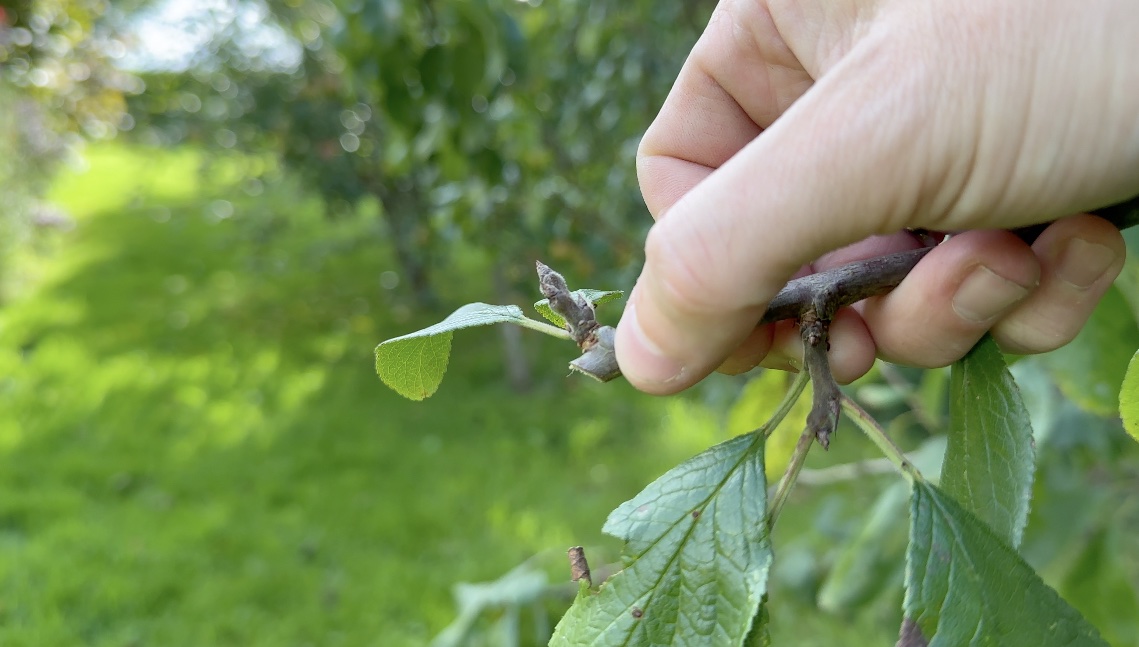
My full cherry tree pruning guide covers the full pruning cycle across the life of the tree, and I have also put together a video walkthrough that shows the technique in practice rather than just describing it, which many people find much easier to follow when they are standing in front of the tree with secateurs in hand.
Cherry Tree Pruning Guide
Brilliant question Marcus. The gardeners who ask why rather than just following the rules always develop the best instinct for this!!
Lee Garden Ninja
Hi @marcus-g
What a great question. The fact that you have noticed this behavioural difference between stone fruit and top fruit when pruned shows you are paying close attention to how your trees actually respond rather than just following instructions, which is exactly the right way to develop real pruning instinct!
Why Summer Pruning is Essential for Stone Fruit
Let me start with the silver leaf question because it underpins everything else about how and when you approach plums and cherries.
Silver leaf disease (Chondrostereum purpureum) is a fungal pathogen that enters stone fruit trees exclusively through fresh pruning wounds. The spores are airborne and present in the environment throughout the year, but they are most abundant and most dangerous during the autumn and winter months when wet, cool conditions favour their germination and spread.
The critical window of vulnerability runs roughly from October through to April, which is precisely why the RHS and every serious fruit grower recommends that all pruning of plums, cherries, damsons, apricots, and peaches is carried out between May and August when the spores are at their lowest levels and the tree's natural wound-sealing response is at its most vigorous.
Summer pruning allows the cut surfaces to dry and begin callusing over rapidly in warm conditions, creating a physical barrier against infection before the high-risk autumn spore season arrives. It is not that the tree cannot be pruned at other times. It is that doing so dramatically increases the probability of introducing a disease for which there is no cure and which can kill a tree within two to three seasons of infection. The risk simply is not worth taking.
Summer Pruning Impacts
Now to the really interesting part of your question, because you have identified something that distinguishes stone fruit from top fruit in their pruning response and it is worth understanding why.
When you shorten a lateral on an apple or pear in summer, the tree tends to respond by forming fruit buds at or near the cut point rather than pushing vigorous new vegetative growth. This is partly why summer pruning of apples is such a useful technique for encouraging fruiting spurs to develop. The tree interprets the summer check as a signal to move from vegetative mode toward reproductive mode, which is exactly the behaviour you want.
Stone fruit, cherries and plums in particular, respond quite differently. When you shorten a branch on a cherry in summer, the tree's strong apical dominance and naturally vigorous growth habit means it often pushes one or more new vegetative shoots from buds just below the cut rather than forming fruit buds. You are entirely right that a shortened lateral will frequently fork and produce two or more new extension shoots rather than settling into a fruiting spur habit. This is not a failure of the pruning. It is simply the tree's character expressing itself. Cherries and plums are constitutionally more vigorous and less easily persuaded into fruiting mode by a simple shortening cut than apples are.
This is one of the reasons that the open goblet training system suits cherries and plums so well, because rather than trying to fight the tree's tendency to produce vigorous extension growth, you are working with it by selecting the strongest, best-placed shoots to form the permanent framework and removing everything that competes with or crosses through that structure.
Shortening the Leaders by a Third to a Half in Year One and Two
For a young cherry or plum in its first or second leaf, summer pruning is primarily about establishing the open goblet framework rather than managing fruiting, and the approach is quite specific.
Select four to five strong primary framework branches radiating outward and upward from the main stem at roughly equal spacing around the tree. These become your permanent scaffold. In summer of year one or two, shorten each of these leaders by approximately one third to one half of the current season's growth, cutting to an outward-facing bud. This does two things simultaneously. It reduces the length of the leader, which moderates the tree's vigour and encourages the lower buds on that branch to break into new laterals rather than all the energy being drawn to the tip. And it begins to build that characteristic open, vase-shaped structure that allows light and air to penetrate the centre of the tree.
The centre of the tree should be kept clear. Any shoots growing inward toward the centre, any crossing branches, and any strongly vertical shoots growing from the framework branches should be removed entirely at their point of origin rather than shortened, because shortening them simply encourages the vigorous forking response you have already identified in your question.
What to Expect After Summer Pruning
Given what you now understand about how stone fruit responds to cutting, set your expectations accordingly. Those shortened leaders will very likely push one or two new laterals from below the cut before the end of the season. This is normal and not a problem. By the following summer you will have more framework to work with and can continue the process of selecting the best-placed shoots, removing congestion, and gradually building the goblet shape to the height and spread that suits your space.
Fruit buds on cherries tend to form on two-year-old wood and on short spurs on older wood rather than on the extension growth tips as apples do, so the fruiting behaviour follows the framework establishment rather than competing with it. Get the structure right in years one and two and the fruiting takes care of itself from year three onward.
Making Clean Cuts and Protecting the Wound
Always use sharp, clean tools and make cuts to just above an outward-facing bud at a slight angle sloping away from the bud. Sterilise your secateurs between trees with a dilute bleach solution or surgical spirit as a basic biosecurity precaution, particularly with stone fruit where the consequences of carrying disease between trees are serious. Some growers apply a wound sealant paste to larger cuts on stone fruit as an additional precaution against silver leaf, though the evidence for this is mixed. On cuts under a centimetre in diameter on a healthy young tree in summer I would not lose sleep over it. On larger cuts or if silver leaf is already present in your area, it is worth considering.
My full cherry tree pruning guide covers the full pruning cycle across the life of the tree, and I have also put together a video walkthrough that shows the technique in practice rather than just describing it, which many people find much easier to follow when they are standing in front of the tree with secateurs in hand.
Cherry Tree Pruning Guide
Brilliant question Marcus. The gardeners who ask why rather than just following the rules always develop the best instinct for this!!
Lee Garden Ninja
 Lee Burkhill: Award Winning Designer & BBC 1's Garden Rescue Presenters Official Blog