Hi @laura_1985
Welcome to the Garden Ninja community and thank you for sharing such clear photos of both plants. These are really helpful in working out what's going on, and the good news is that the picture is quite different for each plant so let me deal with them separately. I can understand why you're panicing and hopefully I can help clear up what you're looking at.
The Salix Willow
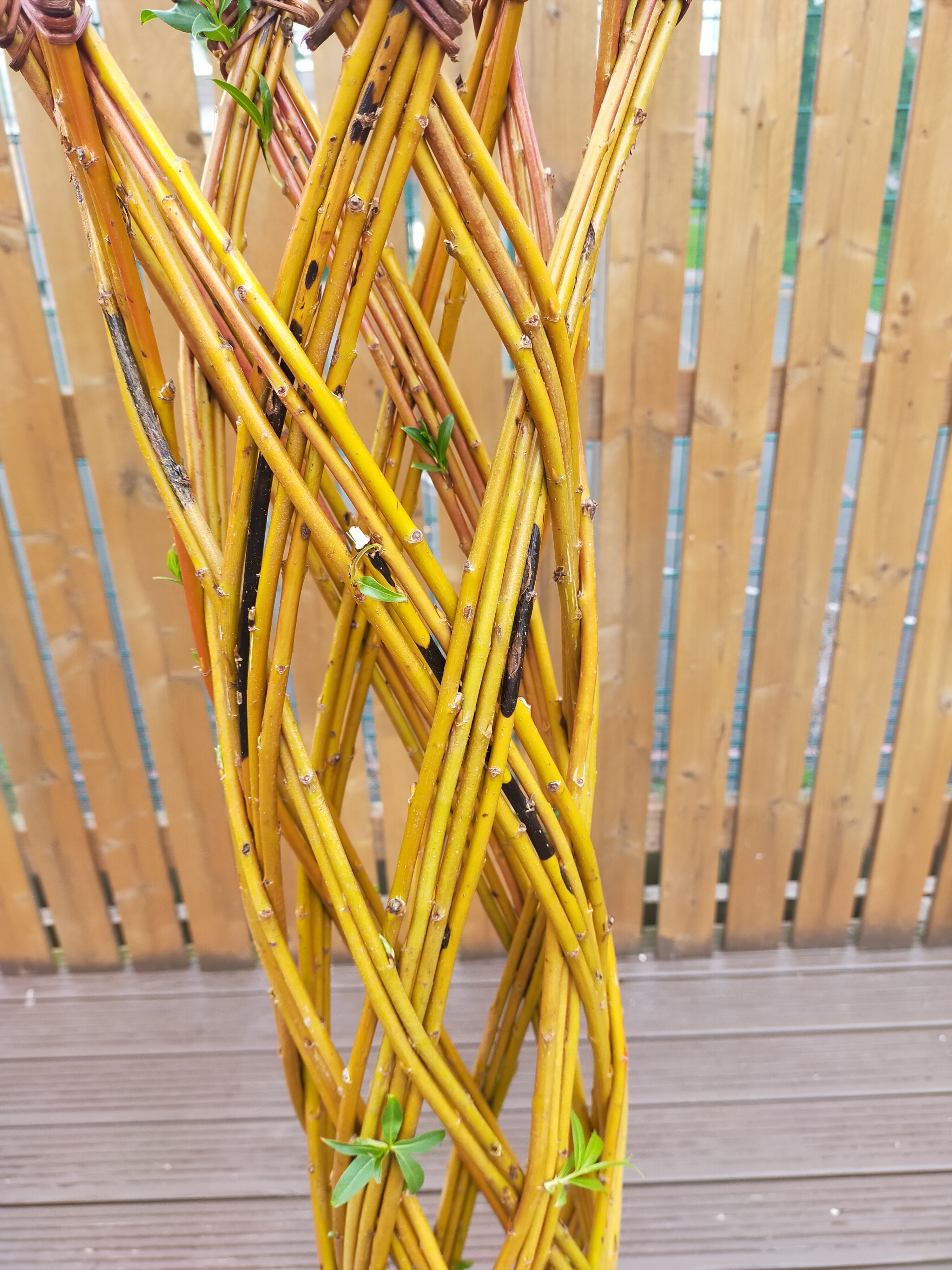
Looking at your photo of the willow stems, he black marks and discolouration you're seeing on the yellow stems are consistent with willow anthracnose or a related fungal infection, which is extremely common on ornamental willows particularly after a wet spring and woven willows. The small green shoots you can see pushing through at the base and lower sections of the stems are actually encouraging signs that the plant still has plenty of life in it and is trying to regenerate from the healthy tissue.
Removing the worst affected branches as you've done is exactly the right first step. The key now is to cut back to genuinely healthy wood, making clean cuts with sterilised secateurs, and to dispose of all the removed material in your general waste rather than composting it as the fungal spores will otherwise persist and reinfect the plant. Avoid leaving any dead stubs as these become entry points for further infection.
The structure of the woven stems does create a slightly humid microclimate in the centre which fungal diseases love, so improving airflow by thinning any congested areas where stems are crossing and touching will help reduce the conditions the fungus thrives in going forward. You are not fighting a losing battle here. Willows are extraordinarily vigorous plants and as long as healthy growth is still present, which yours clearly is, they will push through with the right care. My complete flamingo willow care guide covers the most common disease and care issues with ornamental willows in detail and is well worth working through alongside this advice.
The Buxus Box Ball
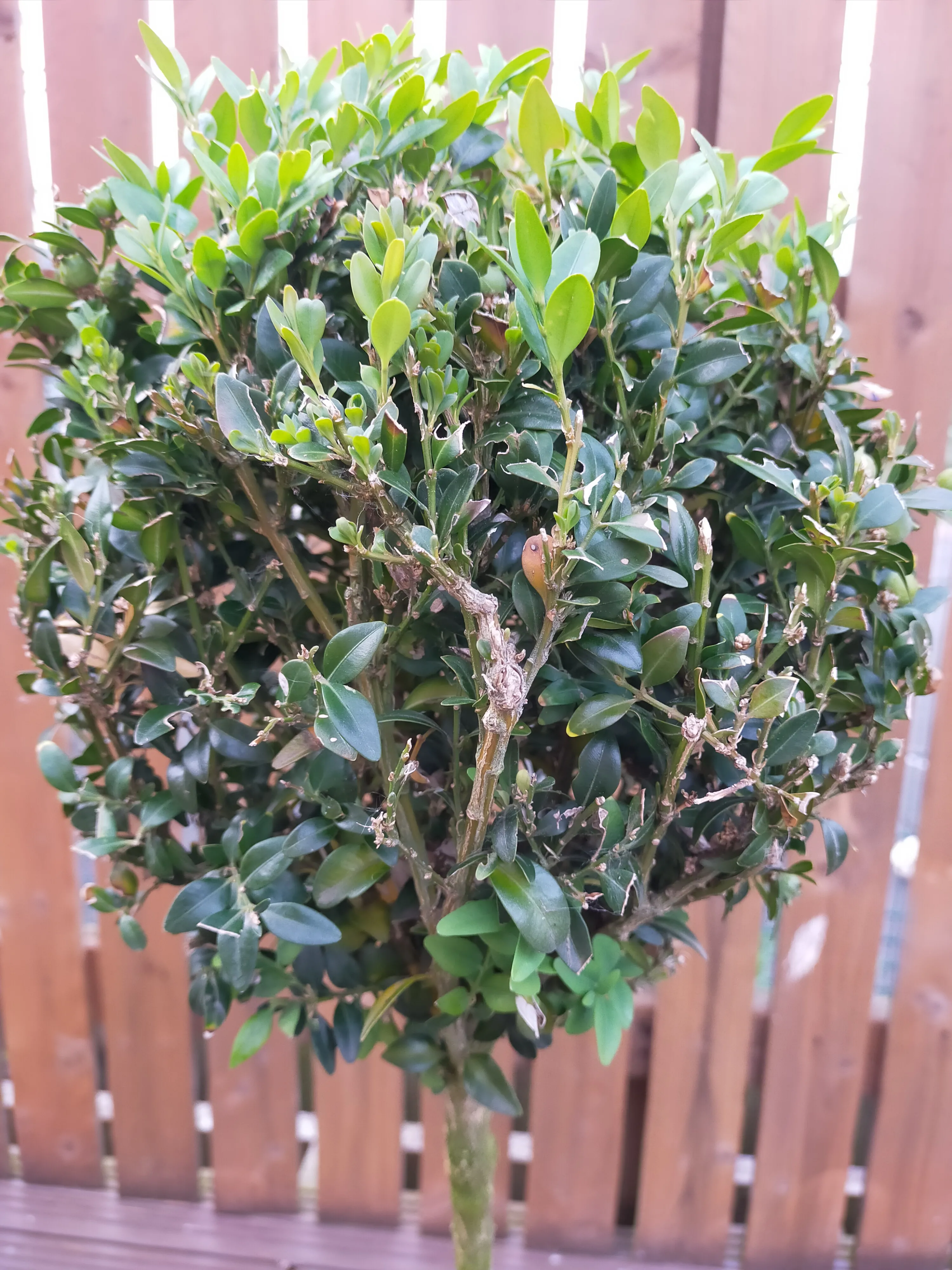
Your box ball is actually looking considerably better than you might think.
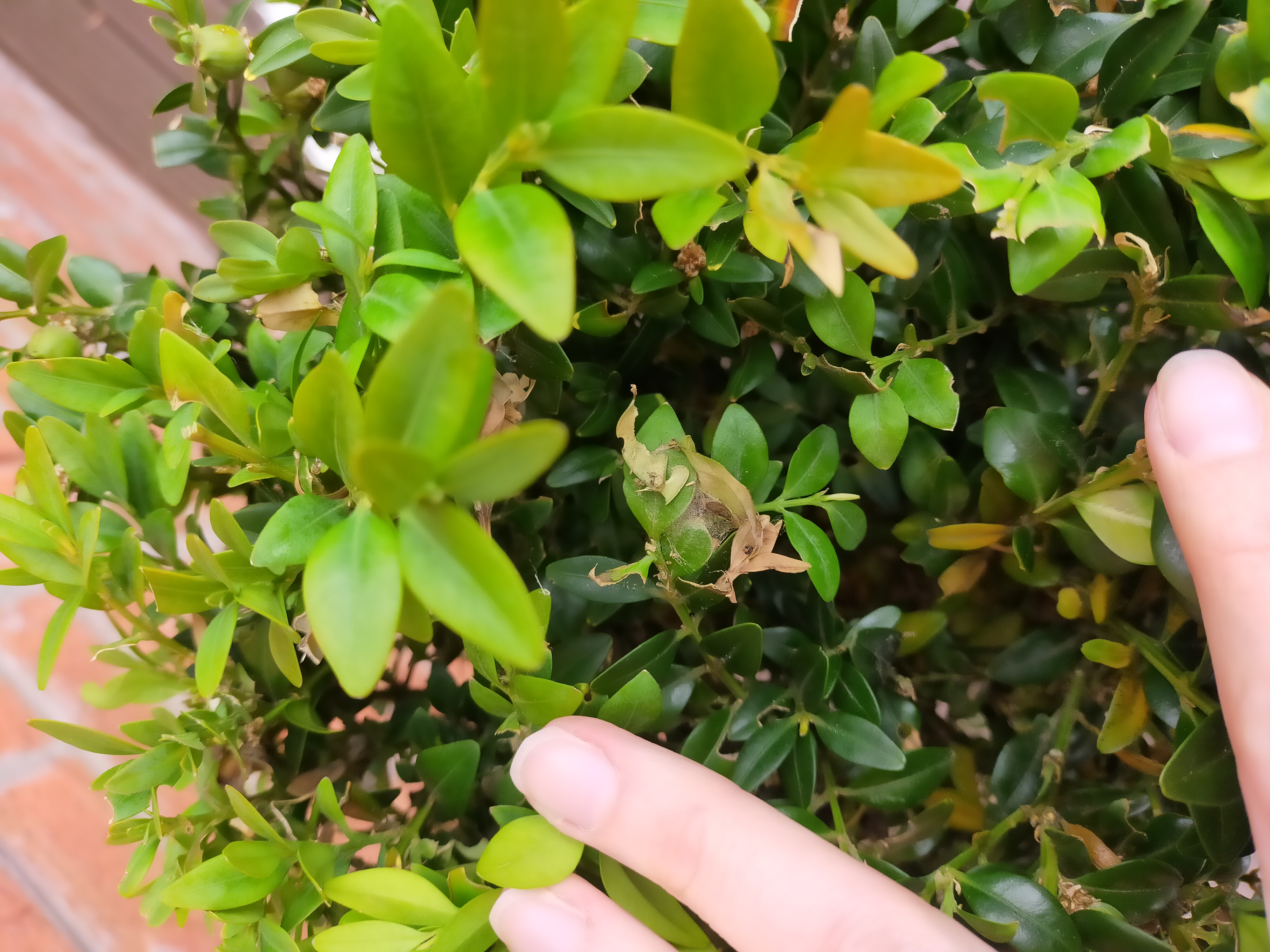
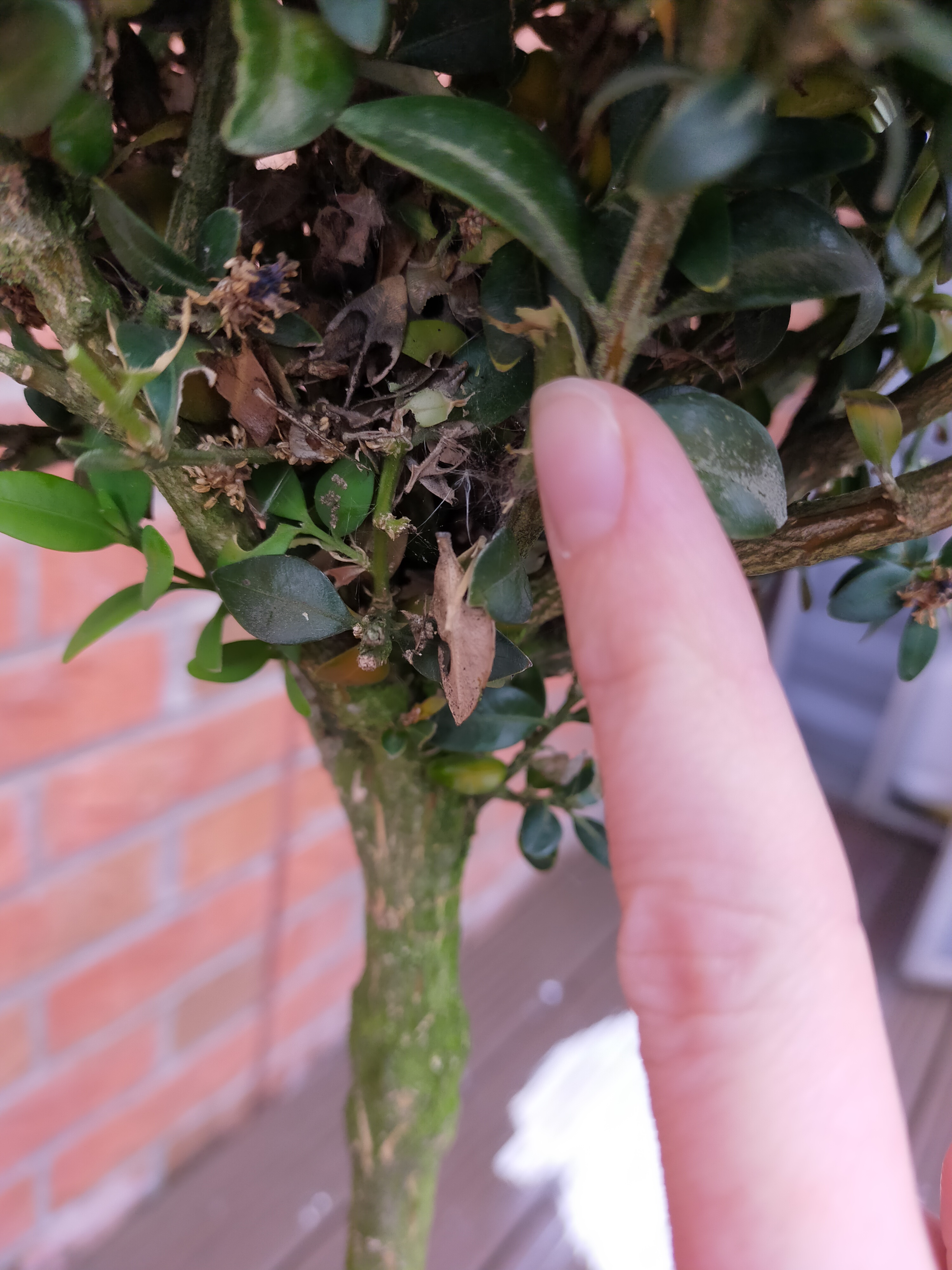
The browning patches on box can have several causes and it is worth identifying which you're dealing with before taking action. Box blight (Cylindrocladium buxicola) presents as tan or straw coloured patches that spread relatively quickly, often with a darker border, and the affected stems typically show black streaking when you look at them closely. Box tree caterpillar (Cydalima perspectalis) is increasingly common across the UK and causes browning by the larvae feeding inside the canopy, often accompanied by fine webbing and small green or yellow caterpillars if you look inside the dense growth. A third possibility, particularly in a container, is simply drought stress or a pot that has become root bound, which causes browning from the inside out as airflow is restricted in the dense centre.
https://youtu.be/oYKWTqstPds
Have a look inside the canopy with your fingers and a pair of gloves. If you find webbing and small caterpillars that is your answer and the treatment is very different from blight. If the stems at the affected patches show black streaking that points more towards blight. And if neither of those is present and the plant is in a container, check when it was last potted on and whether it needs fresh compost and a larger pot.
My complete box hedge pruning and care guide covers diagnosis and treatment of both blight and box tree caterpillar and will help you work through the identification systematically.
Overall, neither plant is beyond saving and you've already done the right thing by removing the worst affected material promptly. Do post some more close up photos of the browning patches on the box if you can, particularly any shots of the interior stems, and I can give you a more precise steer on which issue you're dealing with.
Happy Gardening!
Lee - Garden Ninja
Hi @laura_1985
Welcome to the Garden Ninja community and thank you for sharing such clear photos of both plants. These are really helpful in working out what's going on, and the good news is that the picture is quite different for each plant so let me deal with them separately. I can understand why you're panicing and hopefully I can help clear up what you're looking at.
The Salix Willow
Looking at your photo of the willow stems, he black marks and discolouration you're seeing on the yellow stems are consistent with willow anthracnose or a related fungal infection, which is extremely common on ornamental willows particularly after a wet spring and woven willows. The small green shoots you can see pushing through at the base and lower sections of the stems are actually encouraging signs that the plant still has plenty of life in it and is trying to regenerate from the healthy tissue.
Removing the worst affected branches as you've done is exactly the right first step. The key now is to cut back to genuinely healthy wood, making clean cuts with sterilised secateurs, and to dispose of all the removed material in your general waste rather than composting it as the fungal spores will otherwise persist and reinfect the plant. Avoid leaving any dead stubs as these become entry points for further infection.
The structure of the woven stems does create a slightly humid microclimate in the centre which fungal diseases love, so improving airflow by thinning any congested areas where stems are crossing and touching will help reduce the conditions the fungus thrives in going forward. You are not fighting a losing battle here. Willows are extraordinarily vigorous plants and as long as healthy growth is still present, which yours clearly is, they will push through with the right care. My complete flamingo willow care guide covers the most common disease and care issues with ornamental willows in detail and is well worth working through alongside this advice.
The Buxus Box Ball
Your box ball is actually looking considerably better than you might think.
The browning patches on box can have several causes and it is worth identifying which you're dealing with before taking action. Box blight (Cylindrocladium buxicola) presents as tan or straw coloured patches that spread relatively quickly, often with a darker border, and the affected stems typically show black streaking when you look at them closely. Box tree caterpillar (Cydalima perspectalis) is increasingly common across the UK and causes browning by the larvae feeding inside the canopy, often accompanied by fine webbing and small green or yellow caterpillars if you look inside the dense growth. A third possibility, particularly in a container, is simply drought stress or a pot that has become root bound, which causes browning from the inside out as airflow is restricted in the dense centre.
Have a look inside the canopy with your fingers and a pair of gloves. If you find webbing and small caterpillars that is your answer and the treatment is very different from blight. If the stems at the affected patches show black streaking that points more towards blight. And if neither of those is present and the plant is in a container, check when it was last potted on and whether it needs fresh compost and a larger pot.
My complete box hedge pruning and care guide covers diagnosis and treatment of both blight and box tree caterpillar and will help you work through the identification systematically.
Overall, neither plant is beyond saving and you've already done the right thing by removing the worst affected material promptly. Do post some more close up photos of the browning patches on the box if you can, particularly any shots of the interior stems, and I can give you a more precise steer on which issue you're dealing with.
Happy Gardening!
Lee - Garden Ninja
 Lee Burkhill: Award Winning Designer & BBC 1's Garden Rescue Presenters Official Blog