Hi @jadahaz
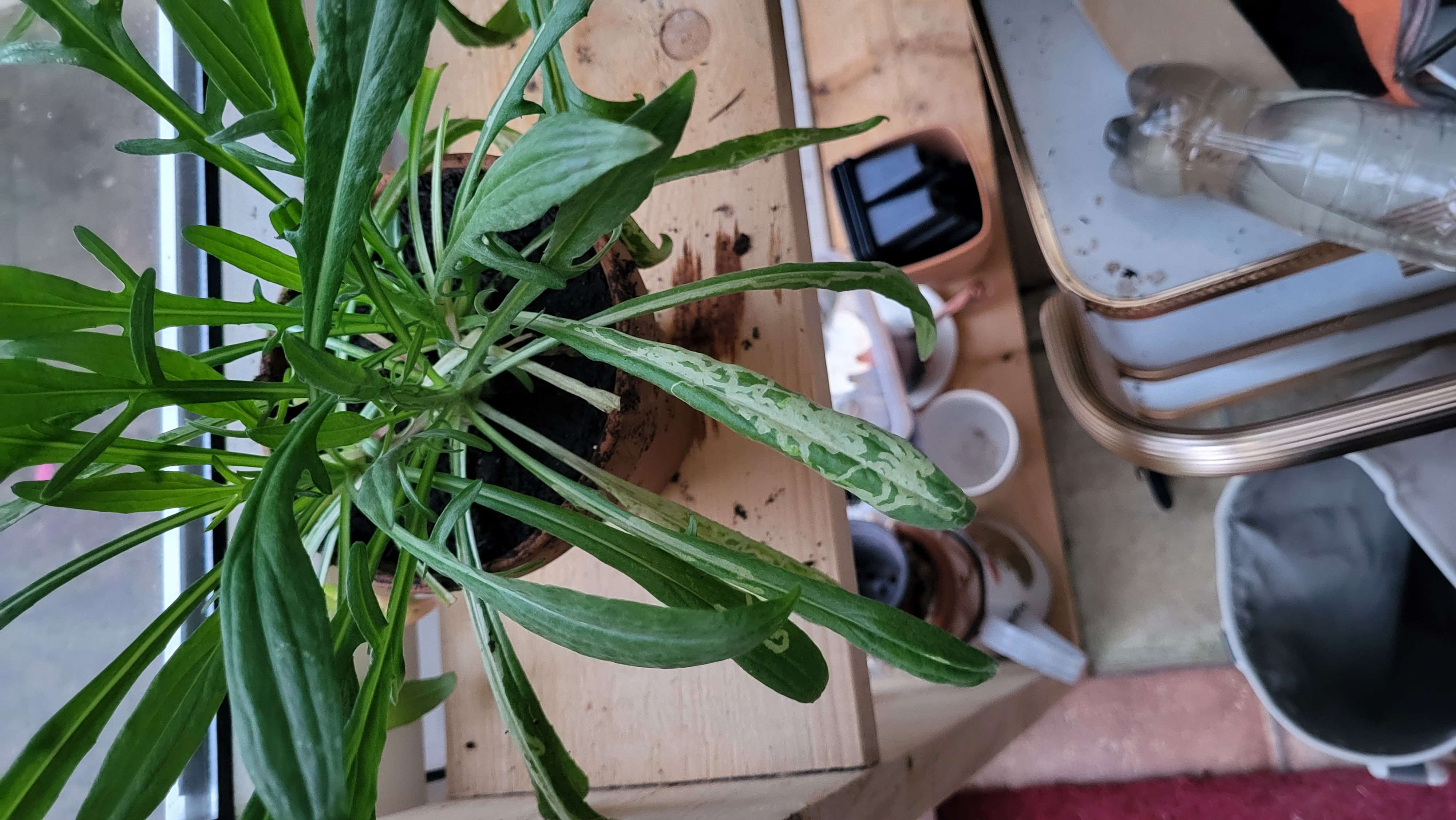
Thanks for your question about the strange white trails in your plants' leaves. They are leaf miners. A common pest in our gardens, don't worry, it won't kill the plant, but leaf miner damage looks unsightly and can be a vector to weaken plants, which other pests like slugs, snails or diseases can then take advantage of! I've already written about plant diseases, but leaf miners are a plant pest.
Leaf miners are destructive garden pests that cause significant damage to a wide range of plants. They are the larvae of various insects, such as flies, moths, and beetles. These pests feed by tunnelling through the leaf tissue, creating distinctive winding trails that can weaken plants if left untreated.
The most common types of leaf miners include:
- Liriomyza spp. (Leaf Miner Flies): These primarily affect vegetables like tomatoes, spinach, and cucumbers.
- Tuta absoluta (Tomato Leaf Miner): A serious pest for tomatoes.
- Phyllocnistis spp. (Citrus Leaf Miners): Common on citrus trees.
- Lyriomyza bryoniae (Tomato Leaf Miner Fly): Another notorious vegetable pest.
Plants Most Affected by Leaf Miner
Leaf miners are opportunities but do target solft fleshy leaves and no plant is fully immune. Leaf miners target a wide variety of plants, including:
Vegetables:
- Tomatoes - Solanum lycopersicum
- Spinach - Spinacia oleracea
- Cucumbers - Cucumis sativus
- Peppers - Capsicum annuum
- Beans - Phaseolus vulgaris
Ornamental Plants:
- Roses - Rosa spp.
- Chrysanthemums - Chrysanthemum spp.
- Marigolds - Tagetes spp.
- Cornflowers - Centaurea cyanus
Fruit Trees:
- Citrus - Citrus spp.
- Apple - Malus domestica
- Pear - Pyrus communis
Shade Trees:
- Elm - Ulmus spp.
- Oak - Quercus spp.
How to Identify Leaf Miner Damage
- Leaf Appearance: Winding, silvery-white trails on leaves.
- Discolouration: Leaves may turn yellow, brown, or wilt prematurely.
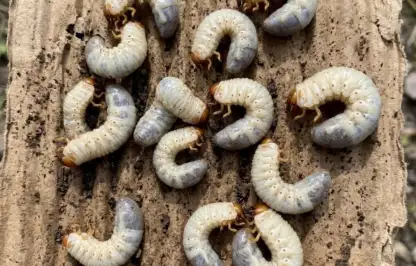
- Larvae Presence: Gently peel back affected leaves to reveal small, worm-like larvae.
Control and Treatment Methods of Leaf Miner
Leaf miners can be a real pest, especially in allotment gardens. They impact tomatoes, fruits, and other vegetables, leaving plants weakened. Let's look at some of the best methods to eliminate leaf miners.
Manual Removal
- Regularly inspect plants for signs of infestation.
- Prune and dispose of affected leaves.
- Avoid composting infected material to prevent further spread.
Encourage Beneficial Insects
- Natural predators like parasitic wasps Diglyphus isaea and lacewings feed on leaf miner larvae.
- Plant companion flowers such as marigolds and dill to attract these beneficial insects.
Use Row Covers
- Apply floating row covers to prevent egg-laying on young plants.
- Ensure covers are properly secured to avoid pest infiltration.
Apply Organic Sprays
- Neem Oil: Disrupts leaf miner growth and development.
- Spinosad-Based Products: Derived from natural bacteria, effective against larvae.
Introduce Beneficial Nematodes
- These microscopic worms attack larvae in the soil, reducing pest populations.
Insecticidal Soaps
- Use insecticidal soaps to treat infestations, but avoid applying them during extreme heat to prevent plant damage.
Preventive Measures
- Maintain Plant Health: Healthy plants can resist pest damage more effectively.
- Crop Rotation: Rotate crops yearly to disrupt the pest lifecycle.
- Inspect New Plants: Examine new plants for signs of infestation before planting.
- Clean Up Debris: Regularly remove dead leaves and weeds where pests might hide.
The best method is to remove and destroy the infected leaves in my opinion. Do let us know how you get on!
Happy Gardening.
Lee Garden Ninja
Hi @jadahaz
Thanks for your question about the strange white trails in your plants' leaves. They are leaf miners. A common pest in our gardens, don't worry, it won't kill the plant, but leaf miner damage looks unsightly and can be a vector to weaken plants, which other pests like slugs, snails or diseases can then take advantage of! I've already written about plant diseases, but leaf miners are a plant pest.
Leaf miners are destructive garden pests that cause significant damage to a wide range of plants. They are the larvae of various insects, such as flies, moths, and beetles. These pests feed by tunnelling through the leaf tissue, creating distinctive winding trails that can weaken plants if left untreated.
The most common types of leaf miners include:
- Liriomyza spp. (Leaf Miner Flies): These primarily affect vegetables like tomatoes, spinach, and cucumbers.
- Tuta absoluta (Tomato Leaf Miner): A serious pest for tomatoes.
- Phyllocnistis spp. (Citrus Leaf Miners): Common on citrus trees.
- Lyriomyza bryoniae (Tomato Leaf Miner Fly): Another notorious vegetable pest.
Plants Most Affected by Leaf Miner
Leaf miners are opportunities but do target solft fleshy leaves and no plant is fully immune. Leaf miners target a wide variety of plants, including:
Vegetables:
- Tomatoes - Solanum lycopersicum
- Spinach - Spinacia oleracea
- Cucumbers - Cucumis sativus
- Peppers - Capsicum annuum
- Beans - Phaseolus vulgaris
Ornamental Plants:
- Roses - Rosa spp.
- Chrysanthemums - Chrysanthemum spp.
- Marigolds - Tagetes spp.
- Cornflowers - Centaurea cyanus
Fruit Trees:
- Citrus - Citrus spp.
- Apple - Malus domestica
- Pear - Pyrus communis
Shade Trees:
- Elm - Ulmus spp.
- Oak - Quercus spp.
How to Identify Leaf Miner Damage
- Leaf Appearance: Winding, silvery-white trails on leaves.
- Discolouration: Leaves may turn yellow, brown, or wilt prematurely.
- Larvae Presence: Gently peel back affected leaves to reveal small, worm-like larvae.
Control and Treatment Methods of Leaf Miner
Leaf miners can be a real pest, especially in allotment gardens. They impact tomatoes, fruits, and other vegetables, leaving plants weakened. Let's look at some of the best methods to eliminate leaf miners.
Manual Removal
- Regularly inspect plants for signs of infestation.
- Prune and dispose of affected leaves.
- Avoid composting infected material to prevent further spread.
Encourage Beneficial Insects
- Natural predators like parasitic wasps Diglyphus isaea and lacewings feed on leaf miner larvae.
- Plant companion flowers such as marigolds and dill to attract these beneficial insects.
Use Row Covers
- Apply floating row covers to prevent egg-laying on young plants.
- Ensure covers are properly secured to avoid pest infiltration.
Apply Organic Sprays
- Neem Oil: Disrupts leaf miner growth and development.
- Spinosad-Based Products: Derived from natural bacteria, effective against larvae.
Introduce Beneficial Nematodes
- These microscopic worms attack larvae in the soil, reducing pest populations.
Insecticidal Soaps
- Use insecticidal soaps to treat infestations, but avoid applying them during extreme heat to prevent plant damage.
Preventive Measures
- Maintain Plant Health: Healthy plants can resist pest damage more effectively.
- Crop Rotation: Rotate crops yearly to disrupt the pest lifecycle.
- Inspect New Plants: Examine new plants for signs of infestation before planting.
- Clean Up Debris: Regularly remove dead leaves and weeds where pests might hide.
The best method is to remove and destroy the infected leaves in my opinion. Do let us know how you get on!
Happy Gardening.
Lee Garden Ninja

 Lee Burkhill: Award Winning Designer & BBC 1's Garden Rescue Presenters Official Blog