Hi @suee
Firstly, it's great to have you here on the forum, and what an excellent question about your holly trees! I can absolutely understand your concern about those black formations appearing in the leaf axils - it's exactly the kind of observation that shows you're really paying attention to your plants, which is brilliant.
Let me put your mind at ease straight away: what you're seeing is most likely completely normal and actually rather exciting.
Black Formations where Holly Berries Should Bee
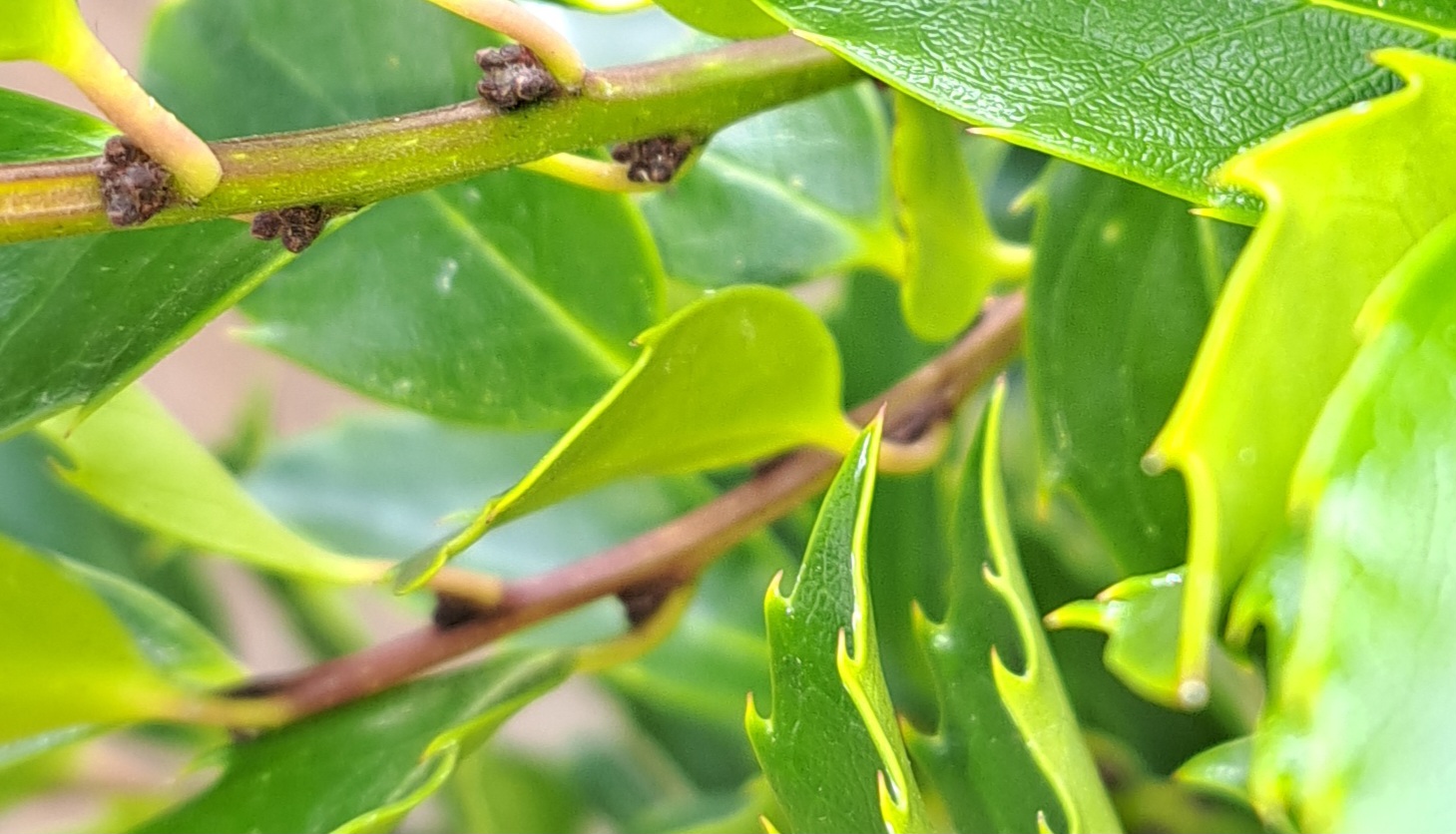
The small black formations you're spotting in the leaf axils are almost certainly developing berry buds, and seeing them at this stage is actually perfectly normal.
Here's the thing that often surprises people - holly berry development doesn't start with obvious green berries. In the center of female holly flowers, there's initially a small, often dark formation that, if successfully pollinated, will develop into those gorgeous red berries we all associate with Christmas.
What you're observing could very well be the earliest stages of berry development. These formations typically start small and dark before gradually developing into the more recognisable green berries that eventually turn that stunning red come autumn. The fact that they're appearing in the leaf axils (where the leaves meet the stem) is exactly where you'd expect to see developing holly berries forming.
Your Pollination Strategy Was Absolutely Spot On!
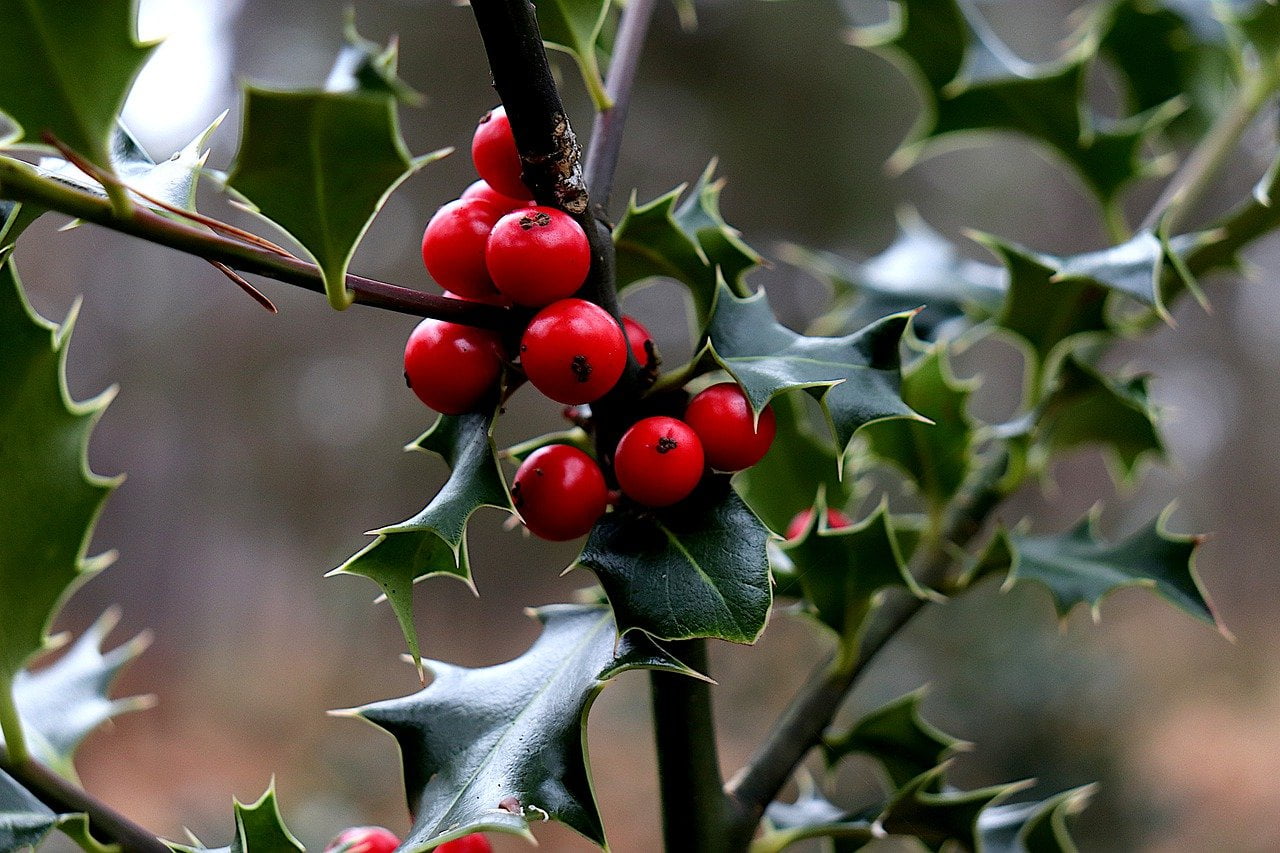
I've got to say, your instinct about needing a male pollinator was bang on the money . You clearly understand how hollies work! Only female holly plants produce berries, and they absolutely will only fruit if a nearby male plant has cross-pollinated them. The general rule is one male plant for every three female holly plants in the garden, and the brilliant news is that the male and female plants don't have to be right next to each other. Bees and other pollinators can carry pollen between plants; however, it's recommended that male plants are within approximately 50 feet of the females for optimal results.
Why No Berries in 2024? The Mystery Solved
There are several perfectly logical reasons why your trees didn't produce berries last year, even with your new male addition:
Timing Issues: This is probably the biggest factor. Not all hollies bloom at exactly the same time, so if your male plant wasn't flowering at the same time as your females, fertilisation simply couldn't occur. Since you only planted the male in spring 2024, the flowering periods may not have been properly synchronised.
Plant Establishment: Like most shrubs, holly trees bloom and fruit best when they're properly established - this usually takes 2-3 years in the ground. Your newly planted male would have needed time to develop a good root system and put on new growth before it could effectively contribute to pollination.
Environmental Factors: Weather plays a huge role in holly berry production. Drought, high temperatures, late cold snaps, or even just poor weather during flowering time can all impact berry production significantly.
What Those Black Formations Most Likely Are
Rather than being any sort of disease or problem, those black formations you're seeing are most probably:
- Early berry development - completely normal developing berries that start dark before becoming visible green berries
- Evidence of pollination attempts - flowers that began to develop but perhaps didn't receive quite enough pollination
- Natural bud development - holly trees naturally form various buds in leaf axils as part of their growth pattern
Now, I should mention that if you're still concerned about disease, there is something called Holly Tar Spot, a fungal disease that can affect both leaves and berries, characterised by black spots. However, given your setup and timing, I'm much more inclined to think you're looking at normal berry development.
Looking Ahead to 2025 - This Should Be Your Year!
Here's the really exciting bit - your setup should work absolutely brilliantly this year. With an established male tree that's been in place for a full growing season, and your female trees now three years established, you've got excellent prospects for berry production this coming autumn. So please don't worry Sue.
Holly plants typically bloom from spring to early summer, depending on your local climate, so keep an eye out for the flowering period this spring, when you should see proper pollination occurring. The timing should be much better aligned now that all your plants have settled in.
My advice is to keep monitoring those black formations over the coming weeks. If they're developing berries, you should start to see them become more obviously green and berry-like as the season progresses. If they remain consistently black and start to look diseased, then you might want to take a sample to your local extension office for proper identification - but honestly, I think you're looking at the early stages of successful berry development.
Your patience and strategic thinking about adding the male pollinator really shows you understand holly requirements well. I have a strong feeling you're going to see the fruits of your planning this coming winter, and I'd love to hear how you get on!
Keep us posted on the forum - there's nothing I love more than a good holly success story!
Happy gardening!
Lee 🌱
You might find these other forum discussions helpful:åç
Hi @suee
Firstly, it's great to have you here on the forum, and what an excellent question about your holly trees! I can absolutely understand your concern about those black formations appearing in the leaf axils - it's exactly the kind of observation that shows you're really paying attention to your plants, which is brilliant.
Let me put your mind at ease straight away: what you're seeing is most likely completely normal and actually rather exciting.
Black Formations where Holly Berries Should Bee
The small black formations you're spotting in the leaf axils are almost certainly developing berry buds, and seeing them at this stage is actually perfectly normal.
Here's the thing that often surprises people - holly berry development doesn't start with obvious green berries. In the center of female holly flowers, there's initially a small, often dark formation that, if successfully pollinated, will develop into those gorgeous red berries we all associate with Christmas.
What you're observing could very well be the earliest stages of berry development. These formations typically start small and dark before gradually developing into the more recognisable green berries that eventually turn that stunning red come autumn. The fact that they're appearing in the leaf axils (where the leaves meet the stem) is exactly where you'd expect to see developing holly berries forming.
Your Pollination Strategy Was Absolutely Spot On!
I've got to say, your instinct about needing a male pollinator was bang on the money . You clearly understand how hollies work! Only female holly plants produce berries, and they absolutely will only fruit if a nearby male plant has cross-pollinated them. The general rule is one male plant for every three female holly plants in the garden, and the brilliant news is that the male and female plants don't have to be right next to each other. Bees and other pollinators can carry pollen between plants; however, it's recommended that male plants are within approximately 50 feet of the females for optimal results.
Why No Berries in 2024? The Mystery Solved
There are several perfectly logical reasons why your trees didn't produce berries last year, even with your new male addition:
Timing Issues: This is probably the biggest factor. Not all hollies bloom at exactly the same time, so if your male plant wasn't flowering at the same time as your females, fertilisation simply couldn't occur. Since you only planted the male in spring 2024, the flowering periods may not have been properly synchronised.
Plant Establishment: Like most shrubs, holly trees bloom and fruit best when they're properly established - this usually takes 2-3 years in the ground. Your newly planted male would have needed time to develop a good root system and put on new growth before it could effectively contribute to pollination.
Environmental Factors: Weather plays a huge role in holly berry production. Drought, high temperatures, late cold snaps, or even just poor weather during flowering time can all impact berry production significantly.
What Those Black Formations Most Likely Are
Rather than being any sort of disease or problem, those black formations you're seeing are most probably:
- Early berry development - completely normal developing berries that start dark before becoming visible green berries
- Evidence of pollination attempts - flowers that began to develop but perhaps didn't receive quite enough pollination
- Natural bud development - holly trees naturally form various buds in leaf axils as part of their growth pattern
Now, I should mention that if you're still concerned about disease, there is something called Holly Tar Spot, a fungal disease that can affect both leaves and berries, characterised by black spots. However, given your setup and timing, I'm much more inclined to think you're looking at normal berry development.
Looking Ahead to 2025 - This Should Be Your Year!
Here's the really exciting bit - your setup should work absolutely brilliantly this year. With an established male tree that's been in place for a full growing season, and your female trees now three years established, you've got excellent prospects for berry production this coming autumn. So please don't worry Sue.
Holly plants typically bloom from spring to early summer, depending on your local climate, so keep an eye out for the flowering period this spring, when you should see proper pollination occurring. The timing should be much better aligned now that all your plants have settled in.
My advice is to keep monitoring those black formations over the coming weeks. If they're developing berries, you should start to see them become more obviously green and berry-like as the season progresses. If they remain consistently black and start to look diseased, then you might want to take a sample to your local extension office for proper identification - but honestly, I think you're looking at the early stages of successful berry development.
Your patience and strategic thinking about adding the male pollinator really shows you understand holly requirements well. I have a strong feeling you're going to see the fruits of your planning this coming winter, and I'd love to hear how you get on!
Keep us posted on the forum - there's nothing I love more than a good holly success story!
Happy gardening!
Lee 🌱
You might find these other forum discussions helpful:åç
 Lee Burkhill: Award Winning Designer & BBC 1's Garden Rescue Presenters Official Blog