Hi @suee
Welcome to the forum and please don't panic. Coming back from a weekend away to find your honeysuckle covered in blackfly is one of those garden moments that feels far more alarming than it actually is. The good news is that your honeysuckle is almost certainly going to be absolutely fine.
What You're Dealing With
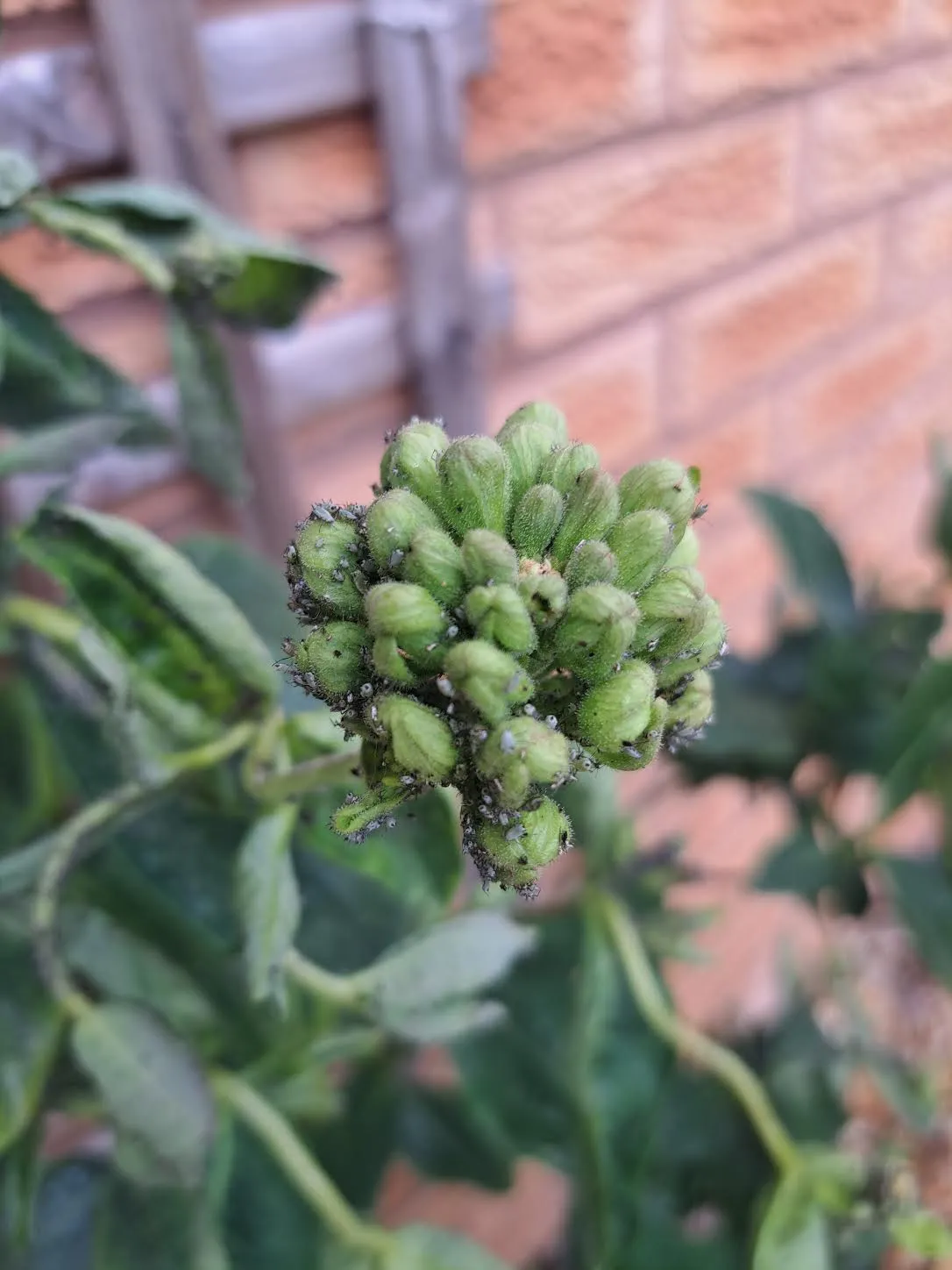
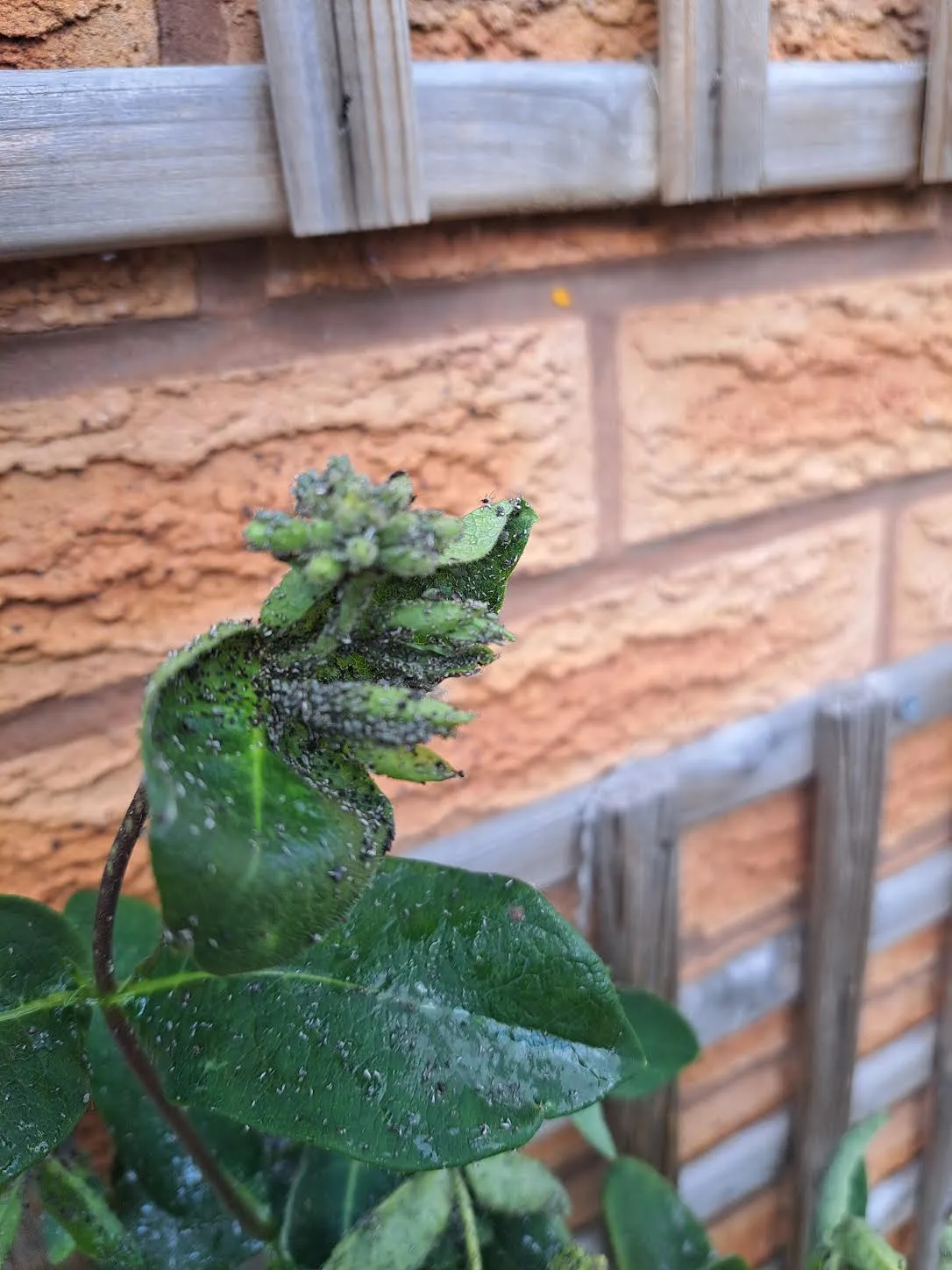
Blackfly (Aphis fabae) are one of the most common aphid species in UK gardens and honeysuckle (Lonicera) is one of their favourite hosts, particularly in spring and early summer when the soft new growth is at its most tender and sappy. They congregate in dense colonies on shoot tips and the undersides of young leaves, feeding by piercing the plant tissue and extracting sap. A heavy infestation can cause the new growth to look distorted, curled, and generally sorry for itself, which is understandably alarming when you first spot it.
However, a healthy, established honeysuckle has enormous reserves and will not be killed by blackfly. This is a cosmetic and short-term problem rather than a life-threatening one, so take a breath and approach it calmly.
What to Do Right Now
Start with the simplest intervention first. A strong jet of water from a hose directed at the affected shoots and the undersides of leaves will physically dislodge a significant proportion of the colony immediately. This alone can make a dramatic difference and costs nothing. You'll need to repeat it every few days as survivors and new arrivals recolonise, but it is genuinely effective as a first line response.
For a more targeted treatment my organic pest spray guide is exactly what you need here. A diluted solution of washing up liquid and water, or a spray using the recipes in that guide, applied directly to the colonies will deal with them effectively without harming the plant, the soil, or the beneficial insects in your garden. I'd always recommend this route over any chemical insecticide, which will kill far more than just the blackfly and can have a real knock on effect on the wider garden ecosystem.
Encouraging Natural Predators
This is where patience really pays off. Ladybirds and their larvae are voracious predators of aphids and a single ladybird larva can consume hundreds of aphids in a day. If you can avoid spraying anything chemical and instead let the water jet and organic spray do the initial work, you give the predator population time to build up and do a lot of the heavy lifting for you.
Blue tits and other garden birds will also pick aphids off plants very effectively, so keeping a bird feeder nearby and encouraging birds into the garden is a genuinely useful long term strategy rather than just a nice thing to do. The more wildlife friendly your garden is, the less these outbreaks tend to get out of hand in the first place.
What the Honeysuckle Will Do
Established honeysuckle is remarkably resilient. Even if the current flush of new growth looks distorted and damaged, the plant will push on with fresh shoots as the season progresses, and by midsummer, you should have flowers and healthy foliage again. The key is to act on the infestation now to reduce the population before it builds further, but please do so knowing that the outcome for the plant is not really in doubt. Honeysuckle has been dealing with blackfly for considerably longer than either of us have been gardening.
Do let us know how it responds once you've treated it.
Lee Garden Ninja
Hi @suee
Welcome to the forum and please don't panic. Coming back from a weekend away to find your honeysuckle covered in blackfly is one of those garden moments that feels far more alarming than it actually is. The good news is that your honeysuckle is almost certainly going to be absolutely fine.
What You're Dealing With
Blackfly (Aphis fabae) are one of the most common aphid species in UK gardens and honeysuckle (Lonicera) is one of their favourite hosts, particularly in spring and early summer when the soft new growth is at its most tender and sappy. They congregate in dense colonies on shoot tips and the undersides of young leaves, feeding by piercing the plant tissue and extracting sap. A heavy infestation can cause the new growth to look distorted, curled, and generally sorry for itself, which is understandably alarming when you first spot it.
However, a healthy, established honeysuckle has enormous reserves and will not be killed by blackfly. This is a cosmetic and short-term problem rather than a life-threatening one, so take a breath and approach it calmly.
What to Do Right Now
Start with the simplest intervention first. A strong jet of water from a hose directed at the affected shoots and the undersides of leaves will physically dislodge a significant proportion of the colony immediately. This alone can make a dramatic difference and costs nothing. You'll need to repeat it every few days as survivors and new arrivals recolonise, but it is genuinely effective as a first line response.
For a more targeted treatment my organic pest spray guide is exactly what you need here. A diluted solution of washing up liquid and water, or a spray using the recipes in that guide, applied directly to the colonies will deal with them effectively without harming the plant, the soil, or the beneficial insects in your garden. I'd always recommend this route over any chemical insecticide, which will kill far more than just the blackfly and can have a real knock on effect on the wider garden ecosystem.
Encouraging Natural Predators
This is where patience really pays off. Ladybirds and their larvae are voracious predators of aphids and a single ladybird larva can consume hundreds of aphids in a day. If you can avoid spraying anything chemical and instead let the water jet and organic spray do the initial work, you give the predator population time to build up and do a lot of the heavy lifting for you.
Blue tits and other garden birds will also pick aphids off plants very effectively, so keeping a bird feeder nearby and encouraging birds into the garden is a genuinely useful long term strategy rather than just a nice thing to do. The more wildlife friendly your garden is, the less these outbreaks tend to get out of hand in the first place.
What the Honeysuckle Will Do
Established honeysuckle is remarkably resilient. Even if the current flush of new growth looks distorted and damaged, the plant will push on with fresh shoots as the season progresses, and by midsummer, you should have flowers and healthy foliage again. The key is to act on the infestation now to reduce the population before it builds further, but please do so knowing that the outcome for the plant is not really in doubt. Honeysuckle has been dealing with blackfly for considerably longer than either of us have been gardening.
Do let us know how it responds once you've treated it.
Lee Garden Ninja
 Lee Burkhill: Award Winning Designer & BBC 1's Garden Rescue Presenters Official Blog