Hi @ianinhisgarden
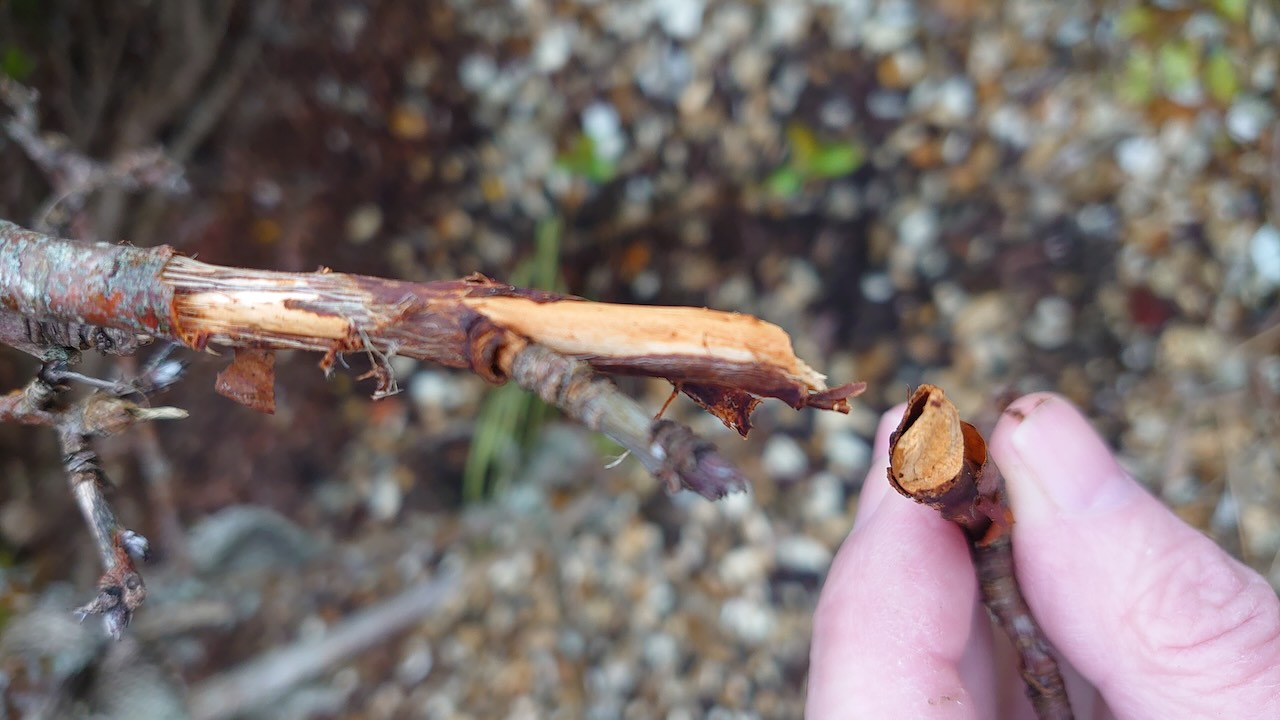
Thanks for posting, and I'm glad you've shared this with the Garden Ninja community. Looking at your photo, I can see some concerning signs there with that peeling bark and the darkened, dead-looking tissue beneath it. However, the photo only shows me part of the picture, so I want to give you the most useful steer I can based on what's visible.
From what I can see, my initial thought is that this could be fire blight (Erwinia amylovora), which is a serious bacterial disease that affects apples, pears, and other members of the rose family. That said, the symptoms you're describing also overlap with apple canker (Neonectria ditissima), which is a fungal disease and actually the more common of the two in UK gardens. It's worth understanding the difference between them before you take any action, because the response to each is slightly different.
Fire blight tends to move fast. The key tell-tale signs beyond bark damage are shoots and young growth that suddenly die back and bend over into what's known as a shepherd's crook shape. The tissue beneath the bark, when you peel it back gently, often shows a reddish-brown streaking or water-soaked appearance rather than clean dead wood. It can spread rapidly through the tree and in severe cases can kill a mature specimen within a single season. It's also a notifiable disease in the UK, which means if you're confident in the identification it should be reported to the Animal and Plant Health Agency.
Apple canker by contrast tends to present as sunken, discoloured patches of bark that crack, peel, and eventually expose the dead wood beneath in a more localised way. You often see concentric rings of cracked tissue around the affected area, and white or orange fungal fruiting bodies can sometimes be visible in autumn and winter. Canker is very common in wet conditions and on trees growing in heavy or poorly drained soils. Unlike fire blight it tends to spread more slowly and is often manageable if caught reasonably early.
To help me give you a better diagnosis, it would really help to know a few things. Is the damage confined to one area of the tree, or are multiple branches affected? When you look at shoots further up the tree, do any of them show that characteristic downward hook shape? And if you gently scrape back a little of the bark at the edge of the damaged area, what colour is the tissue immediately beneath it?
As a precaution in the meantime, avoid pruning anything until you have a clearer diagnosis, and if you do need to cut, sterilise your tools thoroughly between every cut with a diluted bleach solution or surgical spirit. Both diseases can spread on contaminated blades.
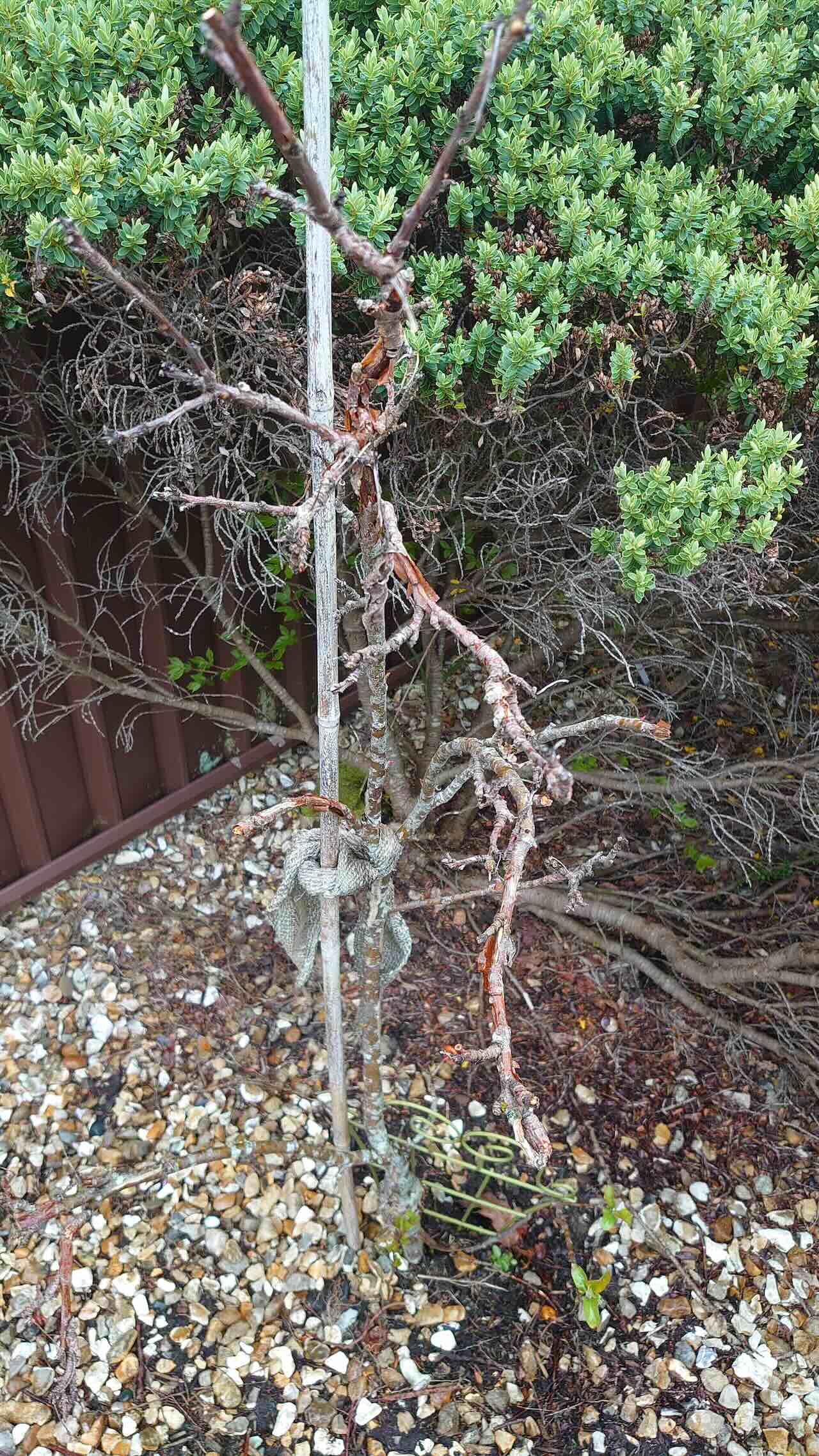
Do get some more photos if you can, ideally of the wider tree and any affected shoots further up, and post them here. The more of the picture we can see, the better the advice I can give you.
You might also find my guide on apple tree care and common problems useful in the meantime: Why Are My Conifers Dying, and my broader guide on Top 10 Plant Diseases, which covers both fire blight and canker in more detail.
Hang in there, Ian. These problems are often more manageable than they first appear.
Lee Garden Ninja
Hi @ianinhisgarden
Thanks for posting, and I'm glad you've shared this with the Garden Ninja community. Looking at your photo, I can see some concerning signs there with that peeling bark and the darkened, dead-looking tissue beneath it. However, the photo only shows me part of the picture, so I want to give you the most useful steer I can based on what's visible.
From what I can see, my initial thought is that this could be fire blight (Erwinia amylovora), which is a serious bacterial disease that affects apples, pears, and other members of the rose family. That said, the symptoms you're describing also overlap with apple canker (Neonectria ditissima), which is a fungal disease and actually the more common of the two in UK gardens. It's worth understanding the difference between them before you take any action, because the response to each is slightly different.
Fire blight tends to move fast. The key tell-tale signs beyond bark damage are shoots and young growth that suddenly die back and bend over into what's known as a shepherd's crook shape. The tissue beneath the bark, when you peel it back gently, often shows a reddish-brown streaking or water-soaked appearance rather than clean dead wood. It can spread rapidly through the tree and in severe cases can kill a mature specimen within a single season. It's also a notifiable disease in the UK, which means if you're confident in the identification it should be reported to the Animal and Plant Health Agency.
Apple canker by contrast tends to present as sunken, discoloured patches of bark that crack, peel, and eventually expose the dead wood beneath in a more localised way. You often see concentric rings of cracked tissue around the affected area, and white or orange fungal fruiting bodies can sometimes be visible in autumn and winter. Canker is very common in wet conditions and on trees growing in heavy or poorly drained soils. Unlike fire blight it tends to spread more slowly and is often manageable if caught reasonably early.
To help me give you a better diagnosis, it would really help to know a few things. Is the damage confined to one area of the tree, or are multiple branches affected? When you look at shoots further up the tree, do any of them show that characteristic downward hook shape? And if you gently scrape back a little of the bark at the edge of the damaged area, what colour is the tissue immediately beneath it?
As a precaution in the meantime, avoid pruning anything until you have a clearer diagnosis, and if you do need to cut, sterilise your tools thoroughly between every cut with a diluted bleach solution or surgical spirit. Both diseases can spread on contaminated blades.
Do get some more photos if you can, ideally of the wider tree and any affected shoots further up, and post them here. The more of the picture we can see, the better the advice I can give you.
You might also find my guide on apple tree care and common problems useful in the meantime: Why Are My Conifers Dying, and my broader guide on Top 10 Plant Diseases, which covers both fire blight and canker in more detail.
Hang in there, Ian. These problems are often more manageable than they first appear.
Lee Garden Ninja
 Lee Burkhill: Award Winning Designer & BBC 1's Garden Rescue Presenters Official Blog