Hi Mr Stanton,
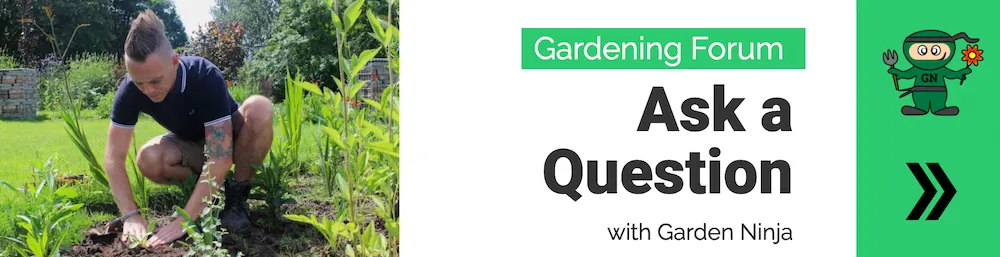
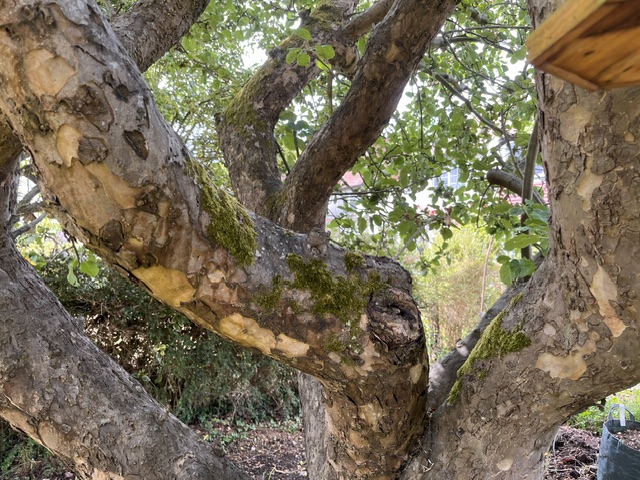
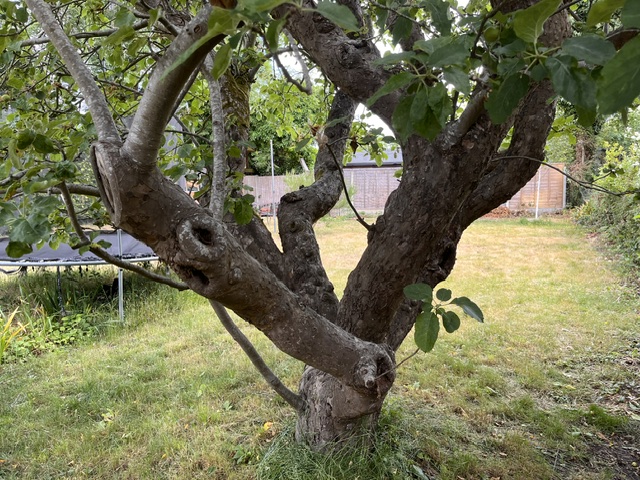
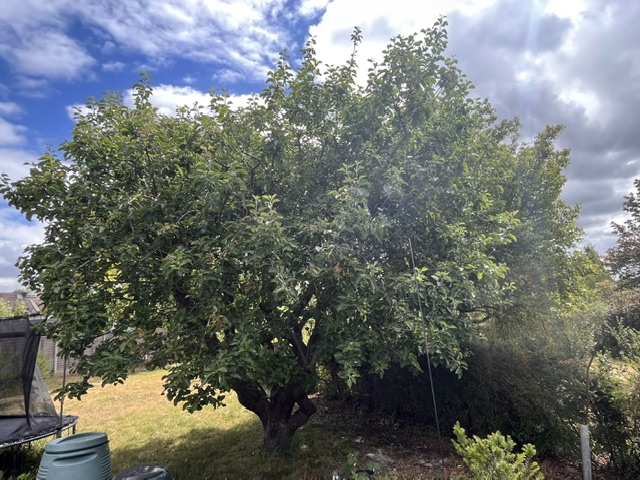
What a magnificent old tree and I can completely understand why you're worried about it. The canopy looks full, healthy, and productive from the wider shots, which is actually a really encouraging sign, but those close up images of the bark and the wood beneath do need addressing properly. Let me work through what I think is happening here.
What the Photos Are Showing
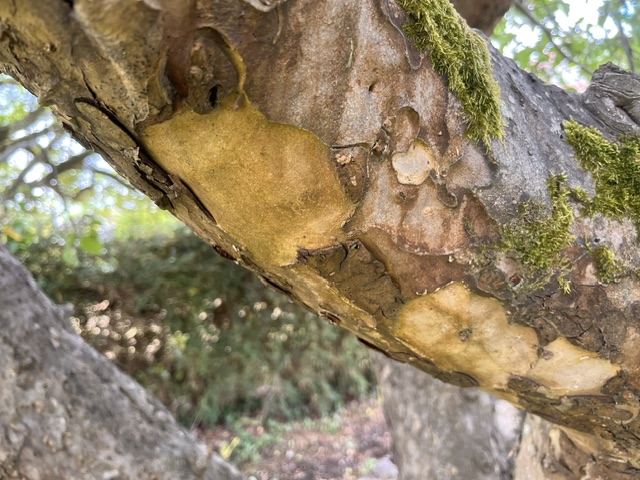
Looking at your images carefully, particularly the close up shots of the exposed wood beneath the peeling bark, what you are describing and photographing points strongly towards sappy bark disease, also sometimes called papery bark, caused by the fungal pathogen Trametes versicolor.
This fungal pathogen attacks older apple trees, typically infecting through pruning cuts on large branches and causing the infected bark to decay, discolour, and develop a spongy texture. The infected bark then peels away from the tree, exposing the decayed tissue underneath. Damp weather causes the infected bark to appear spongy, while the bark has a papery appearance in dry conditions.
The yellowy, spongy cambium layer you can see beneath the peeling plates of bark in your close-up shots is consistent with this diagnosis. Where bark and wood become infected with the sappy bark fungus, infected bark and wood decay and become discoloured and spongy, with affected bark commonly peeling away and exposing the dark, decayed wood underneath.
Apple canker (Neonectria ditissima) is another strong possibility and the two can sometimes occur together on an older tree. Apple canker causes disfiguring, sunken patches of dead bark on apple trees, with infection often entering via wounds or buds, and new cankers forming from mid spring. The key distinction is that canker tends to produce more clearly defined sunken craters with swollen edges around the damaged area, whereas sappy bark produces that characteristic peeling, papery, spongy texture you're describing across a wider area of bark.
Are Its Days Numbered?
Not necessarily, and I want to give you an honest rather than alarming answer here. The fact that the canopy is producing healthy leaves and fruit is a genuinely positive sign that the tree still has significant vigour and that the vascular system is functioning adequately despite the bark damage. An apple tree that was truly failing would typically show it in the canopy first with sparse, yellowing, or undersized leaves rather than what appears in your photos to be a reasonably full and productive crown.
These cankers grow only a few inches a year, so they can be removed from the apple tree before severe damage has occurred. The critical question is whether the damage has girdled, meaning gone completely around, the main trunk or any of the major scaffold branches. If the bark damage is on one side only and healthy bark remains on the opposite side, the tree can continue to function and may well carry on for many more years with careful management.
What to Do Now
The first practical step is to carefully remove all the loose, peeling bark plates with a clean knife or your gloved hands, taking care not to damage any healthy tissue beneath. This removes the habitat the fungal pathogen thrives in and allows the exposed wood to dry out, which it strongly prefers not to be.
Once the loose bark is cleared you'll have a much clearer picture of how extensive the underlying damage actually is. Carefully pare away all the infected and damaged bark and wood, cutting back to completely healthy tissue, disinfecting your knife as you work through the process. Any tools used should be sterilised between cuts with a dilute bleach solution or surgical spirit.
Do not apply wound paint or sealant to the exposed areas. Research over the past two decades has consistently shown that wound sealants trap moisture and fungal material beneath the surface and actually slow healing rather than helping it. Let the exposed wood air and callus over naturally.
Getting a Professional Eye On It
Given the age and scale of this tree, and the fact that the bark damage appears to affect several of the main structural limbs, I would strongly recommend having a qualified arborist carry out an inspection in person. They can assess the structural integrity of the affected limbs, check whether any have been girdled, and advise on whether any of the major branches need removing before they become a safety risk. An old apple tree with compromised bark on major limbs can become structurally unpredictable in high winds, and that is worth taking seriously regardless of how healthy the canopy currently looks.
This tree clearly has enormous character and history and is worth fighting for. With the right care, it may well continue to produce fruit for years to come.
Lee Garden Ninja
Hi Mr Stanton,
What a magnificent old tree and I can completely understand why you're worried about it. The canopy looks full, healthy, and productive from the wider shots, which is actually a really encouraging sign, but those close up images of the bark and the wood beneath do need addressing properly. Let me work through what I think is happening here.
What the Photos Are Showing
Looking at your images carefully, particularly the close up shots of the exposed wood beneath the peeling bark, what you are describing and photographing points strongly towards sappy bark disease, also sometimes called papery bark, caused by the fungal pathogen Trametes versicolor.
This fungal pathogen attacks older apple trees, typically infecting through pruning cuts on large branches and causing the infected bark to decay, discolour, and develop a spongy texture. The infected bark then peels away from the tree, exposing the decayed tissue underneath. Damp weather causes the infected bark to appear spongy, while the bark has a papery appearance in dry conditions.
The yellowy, spongy cambium layer you can see beneath the peeling plates of bark in your close-up shots is consistent with this diagnosis. Where bark and wood become infected with the sappy bark fungus, infected bark and wood decay and become discoloured and spongy, with affected bark commonly peeling away and exposing the dark, decayed wood underneath.
Apple canker (Neonectria ditissima) is another strong possibility and the two can sometimes occur together on an older tree. Apple canker causes disfiguring, sunken patches of dead bark on apple trees, with infection often entering via wounds or buds, and new cankers forming from mid spring. The key distinction is that canker tends to produce more clearly defined sunken craters with swollen edges around the damaged area, whereas sappy bark produces that characteristic peeling, papery, spongy texture you're describing across a wider area of bark.
Are Its Days Numbered?
Not necessarily, and I want to give you an honest rather than alarming answer here. The fact that the canopy is producing healthy leaves and fruit is a genuinely positive sign that the tree still has significant vigour and that the vascular system is functioning adequately despite the bark damage. An apple tree that was truly failing would typically show it in the canopy first with sparse, yellowing, or undersized leaves rather than what appears in your photos to be a reasonably full and productive crown.
These cankers grow only a few inches a year, so they can be removed from the apple tree before severe damage has occurred. The critical question is whether the damage has girdled, meaning gone completely around, the main trunk or any of the major scaffold branches. If the bark damage is on one side only and healthy bark remains on the opposite side, the tree can continue to function and may well carry on for many more years with careful management.
What to Do Now
The first practical step is to carefully remove all the loose, peeling bark plates with a clean knife or your gloved hands, taking care not to damage any healthy tissue beneath. This removes the habitat the fungal pathogen thrives in and allows the exposed wood to dry out, which it strongly prefers not to be.
Once the loose bark is cleared you'll have a much clearer picture of how extensive the underlying damage actually is. Carefully pare away all the infected and damaged bark and wood, cutting back to completely healthy tissue, disinfecting your knife as you work through the process. Any tools used should be sterilised between cuts with a dilute bleach solution or surgical spirit.
Do not apply wound paint or sealant to the exposed areas. Research over the past two decades has consistently shown that wound sealants trap moisture and fungal material beneath the surface and actually slow healing rather than helping it. Let the exposed wood air and callus over naturally.
Getting a Professional Eye On It
Given the age and scale of this tree, and the fact that the bark damage appears to affect several of the main structural limbs, I would strongly recommend having a qualified arborist carry out an inspection in person. They can assess the structural integrity of the affected limbs, check whether any have been girdled, and advise on whether any of the major branches need removing before they become a safety risk. An old apple tree with compromised bark on major limbs can become structurally unpredictable in high winds, and that is worth taking seriously regardless of how healthy the canopy currently looks.
This tree clearly has enormous character and history and is worth fighting for. With the right care, it may well continue to produce fruit for years to come.
Lee Garden Ninja
 Lee Burkhill: Award Winning Designer & BBC 1's Garden Rescue Presenters Official Blog