Best Garden Kneelers UK: Protect Your Knees for Decades of Gardening
Lee Burkhill: Award Winning Designer & BBC 1's Garden Rescue Presenters Official Blog
Beginner level
Gardening is one of the most physically demanding hobbies, and your knees pay the price if you are not careful. I have spent thirty years kneeling on everything from wet clay to compacted gravel to stony chalk, and I can tell you from experience that the difference between a good kneeler and nothing at all is not just comfort. It is the difference between a productive hour on the border and a painful few days afterwards.
What I find surprising is how many gardeners spend a significant amount of money on plants and tools but use a folded-up cardboard box as a kneeling pad. Your knees are irreplaceable. A good garden kneeler costs between £10 and £40 and will serve you for years. That is a straightforward investment in long-term gardening enjoyment, and I cannot recommend it strongly enough to everyone I work with.
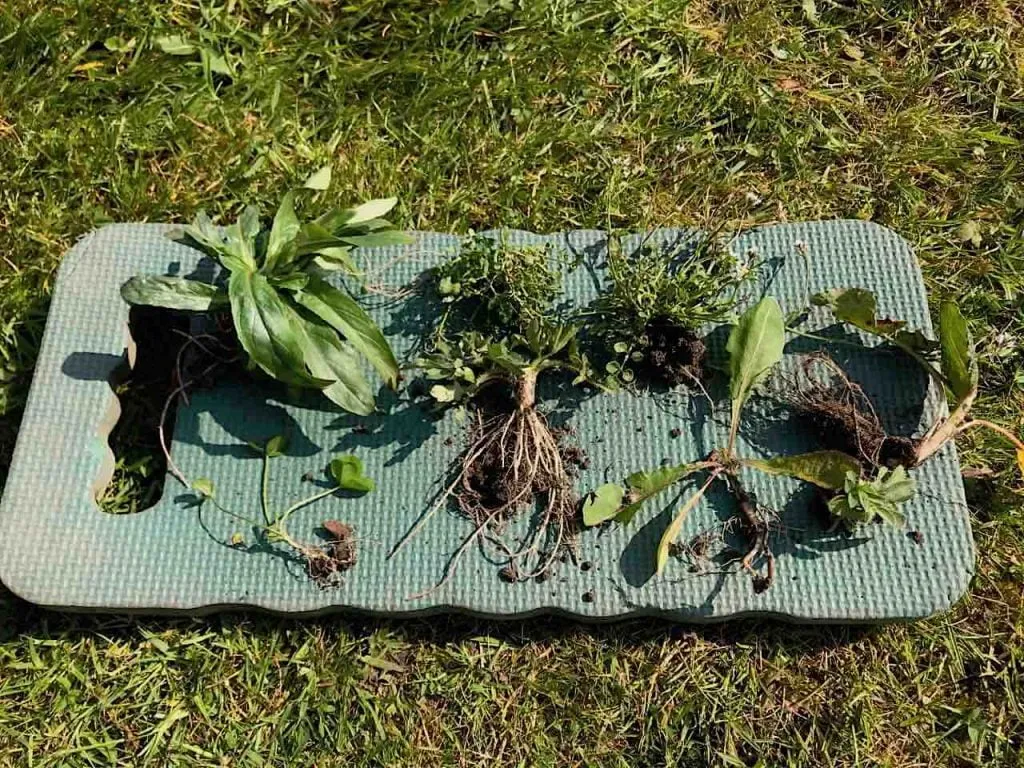
And here is something nobody talks about: a garden kneeler is one of the most versatile bits of kit in the shed. It is not just for your knees. I use mine as an impromptu tray for collected weeds while I work my way along a border. It holds a mug of tea perfectly flat on uneven ground. It has sheltered my head from a sudden downpour while I was elbow-deep in a border and too stubborn to go inside. The humble garden kneeler earns its place ten times over.
This page contains affiliate links for products I use and love. If you take action (i.e. subscribe or make a purchase) after clicking a link, I may earn a small gardening commission, which helps me keep the Garden Ninja blog free for everyone.
Types of Garden Kneeler Explained
1) Kneeling Mats
Flat Foam or Memory Foam pads you place on the ground and kneel on. Lightweight, portable, easy to carry in a trug. The most common type is suitable for most garden tasks. Also, the format is most likely to double as a makeshift tea tray, which I will come back to.
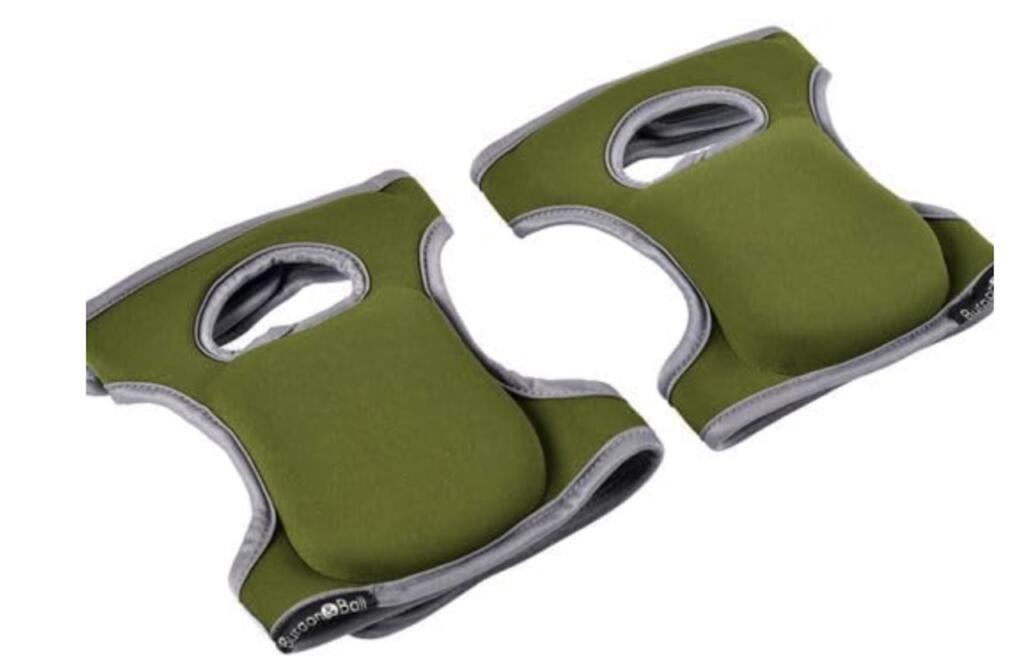
2) Knee Pads
Strap-on pads that stay attached to your knees as you move around. More practical for tasks where you are constantly repositioning. Less comfortable to wear for extended periods, but completely hands-free.
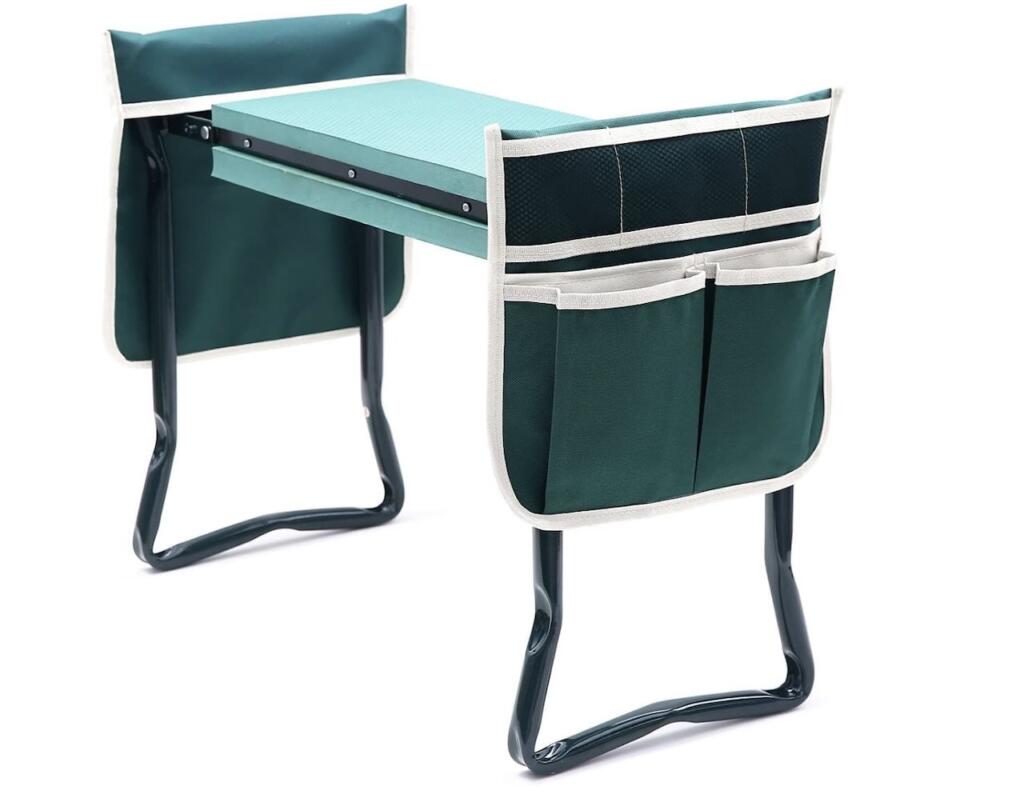
3) Kneeler Seats
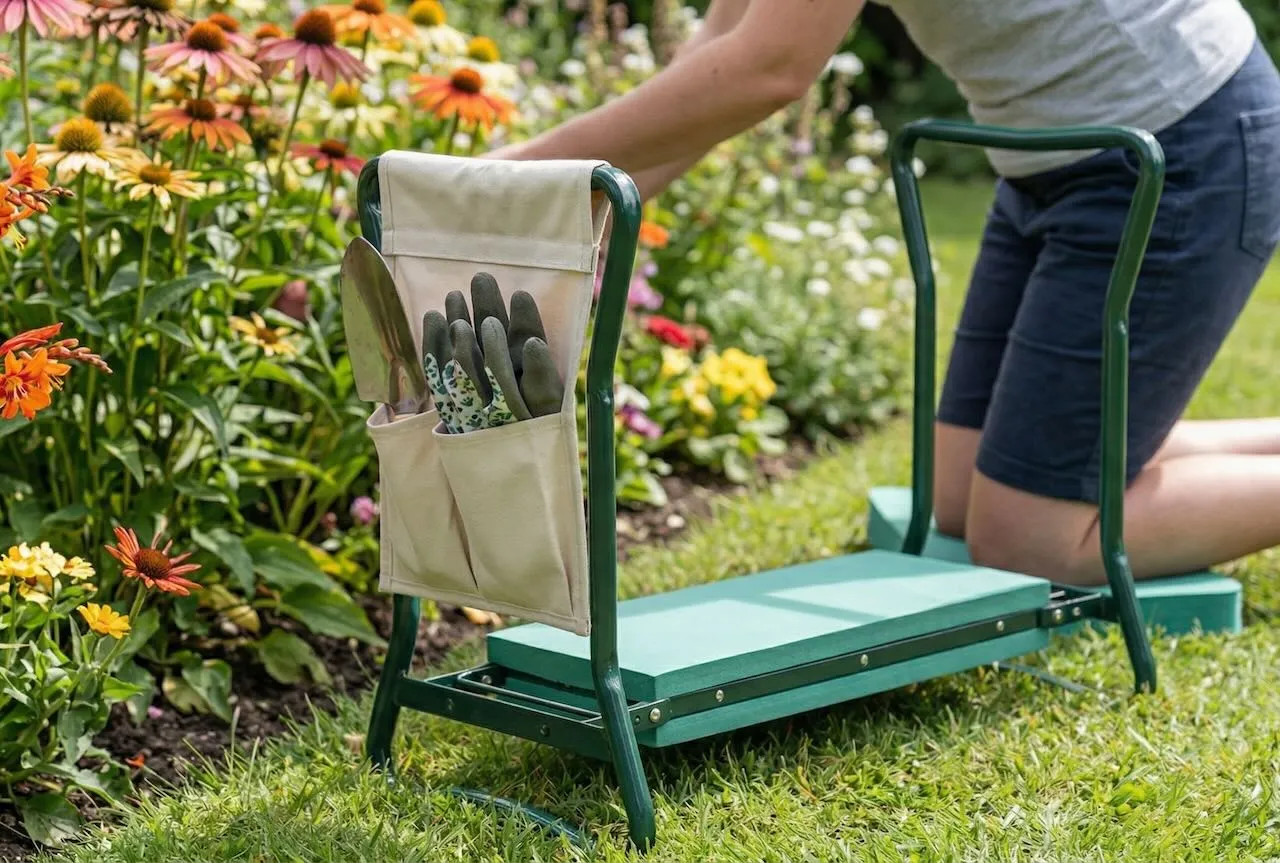
Steel-frame tools that function as both a kneeling pad (flipped one way) and a garden seat (flipped the other). Handles on both sides help you get up and down. The most functional option, and the one I most often recommend to clients who garden seriously.
For most gardeners, a good quality kneeling mat is the essential first purchase. Knee pads are the better choice for tasks like weeding a long border where you are shuffling along continuously. A kneeler seat is the most practical choice for older gardeners or anyone with hip and knee problems who struggles to get up from ground level.
What to Look For Before You Buy
Foam thickness and density
This is the most important specification. A kneeling mat needs a minimum thickness of 25mm to provide meaningful protection on hard surfaces. For gravel or compacted soil, 40mm or more is significantly more comfortable.
Memory foam feels more luxurious, but standard EVA foam at sufficient thickness performs very well as memory foam tends to collapse or settle over time ith weird dips and bumps. So I don’t buy anything with a vasco or heat related element to it for garden kneelers.
Do not buy anything thinner than 25mm and expect it to serve you on anything other than soft turf.
Waterproofing
UK garden soil is wet for a significant portion of the year. An uncoated foam kneeler will absorb moisture, become heavy, and develop an unpleasant smell within a season. Look for a waterproof cover if possible. Neoprene is the premium choice, and PVC coating is adequate. Most quality kneelers now include waterproofing as standard however, a thick foam kneeler can be quickly dried out in your van in between jobs in the dash board or on a radiator at home, whereas gels and foams take ages to dry out as you can’t piut them tooclose tol a heat source without damaing them.
Size
Kneeling mats come in a range of sizes. A pad that is too small will not properly support both knees on wider tasks. The Burgon and Ball Kneelo at 52cm length is a good reference point. Anything smaller than 40cm tends to feel cramped for most adult users. Larger is not always better for portability, but for comfort, a generously sized mat makes a real difference.
Colour: brighter is genuinely better
This sounds frivolous, but it is absolutely practical. A dark green or muddy brown kneeler disappears into the garden. I have stepped on mine, tripped over it, accidentally buried it under a pile of prunings, and once spent a genuinely embarrassing amount of time looking for it before noticing it was propped against the fence where I had left it. A bright kneeler is a kneeler you can actually find. Hot pink, vivid orange, yellow. Whatever it takes. You will thank yourself every single session.
💡 Top Tip
Write your name on your kneeler in permanent marker on the first day you own it. Gardens are communal spaces and kneelers have a habit of wandering. If you garden with a partner, share an allotment, or have a gardener come in, a named kneeler stays yours. It takes ten seconds and saves an argument.
Handles (for kneeler seats)
If you are buying a kneeler seat specifically to help with getting up and down, the handle design is critical. Handles need to be wide enough to accommodate gloved hands and high enough to provide meaningful leverage. Some cheaper kneeler seats have handles that flex alarmingly under load. Look for welded steel frames rated above your body weight.
Foam vs Gel: Why Thick Foam Wins Every Time
Gel kneelers look appealing in product photography. The idea of a soft, yielding gel cushion sounds more comfortable than a dense foam pad, and for a brief kneel on a smooth surface, it might even be. But gel kneelers have a fundamental problem that most reviews do not address honestly: they are comfortable only on one side.
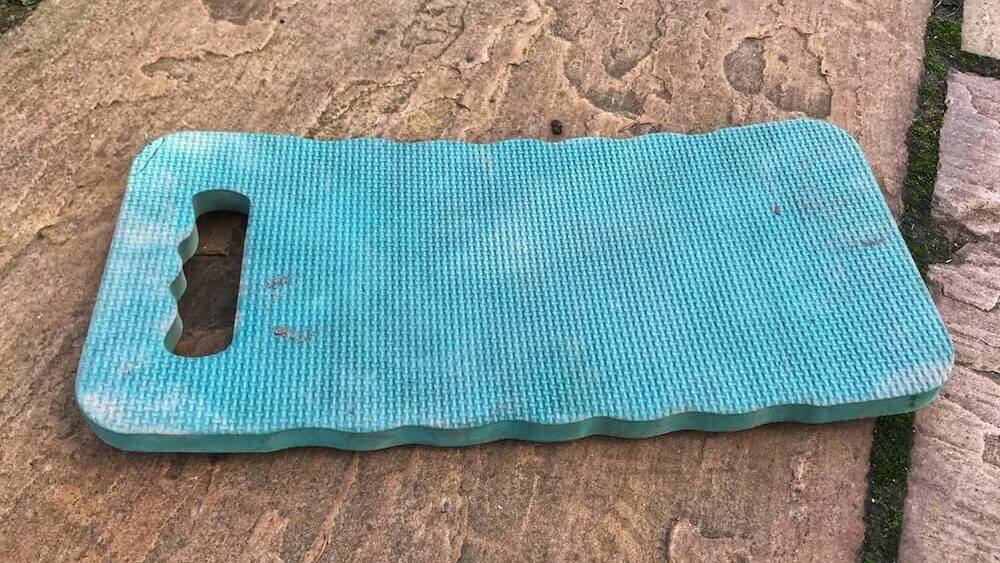
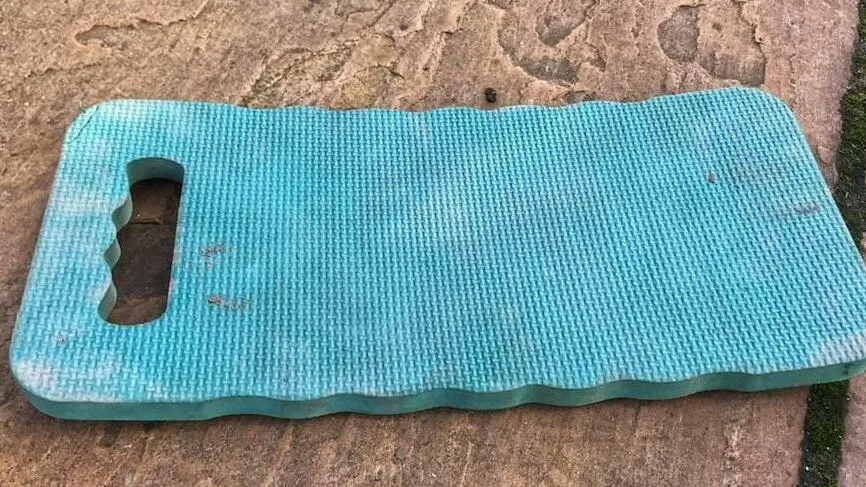
A thick foam kneeler is usable from both sides. Flip it over, and the surface is clean, dry, and ready to go. This matters more than you might think. One side picks up soil, mulch, grit, and general garden debris within about thirty seconds of use. Being able to flip your kneeler and have a clean, dry surface underneath is genuinely useful several times per session. See the filthy foam kneelers I’m using below, I can keep flipping each side between jobs and it never gets saturated!
You kneel on one side for the dirty work, flip it over to rest a mug of tea or place harvested produce on the clean side. Gel kneelers do not offer this, and many have textured or ridged surfaces that make them impractical as a flat working surface.
Gel also tends to migrate and compress unevenly over time, creating thin spots where it has pooled at the edges. A quality 40 mm EVA foam pad retains its structure across the entire surface for years. Memory foam behaves similarly, moulding to your knee under pressure and recovering when you stand up, without the long-term degradation that gel is prone to.
There is also the cold weather factor. Gel hardens noticeably in cold temperatures, which is precisely when UK gardeners are most likely to be kneeling on frozen or near-frozen ground, pruning, planting bulbs, or tidying borders. A foam pad performs consistently regardless of whether it is February or August.
Thick foam is the practical choice. It is also the cheaper choice, which makes the decision fairly easy.
Best Garden Kneeling Mats
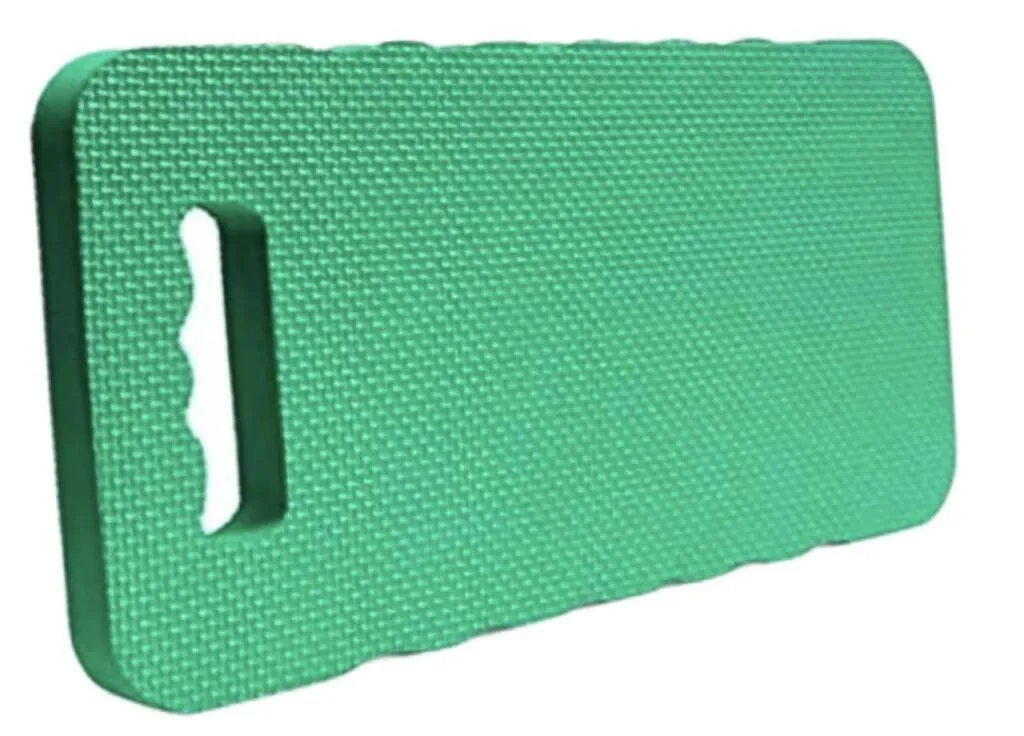
1. Green ComfortThick EVA Kneeling Pad – 🏆 Best Frequent Use and Jobbing Gardener Kneeling Mat
Around £10
If you want to spend as little as possible on a kneeling pad that will still genuinely protect your knees, the Green Comfort thick EVA pad is the honest budget recommendation. It carries Amazon Best Seller status in the category for good reason. For the price it is a competent, practical kneeling surface and it is thicker than many of its competitors at this price point. The lack of waterproofing means it will absorb moisture over time, but it dries rapidly next to a radiator or on a car dash with the heating on full.
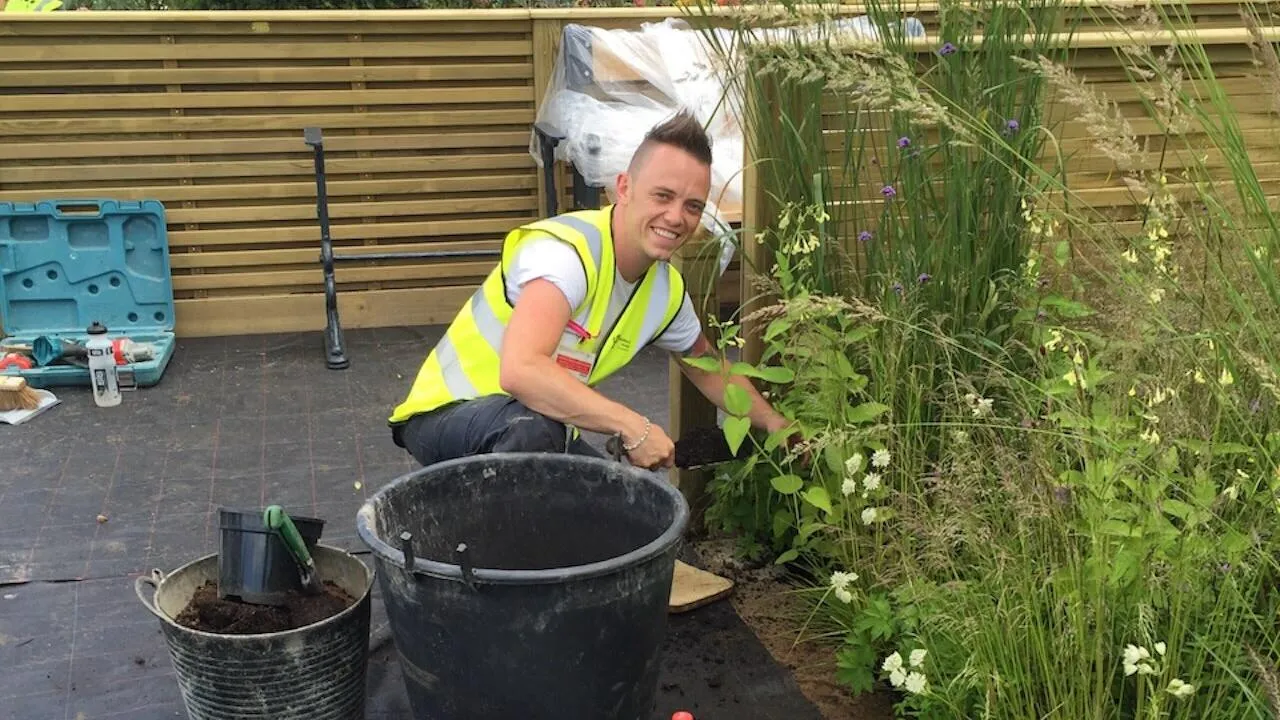
At £10 replacing it annually is still far cheaper than the mid-range alternatives. It’s the one I use on Garden Rescue!
Best for: Budget-conscious buyers, secondary pads, beginners testing the waters before committing to a premium option.
2. Spear & Jackson Kew Gardens Kneeler – 🏆 Best Fancy Occasional Kneeling Mat
Around £12 to £17
Developed in partnership with the horticultural team at Kew Gardens, the Spear and Jackson Kew kneeler uses a five-layer foam construction that provides both cushioning and support. BBC Gardeners’ World tested 26 kneelers with 13 gardeners over eight weeks and awarded this one Best Buy for comfort.
It performs well on gravel, compacted soil, and hard paving, which are the surfaces that really test a kneeler’s worth. The water-resistant cover handles most UK conditions without issue, and it wipes clean quickly. However, there’s a big difference between water-resistant, which handles the occasional shower, and waterproof, which it is not. In heavy downpours or with jobbing gardeners, it soon gets saturated if you’re not careful. For the price, though, it’s a great all-rounder for more clement weather conditions.
Best for: All-round use, most surfaces, anyone wanting excellent performance at a genuinely affordable price. However, once it gets wet (as the waterproof cover can really handle a light shower) it takes ages to dry and out so if you use it frequently in poor weather bare that in mind.
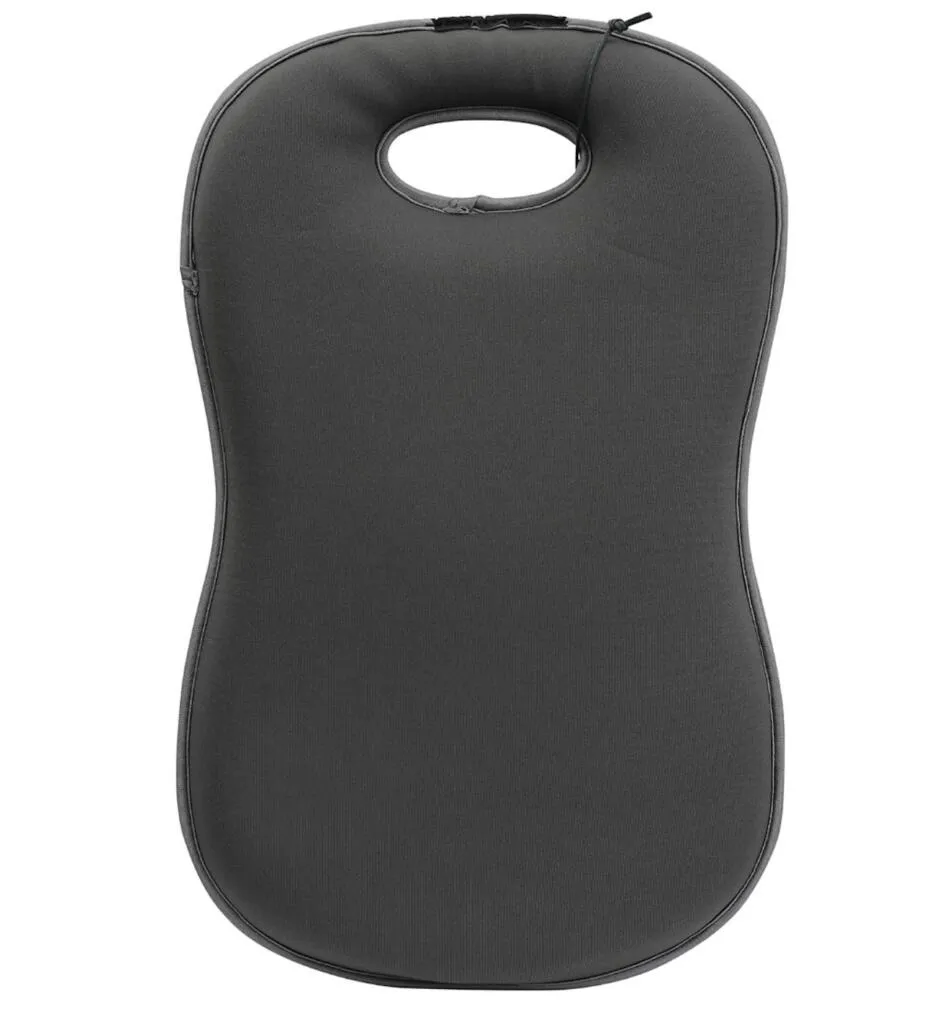
3. Burgon & Ball Kneelo Garden Kneeler – ⭐ Best Memory Foam Mat
Around £17 to £24
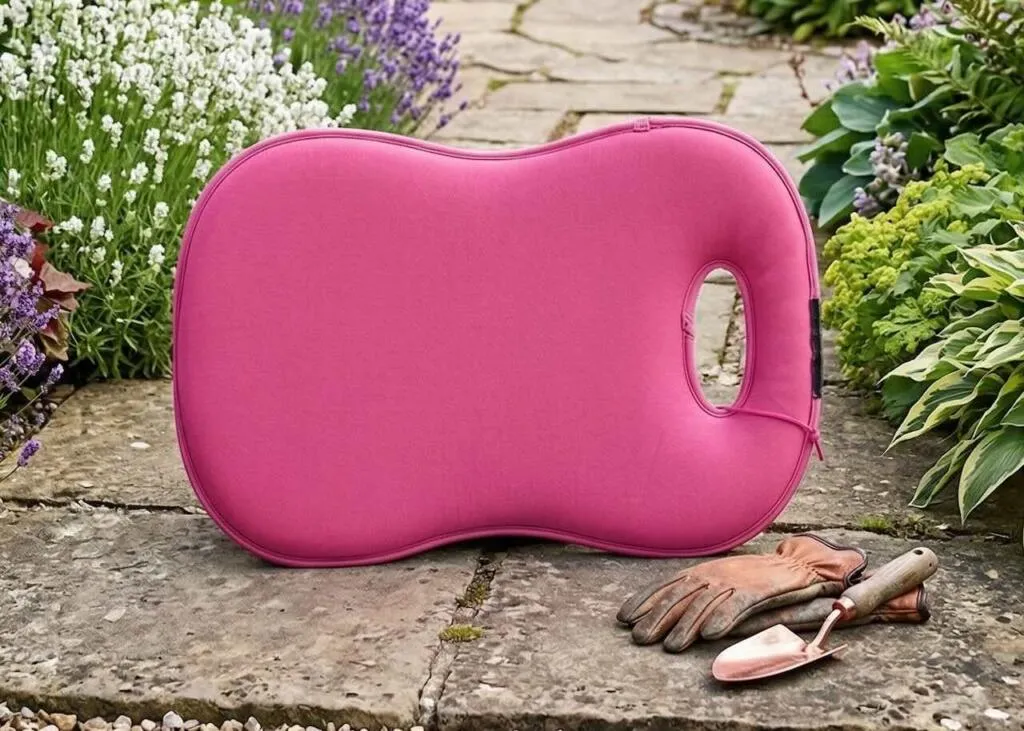
The Burgon and Ball Kneelo is the kneeler I most often recommend as a gift because it manages the rare combination of genuine quality and visual appeal. It comes in twelve colours, including lovely deep tones that look far more considered than the usual green or black, and crucially, it comes in bright enough options that you will actually be able to spot it when you put it down.
The memory foam moulding to knee shape after a few minutes of use is genuinely noticeably comfortable, and at 52cm it is generously sized for both knees. The neoprene cover is a real quality step up, far more durable and water-resistant than fabric covers. The smooth underside also makes it ideal for the tea-mug-balancing duties I mentioned earlier.
Best for: Gifting, those who want visual appeal alongside quality, extended kneeling sessions, and anyone wanting memory foam comfort and very occasional weekend gardening.
Knee pads suit a different kind of gardener than kneeling mats. If you are weeding a long border, moving continuously along a row, planting bulbs over a large area, or doing any task where picking up and repositioning a mat would slow you down, strap-on pads are the practical choice. The trade-off is that they are less comfortable to wear for extended static kneeling, and getting the strap tension right takes a little practice. A good pair of knee pads should stay put through movement, not cut into the back of the knee, and be easy to put on and take off with muddy hands.
1. Burgon & Ball Kneelo Knee Pads
Around £17 to £22
The Kneelo knee pads bring the same memory foam and neoprene construction of the kneeling mat to a strap-on format. The Velcro straps adjust easily and hold position well, even through the constant shuffling motion of border weeding. They can feel a bit awkward for longer-duration use, as they do rub the back of the knee for some gardeners.
The neoprene cover is water-resistant for a period that depends on the weather. They are available in the same colour range as the kneeling mat, so if you want a coordinated toolkit (which is not a frivolous concern, because tools you like using get used more), they pair nicely with the mat.
Best for: Mobile garden tasks, border weeding, planting in rows, coordinated use with the Kneelo kneeling mat.
The Kew Gardens knee pad version uses the same three-layer foam construction as the kneeling mat and is packaged in a strap-on format with neoprene covering. At this price, they represent the best value resistant knee pads currently available in the UK market. The strap system works well, and the foam density is appropriate for typical UK garden surfaces. A solid choice for anyone who wants performance without premium pricing.
Best for: Budget-conscious buyers wanting a waterproof, quality knee pad.
A kneeler seat is the most versatile kneeling solution in the garden. Flipped one way, the padded base gives you a comfortable kneeling surface with the steel frame handles providing leverage to push yourself up. Flipped the other way, it becomes a low garden seat for tasks where you would rather sit than kneel. The handles are the critical detail. For anyone who has ever struggled to get up from ground level in the garden, proper handles change the experience completely.
1. Ohuhu Heavy Duty Garden Kneeler and Seat – 🏆 Best Kneeler Seat
Around £30 to £42
The Ohuhu kneeler seat is the consistently highest-rated dual-function kneeler on Amazon UK, and having examined it closely, I understand why. The steel frame is powder-coated and rated to 150kg. A weight capacity specification that most competitors are vague about, but that matters for safety. The handles are at a well-designed height for pushing up from kneeling and, critically, wide enough to use with gloved hands.
Two large side pouches for storing hand tools, phone, or seed packets are a practical addition. The EVA foam pad is thick enough to be comfortable on harder surfaces.
Best for: Older gardeners, anyone with hip or knee difficulty, gardeners wanting a kneeler and a low seat in one tool.
2. Town & Country Memory Foam Folding Kneeler Seat – Best Budget Kneeler Seat
Around £20 to £26
BBC Gardeners’ World’s Best Buy for ease of use among kneeler seats, the Town and Country folding kneeler collapses flat for storage and sets up quickly. The memory Foam pad is noticeably softer than standard EVA foam options. The folding mechanism is smooth, and the handles feel solid for the price. Not rated to as high a weight capacity as the Ohuhu (typically listed at 100kg), but well within the range for most users. A good choice if storage space is a consideration and you want the convenience of easy folding.
Best for: Space-conscious gardeners, those who want easy storage, memory foam comfort at a mid-range price.
This section matters to me. Gardening is one of the most important activities for wellbeing in later life. It provides exercise, purpose, connection to the seasons, and measurable mental health benefits. The thought of someone giving up their garden because the physical discomfort of getting up and down has become too much is genuinely sad, and in many cases, it is preventable with the right equipment. The right kneeler seat can extend your active gardening life by years.
For gardeners with arthritis, reduced mobility, or significant joint problems, I have three specific recommendations beyond the products already covered. First, prioritise a kneeler seat with proper handles over a kneeling mat. The ability to push yourself up with both hands from a stable frame is transformative. Second, consider the ground surface where you garden most. Harder surfaces require more padding, and memory foam consistently scores better in this application. Third, pair your kneeler with long-handled tools designed to reduce bending, which removes many of the situations where kneeling is necessary in the first place.
Designer’s Accessibility Tip
If getting up and down from ground level has become genuinely painful rather than just mildly uncomfortable, it is worth considering whether raised beds would serve you better than increasingly sophisticated kneeling equipment.
A 75 to 90cm high raised bed eliminates ground-level work entirely for a significant proportion of garden maintenance tasks. I have designed and built raised bed arrangements for several clients specifically for this reason, and the difference in their quality of gardening life has been significant. The Garden Ninja design courses cover accessible garden design in detail if you would like to explore this further.
What is the Difference Between Waterproof and Water-Resistant for Garden Kneelers?
This distinction matters more than most product listings let on, and it is worth understanding before you buy. Water-resistant means the material will cope with a light splash or brief contact with damp ground without immediately soaking through. Waterproof means it will not let moisture in at all, even after prolonged contact with wet soil, sitting in a puddle, or being left out in a downpour.
For a garden kneeler used in UK conditions, water resistant is not really good enough. We kneel on wet ground for extended periods, often in drizzle, on soil saturated for weeks. A water-resistant cover will start to allow moisture through within minutes on genuinely wet ground. Your knees stay dry for the first session or two, then the foam core begins to absorb water, and the cover starts to feel cold and clammy from the inside out.
A waterproof cover, by contrast, keeps the foam core completely dry regardless of how wet the ground is. Neoprene is the gold standard here. It is the same material used in wetsuits, which tells you everything you need to know about its relationship with water. Neoprene-covered kneelers can sit directly on waterlogged soil, be left in the rain, and be wiped clean without any moisture reaching the foam beneath. PVC coating is a more affordable alternative and performs well, though it tends to be less flexible in cold weather and can crack over time at fold points.
The foam core itself also plays a role. EVA foam is naturally closed-cell, which means it does not absorb water even if the cover is compromised. Open-cell foam, which is softer and used in cheaper pads, will soak up moisture like a sponge the moment the cover fails. This is why a cheap uncoated foam pad becomes heavy, cold, and unpleasant to use within a single wet season, while a quality EVA core with a neoprene cover can last for years without deteriorating.
My practical advice is simple: if the product listing says water-resistant rather than waterproof, treat it as a yellow flag for UK garden use. It may be fine for occasional light use on dry days, but it will not hold up to regular kneeling on wet British soil. Spend a few pounds more and get a genuinely waterproof neoprene or PVC-covered kneeler. Your knees and your foam core will both thank you for it.
Other Brilliant Uses for Your Garden Kneeler
Here is the section I genuinely enjoy writing. Because if you have only ever thought of your kneeler as something you kneel on, Ninjas, you are leaving most of its potential sitting unused in the shed.
The brew shelf. Every serious gardening session needs a cup of tea, and there is nowhere to put it on uneven ground. A flat foam kneeler placed beside you provides a perfectly stable surface for a mug, a flask, your phone, or a small tray of seedlings while you work. I prop mine slightly against a raised bed or a border edge, and it stays rock-solid. This is honestly one of the things I use it for most often.
The weed tray. If you are weeding and do not want to keep getting up to walk to the compost heap, a flat kneeler beside you becomes an excellent staging area. Pile your weeds onto it as you go, then carry the whole lot to the heap in one trip. Much more satisfying than making fifteen individual journeys, and far less likely to result in accidentally dropping dandelion roots back onto the border you just cleared.
💡 Top Tip
The two-sided nature of a good foam kneeler means one side can be designated permanently as your “weed side” and the other as your “clean side” for resting things on. Give each side a quick wipe at the end of the session and it stays genuinely useful for both jobs.
Emergency rain hat. This one sounds ridiculous until you have done it. You are thirty minutes into a border job when the sky opens, and you are not near the house, and you are absolutely not stopping. A kneeler held flat over your head keeps your hair and the back of your neck dry long enough to finish the section you were working on. I have done this more times than I care to admit, and I regard it as entirely dignified.
Potting surface protector. If you are repotting at a low table or on a patio, placing your kneeler underneath the pot protects the surface from scratches and catches spillage. Much easier to rinse off than to scrub compost off paving.
Knee prop for awkward positions. Sometimes you are not kneeling conventionally but half-kneeling to reach under a low shrub or working sideways along a raised bed. A kneeler used as a prop under whichever knee happens to be on the ground saves you from a painful few minutes in an uncomfortable position.
Write your name on it. Every single one of these secondary uses becomes more useful when the kneeler is visibly yours. Write your name clearly in permanent marker on the underside (or the top if you like a statement). It takes ten seconds, which means no one accidentally walks off with it, and it means you can leave it in communal garden spaces without worry.
When to Stop Kneeling: The Case for Raised Beds
There is a point in every gardener’s life, different for each person, where the question changes from “what kneeler should I use” to “how can I redesign my garden to minimise kneeling altogether”. This is not giving up. This is intelligent garden design that extends the active life of both the garden and its gardener.
Raised beds built at 75 to 90cm height eliminate ground-level work for sowing, planting, feeding, and harvesting. Wide paths between planting areas reduce the need to reach across and kneel into borders. Permanent mulch layers suppress weeds, dramatically reducing the amount of weeding. Weeding is the most kneeling-intensive task of all. Investing in garden design that reduces the physical demand of maintenance is the most sustainable approach for gardeners of all ages, but especially as we get older.
A £25 kneeler is a valuable tool. But a garden designed around how you can actually use it, with appropriate path widths, raised growing areas, and thoughtful plant selection to reduce maintenance, is an investment that pays dividends for decades. If you would like to explore this, my online Garden Design for Beginners course covers accessibility design principles in detail.
Common Questions Answered
How thick should a garden kneeler be?
For most garden surfaces, a minimum of 25mm is the baseline for meaningful knee protection. On hard surfaces like concrete, gravel, or stone paving, I would want at least 40mm. Memory foam at 25mm typically feels more protective than standard foam at the same thickness due to how it distributes pressure, but thickness still matters significantly.
Is foam or gel better for a garden kneeler?
Foam wins for garden use. Gel kneelers harden in cold weather, degrade unevenly over time, and are only usable from one side. A good thick EVA foam pad is usable from both sides (one for kneeling, one as a clean surface for resting things), works consistently in all temperatures, and lasts considerably longer. Memory foam gives you the comfort of gel without any of the drawbacks.
Can you wash a garden kneeler?
Most kneelers with a waterproof neoprene or PVC cover can be wiped down with a damp cloth and mild detergent. Avoid submerging foam-core kneelers in water. Even waterproof covers can allow moisture infiltration over time, and a waterlogged foam core takes days to dry and will eventually develop an unpleasant smell. Wipe after each use and allow to air-dry before storing.
What is the difference between EVA foam and memory foam kneelers?
EVA (ethylene vinyl acetate) foam is the standard material for garden kneelers. It is firm, durable, water-resistant, and consistent in performance. Memory foam moulds to the shape of your knee under pressure and body heat, distributing load more evenly and feeling noticeably more comfortable during extended kneeling. Memory foam kneelers cost more and can feel slightly less responsive when cold. Both work well. Memory foam is the upgrade worth having if you kneel for long periods.
Are kneeler seats safe for heavy users?
Weight capacity varies significantly between models. Budget kneeler seats are often rated at 89 to 100kg. The Ohuhu heavy-duty model is rated at 150kg. Always check the manufacturer’s weight rating before purchasing. Do not assume a kneeler seat will support your weight. Check the specification explicitly before you buy.
Why should I write my name on my kneeler?
Because kneelers walk. If you share a garden, an allotment, or have help in the garden, an unnamed kneeler is a kneeler that will eventually disappear. A permanent marker on the underside takes ten seconds and saves you from buying a replacement. It also solves the “whose kneeler is this” argument with your partner, which in a long gardening marriage is genuinely worth ten seconds of effort.
Transform Your Garden Knowledge with Garden Ninja’s Expert Resources
Ready to elevate your gardening beyond basic tasks? My comprehensive online courses provide the expertise to transform you from enthusiastic beginner to confident garden creator.
With courses starting from just £29, you gain access to award-winning design knowledge.
29
Garden Design Examples for Small Gardens: 30 Design Templates & Planting Plans
Garden Design Examples for Small Gardens: 30 Design Templates & Planting Plans: In this online gardening course, I’ll walk you through 30 fantastic garden designs, explaining the logic behind the layout, the plant choices, and take-home tips for applying them in your own garden.
Weekend Garden Makeover: A Crash Course in Design for Beginners
Learn how to transform and design your own garden with Lee Burkhills crash course in garden design. Over 5 hours Lee will teach you how to design your own dream garden. Featuring practical design examples, planting ideas and video guides. Learn how to design your garden in one weekend!
Garden Design for Beginners: Create Your Dream Garden in Just 4 Weeks
Garden Design for Beginners Online Course: If you want to make the career jump to becoming a garden designer or to learn how to design your own garden, this is the beginner course for you. Join me, Lee Burkhill, an award-winning garden designer, as I train you in the art of beautiful garden design.
Your knees have been keeping you in the garden for decades. They deserve better than a folded cardboard box. A good kneeling mat costs less than a bag of compost, lasts for years, and genuinely changes how long you can work comfortably in the border. Go thick foam over gel, go bright over sensible, go waterproof over water resistant, and write your name on it the day it arrives. Job done.
If you found this guide useful, I’d love to hear which kneeler you go for! Drop a comment below or come and find me on social media. You can find me on YouTube, Instagram, Facebook and TikTok as Garden Ninja. I share garden design tips, plant advice, and behind-the-scenes content from BBC Garden Rescue regularly, so come and say hello!
Lee Burkhill, known as the Garden Ninja, is an award-winning garden designer and horticulturist with over 30 years of gardening experience and 15 years as a professional garden designer. A qualified RHS (Royal Horticultural Society) professional, Lee specialises in sustainable garden design and practical horticultural advice. He designs and presents on BBC1’s Garden Rescue and in leading gardening publications.