How to Spot and Get Rid of Vine Weevils: The Complete UK Guide
Lee Burkhill: Award Winning Designer & BBC 1's Garden Rescue Presenters Official Blog
The reason vine weevils catch so many gardeners off guard is that almost all the damage occurs underground and at night. The adult beetle is nocturnal and hides expertly during the day. The larvae live entirely within the compost or soil, feeding on roots for months before the plant shows any above-ground symptoms.
By the time you see the problem, the damage is severe. Understanding the vine weevil lifecycle is the key to beating it, because there are specific windows in the year when you can intervene effectively, and missing those windows means waiting another twelve months for another chance.
Quick Answer
Vine weevil adults are 9mm matt-black flightless beetles that notch leaf edges at night. Their larvae are the real killers: fat, C-shaped cream grubs that eat plant roots through autumn and winter, causing sudden wilting and plant death. Control with nematodes applied in late August to September when soil is above 5°C, and by hand-picking adults at night with a torch. Container plants are most at risk.
The vine weevil (Otiorhynchus sulcatus) is a beetle native to temperate Europe and now widespread across the UK and much of the world. It holds the unenviable title of the most destructive container plant pest in British gardens, capable of damaging over 200 plant species. Two things make it particularly difficult to manage. First, every single adult vine weevil is female. There are no males. Every adult you find in your garden can lay up to 800 eggs without needing to mate, which gives you a sense of how rapidly a single individual can generate a devastating infestation.
Second, the vine weevil does its most serious damage entirely underground, invisible to the gardener, over several months. By the time symptoms appear above ground, the root system is already severely compromised. This combination of rapid reproduction, hidden damage, and nocturnal activity makes it a genuinely formidable pest that requires an active, timed management approach rather than a reactive one.
2. The vine weevil lifecycle: why timing matters so much
Understanding the vine weevil lifecycle is the most important piece of knowledge in this guide because the effectiveness of every treatment depends entirely on knowing the pest’s current stage.
Larvae slow in cold but continue feeding; plants wilt and collapse
Inspect root balls, remove grubs by hand, repot affected plants
March to April
Larvae pupate, second nematode application possible
Spring nematode application if overwintered larvae found
The single most important takeaway from this lifecycle is that late August to September is the most critical treatment window of the year. Young larvae have just hatched and are at their most vulnerable. The soil is still warm enough for nematodes to work effectively. And the larvae have not yet had time to cause significant root damage. Every week you delay past October means larger, more entrenched larvae that have already eaten more of your plants’ root systems and are harder to kill.
3. How to identify adult vine weevils
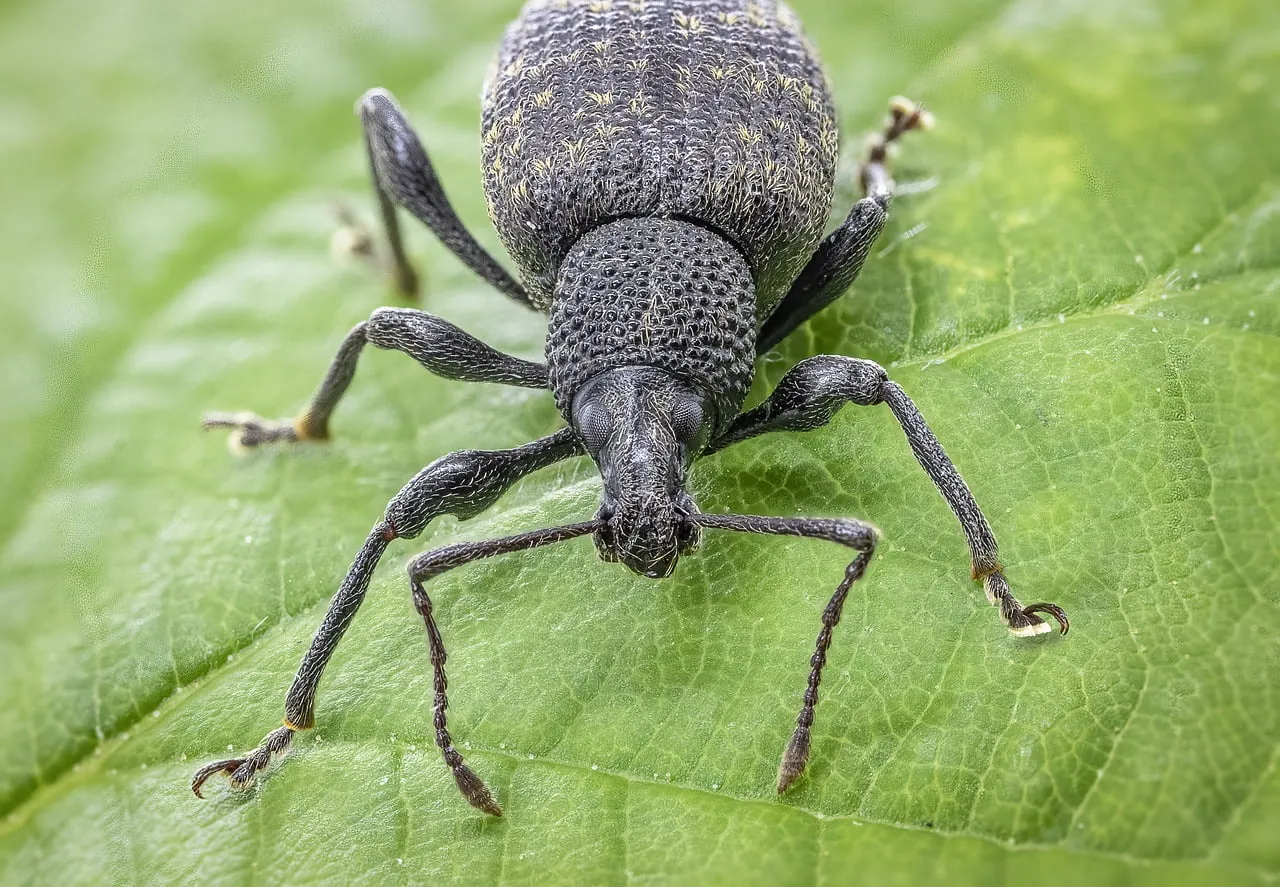
Adult vine weevils are 8 to 10mm long, roughly the size of a large woodlouse, with a distinctive elongated snout and elbowed antennae. The body is dull matt black, not shiny, with scattered patches of yellowish or orange hairs on the wing cases. The wing cases are fused together, which is why the beetle cannot fly. It spreads everywhere by crawling rather than flying, so an infestation typically spreads slowly through a garden on foot, from pot to pot. It also spreads rapidly through infested plants bought from garden centres and nurseries.
Adults are almost never seen during the day. They are expert hiders, tucking themselves under pots, beneath staging in greenhouses, in leaf litter, under loose bark, and in the crevices of walls and raised beds. When disturbed, they have an excellent survival strategy: they freeze and drop, landing in debris where their matt black colouring makes them almost invisible. The only reliable way to find adults is to go out an hour after dark with a torch in spring and summer and inspect the leaves and compost surface of vulnerable plants. They will be there, feeding on leaf edges, if you look at the right time.
💡 Top Tip
When you find adult vine weevils during night inspections, do not just squash them on the spot. Drop them into a jar of water. They are flightless and cannot swim, so a jar of water kills them reliably. This also prevents them from playing dead, recovering, and returning to laying eggs in your containers. Mild, still evenings from April through August are the best nights for torch inspections.
4. How to identify vine weevil larvae
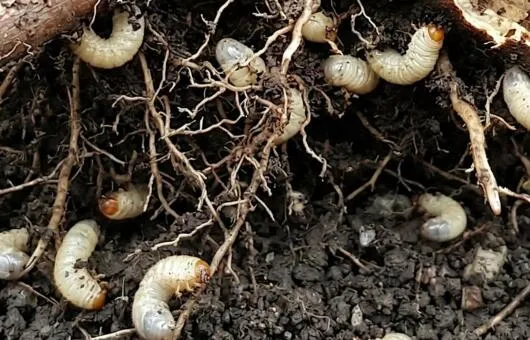
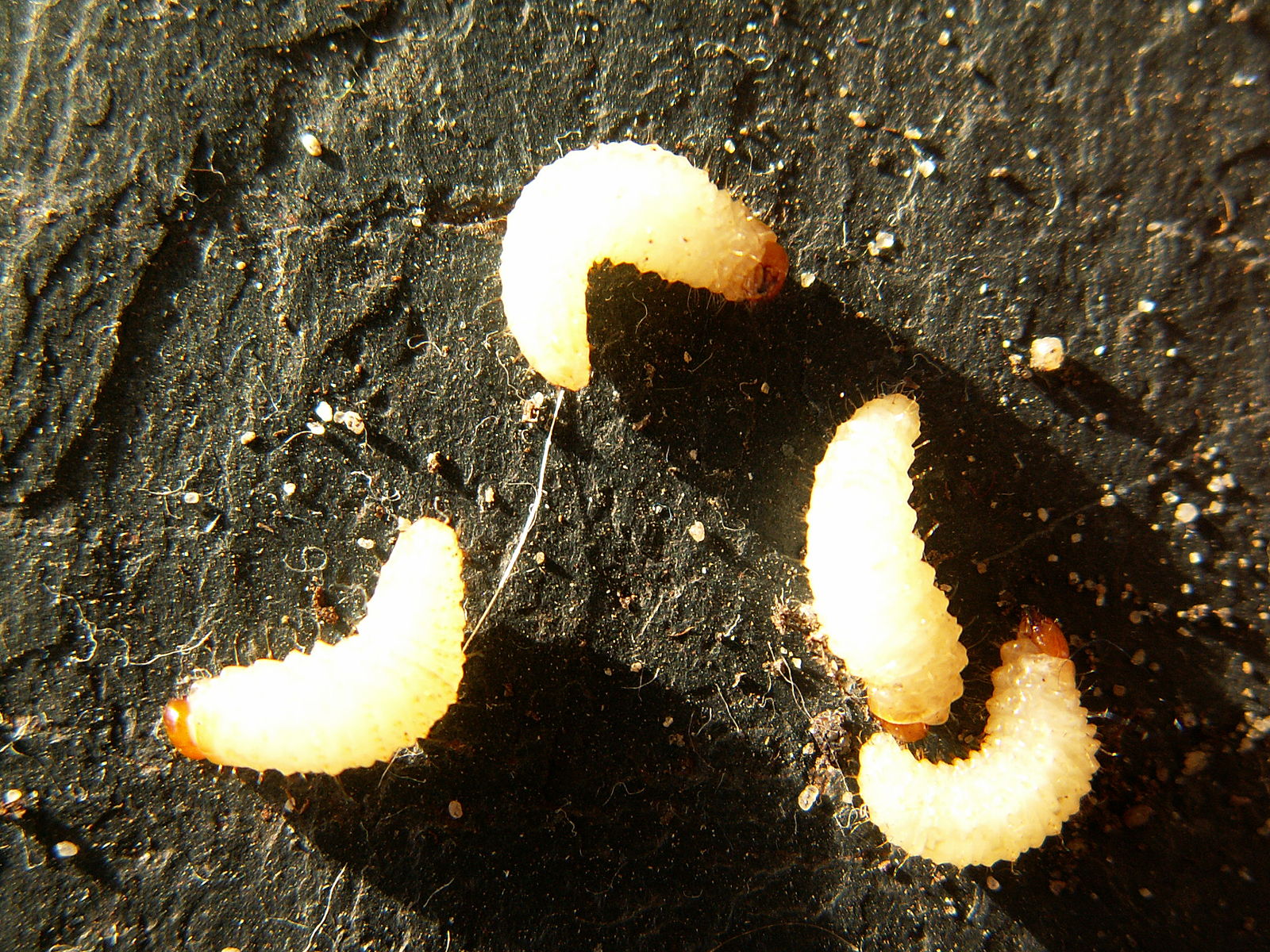
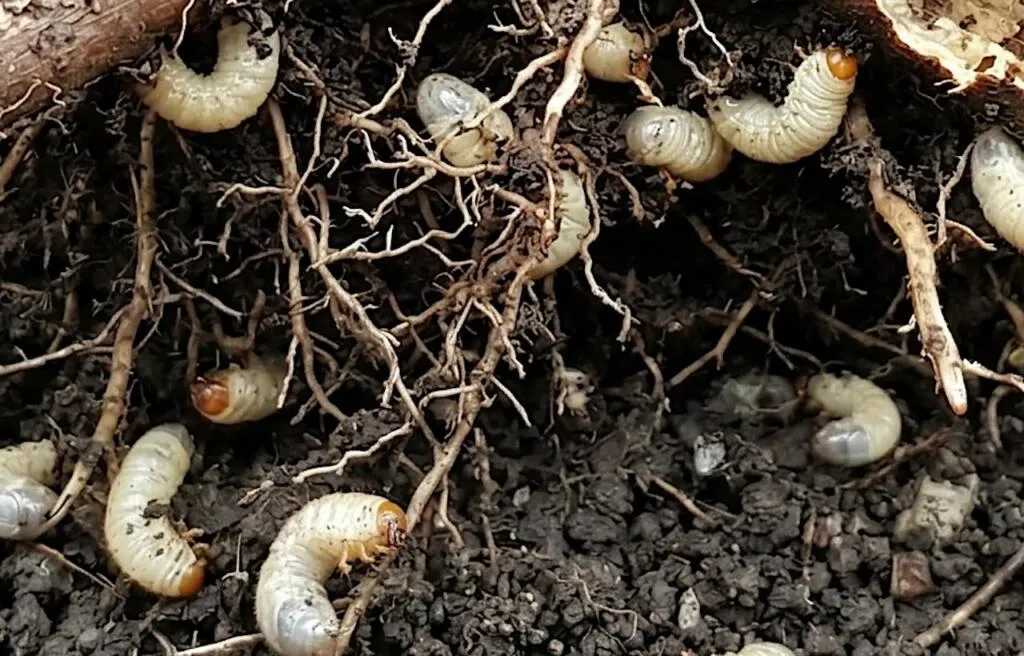
Vine weevil larvae are unmistakable once you know what you are looking for. They are plump, legless, creamy-white grubs, up to 10mm long, with a distinctive light-brown head. Their bodies naturally curve into a pronounced C-shape, which is the feature that most reliably distinguishes them from other soil-dwelling grubs you might encounter. They will be found in the compost or soil around and beneath plant roots, often in considerable numbers if an infestation is well established.
The larvae go through six developmental stages (instars) between hatching and pupation. Young first-instar larvae are very small and feed only on fine feeder roots. By the time they reach the later instars in Autumn and Winter, they are eating substantial root tissue and can strip a root ball comprehensively within weeks. If you tip a plant from its pot and find more than three or four larvae, the plant has been significantly weakened, regardless of how it looks above ground.
The eggs themselves are virtually impossible to detect. They are less than 1mm in diameter, initially white, then turning brown before hatching, and are simply dropped into the compost by the adult. There is no nest, no structure, no visible sign of their presence. This is why preventive treatment before eggs hatch is so much more effective than trying to respond after you notice larvae.
5. Signs of vine weevil damage
Vine weevil causes two distinct types of damage at two different times of year, each due to a different life stage.
i) Adult Damage
Adult leaf notching is the easier symptom to spot. Adults chew smooth, rounded or scalloped notches from the edges of leaves, typically between April and October. The notches are neat and consistent in shape, cutting inward from the leaf margin. Unlike slug or caterpillar damage, the notches are usually clean-edged without ragged tearing, and you will rarely find the culprit nearby during the day. On rhododendrons, camellias, heucheras, and bergenias, the notching can be very pronounced. While unsightly, adult leaf damage alone rarely kills an established garden plant. It is primarily a warning sign that eggs are being laid nearby.
ii) Larval Damage
Larval root damage is a serious problem and is almost completely hidden until a critical threshold of root loss is reached. At that point, the plant shows some or all of the above-ground symptoms: wilting despite moist soil, yellowing foliage without any obvious nutritional cause, stunted growth throughout the growing season, and, eventually, sudden and complete collapse. Container plants are particularly vulnerable because the larvae have no escape route from the pot and no natural predators to limit their numbers. A single adult laying eggs in a container can produce enough larvae to kill the plant entirely within a single autumn and winter.
💡 Top Tip
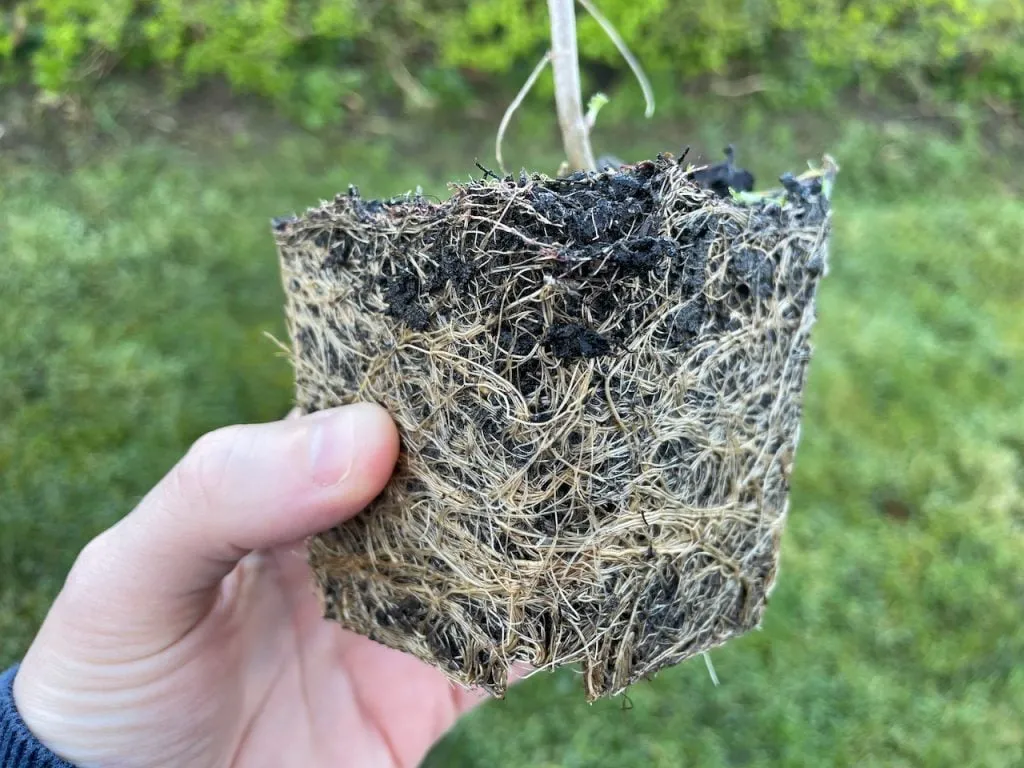
If you notice a plant wilting despite adequate watering, always check the root ball before doing anything else. Tip the plant from its pot and look at the base of the compost. If the roots are largely absent or if you find cream C-shaped grubs, vine weevil larvae are the cause. Do not water more in the hope it will recover. The roots are gone and more water will not help. Act on the larvae directly.
6. Plants most at risk from vine weevil in UK gardens
Vine weevil is not as selective as some pests. It will attack a very wide range of plants, but certain plants are particularly favoured by adults for egg laying and are reliably targeted every year. If you grow any of the following in containers, they should be treated preventively rather than waiting for symptoms to appear.
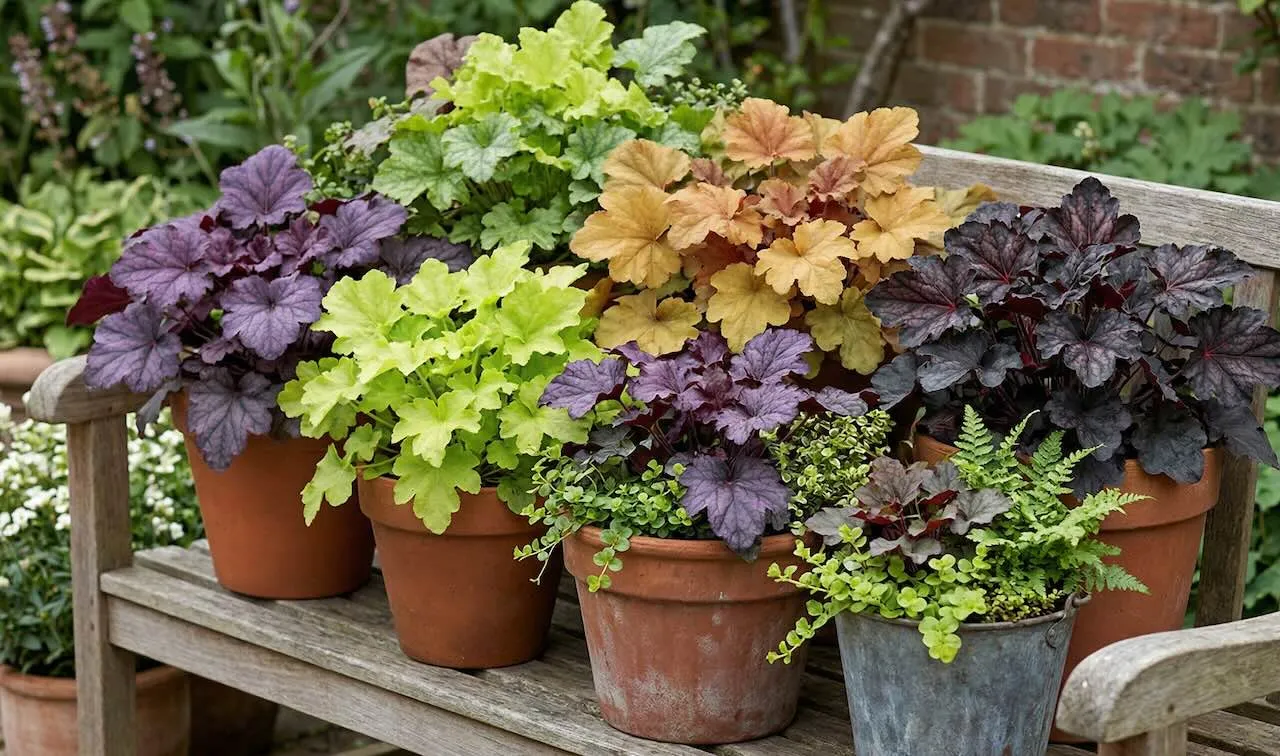
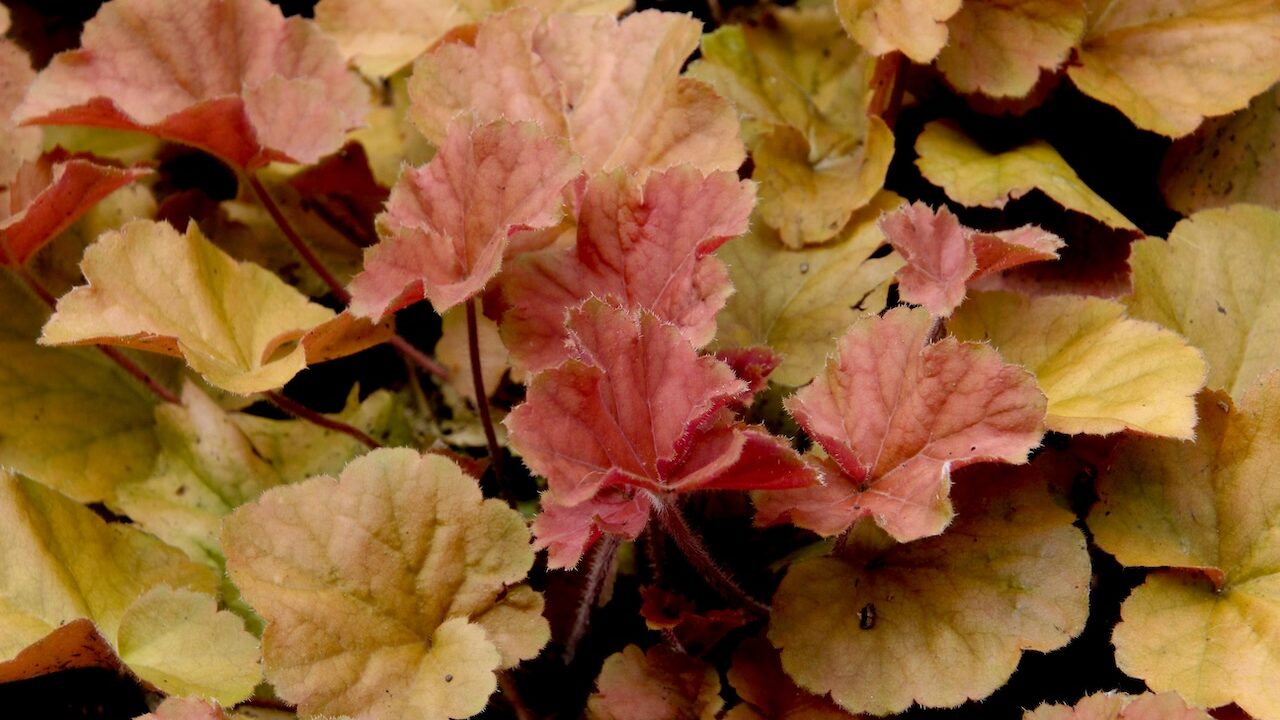
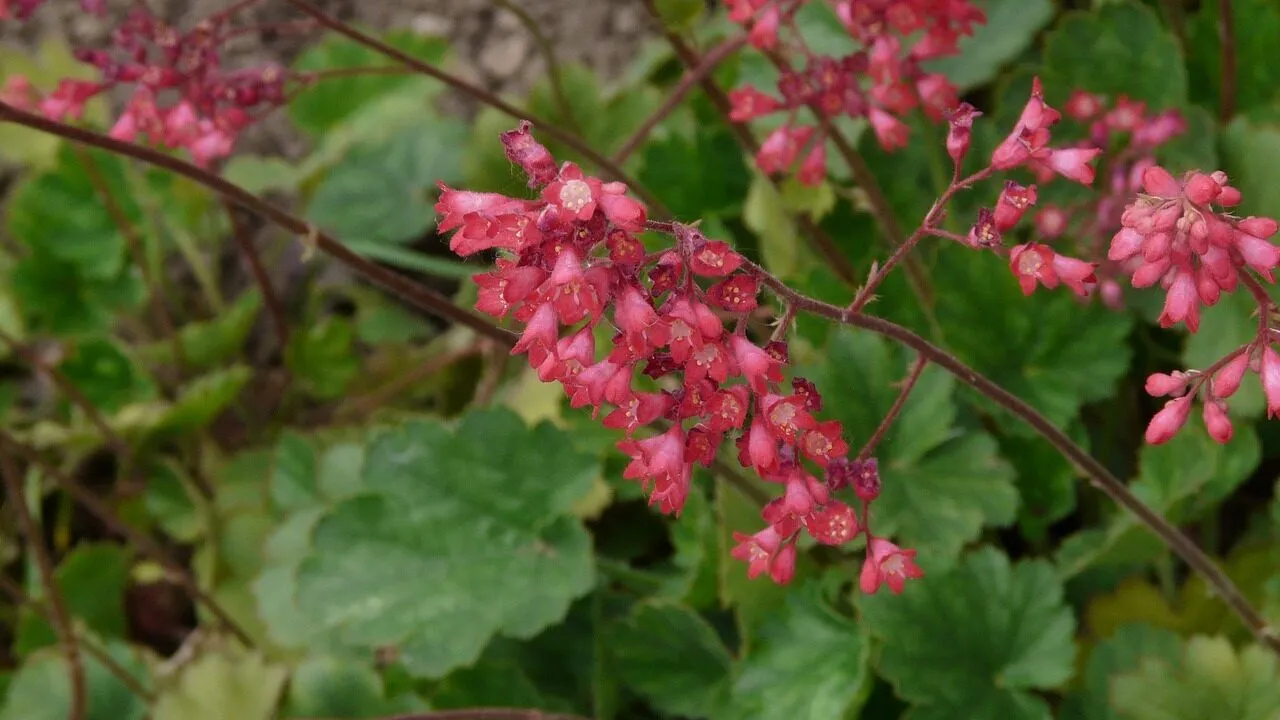
The plants vine weevil attacks most aggressively in UK gardens include heuchera (consistently the number one target and the plant I most often hear about from forum members), fuchsia, begonia, cyclamen, primula, polyanthus, strawberry, rhododendron, azalea, camellia, hydrangea, sedum, saxifrage, bergenia, hosta, and yew. Container-grown specimens of all these plants are dramatically more vulnerable than garden-planted ones, simply because the closed environment of a container offers the larvae nowhere to go and no predators to face.
Garden-planted specimens are not immune. Strawberries, primulas, and heucheras in open borders are commonly attacked. The difference is that larvae in open ground have more natural predators, including ground beetles, birds, hedgehogs, frogs, and shrews, which limit population build-up.
In twenty years of designing gardens, I have seen vine weevil silently wipe out container collections that took clients years to build, often because a single infested plant from a garden centre was placed straight into the display without a root-ball check. If you are regularly losing heucheras that seem otherwise perfectly healthy, vine weevil larvae are the almost certain cause in my experience!
7. Nematodes: the best biological control for vine weevil
Nematodes are my preferred treatment for vine weevil, and for good reason. They are organic, safe for wildlife, edible plants, children, and pets, and, when applied correctly, genuinely very effective. The specific nematode used for vine weevil control is Steinernema kraussei, a microscopic parasitic worm that occurs naturally in soil and that actively seeks out and kills vine weevil larvae without harming anything else in the garden.
The nematodes are supplied as a powder or paste, mixed with water, and applied as a drench directly to moist compost or soil. Once in the growing medium, they move through the moisture film between soil particles and enter the vine weevil larvae, releasing bacteria that kill the grub within a few days. The nematodes then reproduce inside the dead larvae and spread through the compost, seeking out more larvae.
Temperature is critical for nematode success.Steinernema kraussei is effective at soil temperatures above 5°C, though the optimal range for best results is between 10°C and 20°C. This makes it the most cold-tolerant vine weevil nematode available and suitable for application later into autumn than other species. Soil above 20°C also reduces effectiveness, so do not apply during a heat wave or to pots sitting in direct hot sun.
Apply nematodes to thoroughly moist compost or soil. Dry conditions kill nematodes before they can work. Water the plants well the day before application, apply the nematode drench, and then water again afterwards to wash the nematodes into the compost. Keep the compost moist for at least two weeks after application while the nematodes establish and spread.
🌿 Nematode Application Guide
Factor
Requirement
Best timing
Late August to September (prime window). March to April as a second application
Soil temperature
Above 5°C minimum. 10°C to 20°C optimal for Steinernema kraussei
Soil moisture
Compost must be moist before, during, and for two weeks after application
How to apply
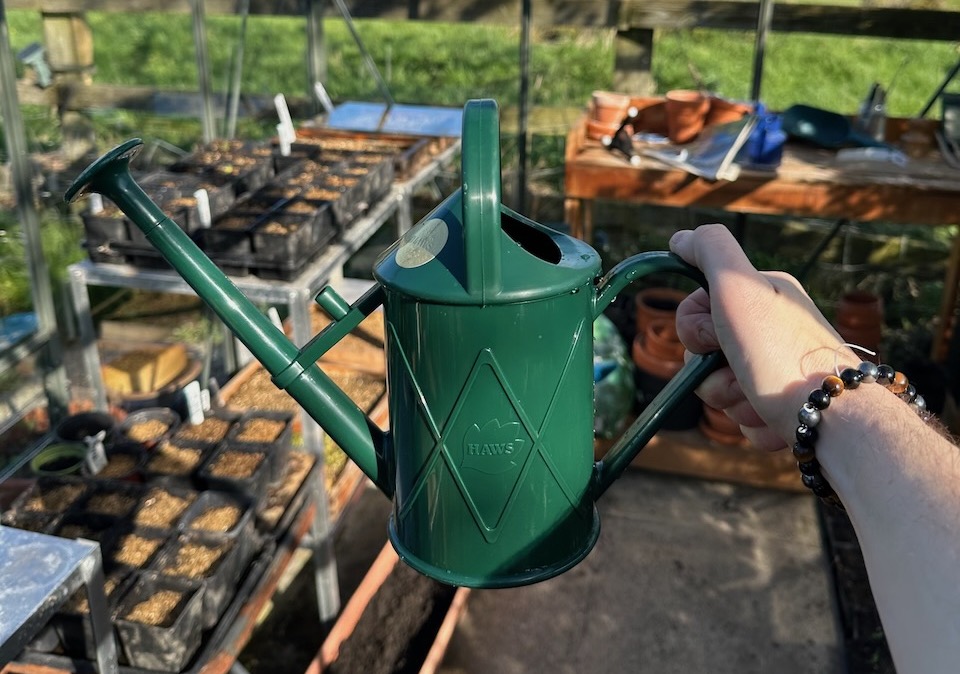
Mix with water per packet instructions, apply as compost drench with watering can
Storage
Keep refrigerated until use. Use before expiry date on packet
Repeat application
Two applications per year recommended: late summer and early spring
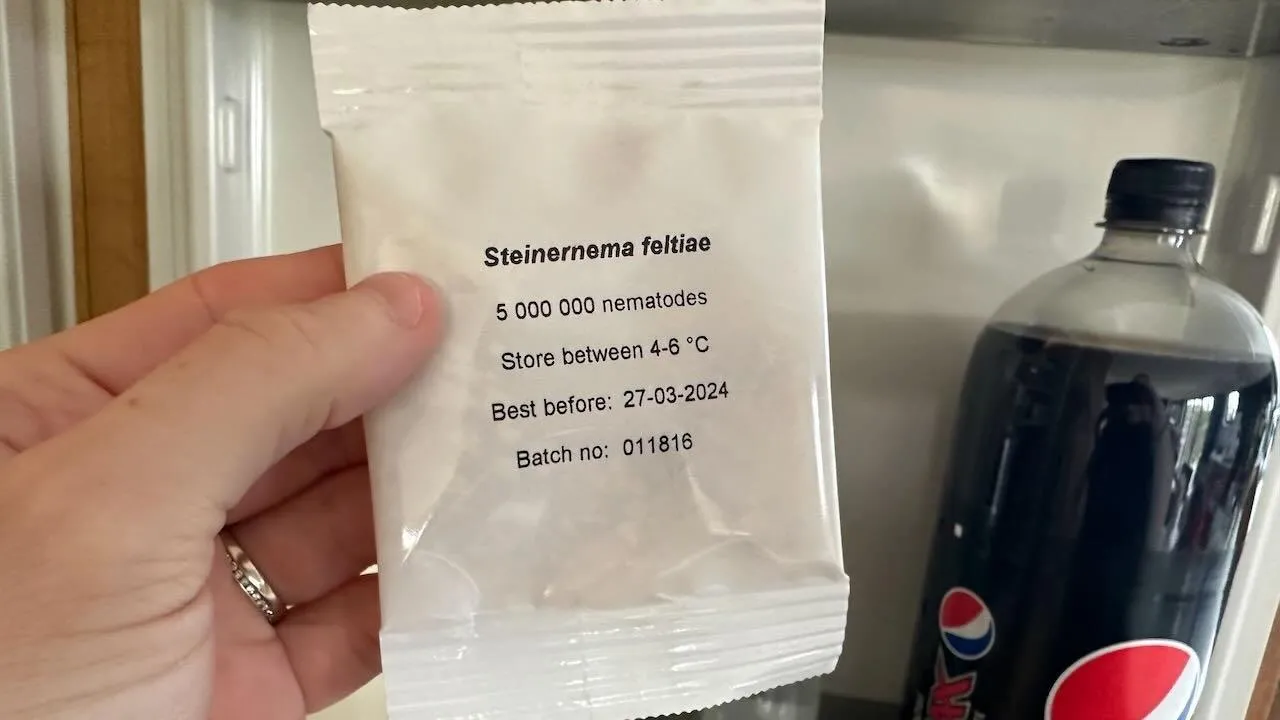
Nematode packs need refrigeration until use and have a limited shelf life. Buy from a reputable supplier, store them properly, and use them at the correct time of year. I have consistently had good results with Nemasys Vine Weevil Killer in my own garden and have recommended it to clients and forum members for years. Apply to every container that grows vulnerable plants, not just the ones showing symptoms, because larvae may be present and feeding before any above-ground signs appear.
8. Chemical treatments
For gardeners who want an additional chemical option alongside nematodes, drench treatments are available that release active ingredients into the compost, which are then taken up by plant roots. When vine weevil larvae feed on treated roots, they are killed. The active ingredient in most products available in the UK is acetamiprid. Do take care with any chemical treatments, though, as you often kill off the good things in the soil, too!
There are important limitations to know before using chemical vine weevil treatments. They can only be used on ornamental plants in containers. They cannot be used on edible plants, on plants grown in open ground, or on plants that pollinators use as a primary nectar or pollen source. Always read the label in full before application.
My personal preference is always to use nematodes as the primary treatment. They are safer for the wider garden ecosystem, genuinely effective when applied correctly and at the right time, and usable on any plant, including edibles. Chemical treatments have their place as a backup or for heavy infestations in purely ornamental containers, but I would not use them as the default approach when nematodes do the job well.
9. Physical controls: night inspections, barriers, and wildlife
Physical controls work best as part of an integrated approach alongside nematodes rather than as a standalone solution, but they are genuinely valuable and for small collections of containers they can make a significant difference.
Night torch inspections from April through August are the most effective physical control for adults. Go out an hour after dark with a head torch and inspect the leaves and compost surface of vulnerable plants. Vine weevils will be visible feeding on leaf edges. They play dead when light hits them, so work quickly. Drop them into a jar of water rather than squashing them in place. Even catching ten or twenty adults over the course of a season represents a very significant reduction in the number of eggs being laid, given that each adult lays up to 800 eggs.
Sticky barriers placed around pot rims or on greenhouse staging can trap adults as they climb toward plants. These are particularly effective in greenhouses where adults have limited alternative routes to access plants. Renew them regularly through the active season.
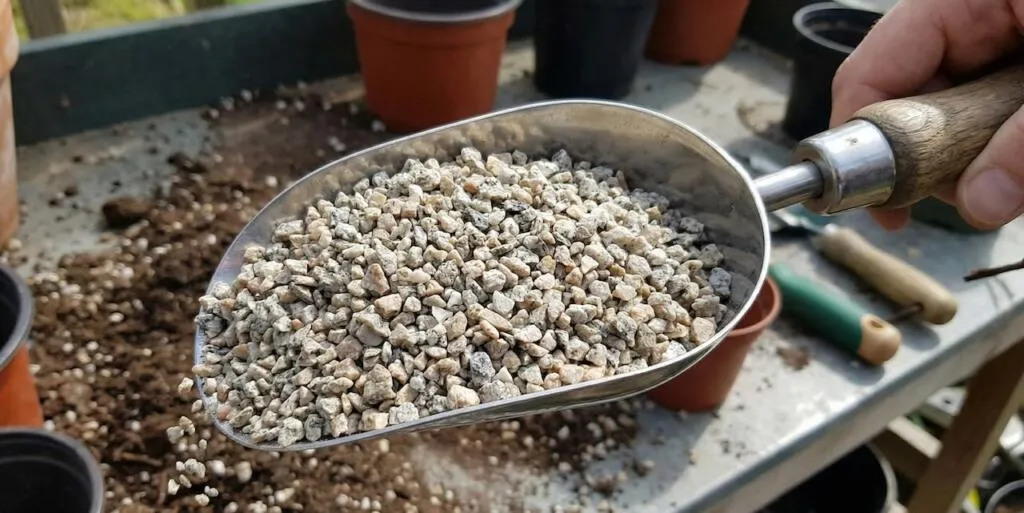
A layer of grit on the surface of the container compost acts as a physical deterrent to egg laying. Adult vine weevils prefer to lay eggs in loose, soft compost. A 2cm layer of coarse horticultural grit across the compost surface makes it harder for adults to access the compost and lay eggs effectively. It is not a guarantee, but it does reduce infestation pressure, particularly useful on pots of prized plants.
Encouraging natural predators is the most sustainable long-term approach for garden-planted specimens. Ground beetles, birds, hedgehogs, frogs, shrews, and predatory rove beetles all eat vine weevil adults and larvae. A garden with plenty of habitat, leaf litter, log piles, a pond, and reduced chemical use will have significantly higher natural predator populations and correspondingly lower vine weevil pressure.
Prevention is genuinely more effective than treatment with vine weevil, because by the time you are treating a severe infestation, you have already lost plants. This is what causes frustration among newbie gardeners on my forum. Their plants are already long dead by the time they notice something is wrong. The following practices, applied consistently, dramatically reduce vine weevil pressure in any garden and can enable even a beginner gardener to catch them before the plant loses!
Check rootballs before buying. One infested plant from a garden centre can introduce vine weevil to every container in your collection. Before buying any container-grown plant, tip it from its pot and inspect the compost for larvae. This single habit prevents most new vine weevil introductions. Do not be embarrassed about doing this at the garden centre. Any reputable nursery will understand exactly why you are checking.
Use fresh compost every season for vulnerable plants. Old compost in containers that grew last year’s heucheras or fuchsias may contain overwintered larvae or eggs ready to hatch. Tip out, inspect, and replace with fresh compost for your most vulnerable plants each spring. Dispose of any suspect compost in general waste rather than spreading it on the garden.
Avoid leaving empty pots with compost in them. An empty container with residual compost is an ideal egg-laying location for an adult vine weevil. Either empty, clean, and store pots dry, or keep them planted.
Treat preventively rather than reactively. If you grow heucheras, fuchsias, begonias, or cyclamen in containers, apply nematodes to those pots every August to September as a matter of routine, regardless of whether you have seen any symptoms. The larvae are almost certainly present before symptoms appear. A preventive nematode application costs very little compared to the loss of plants you may have grown for years.
💡 Top Tip
Set a reminder on your phone for the last week of August each year labelled “vine weevil nematodes”. Order them the week before, keep them in the fridge when they arrive, and apply them on a mild, cloudy evening to well-watered containers. This single annual habit, done consistently, keeps vine weevil from becoming the devastating problem it can be if left unchecked.
11. Can I rescue a plant affected by vine weevil larvae?
The answer depends entirely on how much root damage has occurred. If you catch the infestation early, when the plant is just beginning to wilt, and a reasonable root system remains, rescue is often possible. If the plant has completely collapsed and the root ball is almost entirely eaten away, recovery is unlikely.
For a plant with healthy roots remaining, work through this rescue sequence. Tip the plant out of its pot and shake off all the old compost onto a sheet of newspaper. Remove every larva you can find by hand and dispose of them in the general waste. Inspect what remains of the root system.
Trim any completely dead or mushy roots back to healthy white tissue with clean secateurs. Repot the plant into fresh ericaceous or multipurpose compost, depending on the plant, with added horticultural grit for drainage. Apply a nematode drench immediately into the new compost. Place in a sheltered spot out of direct sun and do not feed for at least four weeks while the plant stabilises.
For heucheras specifically, which are vine weevils’ most enthusiastic hosts, there is a straightforward rescue technique I have used successfully many times. Even a heuchera that appears to have lost almost all its roots can often be revived by treating it as a cutting.
Remove all damaged root material; leave only the crown; dust with rooting hormone powder; and press into fresh compost. Keep moist and out of direct sun. Heucheras are remarkably resilient and will often re-root successfully within six to eight weeks.
Your subscription could not be saved. Please try again.
Your subscription has been successful.
12. Frequently asked questions about vine weevil
When is the best time to treat vine weevil with nematodes?
Late August to September is the single most important treatment window. Young larvae have just hatched, the soil is still warm enough for nematodes to be highly effective, and the larvae have not yet had time to cause significant root damage. A second application in March or April targets any overwintered larvae. If you only apply nematodes once per year, late August is the time to do it.
Do vine weevils live in the ground or only in containers?
They live in both, but container-grown plants suffer significantly more severe damage. In open ground, natural predators, including ground beetles, birds, and hedgehogs, limit larval populations. In a closed container, larvae have no predators and nowhere to go, so they eat every root available. Strawberries, primulas, and heucheras in open borders are commonly attacked but usually survive in better shape than the same plants in containers.
How do I know if my plant has vine weevil larvae?
Tip the plant from its pot and inspect the root ball. Vine weevil larvae are fat, legless, C-shaped grubs up to 10mm long with cream bodies and a light brown head. They will be visible in the compost around and beneath the roots. A healthy root ball should be white and intact. A vine weevil-damaged root ball will have few or no roots remaining, with larvae visible in the compost.
Are vine weevils harmful to humans?
No. Vine weevils are entirely harmless to people and pets. They do not bite, sting, or carry any disease. They are purely a plant pest. The nematodes used to control them are also completely harmless to humans, pets, birds, earthworms, and beneficial insects.
Why do I keep losing heucheras for no obvious reason?
Vine weevil larvae are almost certainly the cause. Heuchera is by far the most commonly attacked garden plant in the UK, and heucheras dying for no apparent reason is the classic presentation of vine weevil infestation. Tip the plant out of its pot and look for C-shaped, cream-coloured grubs in the compost. Apply nematodes to all your heuchera containers each August as a routine preventive measure going forward.
Do vine weevils fly?
No. Adult vine weevils are completely flightless. Their wing cases are fused, and they get around by crawling. This means an infestation in a garden spreads relatively slowly on its own, from pot to pot across a patio or along a border. The main way they spread long distances is through the movement of infested plants and compost, which is why checking root balls before buying container plants is so important.
Improve Your Garden Design Skills Online
Why not start shaping a garden that truly works for you? Level up your skills with one of my online gardening courses!
My Garden Design for Beginners course is the perfect next step. Whether you’re completely new to garden design or just need a more structured approach, this affordable online course guides you through the full process from blank canvas to brilliant layout.
I’m Lee Burkhill, award-winning garden designer and presenter on BBC1’s Garden Rescue, and I’ve packed this course with practical advice, insider tips, and easy-to-follow steps to help you design a garden that works in harmony with nature, and keeps ground elder firmly in its place!
Planting Techniques: Select and arrange plants like a professional.
Design Styles and Layout Options: Explore a range of styles to suit every garden.
Course Features:
20 Hours of Study Time
Flexible Online Learning
Engaging Video Lessons and Quizzes
Real-World Case Studies
Certification upon Completion
Taught by Award-Winning Designer Lee Burkhill
Enrol now for just £199 and start your journey toward garden design mastery!
29
Garden Design Examples for Small Gardens: 30 Design Templates & Planting Plans
Garden Design Examples for Small Gardens: 30 Design Templates & Planting Plans: In this online gardening course, I’ll walk you through 30 fantastic garden designs, explaining the logic behind the layout, the plant choices, and take-home tips for applying them in your own garden.
Weekend Garden Makeover: A Crash Course in Design for Beginners
Learn how to transform and design your own garden with Lee Burkhills crash course in garden design. Over 5 hours Lee will teach you how to design your own dream garden. Featuring practical design examples, planting ideas and video guides. Learn how to design your garden in one weekend!
Garden Design for Beginners: Create Your Dream Garden in Just 4 Weeks
Garden Design for Beginners Online Course: If you want to make the career jump to becoming a garden designer or to learn how to design your own garden, this is the beginner course for you. Join me, Lee Burkhill, an award-winning garden designer, as I train you in the art of beautiful garden design.
Vine weevil is beatable, but it rewards the proactive gardener far more than the reactive one. Set that August reminder. Apply nematodes to your vulnerable containers every year before you see symptoms, because by the time symptoms appear, the damage is already done.
Check root balls before buying plants. Do torch inspections on mild evenings in spring and summer. Encourage predators with a good garden habitat. Do those things consistently, and vine weevil moves from an annual catastrophe to a manageable background pest.
Your subscription could not be saved. Please try again.
Your subscription has been successful.
Lee Burkhill
Lee Burkhill, known as the Garden Ninja, is an award-winning garden designer and horticulturist with over 30 years of gardening experience and 15 years as a professional garden designer. A qualified RHS (Royal Horticultural Society) professional, Lee specialises in sustainable garden design and practical horticultural advice. He designs and presents on BBC1’s Garden Rescue and in leading gardening publications.