How to get rid of fungus gnats & sciarid flies from house plants
Lee Burkhill: Award Winning Designer & BBC 1's Garden Rescue Presenters Official Blog
Beginner level
Fungus gnats or sciarid flies can be a real pain when keeping and growing house plants. Once these critters appear your house or greenhouse can be filled with these tiny annoying flies as their grubs eat away at plant roots and cause a nusiance. This beginners guide will show you how to get rid of fungus gnats for super healthy house plants.
Getting rid of fungus gnats can be a perpetual headache for houseplant owners. These tiny flies quickly disrupt the serene green oasis of our indoor space. These tiny, flying pests may be diminutive in size, but their impact is disproportionately felt.
Fungus gnat larvae feast on plant roots and organic matter in damp soil, damaging your houseplants and leaving them vulnerable to other pests. Fungus gnats also have an annoying habit of flying around your face when you are trying to work from home or relax on the sofa!
Quick Answer
Fungus gnats thrive in damp, organic-rich compost and are almost always caused by overwatering. The fastest way to get rid of them is to combine yellow sticky traps (to catch adults) with a nematode drench of Steinernema feltiae (to kill larvae in the soil). Use both at the same time. Reduce watering and add a gravel mulch to the soil surface to prevent them coming back. A full infestation takes around four weeks to clear completely due to their lifecycle.
This page contains affiliate links for products I use and love. If you take action (i.e., subscribe or make a purchase) after clicking a link, I may earn some gardening commission, which helps me keep the Garden Ninja Blog free for all.
1. What are these tiny flies on my houseplants?
Have you suddenly noticed tiny flies appearing in your home since starting your houseplant collection? Were things fine until you repotted a plant? Are you suddenly swatting tiny flies off you when sitting near your houseplants?
If so, meet the party crashers of the plant world: fungus gnats! These tiny, winged intruders thrive in damp compost and are the unapologetic fans of overwatering. With a penchant for organic debris, they turn your plant pots into their version of a five-star restaurant. Without treatment, fungus gnats can become a real problem.
🌿 Fungus Gnats at a Glance
Common name
Fungus gnats / Sciarid flies
Scientific name
Bradysia spp. (Sciaridae family)
Size
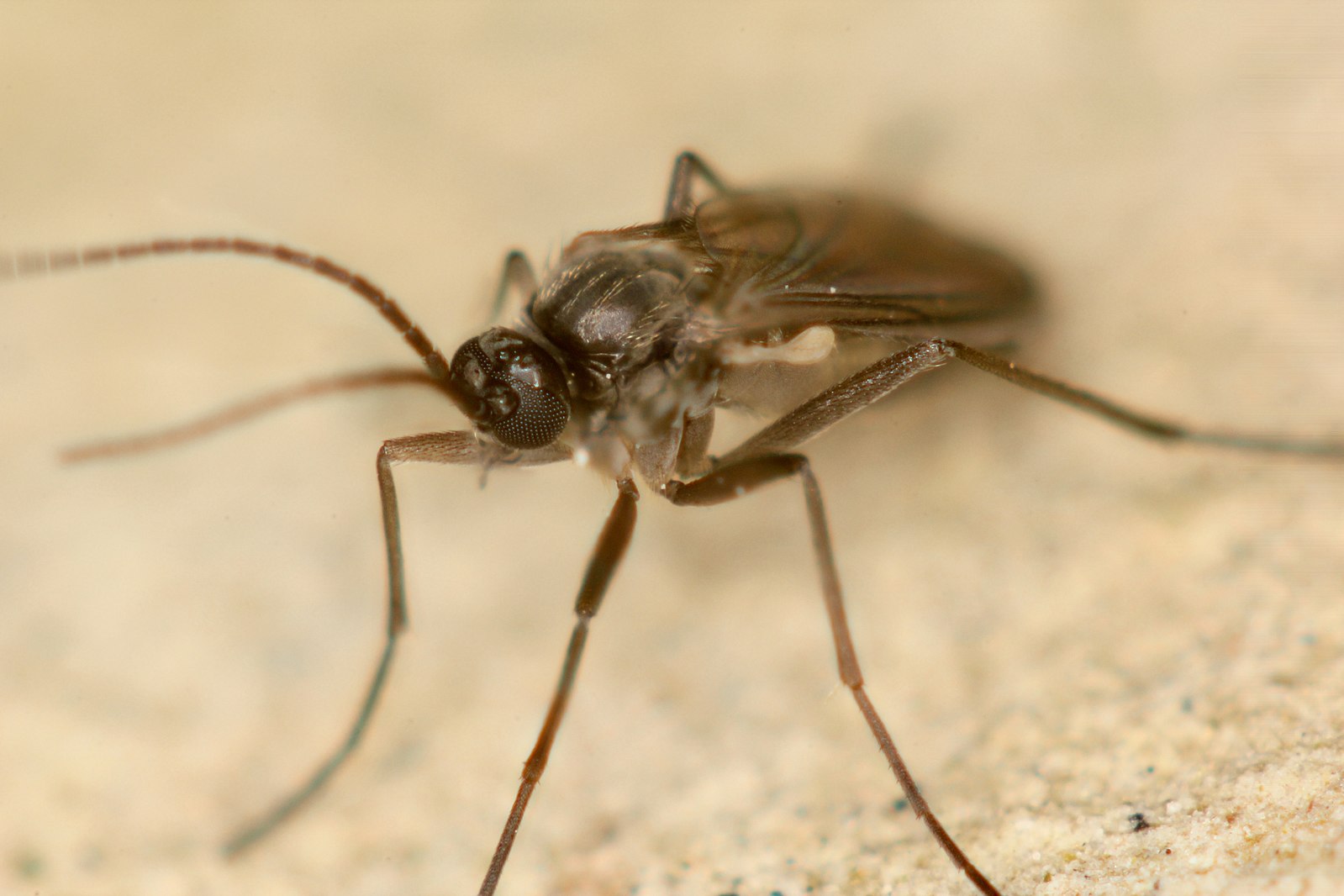
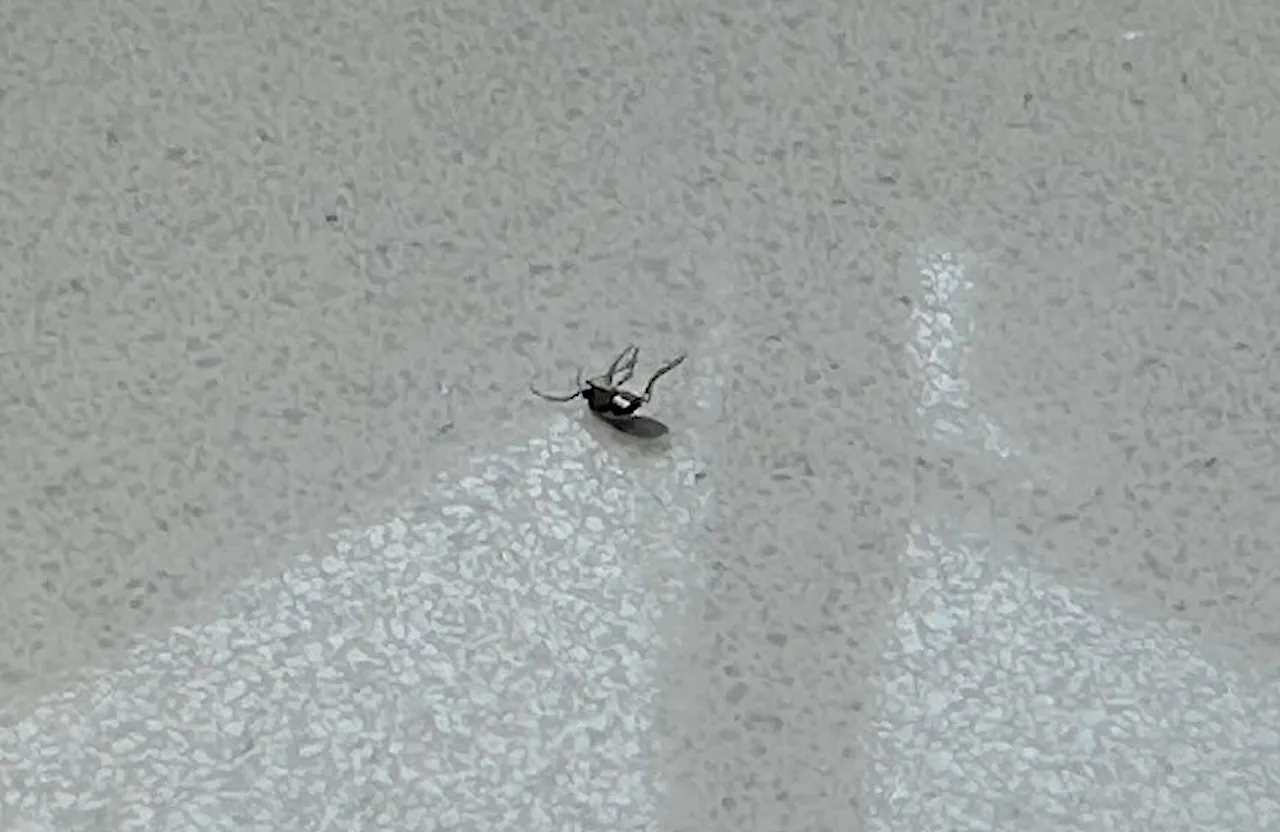
2 to 3mm, similar to a fruit fly but thinner and longer-legged
Appearance
Dark grey to black, long legs, clear wings with a Y-shaped vein
Larvae
White, translucent, with a black head. Live in top 5cm of compost
Attracted to
Damp compost, organic matter, peat-based growing media, CO2
Damage caused
Larvae eat roots and root hairs; worst impact on seedlings and young plants
Full lifecycle
30 to 40 days from egg to adult
Best treatment
Sticky traps + nematode drench used simultaneously
2. What causes sciarid flies and fungus gnats?
Fungus gnats (sciarid flies) are small, flying insects commonly found in and around indoor plants. These pests are primarily attracted to damp, organic-rich environments, and several factors contribute to their presence:
1. Overwatering and damp soil
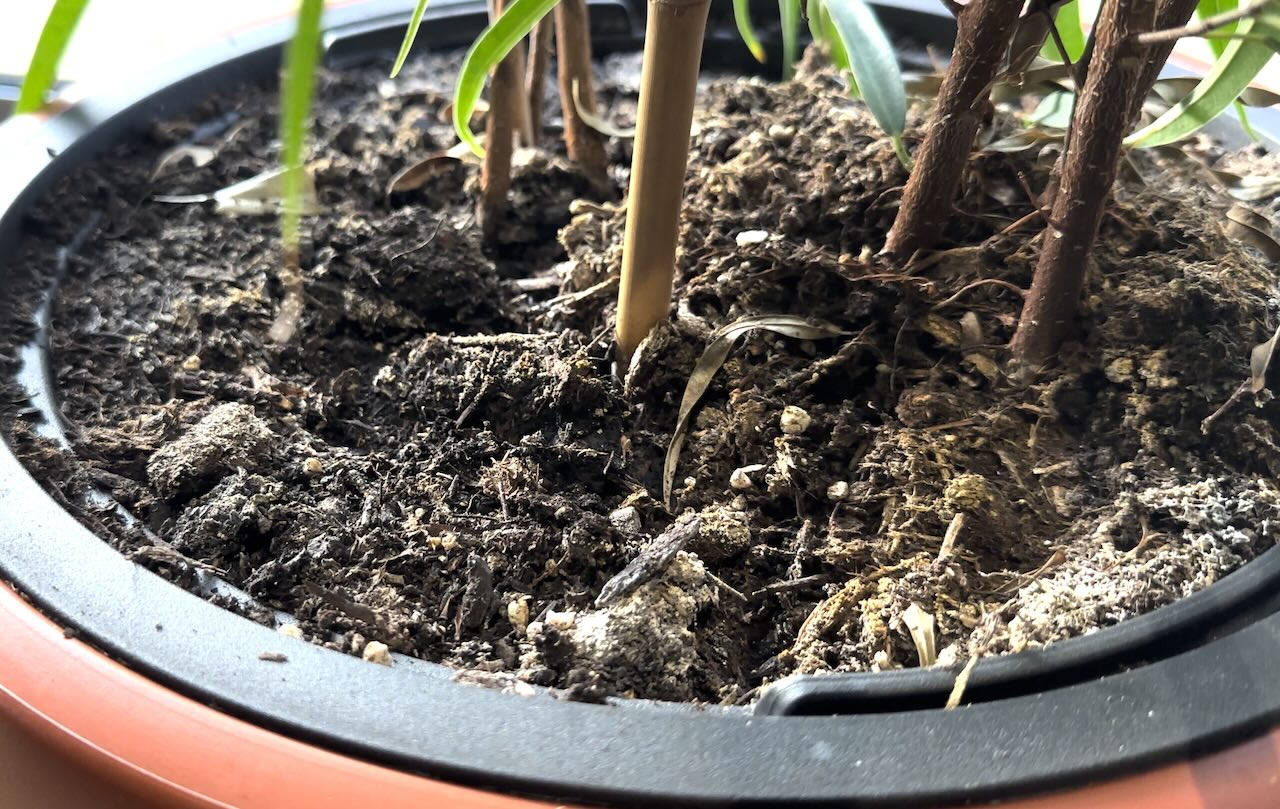
Fungus gnats thrive in moist conditions, and overwatering indoor plants creates an ideal habitat for their larvae. The larvae feed on fungi, organic matter, and plant roots in damp soil. If the soil remains consistently moist, it promotes the development of fungus and organic debris, attracting these pests.
So, if you’ve been giving too much love in the form of hydration to your houseplants, you may need to cut back. Very few houseplants actually like or need constantly wet soil.
Did you know that you can take my online gardening course and learn how to become a Garden Ninja yourself? Click here for details
2. Organic matter decomposition
Fungus gnats are attracted to decaying organic matter, such as fallen leaves or decomposing plant material in the soil. This is why peat-free or organic composts are often prime growing material for fungus gnats, as they thrive on the richness of this type of growing media. If you notice an infestation after repotting with fresh peat-free compost, this is the most likely reason.
3. Overcrowded planters
Planters that are overcrowded with plants can create poor air circulation and contribute to moisture retention in the soil. This creates favourable conditions for fungus gnats to thrive. Less is more when it comes to packing containers with plants.
4. Infested plants or compost
Buying plants that already have fungus gnats is one of the biggest causes of an infestation. Larvae or eggs could be present in the soil of newly acquired plants, or even in a fresh bag of compost sitting in the garden centre. There is little you can do to check when buying plants online, but when buying houseplants in person, give the plant a gentle shake. If lots of flies emerge, put it back and move on. When you open a new bag of compost, check the surface and use it promptly rather than leaving it to sit open and damp.
5. Lack of drainage
Poor drainage in plant containers leads to waterlogged soil, creating a perfect environment for fungus gnat larvae. Always choose a houseplant pot with drainage holes. Avoid completely sealed pots, and empty saucers after watering so roots are never sitting in standing water.
3. How to get rid of fungus gnats
There are a few tried and tested methods to eliminate fungus gnats so your houseplants can thrive without larvae nibbling on their roots. In my experience, it’s always best to use a combination of at least two treatments simultaneously, as fungus gnats are notoriously resilient. A full infestation takes around four weeks to clear due to the 30-plus day lifecycle from egg to adult. Treating only the adults while leaving the larvae untouched simply keeps the cycle going.
Treatment 1: Yellow sticky fly traps
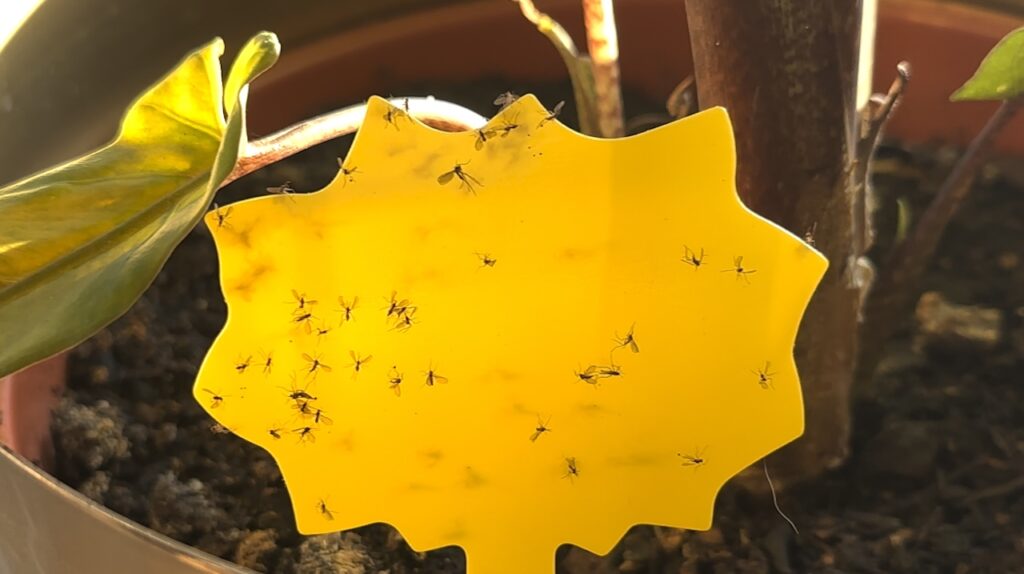
Sticky fungus gnat fly traps are the first port of call when dealing with tiny houseplant flies. They are a cost-effective way of stopping adults from laying eggs in your houseplant compost, and are completely harmless to pets and children. The way that sticky traps work is to disrupt the lifecycle and reproduction of fungus gnats. The more adults you catch, the fewer eggs and larvae there are in the soil.
However, sticky traps alone will not completely eradicate fungus gnats. It only takes a few adults to avoid the traps to keep the lifecycle going. They are a necessary part of the solution, not the whole solution. Aim to replace them each week or when they are full of dead adult flies.
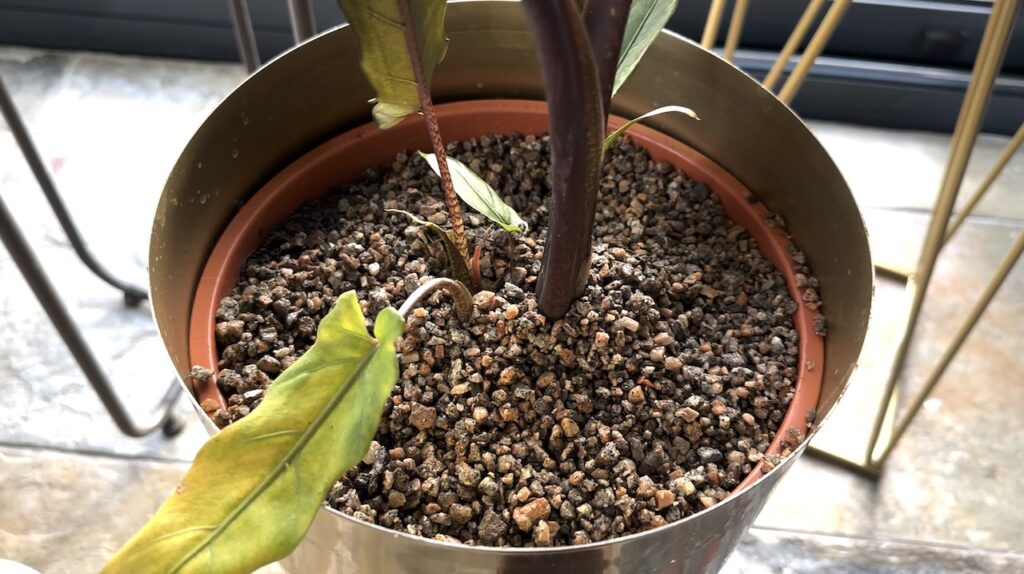
Horticultural gravel mulch is the second line of defence against fungus gnats. A layer of grit or gravel across the entire soil surface makes it far harder for adult flies to lay their eggs in the compost. Given how tiny the flies are, they are simply not big or strong enough to move the gravel out of the way to reach the soil beneath.
Make sure the entire surface of the compost is covered with no gaps. If there is even a small exposed area, adult flies will find it and start laying there instead. Gravel mulch also helps the soil surface dry out faster between waterings, which makes the environment even less hospitable for egg-laying.
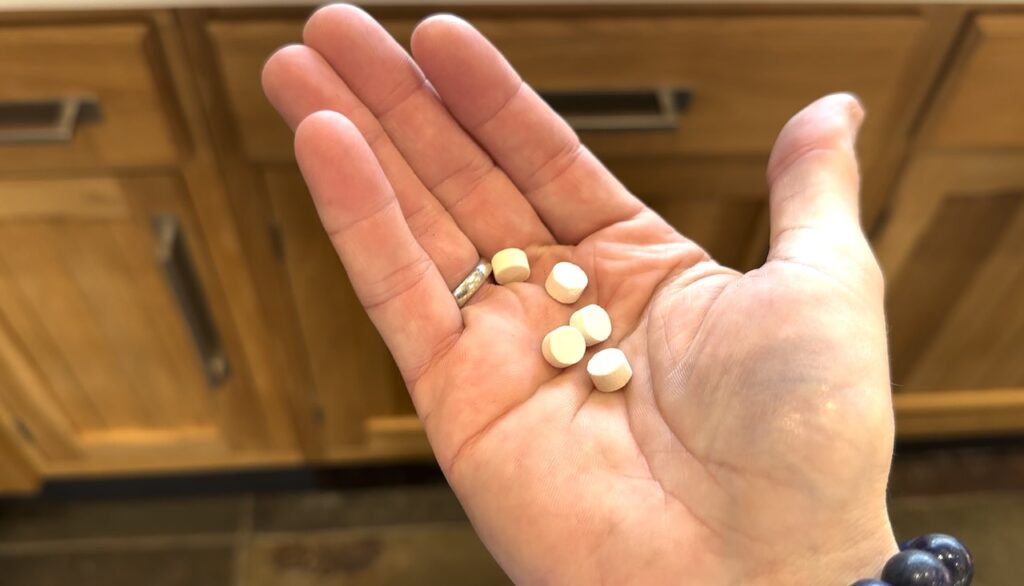
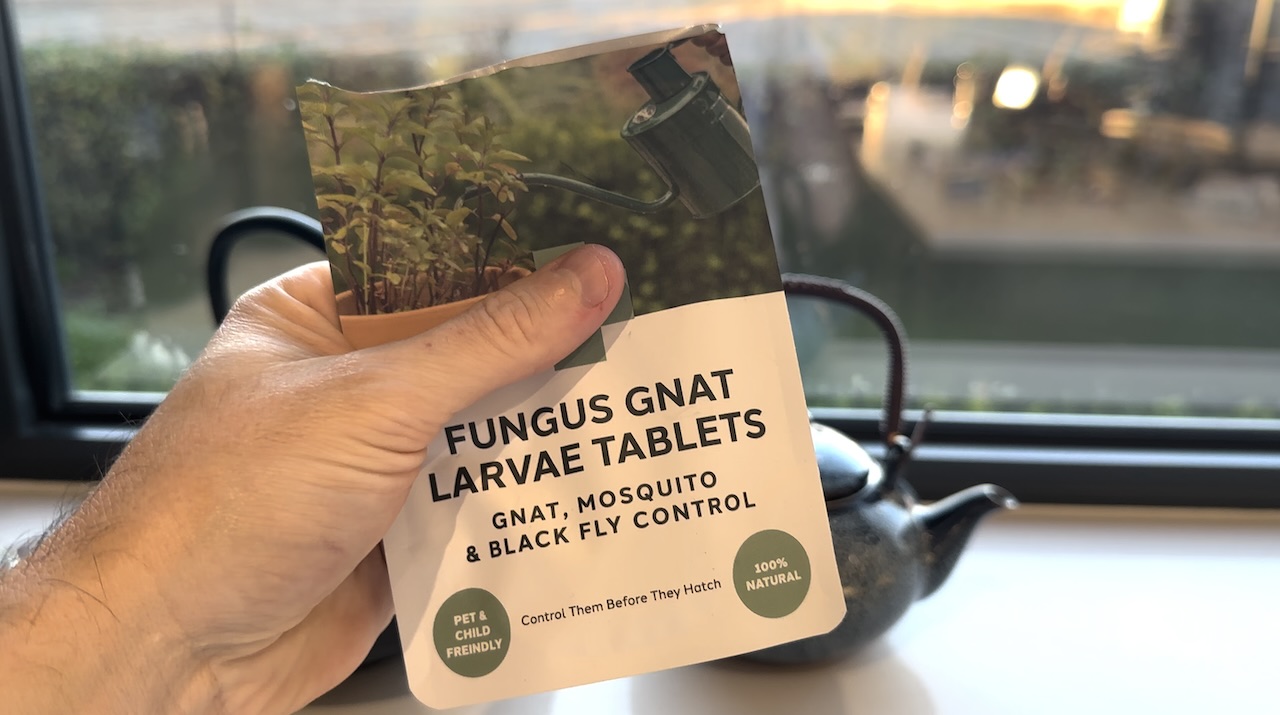
The third option is a clever biological control solution using Bti (Bacillus thuringiensis subspecies israelensis), available as bacteria tablets that are dissolved in water and drenched into the soil. Bti is a naturally occurring bacterium found in soil, used as a biological insecticide that targets and kills fungus gnat larvae specifically, while being completely harmless to humans, pets, and plants.
When larvae come into contact with Bti, the bacteria produce toxins that disrupt the larva’s digestive system, leading to paralysis and death. One of its key advantages is selective toxicity, meaning it primarily affects the larvae of specific insect groups such as mosquitoes and fungus gnats, leaving beneficial insects unharmed.
The one drawback with bacteria tablets is that they are relatively expensive and take a while to build up in the soil. I only reach for them with really heavy infestations where nematodes alone have not been enough.
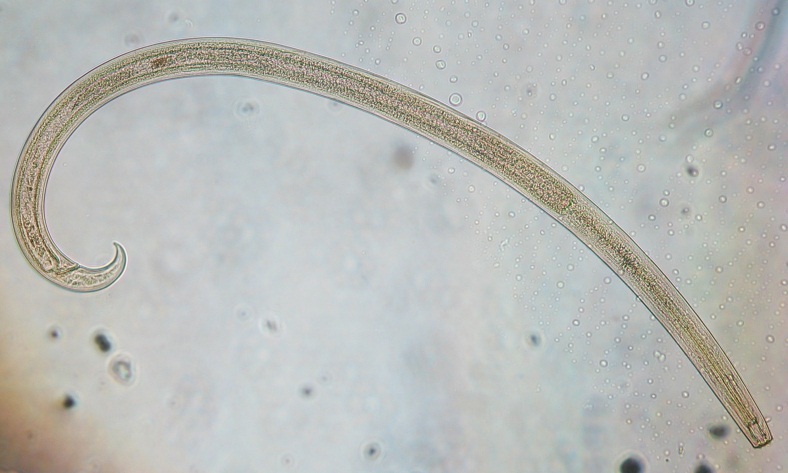
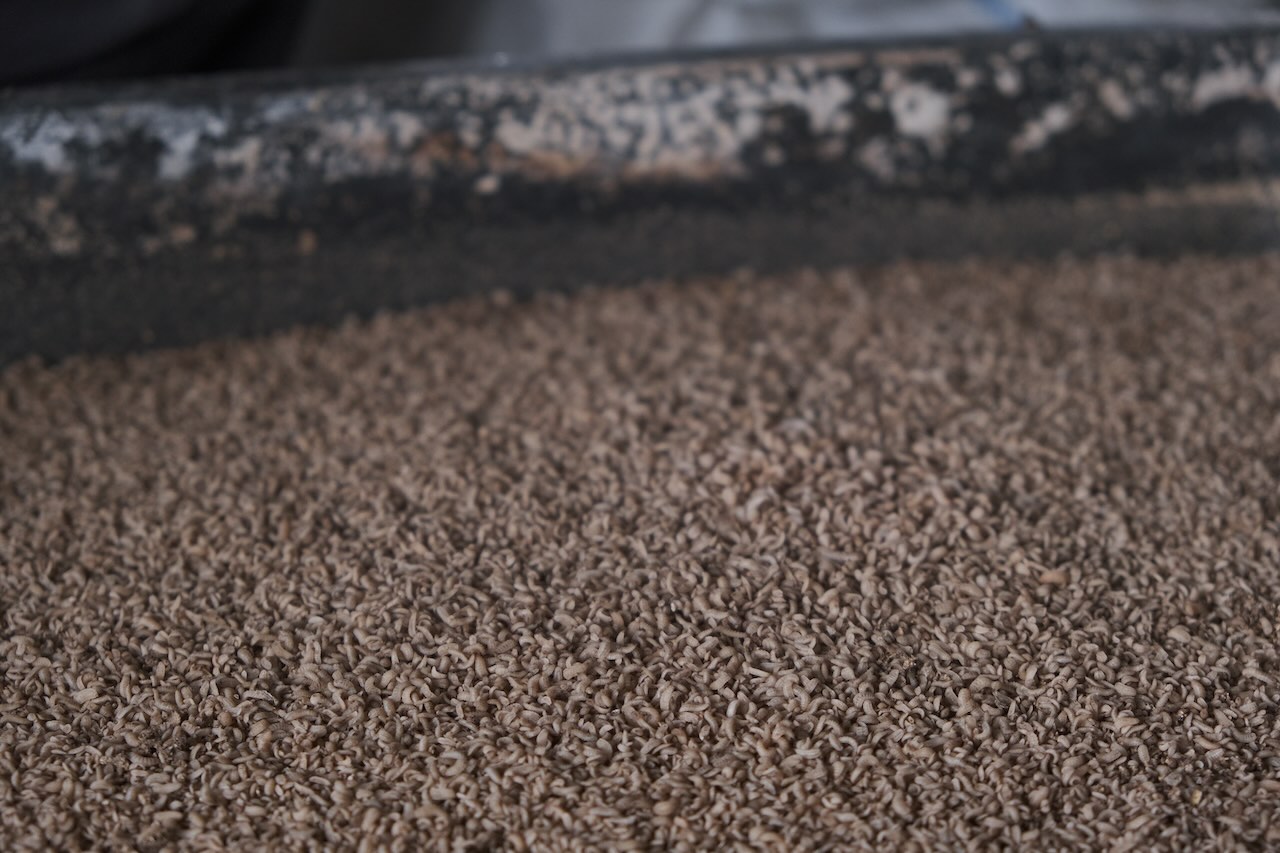
If you thought bacteria tablets were impressive, wait until you discover an army of soil-dwelling larvae hunters: the nematodes! Nematodes, specifically the beneficial nematode Steinernema feltiae, are microscopic roundworms that actively seek out and parasitise the larvae of fungus gnats in the soil. Upon locating a host larva, they enter the larva’s body cavity and release bacteria, which multiply and cause septicaemia, leading to the pest’s death. The nematodes then feed on the contents and reproduce, continuing their biological pest control.
Using nematodes for sciarid flies is both environmentally friendly and highly effective. They provide a targeted, natural solution that does not harm beneficial organisms, plants, or the environment. In my experience, combined with sticky traps, this is the most reliable way to clear a fungus gnat infestation.
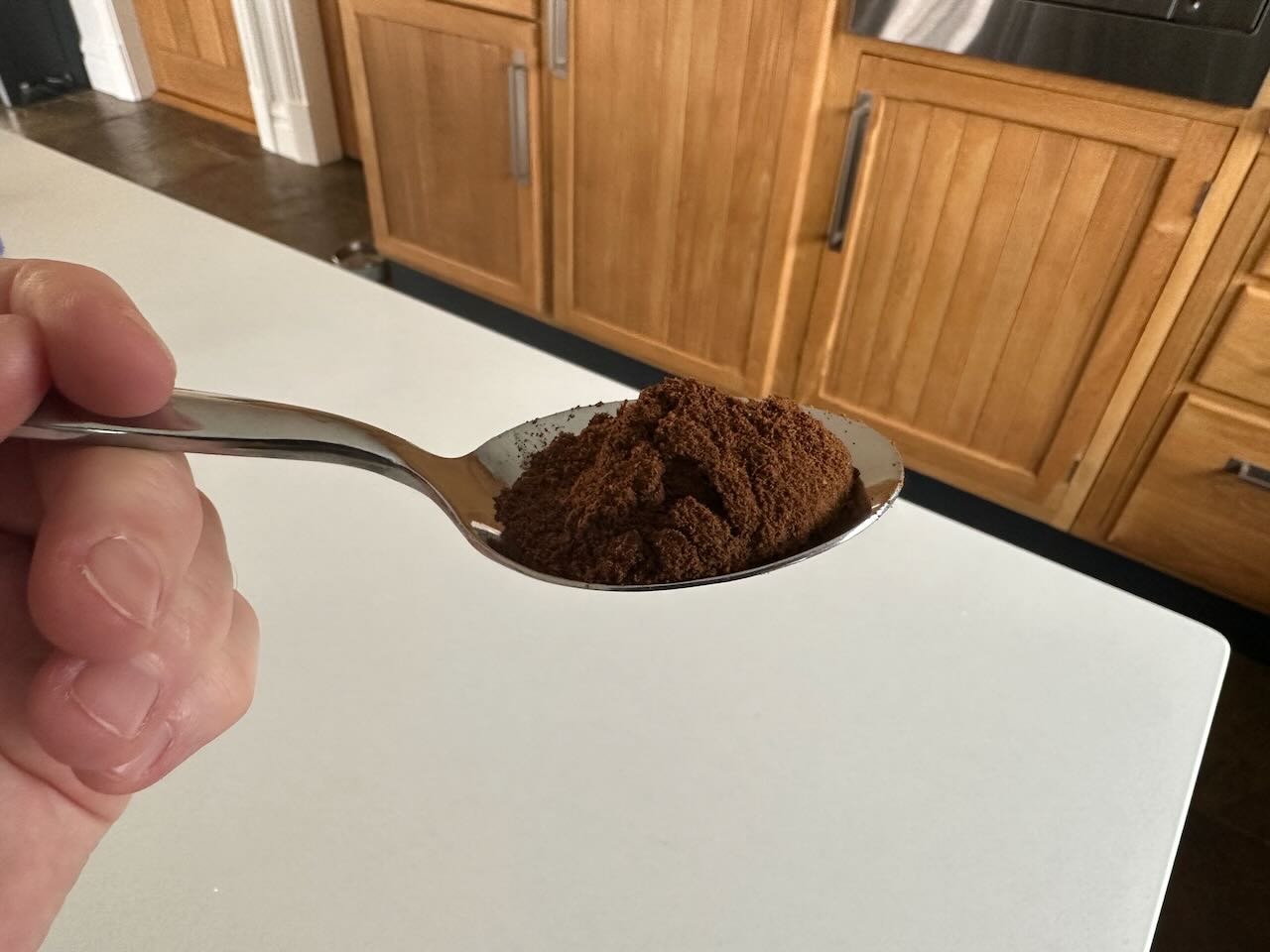
If soil-dwelling assassins are not your thing, neem powder could be the solution for you. Neem powder can be applied as a mulch on the top layer of soil, or mixed with water and used as a drench. Derived from the neem tree (Azadirachta indica), it is a 100% organic biological fungus gnat killer. It works by disrupting the growth and development of insect pests through the compound azadirachtin, while also acting as a repellent through its strong odour.
The one drawback of neem powder is the smell. It has an aroma of burnt coffee and leaves with a pungent, bitter top note. This is why most people water it into the soil rather than leave it as a surface mulch. I used it in my home garden design studio and the smell was very off-putting. Most effective, but not the most pleasant option.
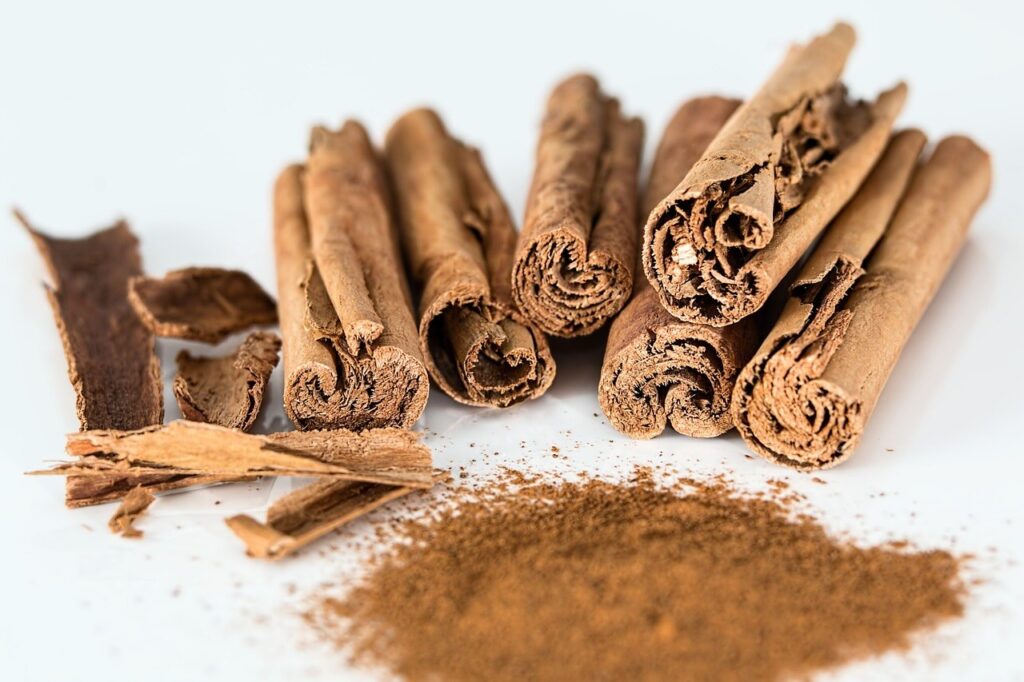
A cheap and cheerful biological control method for fungus gnats is sprinkling ground cinnamon around the base of your plants. The strong odour deters adult flies from laying their eggs near the herb. Cinnamon is an easy, non-toxic way of deterring adults, but it will not stop larvae already present in the soil. You will also need to reapply after every watering, so costs can soon add up for anyone with a large houseplant collection.
Not all treatments work in the same way or target the same stage of the lifecycle. The key to getting rid of fungus gnats for good is attacking both the adults and the larvae at the same time. Here is how all six methods compare so you can choose the right combination for your situation.
🌿 Fungus Gnat Treatment Comparison
Treatment
Kills adults
Kills larvae
Cost
Lee’s rating
Sticky traps
✅ Yes
❌ No
£ Low
⭐⭐⭐ Essential part of solution
Gravel mulch
⚠️ Prevents laying
❌ No
£ Low
⭐⭐⭐ Great for prevention
Nematodes (Steinernema feltiae)
❌ No
✅ Yes
££ Medium
⭐⭐⭐⭐⭐ Best larva treatment
Bti bacteria tablets
❌ No
✅ Yes
£££ Higher
⭐⭐⭐⭐ Good for heavy infestations
Neem powder
⚠️ Deters adults
✅ Partial
££ Medium
⭐⭐⭐ Effective but smelly
Cinnamon
⚠️ Deters adults
❌ No
£ Low
⭐⭐ Mild deterrent only
💡 Top Tip
Treat all your houseplants at the same time, even those that do not appear to be affected. Fungus gnat adults are mobile and will simply move to untreated pots if you only target the plants where you can see the most flies. Doing all plants in one go in the same session is far more effective than treating them one at a time.
5. Understanding the lifecycle of fungus gnats
Understanding the lifecycle of fungus gnats is crucial to getting rid of them for good. By knowing how long each stage lasts, you can choose the right treatment and understand why patience and persistence are essential. The full lifecycle from egg to adult takes 30 to 40 days, which is why a single treatment rarely clears an infestation completely.
The lifecycle of fungus gnats consists of four main stages:
Sticky traps catch adults; each female lays up to 150 eggs
Egg stage (4 to 6 days)
The fungus gnat lifecycle begins with the female laying tiny, transparent eggs in the top layer of moist soil, often near organic matter or fungi. The eggs hatch within about a week. This is the stage to disrupt by stopping eggs being laid in the first place, using sticky traps to catch the adults and gravel mulch to block access to the soil.
Larva stage (14 to 21 days)
Once the eggs hatch, larvae emerge: slender, legless, and transparent with a black head. They have a voracious appetite for organic matter, fungi, and plant roots in the top layer of soil. This is the most damaging stage and the most important one to target with nematodes or Bti.
Pupa stage (7 to 14 days)
As the larvae mature, they enter the pupa stage: cocooned within silk-like threads in the soil. This transitional phase lasts one to two weeks and leads to the emergence of adult fungus gnats. Allowing soil to dry out during this stage can interrupt development.
Adult stage (7 to 14 days)
The final stage sees the emergence of adult fungus gnats: tiny, mosquito-like flies with long legs, segmented antennae, and a Y-shaped vein in their wings. Adults are most active in the evening and are attracted to light and CO2 (which is why they always end up in your face). Each female can lay up to 150 eggs in her short lifetime, which is why infestations escalate so quickly.
6. Which is the best treatment to get rid of fungus gnats?
In my professional experience, the best treatment for fungus gnats or sciarid flies is sticky traps combined with nematodes, used simultaneously. By targeting adults with sticky traps and larvae in the soil with nematodes, you attack both stages of the lifecycle at once and can usually clear an infestation within 1 to 2 weeks after the nematodes take effect.
The other treatments each have limitations: cinnamon and gravel are useful for prevention and mild infestations but will not clear a heavy one on their own. Neem powder is effective but unpleasant in a home environment. Antibiotic tablets are excellent for severe infestations but are more expensive. Whatever combination you choose, you will need at least one treatment targeting adults and one targeting larvae running at the same time.
💡 Lee’s Recommended Kit
For most infestations: yellow sticky traps + nematode drench of Steinernema feltiae, applied to all affected pots simultaneously. Add a gravel mulch layer afterwards to prevent re-infestation. Reapply nematodes after four weeks if adults are still visible.
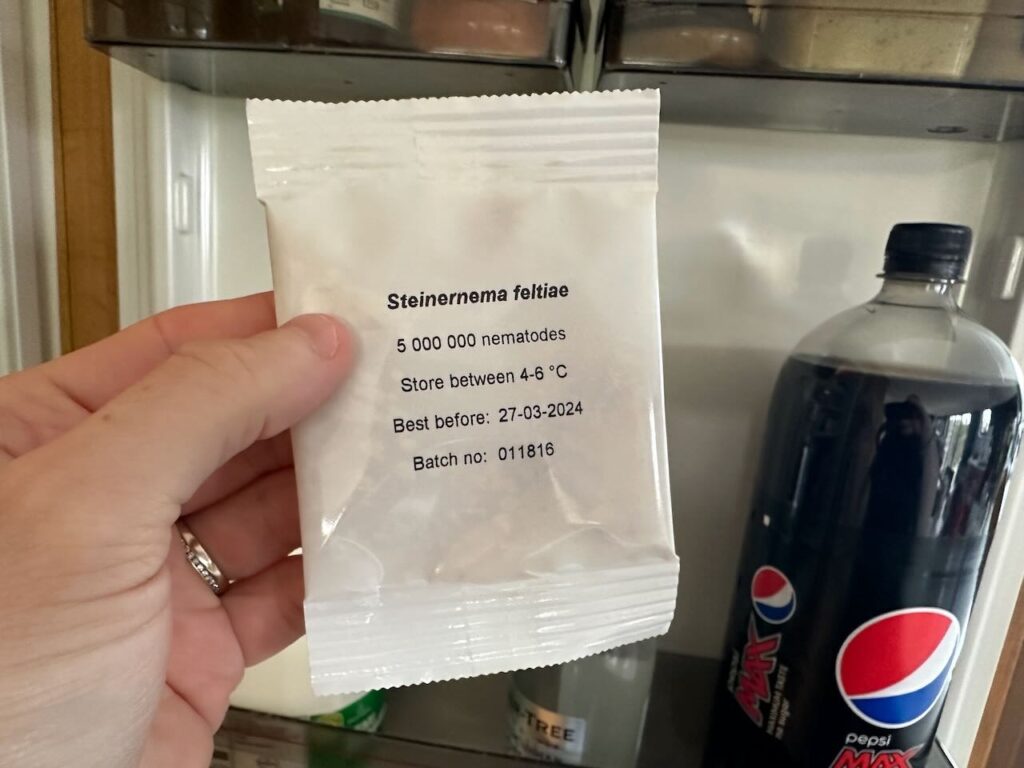
Obtain beneficial nematodes specifically formulated for controlling fungus gnats. These microscopic organisms, usually Steinernema feltiae, are available from gardening supply stores and online retailers.
Before use, check the storage conditions and the expiry date of the nematodes to ensure their viability. Nematodes must be kept refrigerated until use and used before the expiry date. Applying expired or heat-damaged nematodes simply will not work.
Step 3: Prepare the nematode solution
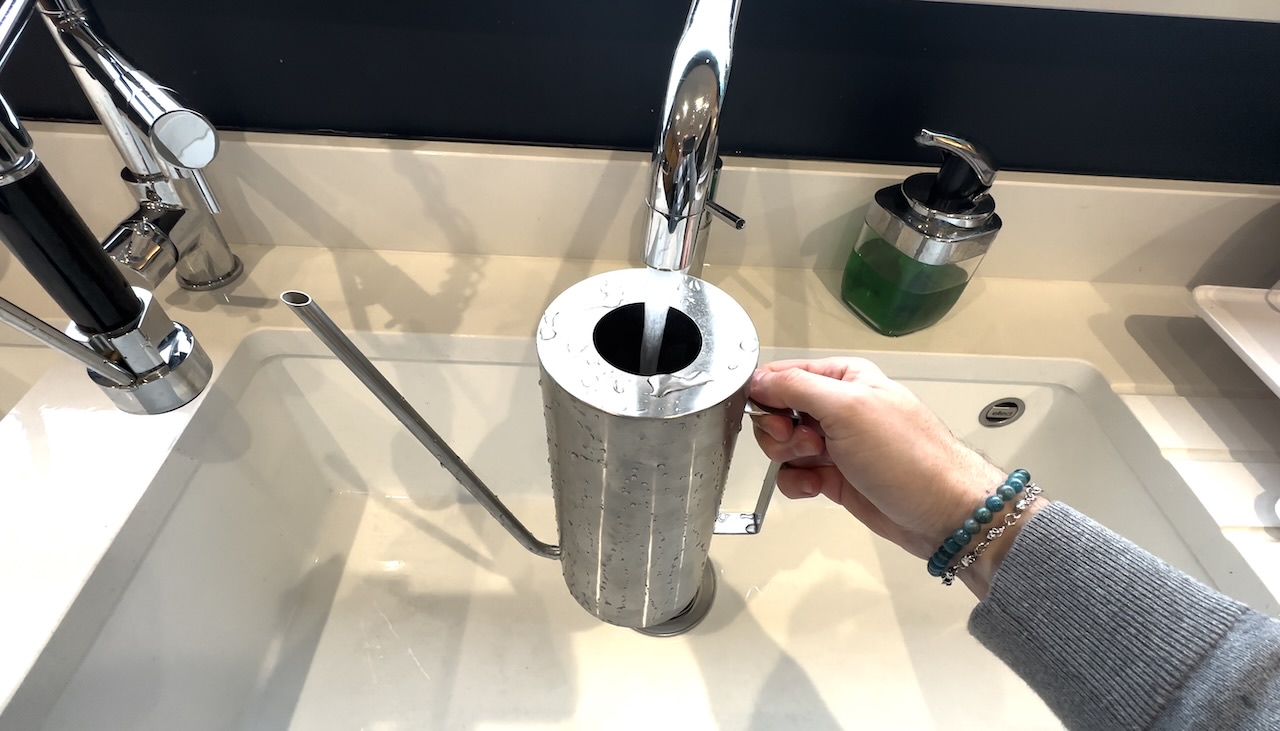
Follow the instructions on the product packaging to prepare the nematode solution, mixing the nematodes with clean, non-chlorinated water. As a general guide, it is usually 1 packet of 5 million nematodes per 10 litres of water (one standard watering can), which will treat approximately 10 square metres. Use the whole packet in one go and do not try to save or split it.
Step 4: Water the soil before applying
Before applying the nematode solution, water the soil around the affected plants. This step is essential. Nematodes need moist soil to move through and find the larvae. Dry soil will stop them reaching their target.
Step 5: Apply the nematode solution
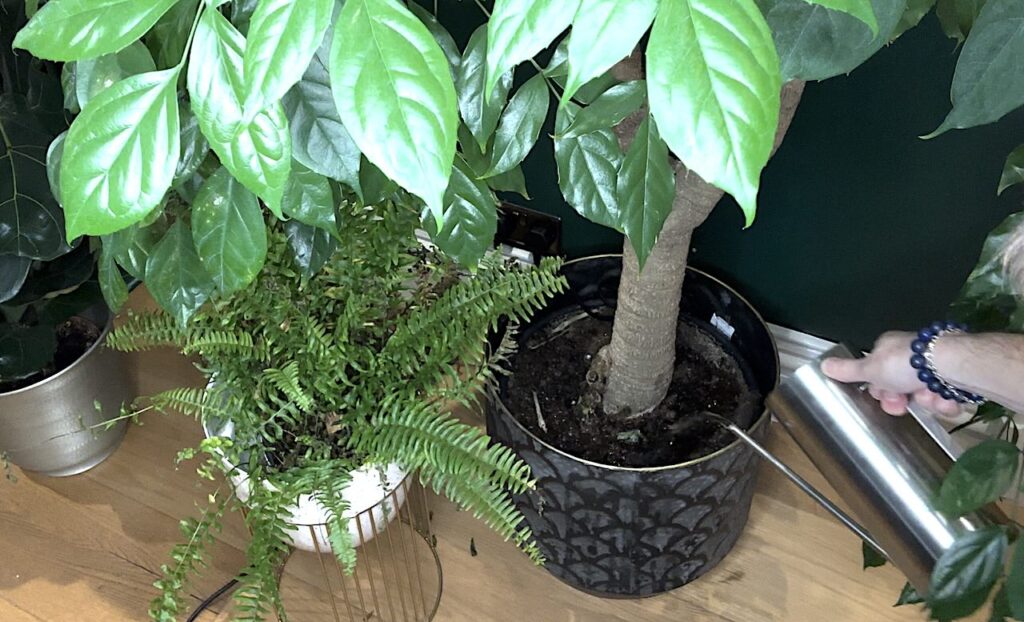
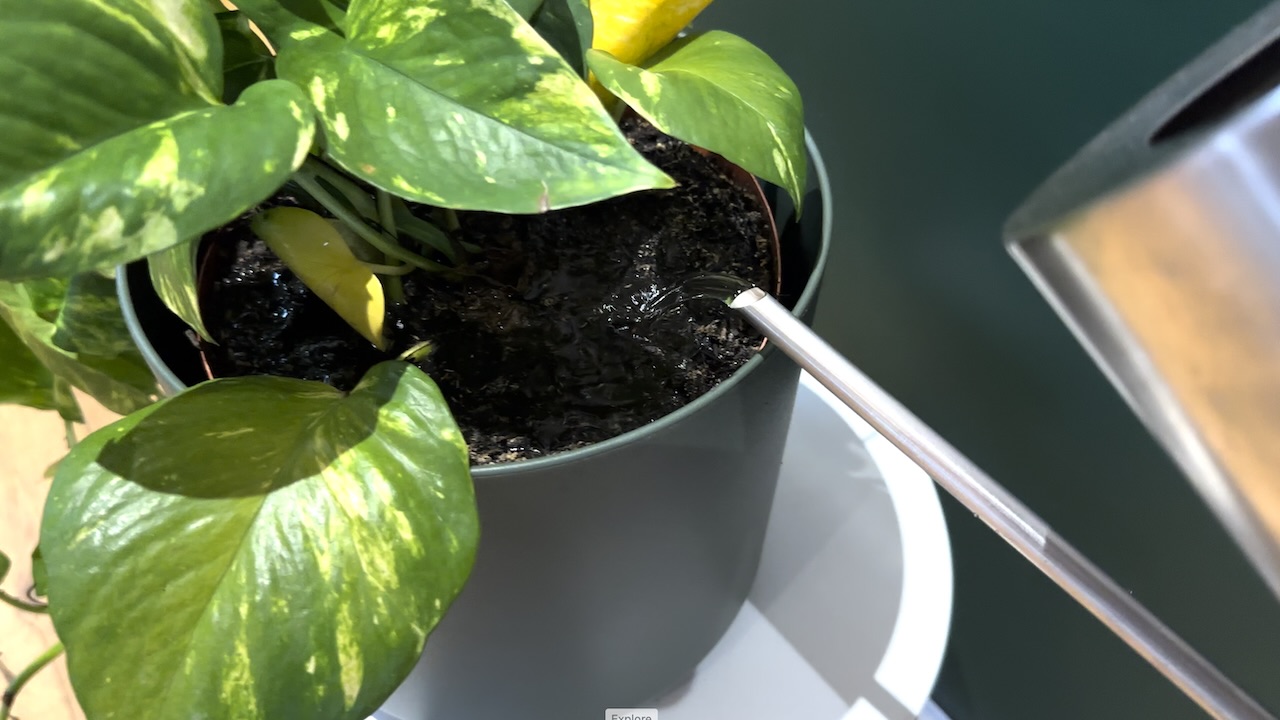
Using a watering can, apply the nematode solution directly to the soil around the base of all affected plants. Ensure even coverage, focusing on areas with known fungus gnat activity. Drench the soil thoroughly with the solution.
Step 6: Water again after application
Water the soil lightly again after applying the nematode solution. This helps the nematodes penetrate deeper into the soil and reach the fungus gnat larvae more effectively.
Step 7: Monitor and reapply if needed
Regularly monitor the affected plants for any signs of continued fungus gnat activity. If you still see adults after four weeks, reapply the nematode treatment. Continue running sticky traps throughout to catch any remaining adults.
8. How to use fungus gnat bacteria tablets (Bti): step by step
Here are step-by-step instructions for using Bti tablets to control fungus gnats in your houseplants.
Step 1: Choose the right Bti tablets
Select Bti tablets specifically formulated for controlling fungus gnats. These tablets contain Bacillus thuringiensis subspecies israelensis. Read the product label carefully, paying attention to dosage, application frequency, and safety precautions.
Most Bti tablets need to be dissolved or mixed with water before application. Follow the specific preparation instructions on the product label. Usually, it is 1 bacteria tablet per 10 litres of water (a standard watering can).
Step 3: Water into the soil
Water the solution directly onto the soil surface of all affected plants. Ensure even distribution, especially around the base of each plant where larvae are most likely to be concentrated. Make sure the entire surface of the soil is covered and wet from the drench.
Step 4: Monitor and reapply as necessary
Regularly monitor the affected plants and observe the population of fungus gnat larvae. Reapply the Bti tablets according to the recommended frequency on the product label, usually every two to three weeks, until the fungus gnats have gone.
9. How to prevent fungus gnats from coming back
Once you have cleared an infestation, a few simple habits will make a recurrence much less likely. Prevention is always easier than cure with fungus gnats.
Water less often. Wait until the top 2 to 3cm of soil is completely dry before watering again. Most houseplants are overwatered rather than underwatered, and dry compost is inhospitable for fungus gnat eggs.
Water from the bottom. Place your pot in a saucer of water and allow the compost to draw moisture up from the base. This keeps the top layer of soil dry and removes the moist surface that adult females need to lay their eggs.
Keep a gravel mulch permanently in place. Once you have treated the infestation, leave the grit layer on the surface of all your houseplant pots as an ongoing barrier.
Inspect new plants before bringing them home. Give any new houseplant a gentle shake. If flies emerge, the plant is already infested. Quarantine any new plant for a week before placing it with your existing collection.
Use peat-free compost from sealed bags. Peat-free composts are higher in organic matter and more prone to harbouring gnats. Buy fresh, sealed bags and use them promptly rather than leaving open bags sitting in the garden.
Expect four to six weeks to fully clear a fungus gnat infestation when using a combined sticky trap and nematode treatment. This is because the 30 to 40 day lifecycle means new adults are still emerging from larvae and pupae in the soil even after you begin treatment. The number of adults you see will reduce quickly, but complete eradication takes time. Do not stop treatment early just because numbers seem lower.
Do fungus gnats harm houseplants?
Adult fungus gnats cause no direct damage to plants. The larvae are the problem. In the soil, larvae feed on organic matter and roots, particularly root hairs. For established, healthy plants, moderate infestations rarely cause serious harm. However, seedlings, newly rooted cuttings, and young plants are highly vulnerable because their root systems are small and cannot absorb the damage. In heavy infestations on any plant, stunted growth and yellowing can develop as root damage accumulates.
Can I use neem oil for fungus gnats in the UK?
Neem oil is widely recommended in the United States but is not currently approved for use as a pesticide in the UK under the current regulatory framework. Neem powder is a different product and is available. For UK houseplant owners, the most effective and legally straightforward options remain sticky traps, nematodes, and Bti bacteria tablets.
Where do fungus gnats come from?
Fungus gnats most commonly enter your home through infested potting compost (even from sealed bags that have been sitting in garden centres), through new houseplants that are already carrying larvae, or through open windows and doors during summer. A single female can lay up to 150 eggs in her lifetime, so even one undetected adult entering the home can begin an infestation within weeks.
Are fungus gnats the same as fruit flies?
No, though they are similar in size and easily confused. Fruit flies are attracted to ripe or rotting fruit and food waste. Fungus gnats are attracted to damp compost and organic matter in plant pots and have no interest in fruit. Look at where they are gathering: if they are hovering around your houseplants and the soil surface, they are fungus gnats. If they are around your fruit bowl or bin, they are fruit flies requiring different treatment.
Can I use sticky traps outdoors?
Sticky traps should only be used indoors for houseplants. Outdoors, yellow sticky traps also catch significant numbers of beneficial insects including hoverflies, parasitic wasps, and other pollinators. Reserve them for indoor use only where they are most targeted and least likely to cause collateral damage to garden wildlife.
Your subscription could not be saved. Please try again.
Your subscription has been successful.
Design the Garden You’ve Always Wanted
Ready to stop guessing and start designing with confidence? My Garden Design for Beginners online course takes you from blank canvas to brilliant layout, step by step.
I’m Lee Burkhill, award-winning garden designer and BBC1’s Garden Rescue presenter, and I’ve built this course around the same principles I use for every client garden — practical, honest, and designed to actually work in the real world.
In 20 hours of flexible online study you’ll cover:
Design principles that make any garden work
How to select and arrange plants like a professional
Styles and layouts to suit every size and shape of space
Video lessons, real-world case studies, quizzes, and a certificate on completion — all for just £199.
Enrol today and start designing your dream garden.
29
Garden Design Examples for Small Gardens: 30 Design Templates & Planting Plans
Garden Design Examples for Small Gardens: 30 Design Templates & Planting Plans: In this online gardening course, I’ll walk you through 30 fantastic garden designs, explaining the logic behind the layout, the plant choices, and take-home tips for applying them in your own garden.
Weekend Garden Makeover: A Crash Course in Design for Beginners
Learn how to transform and design your own garden with Lee Burkhills crash course in garden design. Over 5 hours Lee will teach you how to design your own dream garden. Featuring practical design examples, planting ideas and video guides. Learn how to design your garden in one weekend!
Garden Design for Beginners: Create Your Dream Garden in Just 4 Weeks
Garden Design for Beginners Online Course: If you want to make the career jump to becoming a garden designer or to learn how to design your own garden, this is the beginner course for you. Join me, Lee Burkhill, an award-winning garden designer, as I train you in the art of beautiful garden design.
Getting rid of fungus gnats means targeting both adults and larvae at the same time. Use yellow sticky traps to catch the flying adults while a nematode drench of Steinernema feltiae hunts larvae in the soil. Reduce watering immediately, add a gravel mulch to all affected pots, and treat every houseplant in the same session rather than one at a time. Expect four to six weeks for a full clearance. Once they are gone, keeping the soil surface drier between waterings and maintaining a grit mulch will stop them coming back. No more flies in your face when you are trying to relax!
Your subscription could not be saved. Please try again.
Your subscription has been successful.
Lee Burkhill
Lee Burkhill, known as the Garden Ninja, is an award-winning garden designer and horticulturist with over 30 years of gardening experience and 15 years as a professional garden designer. A qualified RHS (Royal Horticultural Society) professional, Lee specialises in sustainable garden design and practical horticultural advice. He designs and presents on BBC1’s Garden Rescue and in leading gardening publications. Lee combines three decades of hands-on gardening knowledge with professional design qualifications to help gardeners create beautiful, functional outdoor spaces.