-
Ask a Gardening Question Forum
 Lee Burkhill: Award Winning Designer & BBC 1's Garden Rescue Presenters Official Blog
Welcome to the Garden Ninja Gardening Forum! If you have a gardening question that you can't find answers to then ask below to seek help from the Garden Ninja army! Please make your garden questions as specific and detailed as possible so the community can provide comprehensive answers in the online forum below.
Welcome to the ultimate beginner gardening and garden design forum! Where no gardening question is too silly or obvious. This online gardening forum is run by Lee Burkhill, the Garden Ninja from BBC 1’s Garden Rescue and a trusted group of experienced gardeners.
Whether you are a beginner or an expert gardener, it’s a safe place to ask garden-related questions for garden design or planting. If you have a problem in your garden or need help, this is the Garden Forum for you! (See forum rules & moderation policy here)
Posting Rules: This space is open for all garden-related questions. Please be polite, courteous and respectful. If you wouldn’t say it to your mum’s face, then don’t post it here. Please don’t promote, sell, link spam or advertise here. Please don’t ask for ‘cheeky’ full Garden redesigns here. They will be deleted.
If you need a garden design service, please use this page to book a design consultation. I will block anyone who breaks these rules or is discourteous to the Garden Ninja Community.
Join the forum below with your gardening questions!
Nectarine - initial pruning

Quote from Guineafowl on 5th March 2026, 11:11 amHi all, I’ve just planted a young Lord Napier nectarine in the tunnel. Now, a part of me wants to train it as a bush, as there’s plenty of space for it and they look nice, but a fan may be more sensible since these trees fruit only on last year’s wood, and only once.
So:
Bush or fan?
What initial pruning should I do now in either case?
I should mention, I’m in Nairn, which is in the Moray microclimate and receives relatively mild and sunny weather. In the same tunnel is an established peach tree which was there when I moved in 18 months ago. It was completely overgrown and has been brutally cut back into an upright fruiting offshoot form. I may ask for advice on this too, since it dropped its immature peaches last year.
Many thanks
Hi all, I’ve just planted a young Lord Napier nectarine in the tunnel. Now, a part of me wants to train it as a bush, as there’s plenty of space for it and they look nice, but a fan may be more sensible since these trees fruit only on last year’s wood, and only once.
So:
Bush or fan?
What initial pruning should I do now in either case?
I should mention, I’m in Nairn, which is in the Moray microclimate and receives relatively mild and sunny weather. In the same tunnel is an established peach tree which was there when I moved in 18 months ago. It was completely overgrown and has been brutally cut back into an upright fruiting offshoot form. I may ask for advice on this too, since it dropped its immature peaches last year.
Many thanks
Uploaded files: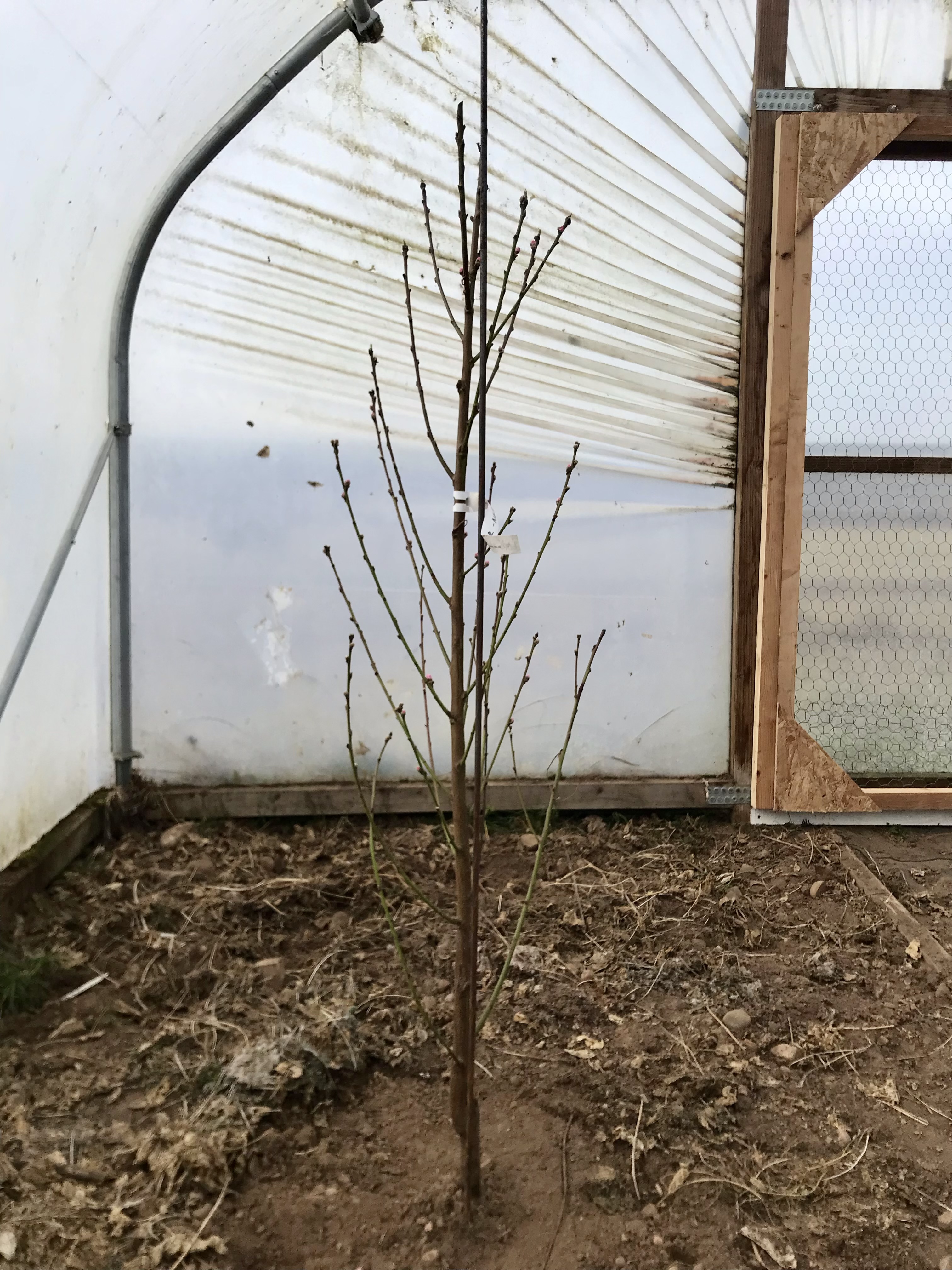

Quote from Lee Garden Ninja on 8th March 2026, 9:20 amHi @guineafowl
Thanks for your question, and congratulations on getting a Lord Napier nectarine into your polytunnel. That's a cracking variety for Scottish conditions, especially with the Moray microclimate working in your favour. I can see from your photos exactly what you're working with, and I'm going to give you some straight talking advice that might not be what you were hoping for, but it'll save you a lot of frustration in the long run.
Looking at the size and age of that tree, you're well past the point where fan training is a sensible option. Fan training needs to start in year two or three when the tree is essentially a maiden whip or has just a couple of main branches. What you've got there looks like a four-year-old tree that's already established its own branching structure and reached a height where trying to force it into a fan shape would require absolutely butchering it back. You'd be removing so much growth that you'd set fruiting back by at least two years, potentially three, and the tree would spend all that time recovering rather than producing nectarines.
Why Bush Form is Your Best Option
Go for a standard bush form, without question. The tree has already made the decision for you by developing that upright, multi stemmed structure. Working with what it wants to do rather than fighting against it will give you fruit far sooner and create a much healthier, more manageable tree. Bush trained stone fruit in polytunnels are actually brilliant because they're easier to manage than fans, give you excellent airflow around the canopy (which is critical for preventing fungal diseases in covered environments), and they're far less fiddly to prune and maintain.
The logic behind fan training is sound, you're maximising fruiting wood and light exposure across a two dimensional plane, but that benefit only materialises if you start the training process early and commit to the annual maintenance pruning that fans demand. With an already established young tree like yours, a well pruned bush will give you just as much productive fruiting wood with a fraction of the faff. You'll be picking fruit next summer rather than spending the next three years wrestling branches onto wires and wondering why you bothered.
In a polytunnel environment, you've got the huge advantage of protected growing conditions, which means your nectarine doesn't need the additional warmth and light that wall trained fans provide in outdoor situations. The polytunnel is already giving you that microclimate boost. A bush form tree will utilise the vertical space in your tunnel more efficiently than a fan spread across one wall, leaving you room for other crops alongside it.
Understanding Stone Fruit Pruning Timing
Before we get into the specific cuts you need to make, let's talk timing because this is absolutely critical with stone fruit. Nectarines, peaches, plums, cherries, and all other Prunus species must be pruned in late spring or summer when they're in active growth, never during winter dormancy. The standard advice is to prune between April and August, with the sweet spot being May to July when sap flow is strongest and the tree can seal its wounds effectively.
https://youtu.be/EWPEuJ48kmU
Pruning stone fruit in winter leaves them vulnerable to silver leaf disease, bacterial canker, and a host of other fungal infections that can kill branches or even entire trees. The phrase to remember is "prune when you can see pink", meaning wait until the blossom buds are showing colour or the tree is in early leaf. This rule is absolutely fundamental to successful stone fruit growing, and I notice you're asking about initial pruning "now", which suggests we might be in late winter or early spring. If it's before April, do absolutely nothing to that tree yet. Wait until late spring when it's actively growing.
Initial Pruning for Bush Form
Assuming you're reading this in the right season (late April onwards), here's what you need to do to establish a good bush framework. Your goal is to create an open centred goblet or vase shape with three to five main framework branches radiating outward from a central point. Looking at your tree, it's already got multiple stems coming from the base, which is exactly what you want for bush form, so you're halfway there already.
First, identify the three to five strongest, best positioned branches that will become your permanent framework. You're looking for branches that are relatively evenly spaced around the tree, angling outward at about 45 degrees from vertical, and showing vigorous, healthy growth. These are your keepers. Everything else gets removed completely, cut back to the base or to where they join one of your framework branches.
Second, once you've selected your framework branches, shorten each one by about one third to a half, cutting just above an outward facing bud. This might seem drastic, but shortening the leaders encourages the tree to produce lateral branches along the main framework, which is where your fruiting wood will develop. You want a branched structure, not long whippy stems shooting straight up to the polytunnel roof.
Third, remove any branches that are crossing through the centre of the tree, rubbing against other branches, or growing inward toward the middle of the canopy. The centre of a bush trained fruit tree should be open and airy, allowing light to penetrate and air to circulate freely. This is absolutely critical in a polytunnel environment where humidity can build up and create perfect conditions for fungal diseases like peach leaf curl (although you're protected from the rain that usually spreads it).
Ongoing Maintenance Pruning
Once you've established that initial framework, your annual pruning regime is straightforward and far less intensive than fan training would require. Each year in late spring or early summer, after the tree has fruited, you'll remove any dead, diseased, or damaged wood first, then thin out overcrowded growth to maintain that open centre.
Nectarines fruit on the previous year's growth, as you correctly identified, which means you want to encourage a constant supply of new wood whilst removing older, unproductive branches. The technique is to identify which shoots fruited this year, then cut them back to a suitable replacement shoot lower down, which will then fruit next year. It sounds complicated, but once you've done it a couple of times, the pattern becomes obvious.
The beauty of bush form is that you can access the entire canopy from ground level without needing ladders or complicated wire systems. You can walk around the tree, assess the structure from all angles, and make your pruning decisions based on what you can actually see. With fans, you're constantly fighting to keep growth in a two dimensional plane, which means far more corrective pruning, more tying in, and more time spent faffing about with garden wire and wall fixings.
Your Existing Peach Tree Situation
You mentioned you've got an established peach that was brutally cut back into an upright fruiting offshoot form and subsequently dropped its immature fruit. That fruit drop tells me everything I need to know about what went wrong. Heavy, brutal pruning causes massive stress to fruit trees, and their first response is to abort developing fruit to divert energy into recovery growth. It's a survival mechanism, not a sign that the tree is dying, but it does mean you won't get a crop for at least a year, possibly two, whilst the tree rebuilds its canopy.
The other common cause of fruit drop in polytunnel grown stone fruit is inadequate pollination or inconsistent watering. Peaches and nectarines are self fertile, but in a protected environment they need hand pollination because there are no insects to do the job for you. A soft paintbrush dabbed from flower to flower on a dry day does the trick. Inconsistent watering, particularly drought stress followed by heavy watering, will cause fruit drop faster than almost anything else.
If you want specific advice on rescuing that peach tree, post some photos of its current state and I'll talk you through how to work with what you've got. The good news is that stone fruit are remarkably resilient, and even trees that have been absolutely hammered can usually be nursed back into productive shape with patient, appropriate pruning over a couple of seasons.
Polytunnel Specific Considerations
Since both your nectarine and peach are growing in a polytunnel environment, there are a few specific management points worth mentioning. Ventilation is absolutely critical to prevent fungal diseases, particularly peach leaf curl and brown rot. Even though the polytunnel protects your trees from rain borne spores, poor air circulation and high humidity create perfect conditions for these diseases to take hold.
Make sure you're opening the polytunnel doors and vents on all but the coldest days. You want air moving through constantly, not a stagnant, humid atmosphere. The open centred bush form I've recommended will help enormously with this by allowing air to flow through the canopy rather than around a solid mass of foliage.
Watering needs to be consistent and adequate, but not excessive. Stone fruit in containers or polytunnel beds need regular watering during the growing season, particularly when the fruit is swelling. Let the soil dry out slightly between waterings, but never let it get bone dry. A good mulch of well rotted compost around the base will help retain moisture and regulate soil temperature.
Hand pollination is essential, as I mentioned earlier. When the blossom opens, use a small, soft paintbrush to transfer pollen from flower to flower. Do this on a dry day in the middle of the day when humidity is lowest. You only get one chance per year to pollinate stone fruit, so don't skip this step or you'll have a beautifully healthy tree with no fruit whatsoever.
The Reality of Fan Training vs Bush
I want to circle back to why I'm so adamant that bush form is the right choice for your situation, because I suspect there's a romantic notion of espalier fans that's making you question this advice. Fan trained fruit trees look absolutely spectacular when done properly, there's no denying it. They're the epitome of traditional kitchen garden cultivation and they photograph beautifully.
But here's what the glossy magazines don't show you: the hours of fiddly tying in, the constant corrective pruning to prevent branches breaking out of the two dimensional plane, the difficulty of accessing fruit and foliage at the back of the fan, and the absolute nightmare of trying to retrofit a fan shape onto a tree that's already developed its own ideas about structure. Fan training is a commitment that starts early and continues for the life of the tree.
Your nectarine has already told you it wants to be a bush. The branching pattern, the height, the age, everything about this tree says "I'm going to grow upward and outward in three dimensions". You can fight that and spend the next three years butchering it into submission, during which time you'll get minimal fruit and maximum stress. Or you can work with it, establish a lovely open centred bush, and be picking Lord Napier nectarines next August while your neighbours are still wrestling with training wires.
Practical Steps for Right Now
If you're reading this in the dormant season (November through March), do absolutely nothing to either tree until late April at the earliest. Mark it in your calendar, resist the urge to start pruning early, and wait for active growth. Use this time to research, watch videos, read guides, and plan your cuts so you're confident when the time comes.
If you're reading this in the growing season (April onwards), get out there with clean, sharp secateurs and establish that bush framework as I've described. Select three to five main branches, remove everything else, shorten the keepers by about one third, and open up the centre. Stand back frequently, assess the shape, and remember that you can always take more off, but you can't stick branches back on.
For both trees, ensure you've got a consistent watering regime in place, particularly as fruit starts to swell. Set up a simple irrigation system if you can, even just a seep hose on a timer, because hand watering polytunnel fruit trees is easy to forget and impossible to do consistently when life gets busy.
Do let us know how you get on Ninja!
All the best
Hi @guineafowl
Thanks for your question, and congratulations on getting a Lord Napier nectarine into your polytunnel. That's a cracking variety for Scottish conditions, especially with the Moray microclimate working in your favour. I can see from your photos exactly what you're working with, and I'm going to give you some straight talking advice that might not be what you were hoping for, but it'll save you a lot of frustration in the long run.
Looking at the size and age of that tree, you're well past the point where fan training is a sensible option. Fan training needs to start in year two or three when the tree is essentially a maiden whip or has just a couple of main branches. What you've got there looks like a four-year-old tree that's already established its own branching structure and reached a height where trying to force it into a fan shape would require absolutely butchering it back. You'd be removing so much growth that you'd set fruiting back by at least two years, potentially three, and the tree would spend all that time recovering rather than producing nectarines.
Why Bush Form is Your Best Option
Go for a standard bush form, without question. The tree has already made the decision for you by developing that upright, multi stemmed structure. Working with what it wants to do rather than fighting against it will give you fruit far sooner and create a much healthier, more manageable tree. Bush trained stone fruit in polytunnels are actually brilliant because they're easier to manage than fans, give you excellent airflow around the canopy (which is critical for preventing fungal diseases in covered environments), and they're far less fiddly to prune and maintain.
The logic behind fan training is sound, you're maximising fruiting wood and light exposure across a two dimensional plane, but that benefit only materialises if you start the training process early and commit to the annual maintenance pruning that fans demand. With an already established young tree like yours, a well pruned bush will give you just as much productive fruiting wood with a fraction of the faff. You'll be picking fruit next summer rather than spending the next three years wrestling branches onto wires and wondering why you bothered.
In a polytunnel environment, you've got the huge advantage of protected growing conditions, which means your nectarine doesn't need the additional warmth and light that wall trained fans provide in outdoor situations. The polytunnel is already giving you that microclimate boost. A bush form tree will utilise the vertical space in your tunnel more efficiently than a fan spread across one wall, leaving you room for other crops alongside it.
Understanding Stone Fruit Pruning Timing
Before we get into the specific cuts you need to make, let's talk timing because this is absolutely critical with stone fruit. Nectarines, peaches, plums, cherries, and all other Prunus species must be pruned in late spring or summer when they're in active growth, never during winter dormancy. The standard advice is to prune between April and August, with the sweet spot being May to July when sap flow is strongest and the tree can seal its wounds effectively.
Pruning stone fruit in winter leaves them vulnerable to silver leaf disease, bacterial canker, and a host of other fungal infections that can kill branches or even entire trees. The phrase to remember is "prune when you can see pink", meaning wait until the blossom buds are showing colour or the tree is in early leaf. This rule is absolutely fundamental to successful stone fruit growing, and I notice you're asking about initial pruning "now", which suggests we might be in late winter or early spring. If it's before April, do absolutely nothing to that tree yet. Wait until late spring when it's actively growing.
Initial Pruning for Bush Form
Assuming you're reading this in the right season (late April onwards), here's what you need to do to establish a good bush framework. Your goal is to create an open centred goblet or vase shape with three to five main framework branches radiating outward from a central point. Looking at your tree, it's already got multiple stems coming from the base, which is exactly what you want for bush form, so you're halfway there already.
First, identify the three to five strongest, best positioned branches that will become your permanent framework. You're looking for branches that are relatively evenly spaced around the tree, angling outward at about 45 degrees from vertical, and showing vigorous, healthy growth. These are your keepers. Everything else gets removed completely, cut back to the base or to where they join one of your framework branches.
Second, once you've selected your framework branches, shorten each one by about one third to a half, cutting just above an outward facing bud. This might seem drastic, but shortening the leaders encourages the tree to produce lateral branches along the main framework, which is where your fruiting wood will develop. You want a branched structure, not long whippy stems shooting straight up to the polytunnel roof.
Third, remove any branches that are crossing through the centre of the tree, rubbing against other branches, or growing inward toward the middle of the canopy. The centre of a bush trained fruit tree should be open and airy, allowing light to penetrate and air to circulate freely. This is absolutely critical in a polytunnel environment where humidity can build up and create perfect conditions for fungal diseases like peach leaf curl (although you're protected from the rain that usually spreads it).
Ongoing Maintenance Pruning
Once you've established that initial framework, your annual pruning regime is straightforward and far less intensive than fan training would require. Each year in late spring or early summer, after the tree has fruited, you'll remove any dead, diseased, or damaged wood first, then thin out overcrowded growth to maintain that open centre.
Nectarines fruit on the previous year's growth, as you correctly identified, which means you want to encourage a constant supply of new wood whilst removing older, unproductive branches. The technique is to identify which shoots fruited this year, then cut them back to a suitable replacement shoot lower down, which will then fruit next year. It sounds complicated, but once you've done it a couple of times, the pattern becomes obvious.
The beauty of bush form is that you can access the entire canopy from ground level without needing ladders or complicated wire systems. You can walk around the tree, assess the structure from all angles, and make your pruning decisions based on what you can actually see. With fans, you're constantly fighting to keep growth in a two dimensional plane, which means far more corrective pruning, more tying in, and more time spent faffing about with garden wire and wall fixings.
Your Existing Peach Tree Situation
You mentioned you've got an established peach that was brutally cut back into an upright fruiting offshoot form and subsequently dropped its immature fruit. That fruit drop tells me everything I need to know about what went wrong. Heavy, brutal pruning causes massive stress to fruit trees, and their first response is to abort developing fruit to divert energy into recovery growth. It's a survival mechanism, not a sign that the tree is dying, but it does mean you won't get a crop for at least a year, possibly two, whilst the tree rebuilds its canopy.
The other common cause of fruit drop in polytunnel grown stone fruit is inadequate pollination or inconsistent watering. Peaches and nectarines are self fertile, but in a protected environment they need hand pollination because there are no insects to do the job for you. A soft paintbrush dabbed from flower to flower on a dry day does the trick. Inconsistent watering, particularly drought stress followed by heavy watering, will cause fruit drop faster than almost anything else.
If you want specific advice on rescuing that peach tree, post some photos of its current state and I'll talk you through how to work with what you've got. The good news is that stone fruit are remarkably resilient, and even trees that have been absolutely hammered can usually be nursed back into productive shape with patient, appropriate pruning over a couple of seasons.
Polytunnel Specific Considerations
Since both your nectarine and peach are growing in a polytunnel environment, there are a few specific management points worth mentioning. Ventilation is absolutely critical to prevent fungal diseases, particularly peach leaf curl and brown rot. Even though the polytunnel protects your trees from rain borne spores, poor air circulation and high humidity create perfect conditions for these diseases to take hold.
Make sure you're opening the polytunnel doors and vents on all but the coldest days. You want air moving through constantly, not a stagnant, humid atmosphere. The open centred bush form I've recommended will help enormously with this by allowing air to flow through the canopy rather than around a solid mass of foliage.
Watering needs to be consistent and adequate, but not excessive. Stone fruit in containers or polytunnel beds need regular watering during the growing season, particularly when the fruit is swelling. Let the soil dry out slightly between waterings, but never let it get bone dry. A good mulch of well rotted compost around the base will help retain moisture and regulate soil temperature.
Hand pollination is essential, as I mentioned earlier. When the blossom opens, use a small, soft paintbrush to transfer pollen from flower to flower. Do this on a dry day in the middle of the day when humidity is lowest. You only get one chance per year to pollinate stone fruit, so don't skip this step or you'll have a beautifully healthy tree with no fruit whatsoever.
The Reality of Fan Training vs Bush
I want to circle back to why I'm so adamant that bush form is the right choice for your situation, because I suspect there's a romantic notion of espalier fans that's making you question this advice. Fan trained fruit trees look absolutely spectacular when done properly, there's no denying it. They're the epitome of traditional kitchen garden cultivation and they photograph beautifully.
But here's what the glossy magazines don't show you: the hours of fiddly tying in, the constant corrective pruning to prevent branches breaking out of the two dimensional plane, the difficulty of accessing fruit and foliage at the back of the fan, and the absolute nightmare of trying to retrofit a fan shape onto a tree that's already developed its own ideas about structure. Fan training is a commitment that starts early and continues for the life of the tree.
Your nectarine has already told you it wants to be a bush. The branching pattern, the height, the age, everything about this tree says "I'm going to grow upward and outward in three dimensions". You can fight that and spend the next three years butchering it into submission, during which time you'll get minimal fruit and maximum stress. Or you can work with it, establish a lovely open centred bush, and be picking Lord Napier nectarines next August while your neighbours are still wrestling with training wires.
Practical Steps for Right Now
If you're reading this in the dormant season (November through March), do absolutely nothing to either tree until late April at the earliest. Mark it in your calendar, resist the urge to start pruning early, and wait for active growth. Use this time to research, watch videos, read guides, and plan your cuts so you're confident when the time comes.
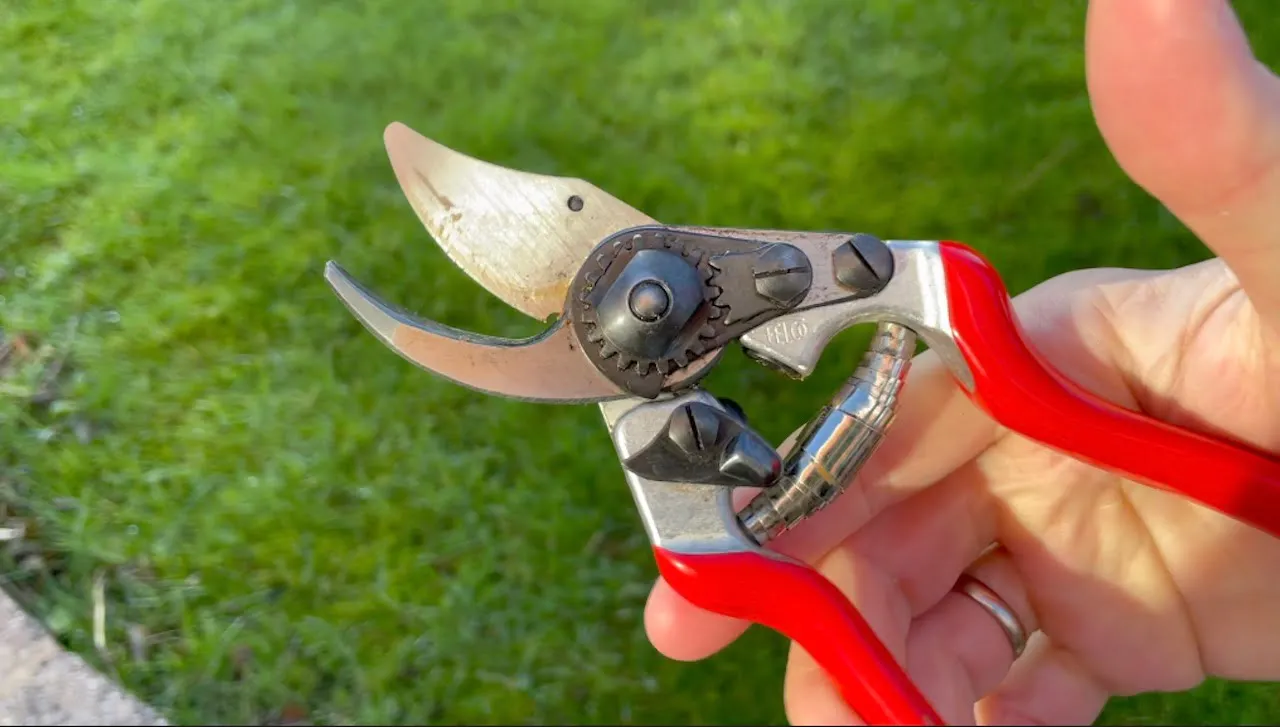
If you're reading this in the growing season (April onwards), get out there with clean, sharp secateurs and establish that bush framework as I've described. Select three to five main branches, remove everything else, shorten the keepers by about one third, and open up the centre. Stand back frequently, assess the shape, and remember that you can always take more off, but you can't stick branches back on.
For both trees, ensure you've got a consistent watering regime in place, particularly as fruit starts to swell. Set up a simple irrigation system if you can, even just a seep hose on a timer, because hand watering polytunnel fruit trees is easy to forget and impossible to do consistently when life gets busy.
Do let us know how you get on Ninja!
All the best
Quote from Guineafowl on 8th March 2026, 6:22 pmThanks for the comprehensive reply. I did feel that fan training would involve a very drastic amount of pruning, and that the supplier wouldn’t have let it grow like that if that was the intention. Thankfully, I held off starting that before asking you. I’d already built the wire framework behind it, which will be removed now.
So, as I understand it, I should do nothing except watering until the end of April. Should I then cut the main leader at about 1 metre high, before thinning the branches down to 5 as advised?
There are some flowers opening now and I wondered if, on the branches to be kept, I could pollenate them and get maybe 2 or 3 nectarines this season?
Many thanks. I’ll get a picture of the problematic peach tree at some point.
Thanks for the comprehensive reply. I did feel that fan training would involve a very drastic amount of pruning, and that the supplier wouldn’t have let it grow like that if that was the intention. Thankfully, I held off starting that before asking you. I’d already built the wire framework behind it, which will be removed now.
So, as I understand it, I should do nothing except watering until the end of April. Should I then cut the main leader at about 1 metre high, before thinning the branches down to 5 as advised?
There are some flowers opening now and I wondered if, on the branches to be kept, I could pollenate them and get maybe 2 or 3 nectarines this season?
Many thanks. I’ll get a picture of the problematic peach tree at some point.
Quote from Guineafowl on 14th April 2026, 2:29 pmHello, @lee , here’s an update for you. The nectarine flowers have come and gone, and the tree is putting out leaves so I went ahead with the pruning. I’ve taken the crown down fairly low, because of the limited headroom, and left six branches that are spread nicely around the clock. These branches were nipped back to an outward-facing bud.
Hello, @lee , here’s an update for you. The nectarine flowers have come and gone, and the tree is putting out leaves so I went ahead with the pruning. I’ve taken the crown down fairly low, because of the limited headroom, and left six branches that are spread nicely around the clock. These branches were nipped back to an outward-facing bud.
Uploaded files: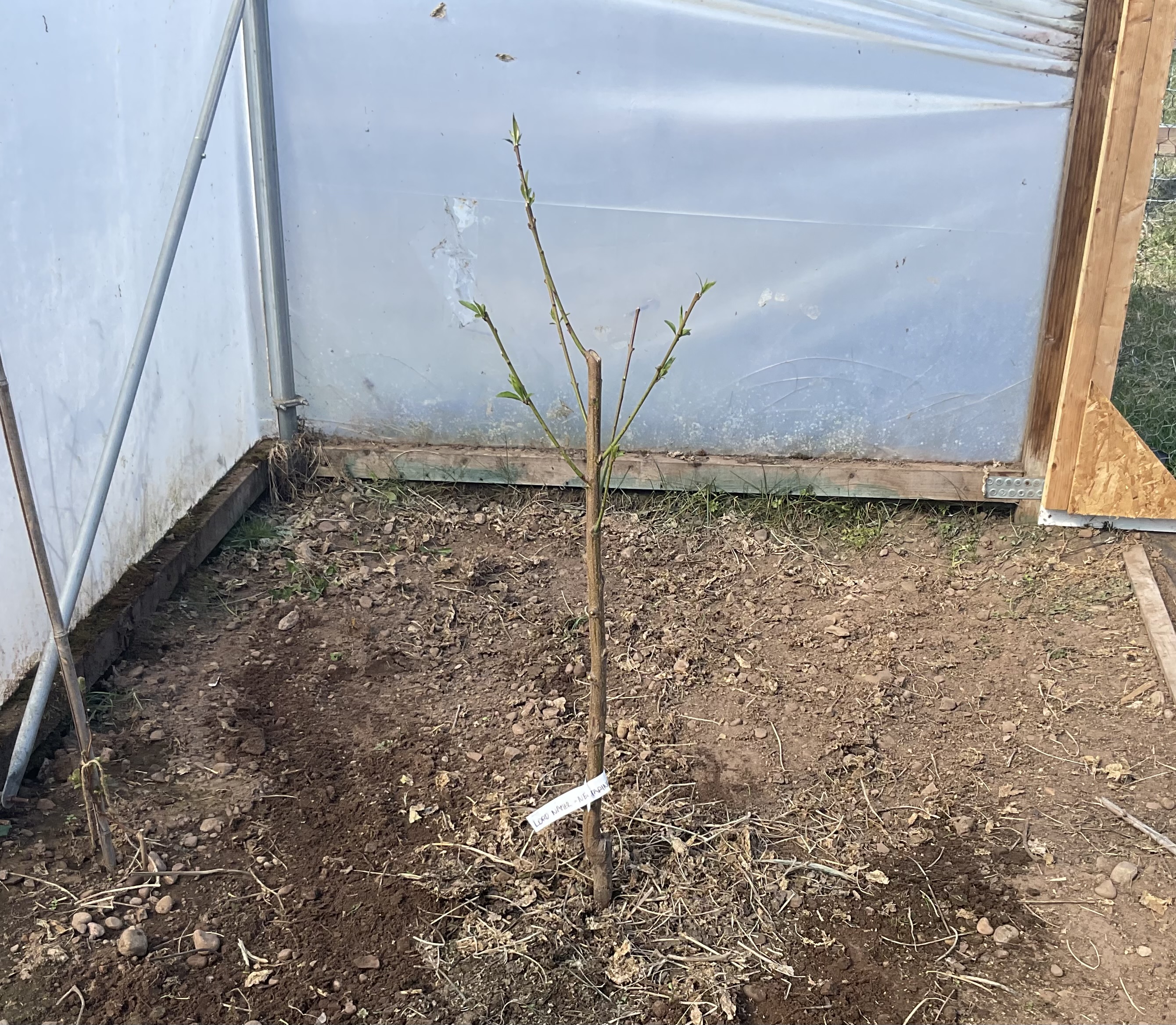




Lee Burkhill
Lee Burkhill, known as the Garden Ninja, is an award-winning garden designer and horticulturist with over 30 years of gardening experience and 15 years as a professional garden designer. A qualified RHS (Royal Horticultural Society) professional, Lee specialises in sustainable garden design and practical horticultural advice. He designs and presents on BBC1’s Garden Rescue and in leading gardening publications. Lee combines three decades of hands-on gardening knowledge with professional design qualifications to help gardeners create beautiful, functional outdoor spaces.
View all posts by Lee Burkhill




Vuelo Top 10 Garden Blogger Award 2019
Chelsea Flower Show Director Generals Trade Stand Award 2018
5 Star Trade Stand Hampton Court 2018
Garden Media Guild New Talent 2017 Finalist
RHS & BBC Feel Good Gardens Winner 2016

Categories
- Blog
- Garden Advice
- Planning a garden
- Horticulture & Plant Ideas
- Wildlife Gardens
- Grow Your Own Fruit & Veg
- Garden Services
- Portfolio
- Garden Design Styles
- Pruning Guides
- Propagating & Growing Plants
- Lawn Care
- Hedge Care
- Summer Gardening
- Spring Gardening
- Autumn Gardening
- Winter Gardening
- Garden Tools & Equipment
- Tree Planting & Care