Hi @marcus-g
Hi, welcome to the world of roses and what a classic situation you've found yourself in. This is actually a really common and encouraging problem to have, even if it doesn't feel like it right now.
Why This is Happening
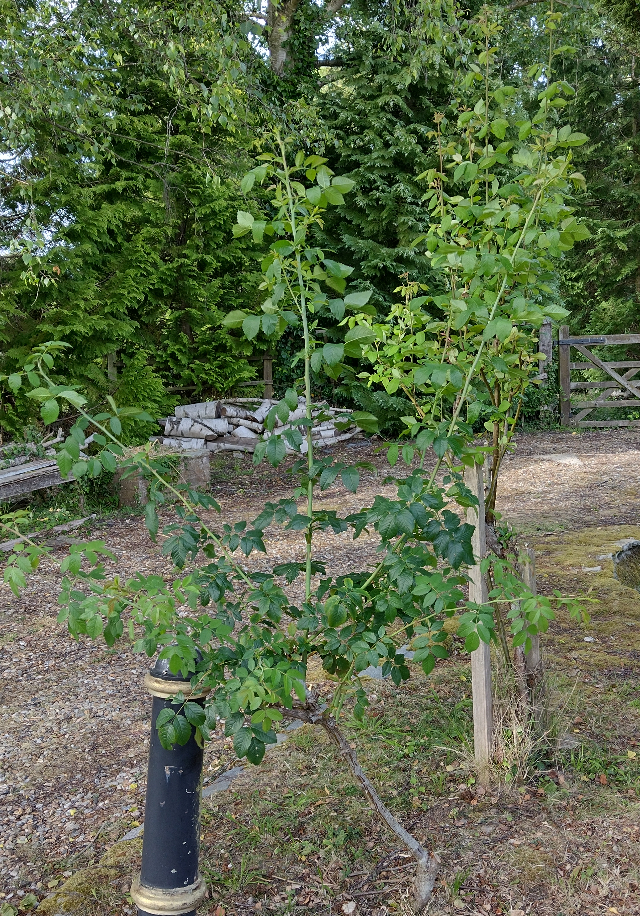
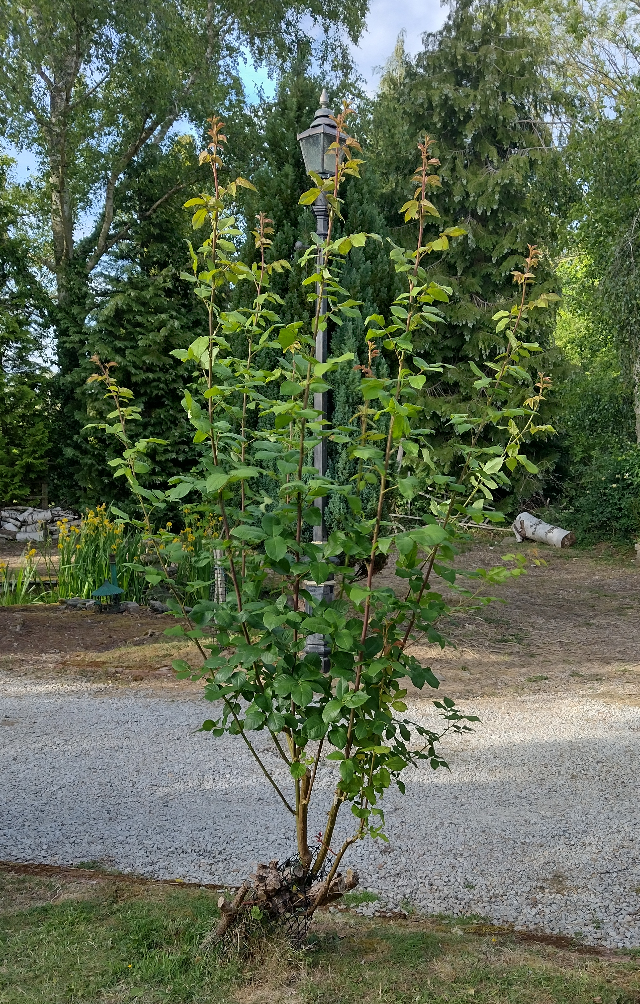
What you're seeing is a completely natural response to hard pruning. When you cut a rose back hard in winter you remove a large proportion of the plant's stored energy above ground, and the rose responds in spring by throwing up vigorous, fast growing shoots to compensate. These long, whippy, non-flowering stems are called water shoots or blind shoots, and they are the rose's way of rebuilding its canopy as quickly as possible. They tend to be very upright, very vigorous, and frustratingly reluctant to flower in their first flush. The fact that yours have reached two and a half to three feet and are bending in the wind tells you the rose is extremely healthy and full of energy, which is actually a very good sign for the long term.
Yes, You Can Prune Now
Please don't feel you need to wait until winter to deal with this. An emergency summer prune is absolutely fine and in your situation I'd say it's the right thing to do rather than watching more stems snap in the wind and waste all that energy. The old rule that roses can only be touched in winter is a myth, and roses are considerably more resilient to summer pruning than most people realise.
For the longest, most whippy stems that are bending and at risk of snapping, cut them back by roughly a third to a half, making your cut just above an outward facing bud at an angle sloping away from the bud. This will reduce the wind resistance, stop further breakage, and encourage the remaining stem to put its energy into branching rather than continuing to race upwards. You don't need to be too precious about this. A confident cut to a sensible height is far better than leaving stems to thrash about and damage themselves or neighbouring growth.
Thinning Out the Centre
Your instinct about thinning is also exactly right. A crowded rose centre with crossing stems is a recipe for poor airflow, which in turn encourages fungal problems like blackspot and powdery mildew, both of which roses are already prone to. Now is a perfectly good time to remove any stems that are crossing through the centre of the plant, any that are rubbing against each other, and any that are very thin and weak compared to the main framework stems. Always cut these back to their point of origin rather than leaving stumps, which can die back and become entry points for disease.
When you're thinning, step back regularly and look at the overall shape of the plant. You're aiming for an open goblet shape with the centre relatively clear and the main stems radiating outwards. It doesn't need to be perfect and roses are very forgiving of imperfect pruning, but that open centre principle is worth keeping in mind.
What to Expect After
Once you've reduced the longest stems and thinned out the centre, give each plant a feed with a balanced rose fertiliser to support the next flush of growth, and water in well if conditions are dry. You should see flowering side shoots developing from the stems you've cut back within a few weeks, and by late summer these once troublesome water shoots should be contributing properly to the display rather than just waving about in the wind.
My full rose pruning guide covers summer deadheading and maintenance pruning in more detail alongside the winter hard prune, and is worth bookmarking for future reference as your confidence with roses grows.
You're doing absolutely the right things. Roses reward attentive gardeners and you're clearly paying close attention.
Lee Garden Ninja
Hi @marcus-g
Hi, welcome to the world of roses and what a classic situation you've found yourself in. This is actually a really common and encouraging problem to have, even if it doesn't feel like it right now.
Why This is Happening
What you're seeing is a completely natural response to hard pruning. When you cut a rose back hard in winter you remove a large proportion of the plant's stored energy above ground, and the rose responds in spring by throwing up vigorous, fast growing shoots to compensate. These long, whippy, non-flowering stems are called water shoots or blind shoots, and they are the rose's way of rebuilding its canopy as quickly as possible. They tend to be very upright, very vigorous, and frustratingly reluctant to flower in their first flush. The fact that yours have reached two and a half to three feet and are bending in the wind tells you the rose is extremely healthy and full of energy, which is actually a very good sign for the long term.
Yes, You Can Prune Now
Please don't feel you need to wait until winter to deal with this. An emergency summer prune is absolutely fine and in your situation I'd say it's the right thing to do rather than watching more stems snap in the wind and waste all that energy. The old rule that roses can only be touched in winter is a myth, and roses are considerably more resilient to summer pruning than most people realise.
For the longest, most whippy stems that are bending and at risk of snapping, cut them back by roughly a third to a half, making your cut just above an outward facing bud at an angle sloping away from the bud. This will reduce the wind resistance, stop further breakage, and encourage the remaining stem to put its energy into branching rather than continuing to race upwards. You don't need to be too precious about this. A confident cut to a sensible height is far better than leaving stems to thrash about and damage themselves or neighbouring growth.
Thinning Out the Centre
Your instinct about thinning is also exactly right. A crowded rose centre with crossing stems is a recipe for poor airflow, which in turn encourages fungal problems like blackspot and powdery mildew, both of which roses are already prone to. Now is a perfectly good time to remove any stems that are crossing through the centre of the plant, any that are rubbing against each other, and any that are very thin and weak compared to the main framework stems. Always cut these back to their point of origin rather than leaving stumps, which can die back and become entry points for disease.
When you're thinning, step back regularly and look at the overall shape of the plant. You're aiming for an open goblet shape with the centre relatively clear and the main stems radiating outwards. It doesn't need to be perfect and roses are very forgiving of imperfect pruning, but that open centre principle is worth keeping in mind.
What to Expect After
Once you've reduced the longest stems and thinned out the centre, give each plant a feed with a balanced rose fertiliser to support the next flush of growth, and water in well if conditions are dry. You should see flowering side shoots developing from the stems you've cut back within a few weeks, and by late summer these once troublesome water shoots should be contributing properly to the display rather than just waving about in the wind.
My full rose pruning guide covers summer deadheading and maintenance pruning in more detail alongside the winter hard prune, and is worth bookmarking for future reference as your confidence with roses grows.
You're doing absolutely the right things. Roses reward attentive gardeners and you're clearly paying close attention.
Lee Garden Ninja
 Lee Burkhill: Award Winning Designer & BBC 1's Garden Rescue Presenters Official Blog