Hi @eoinkmcc
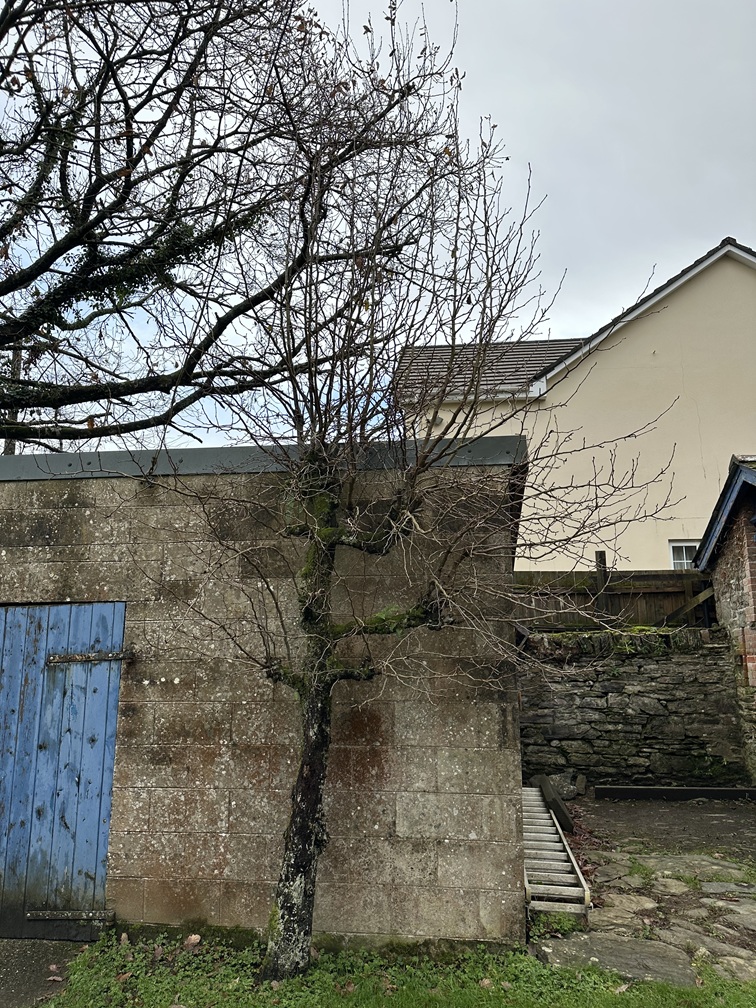
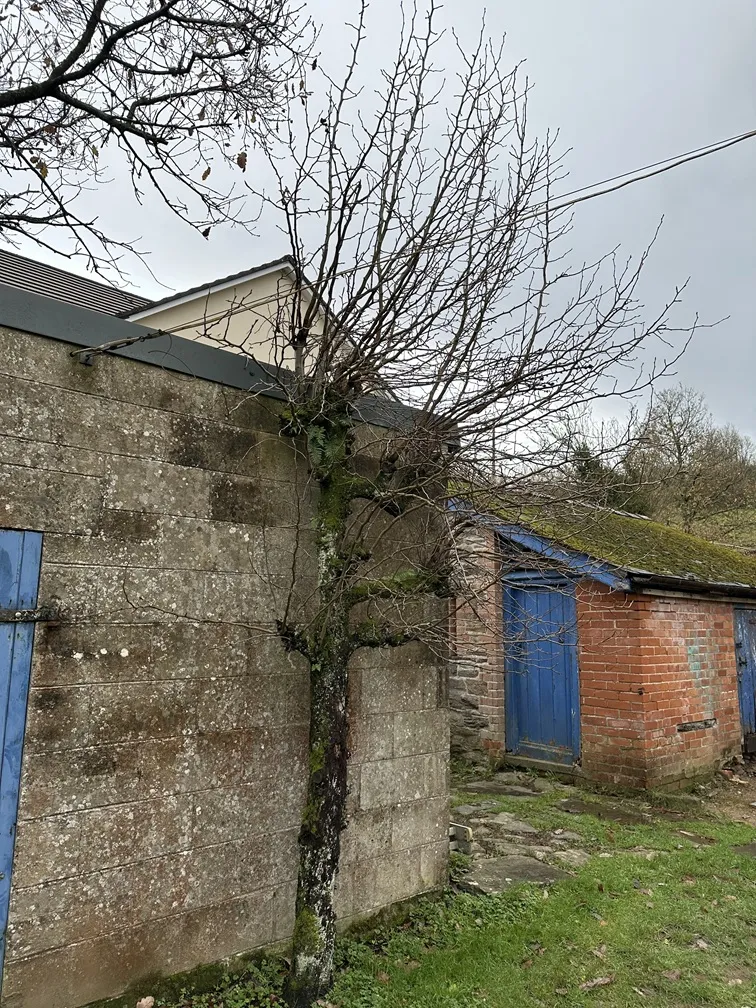
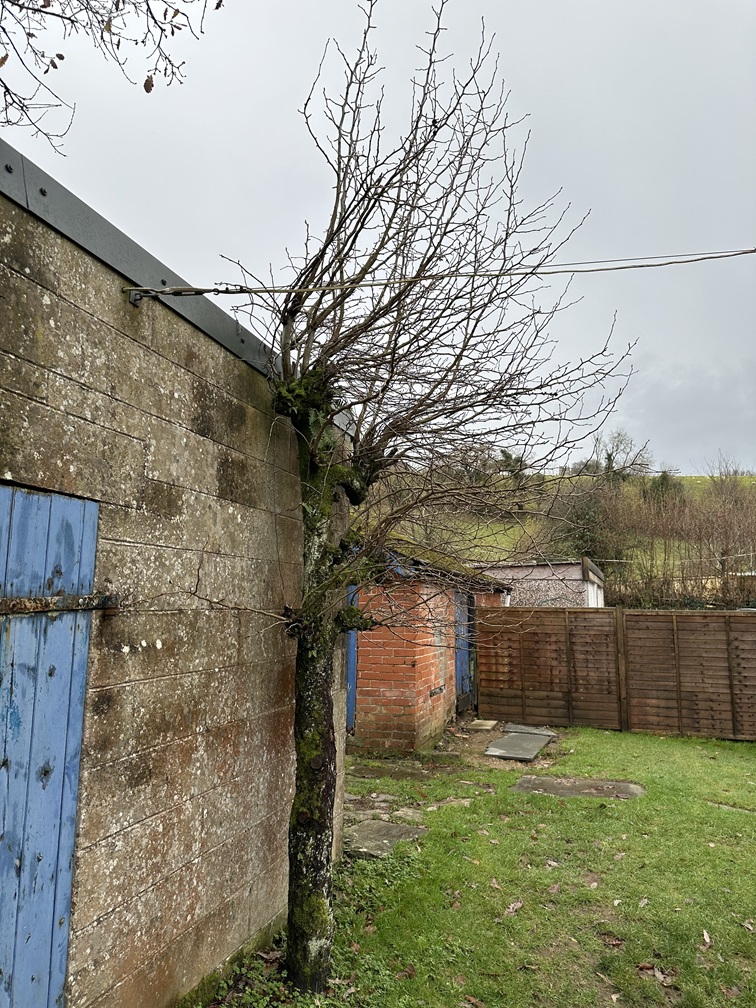
Thanks for your question about old pear tree pruning, looking at your photos, I can see what's going on here, and it's a classic case of someone knowing what they were doing in the past, but then the tree's been left to its own devices for far too long.
The good news is that pear is absolutely salvageable with some careful and strategic pruning. The main issue you've got is that this pear has been planted really close to that outbuilding, which means it's always going to be a management job rather than letting it develop naturally. Pears have a very different growth habit from apples, and you need to work with that rather than against it.
Understanding pear tree growth habits
Pears naturally want to grow vertically rather than spreading horizontally as apples do. They're upright growers that send up strong vertical shoots, which is exactly what's happened here. This vertical growth habit is part of their DNA, and it's why they often look quite different in structure to apple trees.
Where apples tend to spread out and create a more rounded canopy, pears shoot upwards and create these tall, narrow crowns if left unpruned. This makes them well-suited to tight spaces when managed properly, but it also means they require more frequent intervention to stay productive and healthy.
What's happened with your pear tree
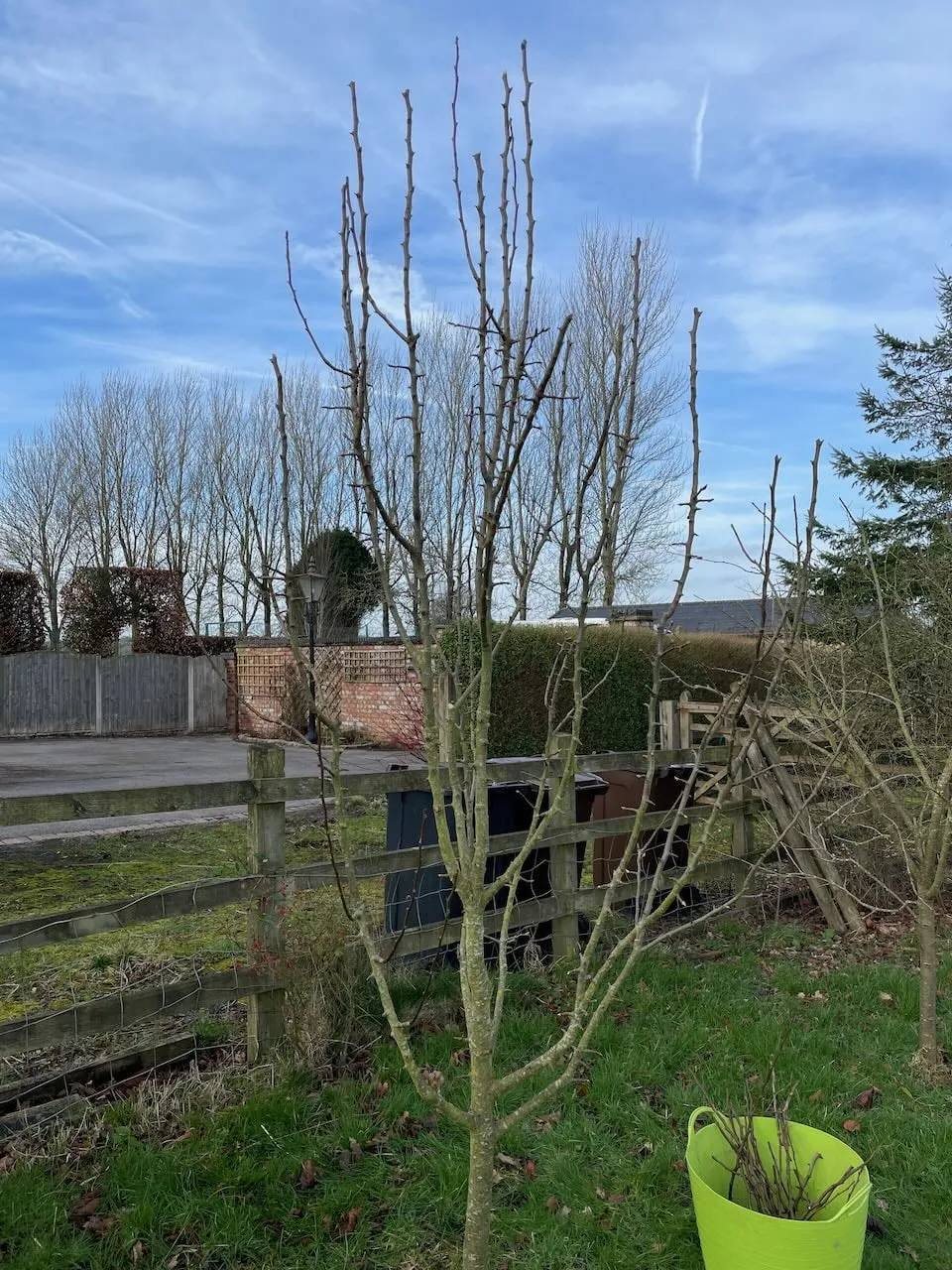
Looking at your tree, I can see it's been hard coppiced at some point in the past, probably to keep it away from the building, and whoever did that knew their stuff.
Coppicing is an old traditional woodland management technique where you cut a tree right back to near ground level or to a low framework of main stems. The tree then responds by throwing up multiple new shoots from the cut point, which is exactly what's happened with your pear. It's a brilliant way to rejuvenate old or overgrown trees, especially ones that have been planted in the wrong spot or have outgrown their space.
The technique has been used for centuries to manage trees for firewood, fencing materials and fruit production, and it works because most trees have this incredible ability to regenerate from dormant buds in the older wood.
The problem with your tree is that those coppiced stems have now been left to throw up loads of water sprouts and vertical growth, and they've not been thinned out properly. What you've ended up with is a congested mess of competing stems all fighting for light and space, which is why you're getting fruit that goes black before you can harvest it. That's likely fireblight or brown rot taking hold because there's no airflow through the canopy and the tree's stressed from being so congested. When trees are this overcrowded, they're basically creating the perfect environment for fungal diseases and pests to set up shop.
How to thin and restructure the tree
What you need to do is thin those coppiced stems right back to about five to seven of the strongest, most outward-facing branches. Pick the ones that are growing away from the building and have good structure, then remove everything else at the base. Be brutal with it because pears respond really well to hard pruning and will thank you for the extra light and air.
Once you've got your framework sorted, you need to keep on top of pruning the side that faces the building. Any growth heading back towards the outbuilding needs removing each winter to keep that side compact. The outward facing side can be allowed to develop more naturally, but you'll still need to thin out crossing branches and any congested growth to maintain good airflow through the tree.
This is going to be an ongoing job because of where it's planted, but once you've got the framework right, it's just annual maintenance to keep it in check. Think of it as training the tree to grow in one direction, almost like a fan shape pointing away from the building. You're essentially creating an asymmetric tree that works with the space you've got rather than fighting against it.
Dealing with the fruit disease issues
The black fruit and wasp damage is a symptom of poor tree health and congestion. Once you've opened up the canopy and got better airflow, you should see a massive improvement in fruit quality. Make sure you're also removing any diseased or damaged wood as you go, and keep the area around the base of the tree clear of fallen fruit and debris. Pears are prone to various fungal diseases, and they spread like wildfire in congested, poorly ventilated trees.
Get this sorted now whilst it's dormant, and you'll have a much healthier, more productive tree come spring. The wasps are only turning up because the fruit's already compromised and rotting on the tree. Fix the underlying health issues and you'll find they're far less of a problem.
Further reading
For step by step guidance on pruning pear trees properly, check out this detailed guide:
How to Prune Pear Trees: Beginners Pruning Guide
Happy Gardening!
Lee
Hi @eoinkmcc
Thanks for your question about old pear tree pruning, looking at your photos, I can see what's going on here, and it's a classic case of someone knowing what they were doing in the past, but then the tree's been left to its own devices for far too long.
The good news is that pear is absolutely salvageable with some careful and strategic pruning. The main issue you've got is that this pear has been planted really close to that outbuilding, which means it's always going to be a management job rather than letting it develop naturally. Pears have a very different growth habit from apples, and you need to work with that rather than against it.
Understanding pear tree growth habits
Pears naturally want to grow vertically rather than spreading horizontally as apples do. They're upright growers that send up strong vertical shoots, which is exactly what's happened here. This vertical growth habit is part of their DNA, and it's why they often look quite different in structure to apple trees.
Where apples tend to spread out and create a more rounded canopy, pears shoot upwards and create these tall, narrow crowns if left unpruned. This makes them well-suited to tight spaces when managed properly, but it also means they require more frequent intervention to stay productive and healthy.
What's happened with your pear tree
Looking at your tree, I can see it's been hard coppiced at some point in the past, probably to keep it away from the building, and whoever did that knew their stuff.
Coppicing is an old traditional woodland management technique where you cut a tree right back to near ground level or to a low framework of main stems. The tree then responds by throwing up multiple new shoots from the cut point, which is exactly what's happened with your pear. It's a brilliant way to rejuvenate old or overgrown trees, especially ones that have been planted in the wrong spot or have outgrown their space.
The technique has been used for centuries to manage trees for firewood, fencing materials and fruit production, and it works because most trees have this incredible ability to regenerate from dormant buds in the older wood.
The problem with your tree is that those coppiced stems have now been left to throw up loads of water sprouts and vertical growth, and they've not been thinned out properly. What you've ended up with is a congested mess of competing stems all fighting for light and space, which is why you're getting fruit that goes black before you can harvest it. That's likely fireblight or brown rot taking hold because there's no airflow through the canopy and the tree's stressed from being so congested. When trees are this overcrowded, they're basically creating the perfect environment for fungal diseases and pests to set up shop.
How to thin and restructure the tree
What you need to do is thin those coppiced stems right back to about five to seven of the strongest, most outward-facing branches. Pick the ones that are growing away from the building and have good structure, then remove everything else at the base. Be brutal with it because pears respond really well to hard pruning and will thank you for the extra light and air.
Once you've got your framework sorted, you need to keep on top of pruning the side that faces the building. Any growth heading back towards the outbuilding needs removing each winter to keep that side compact. The outward facing side can be allowed to develop more naturally, but you'll still need to thin out crossing branches and any congested growth to maintain good airflow through the tree.
This is going to be an ongoing job because of where it's planted, but once you've got the framework right, it's just annual maintenance to keep it in check. Think of it as training the tree to grow in one direction, almost like a fan shape pointing away from the building. You're essentially creating an asymmetric tree that works with the space you've got rather than fighting against it.
Dealing with the fruit disease issues
The black fruit and wasp damage is a symptom of poor tree health and congestion. Once you've opened up the canopy and got better airflow, you should see a massive improvement in fruit quality. Make sure you're also removing any diseased or damaged wood as you go, and keep the area around the base of the tree clear of fallen fruit and debris. Pears are prone to various fungal diseases, and they spread like wildfire in congested, poorly ventilated trees.
Get this sorted now whilst it's dormant, and you'll have a much healthier, more productive tree come spring. The wasps are only turning up because the fruit's already compromised and rotting on the tree. Fix the underlying health issues and you'll find they're far less of a problem.
Further reading
For step by step guidance on pruning pear trees properly, check out this detailed guide:
How to Prune Pear Trees: Beginners Pruning Guide
Happy Gardening!
Lee
 Lee Burkhill: Award Winning Designer & BBC 1's Garden Rescue Presenters Official Blog