Best Plants for Alkaline Soil UK: 22 Lime-Loving Picks
Lee Burkhill: Award Winning Designer & BBC 1's Garden Rescue Presenters Official Blog
Beginner level
If you've tested your soil and discovered a pH above 7.0, you might be feeling a pang of disappointment at the prospect of never growing rhododendrons or camellias successfully in the open ground. I understand that instinct entirely. But I want to reframe that reaction, because alkaline soil gives you access to some of the most celebrated and spectacular plants in the British garden, including lavender, lilac, clematis, beech, alliums, and delphiniums.
Many of the plants that define the classic English country garden style thrive specifically because of alkaline conditions, meaning that if you live in a very chalky garden, there are plenty of plants to choose from. Trust me, as the garden design expert, having all kinds of soil still lets you have flower beds full of beautiful specimens; it’s just knowing which plants to pick!
In this guide, I’ll take you through how to test and understand your soil’s alkalinity, why attempting to acidify the whole garden is a losing battle not worth fighting, and then a comprehensive plant selection covering trees, shrubs, perennials, climbers, edibles, and ground cover that will genuinely love your conditions and reward you with year after year of performance.
Quick Answer
The best plants for alkaline soil in the UK include lavender, clematis, lilac, beech, alliums, salvia, achillea, buddleja, weigela, iris, philadelphus, nepeta, dianthus, scabious, penstemon, delphinium, gypsophila, cistus, verbascum, and rosemary. These calcicole and lime-tolerant plants thrive in soil with a pH of 7.0 to 8.5 and will outperform anything you’d try to force in the wrong conditions. Work with your alkaline soil and you’ll grow a garden that’s the envy of the neighbourhood.
What Is Alkaline Soil and Where Does It Come From?
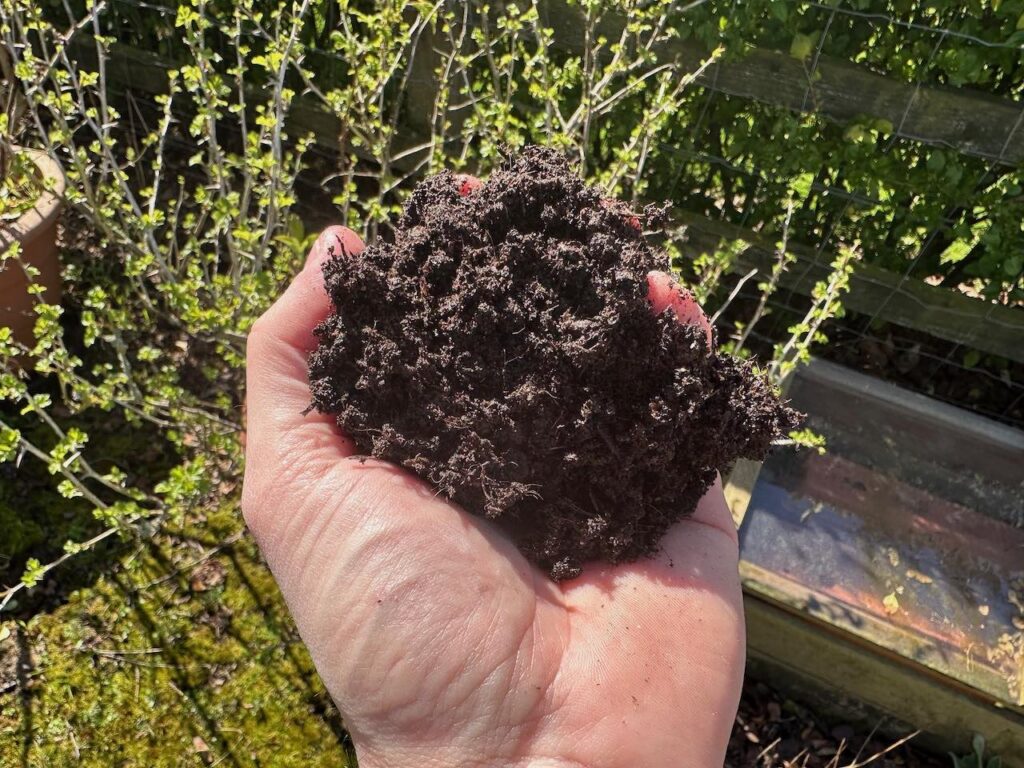
Soil pH runs from 0 to 14, with 7.0 representing neutral ground. Any reading above 7.0 is alkaline, and in UK gardens the range you’re most likely to find runs from around 7.0 to 8.5. Most plants are perfectly content somewhere between 5.5 and 7.5, but alkaline soil above 7.5 is specifically where a whole group of calcicole plants, those adapted to lime-rich conditions, genuinely outperform everything else you could put in their place.
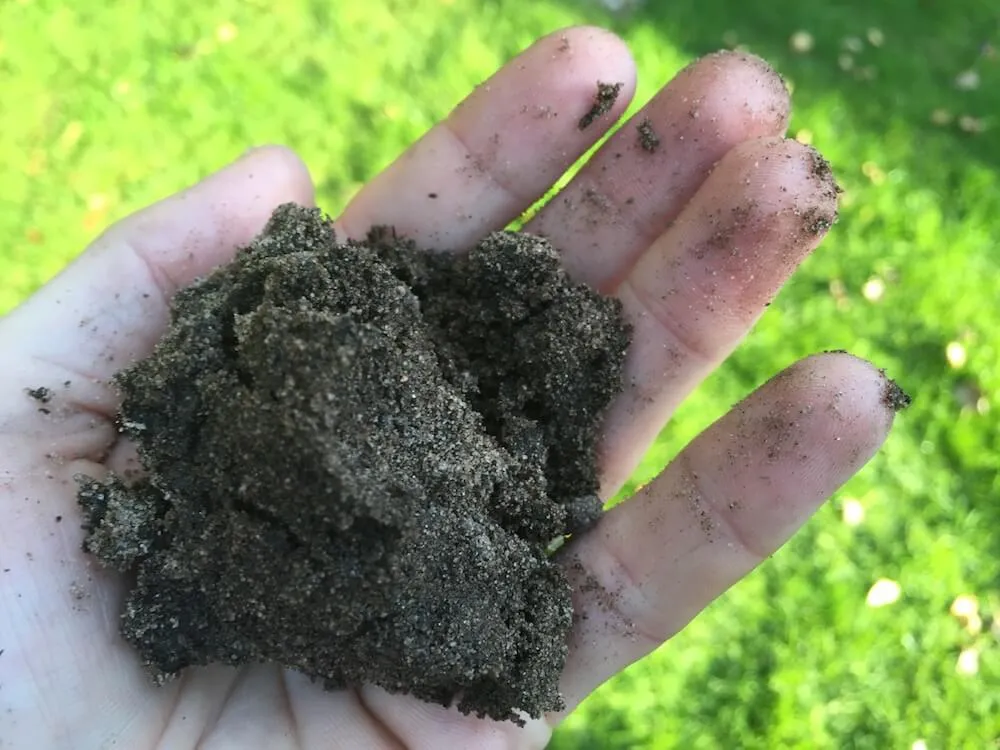
Alkaline soil is most commonly caused by underlying chalk or limestone geology, which releases calcium carbonate into the soil profile as it weathers. In the UK, naturally alkaline conditions are most prevalent across the South Downs, the Chiltern Hills, the North and South Downs, Salisbury Plain, the Yorkshire Wolds, and parts of the Cotswolds and Lincolnshire where limestone lies close to the surface. If you garden on white, flinty, free-draining ground that dries out quickly in summer and shows white chalky lumps when you dig, alkaline conditions are almost certainly what you have.
Tap water in chalk and limestone areas is also significantly alkaline, which means even your irrigation is reinforcing the soil’s natural chemistry over time.
The practical effect of high pH on plant nutrition is that certain micronutrients, particularly iron, manganese, and zinc, become chemically locked up in the soil and unavailable to plant roots. Plants that have not evolved for these conditions will show lime-induced chlorosis: the leaves turn yellow between the veins while the veins themselves remain green, signalling that the plant cannot access the iron it needs. Calcicole plants have adapted to extract nutrition efficiently from alkaline conditions and will never show this symptom, because this is simply home ground for them.
How to Test Your Soil pH Accurately
Before you spend a single pound on plants for any new border, test your soil. This is the single most important preparation you can make, because without a pH reading, you’re guessing, and guessing is an expensive habit in gardening. I’ve visited gardens where clients have spent hundreds of pounds on plants that gradually deteriorated, all because the soil conditions were never assessed before a single thing went in the ground.
A soil testing kit costs under £10 and takes around ten minutes. It is the cheapest investment in your garden’s long-term success.
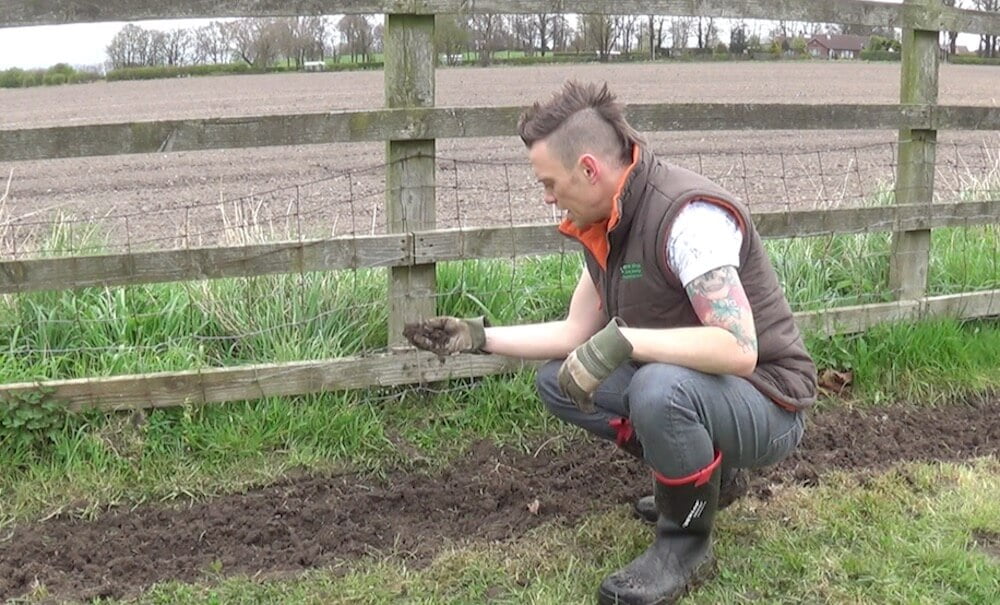
Basic liquid or powder testing kits from any garden centre work perfectly well. Take a small soil sample from 10 to 15cm depth, mix it with the testing solution, and compare the resulting colour to the chart. A reading above 7.0 confirms alkaline conditions. A reading between 7.0 and 7.5 means you can grow a very wide range of plants. Between 7.5 and 8.0 you’re in classic chalky territory, and above 8.0 you’ll want to focus specifically on the most lime-tolerant choices in this guide.
💡 Top Tip
Test soil from multiple spots around your garden rather than just one. pH can vary considerably across a single plot, particularly if there’s been building work, different topsoil depths over chalk, or where old concrete or rubble has been buried. I always take at least three samples from different areas before making any plant selection decisions on a client site.
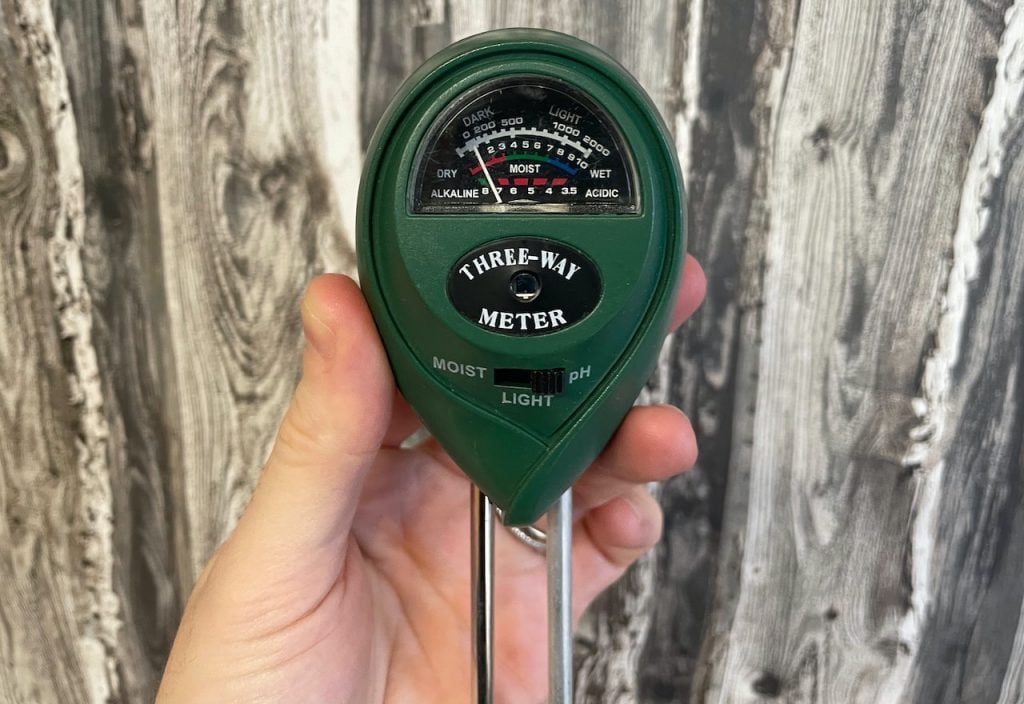
If you want a more precise and reusable option, a digital soil pH meter gives you an instant reading by inserting the probe directly into moist soil. These are particularly useful for larger gardens where conditions vary significantly across different borders and aspects.
You can also gauge likely pH from plants already in your garden and in neighbouring plots. If lavender, clematis, and lilac are thriving in the open ground nearby, the soil is almost certainly alkaline. Conversely, if neighbouring rhododendrons look healthy and vibrant with no sign of yellowing, the soil may be more neutral than you think.
The plants that volunteer in your garden, the weeds that establish themselves without invitation, are often the most honest pH indicators of all: wild clematis, wild marjoram, and ox-eye daisies are classic calcicole indicators on chalky ground.
Why Trying to Acidify Your Alkaline Soil Is a Waste of Resources
Every season I meet gardeners who have been adding sulphur, pine needle mulch, or ericaceous compost to their borders in an effort to grow acid-loving plants on genuinely chalky ground. I understand the impulse entirely, particularly if you’ve fallen in love with the idea of a rhododendron or a camellia. But I want to be completely straight with you about why this approach is so rarely successful, and why the time, money, and effort spent fighting your soil’s chemistry would produce dramatically better results if redirected towards plants that actually want to be there.
Reducing the pH of genuinely chalky soil is, for all practical purposes, impossible to do permanently.
The RHS is explicit on this point: chalky soils contain free calcium carbonate in such abundance that any sulphur or acidifying treatment applied to the surface is rapidly neutralised and the pH bounces straight back. Unlike neutral or slightly alkaline clay soils where modest pH adjustment is at least achievable over time, solid chalk acts as an almost limitless buffering reservoir.
You would need to apply sulphur at rates that would be financially and practically absurd, year after year, indefinitely, with the soil pH recovering towards alkaline within months of each application.
There’s also the soil biology argument. Your alkaline soil has a thriving community of bacteria, fungi, and other organisms calibrated to those conditions. Significant pH manipulation disrupts these communities, often to the detriment of the plants you’re trying to help, because healthy soil biology is what delivers nutrition to roots. You can lower the pH reading and simultaneously make the growing environment worse.
💡 Top Tip
If you’re genuinely set on growing one or two acid-loving plants on alkaline ground, the only reliable solution is a large container filled with ericaceous compost, watered exclusively with collected rainwater rather than tap water. Your tap water in a chalk or limestone area is almost certainly alkaline enough to raise the pH of ericaceous compost within a single season if used continuously. A water butt is a worthwhile investment alongside the container.
The far smarter approach, and the one that delivers the most spectacular gardens I’ve seen on chalky downland, is to identify exactly what pH you have and then choose plants that have evolved to love it. Alkaline soil is not a limitation. It is an invitation to grow some of the most fragrant, colourful, and structurally impressive plants in cultivation. The following list shows you exactly what I mean.
Best Trees for Alkaline Soil
Alkaline soil suits a surprisingly generous range of trees, from the stately beech and field maple through to the ornamental cherry and the Judas tree. If you have chalky ground and want structure and height, you are genuinely well served.
1. Beech (Fagus sylvatica)
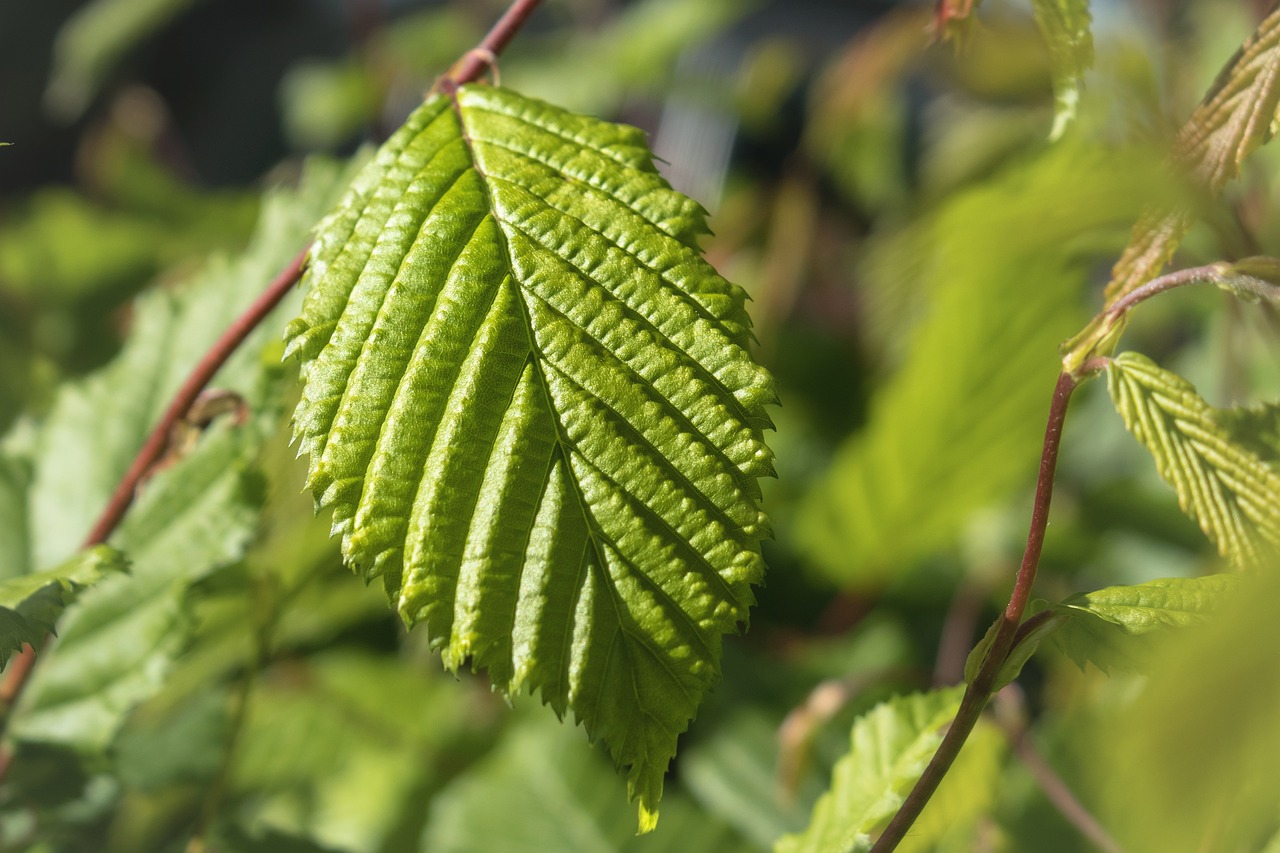
Beech is arguably the defining tree of chalk downland in the UK, and everything about it, from the smooth silver-grey bark to the extraordinary coppery autumn foliage, has evolved in alkaline, free-draining conditions. The great beech woodlands of the Chilterns, the North Downs, and the South Downs sit almost entirely on chalk, and you only have to stand beneath a mature beech in October to understand why gardeners who have the right conditions for it are genuinely fortunate. Beech makes one of the finest hedges in the British garden, holding its tawny dead leaves through winter when grown as a clipped specimen, giving you privacy and structure through the coldest months.
Beech is the quintessential chalk downland tree, thriving in alkaline, free-draining conditions
For a garden tree rather than a hedge, the purple-leafed form Fagus sylvatica ‘Purpurea’ is a dramatic choice, holding its deep copper-purple leaves from spring through to autumn before turning bronze. The fastigiate form ‘Dawyck’ grows in a narrow columnar habit ideal for restricted spaces. As a hedge plant, beech can be kept to any height from 1.5 metres upwards and is one of the most handsome formal hedging choices available in the UK. It prefers full sun and will grow in the shallowest chalk soils where many other trees would struggle.
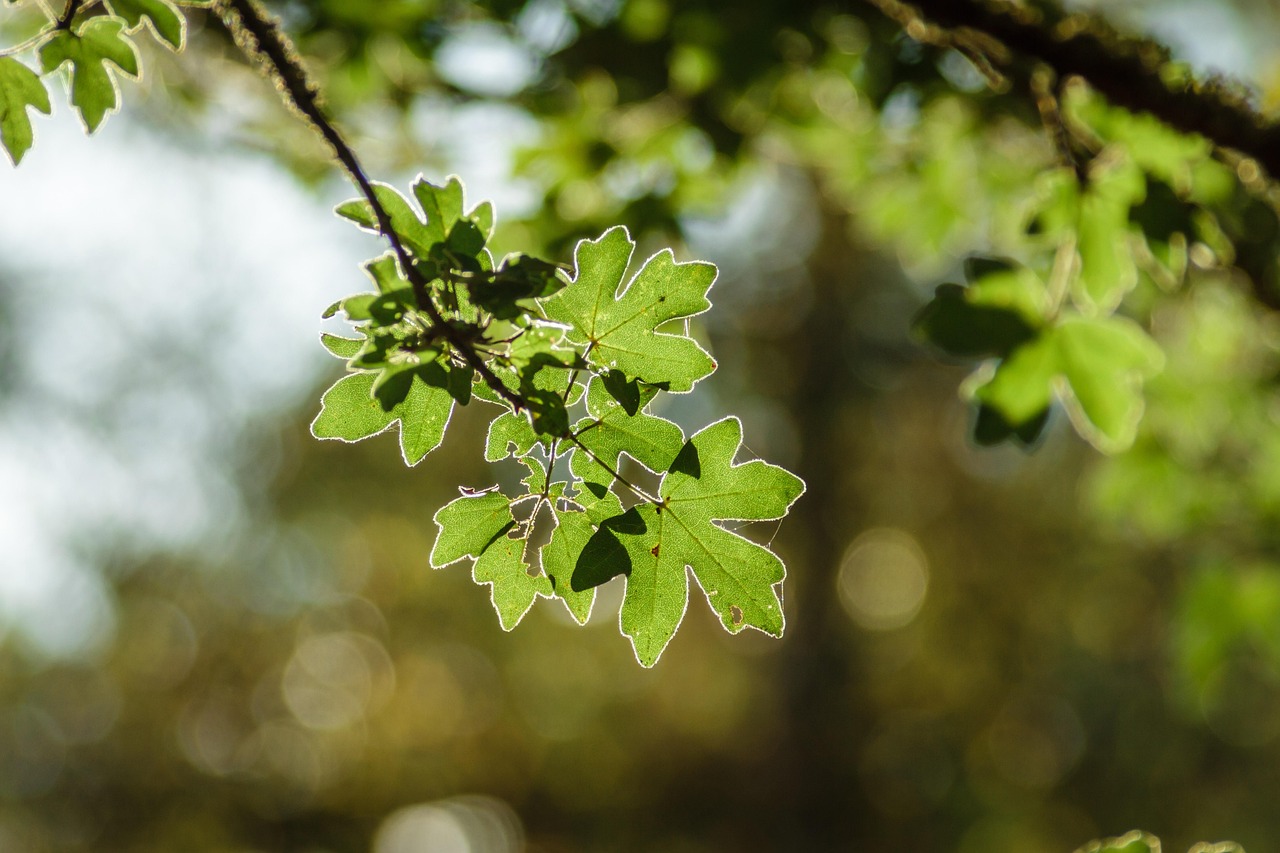
The field maple is our only truly native maple and one of the most undervalued garden trees in the UK. Unlike its Japanese relatives, which prefer acidic conditions, Acer campestre is a committed calcicole that thrives on chalk and limestone and is commonly found as a component of traditional chalk downland hedgerows across the south of England. It produces attractive, fresh-green lobed leaves that turn a warm, clear yellow in autumn, and it responds beautifully to clipping, making it an excellent choice both as a garden tree and as a hedging plant. I have Field Maples here at Garden Ninja HQ and they are on the most fuss free native trees you can plant!
Acer campestre is Britain’s only native maple and a genuine calcicole, thriving on chalk and limestone
For smaller gardens, the cultivar ‘Evelyn’ has a naturally compact, upright habit, reaching around 6 metres, with particularly vivid yellow and orange autumn colour. As a hedging plant, field maple has an advantage over beech in that it establishes faster and is slightly more tolerant of wet conditions, making it better suited to heavier alkaline clay soils as well as the free-draining chalk garden. It provides excellent wildlife value: the flowers attract pollinators in spring, the seeds feed birds and small mammals, and the bark hosts a range of invertebrates.
🌿 At A Glance: Field Maple
Botanical Name
Acer campestre
Plant Type
Deciduous native tree or hedging plant
UK Hardiness
H7 (extremely hardy)
Height / Spread
8m to 15m / 6m to 10m (hedgeable from 1.5m)
Autumn Colour
Clear yellow to orange
Ideal pH Range
7.0 to 8.5
Best Conditions
Alkaline to neutral soil; full sun to partial shade; tolerates chalk and clay
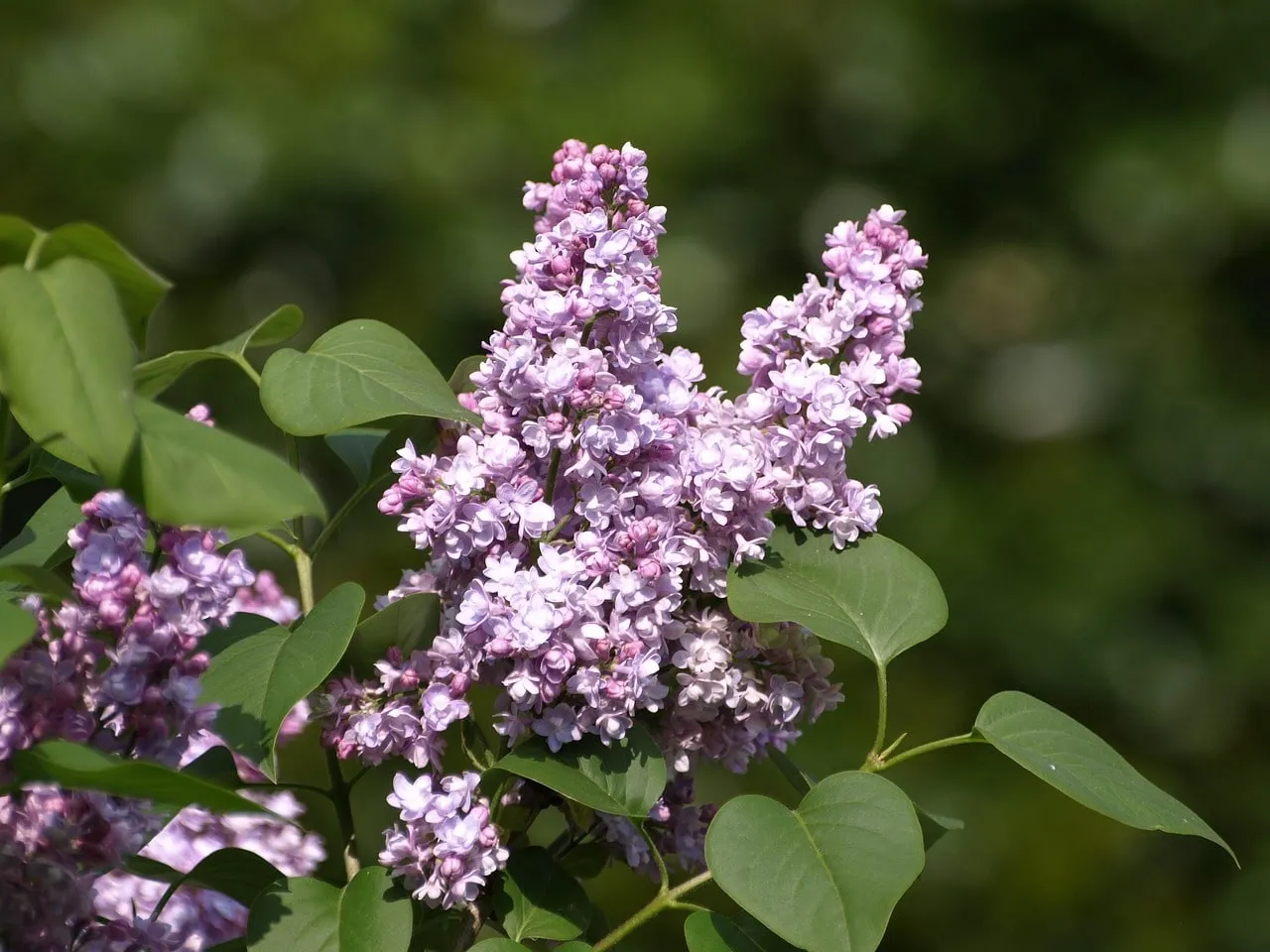
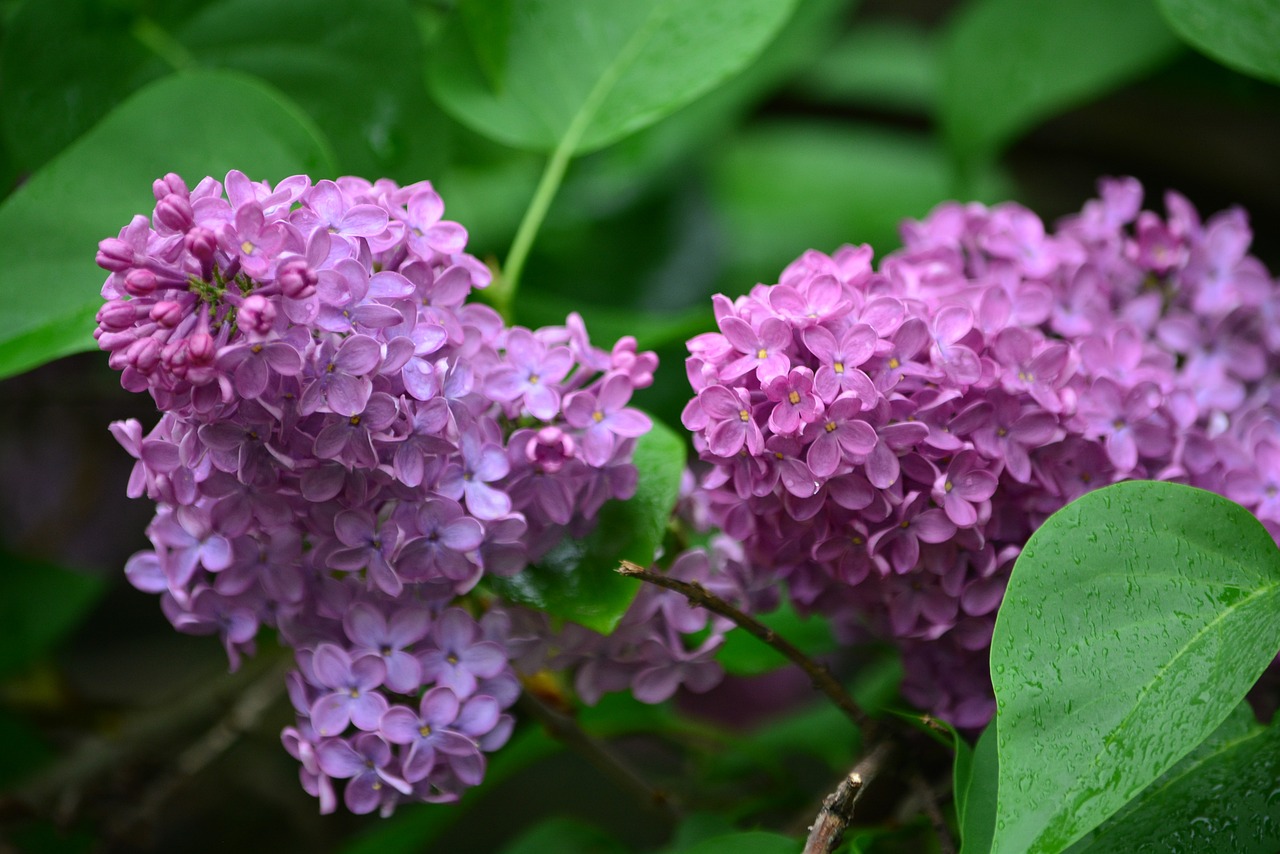
Few plants communicate the promise of early summer in Britain as powerfully as lilac in full flower. Those dense, upright panicles of bloom in purple, pink, white, or deep wine-red, and above all that extraordinary fragrance, represent one of the finest sensory experiences the garden calendar offers. Lilac is a dedicated calcicole that actively thrives on chalky, alkaline soil, and performs noticeably better on lime-rich ground than on neutral or acid conditions. It’s the plant that makes alkaline gardeners quietly smug every May when the whole thing erupts into scented glory.
Syringa vulgaris produces some of the finest scent in the British garden and loves alkaline conditions
‘Charles Joly’ is a double, dark red-purple cultivar with exceptional fragrance and one of the most reliable of all lilac varieties for UK conditions. ‘Madame Lemoine’ gives large, pure white double flowers of breathtaking beauty. ‘Katherine Havemeyer’ produces lavender-blue double flowers with an intense, heady perfume.
All three hold the RHS Award of Garden Merit. Lilac is a large shrub or small tree that ultimately needs space, reaching 3 to 4 metres or more, but can be pruned after flowering to keep it within bounds. The single rule with lilac is not to prune until after flowering, as the buds for next year’s display form on this season’s wood immediately after the flowers fade.
The shrub category is genuinely one of alkaline soil’s strongest suits. Many of the most popular and widely grown garden shrubs in the UK either prefer or actively thrive in lime-rich conditions, and several will perform at their absolute best on chalk that would defeat other plants entirely.
4. Lavender (Lavandula spp.)
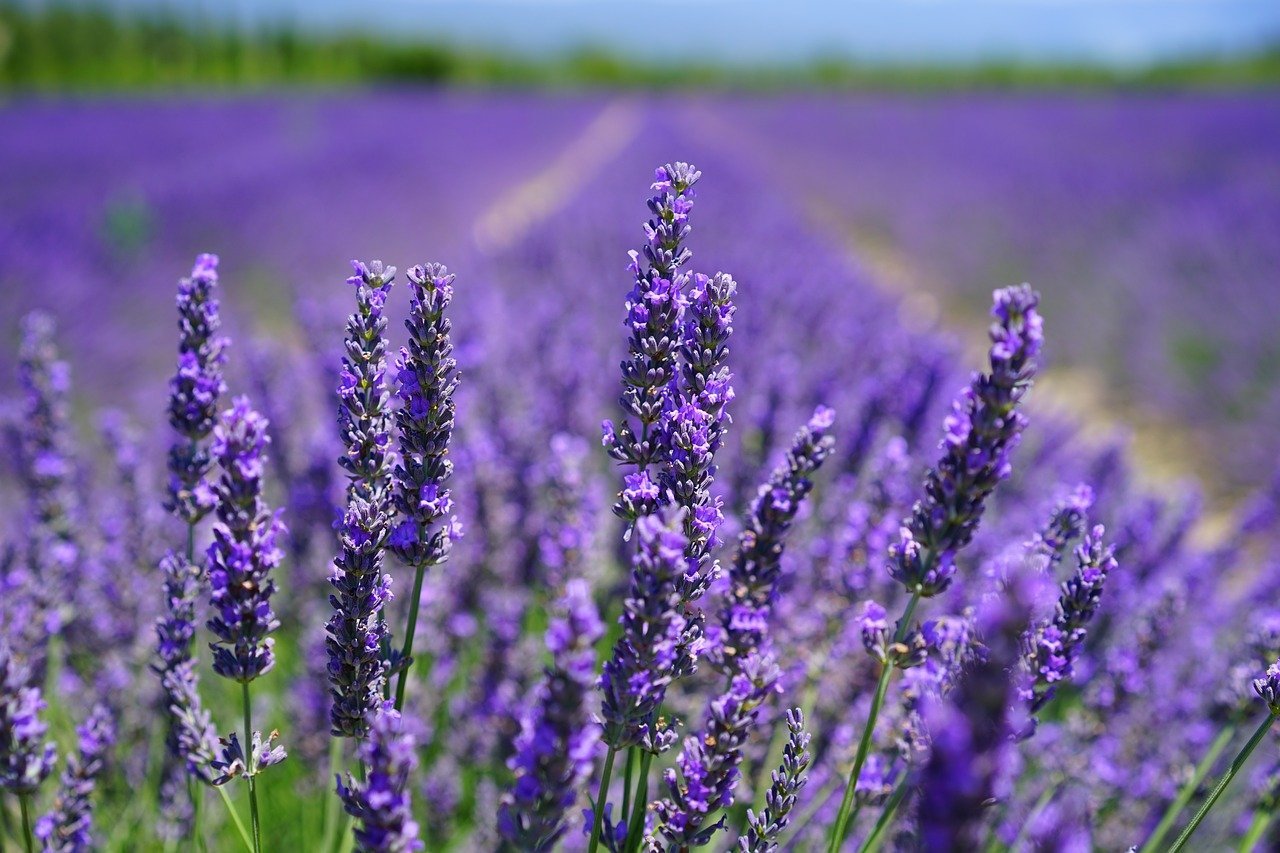
Lavender is the shrub that alkaline gardeners are born to grow. In its native Mediterranean habitat, it grows on dry, thin, limestone-based soils baked by summer sun, and every aspect of its performance in the garden reflects these origins. The free-draining alkaline conditions of a chalky UK garden replicate those homeland soils almost exactly, which is why lavender so often thrives where conditions seem challenging for other plants.
If you have alkaline, free-draining ground in full sun, you can grow lavender that looks and smells precisely as it does in a Provençal field, and that is a genuinely remarkable thing to achieve in Britain.
Lavender is perfectly adapted to alkaline, free-draining conditions and is one of the finest shrubs for a chalk garden
Lavandula angustifolia ‘Hidcote’ is the most widely grown English lavender in the UK and deserves its popularity: compact, reliably deep purple, and intensely fragrant. ‘Vera’ is the classic broad-leafed lavender, less tidy but with exceptional fragrance and excellent drought tolerance.
For longer flowering season, Lavandula x intermedia ‘Grosso’ is the lavender used commercially for essential oil production in France and produces enormous, intensely scented flower spikes from July into September. I use lavender constantly on client sites with chalky soil because it establishes fast, requires minimal maintenance once clipped after flowering, and brings a Mediterranean character to the garden that is hard to replicate with anything else.
Buddleja’s ability to colonise disturbed chalky ground, railway embankments on limestone ballast, bombed sites, and chalk spoil heaps, tells you everything you need to know about its relationship with alkaline soil. This is a plant for which lime-rich, free-draining conditions are not just acceptable but genuinely preferred. In a chalk garden with full sun, buddleja will grow with a vigour and a flower size that exceeds anything you’d achieve on neutral or acid ground.
The long, arching panicles of flower in purple, white, or rich wine-red from July into October represent one of the finest wildlife spectacles in the summer garden, with butterflies gathering in extraordinary numbers when buddleja is in full bloom.
Buddleja genuinely thrives on alkaline, chalky soil and draws butterflies in extraordinary numbers
‘Black Knight’ produces some of the deepest, most saturated purple panicles available and holds its colour exceptionally well in summer heat. ‘White Profusion’ produces large, pure-white flower cones with an orange eye, creating a cooler, more elegant effect. ‘Royal Red’ is a reliable wine-red form that attracts pollinators particularly effectively.
Prune buddleja hard in March, cutting all stems back to approximately 30cm above ground level, and it will regrow vigorously to produce the largest flowers on the current season’s wood. Without this annual hard prune, it becomes increasingly leggy, and the flowers reduce in quality year on year.
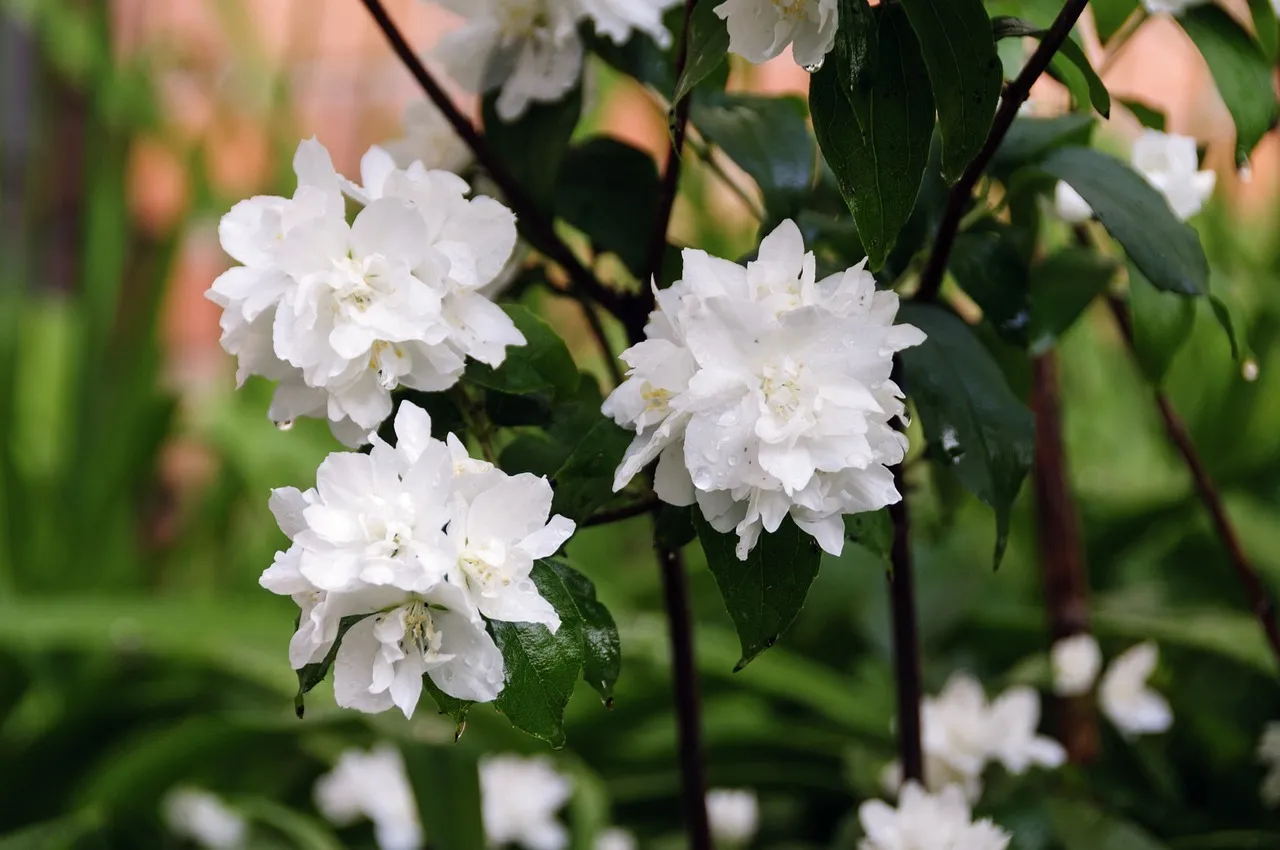
Philadelphus is one of the most intensely fragrant shrubs in cultivation, and the explosion of pure white flowers in June and early July produces a scent so powerfully reminiscent of orange blossom that it stops visitors in their tracks every single time.
It’s an obliging plant that tolerates a wide range of conditions, but it performs particularly well on alkaline, free-draining soil in full sun to partial shade, where the free drainage suits its preference for not sitting in wet roots through winter. For sheer fragrance per square metre in the summer garden, philadelphus is arguably unbeatable, and it is one of the finest plants you can put in an alkaline garden.
Philadelphus produces one of the most powerful and beautiful fragrances of any British garden shrub
‘Belle Etoile’ is a compact form reaching around 1.5 metres with semi-double white flowers carrying a purple blotch at the base, and an exceptional fragrance. ‘Virginal’ grows larger, to around 3 metres, with fully double white flowers that are almost rose-like in their formality. For smaller gardens, ‘Manteau d’Hermine’ is a genuinely dwarf philadelphus at just 75cm, covered in creamy double flowers with a particularly sweet scent.
Prune philadelphus immediately after flowering, removing the oldest flowered stems to the base to encourage vigorous new growth that will carry next year’s flowers.
🌿 At A Glance: Philadelphus
Botanical Name
Philadelphus spp.
Plant Type
Deciduous shrub
UK Hardiness
H5 to H6
Height / Spread
75cm to 3m / 1m to 3m depending on cultivar
Flowering Period
June to July
Ideal pH Range
7.0 to 8.0
Best Conditions
Well-drained alkaline to neutral soil; full sun to partial shade
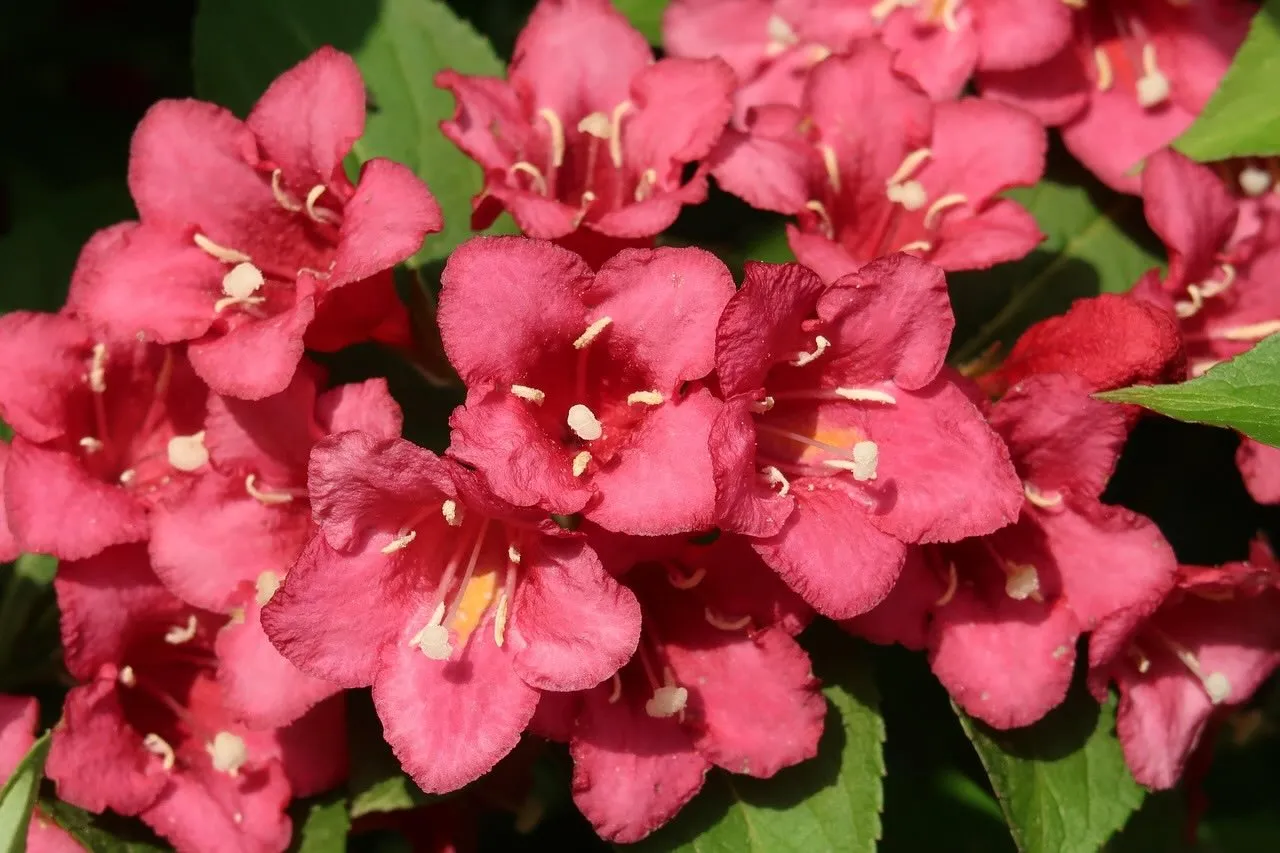
Weigela is one of the most reliable flowering shrubs for alkaline conditions, producing masses of trumpet-shaped flowers in late spring and early summer that cover the entire plant and attract pollinators enthusiastically. It’s tough, adaptable, and undemanding, tolerating poor, shallow chalky soil without complaint and flowering reliably even when conditions are far from ideal. Weigela is one of those shrubs that earns its place simply through consistent, trouble-free performance year after year with almost no intervention required beyond a light tidy after flowering.
Weigela ‘Red Prince’ flowers reliably on alkaline soil and provides excellent pollinator value
Bristol Ruby’ is the most widely planted weigela in the UK, with deep ruby-red bell flowers that cover the plant in May and June. ‘Red Prince’ produces deeper, more saturated red flowers with a slightly later flowering period, extending the display. ‘Florida Variegata’ is an excellent foliage form with grey-green leaves margined in creamy white and soft pink flowers, making it attractive through the entire growing season rather than just at flowering time.
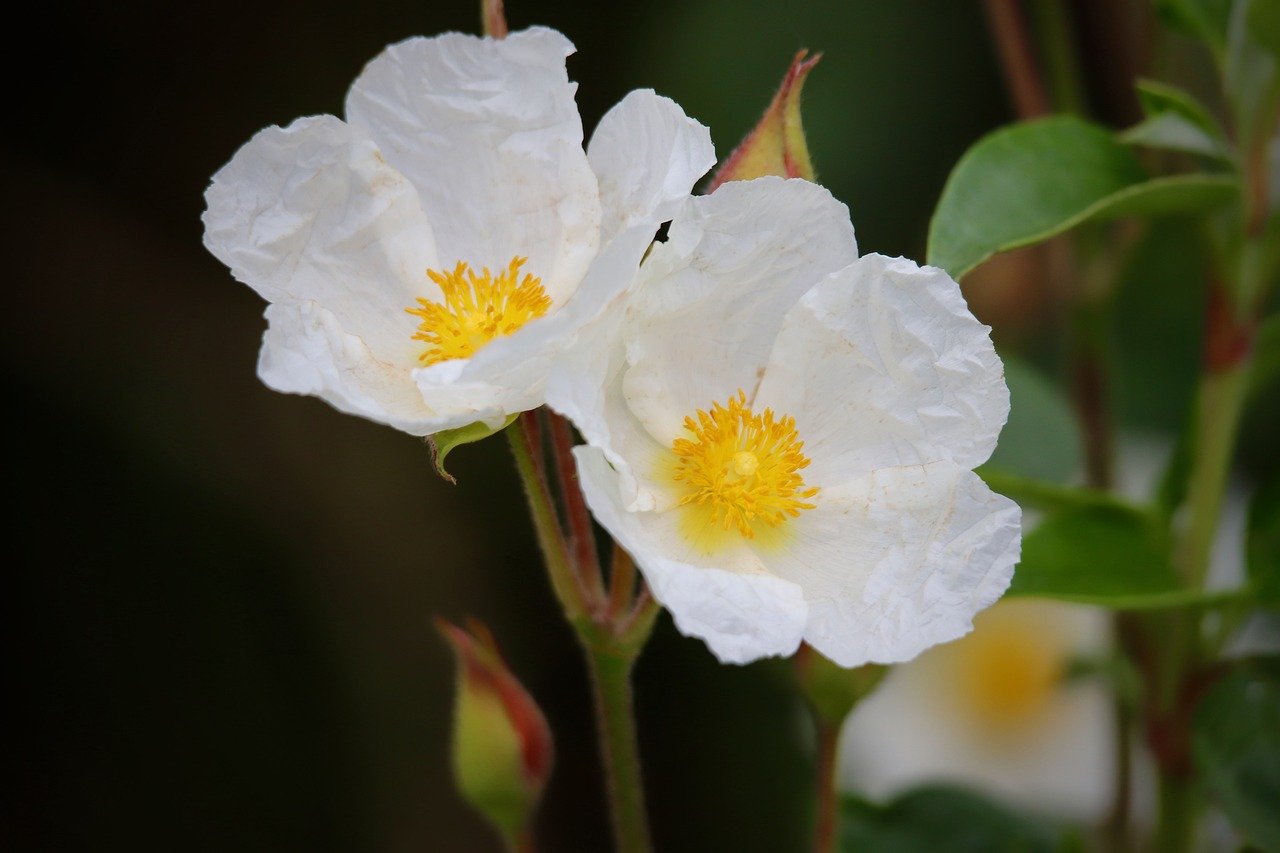
Cistus is the quintessential Mediterranean shrub for hot, dry, alkaline conditions, native to the limestone hillsides of southern Europe, where shallow, calcium-rich, rapidly draining soils are standard. It produces papery, rose-like flowers in white, pink, or magenta from May to July, each bloom lasting only a single day but replaced continuously for weeks.
Cistus thrives on shallow, alkaline, freely drained soil in full sun and flowers prolifically through early summer
The aromatic, resinous foliage is attractive throughout the year and provides a distinctive Mediterranean character to borders in full sun. On shallow chalk in full sun, cistus will thrive in conditions that would defeat virtually any other garden shrub, making it one of the most genuinely useful plants for difficult alkaline spots.
Cistus x corbariensis is one of the hardiest rock roses, tolerating UK winters without difficulty and producing white flowers with a yellow eye. Cistus ladanifer, the gum cistus, reaches up to 2 metres and produces large, white flowers with distinctive dark crimson blotches at the base of each petal. Cistus x purpureus gives rich pink-purple flowers with the same dark blotch, creating a more dramatic effect. Cistus dislikes hard pruning, so remove only spent flower growth and any dead material; never cut back into old wood as it will not regenerate.
Alkaline soil is extremely well served by herbaceous perennials. Many of the most sought-after border plants are either indifferent to pH or actively prefer alkaline conditions, including some of the finest cottage garden staples in cultivation.
9. Salvia (Salvia nemorosa and hybrids)
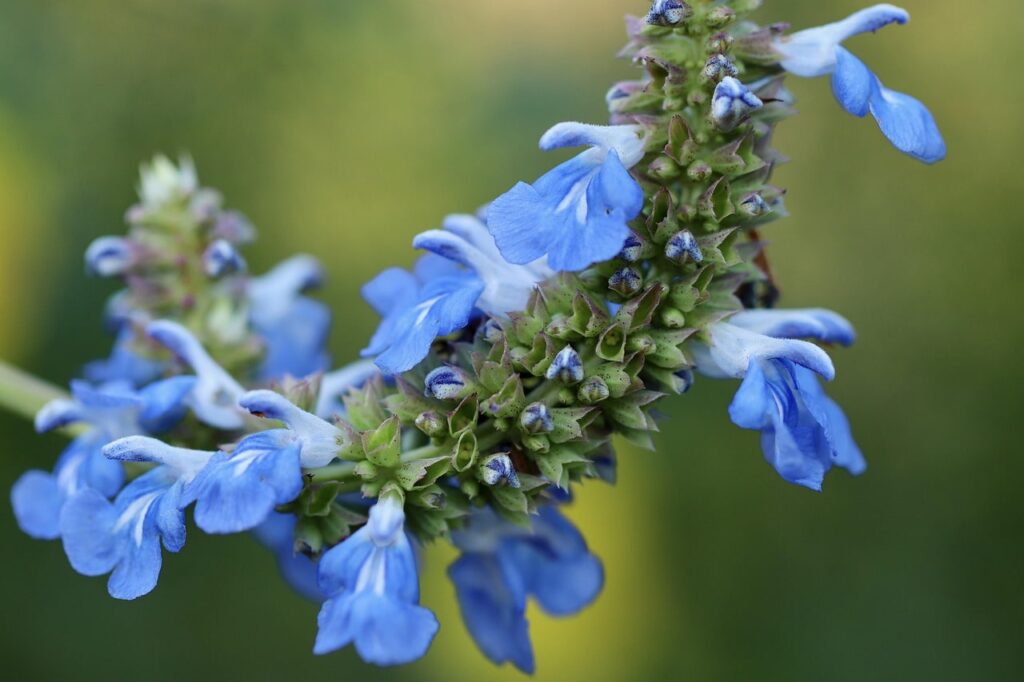
Salvias are among the most rewarding perennials for alkaline, free-draining soil, producing upright spikes of blue, purple, or rich red flowers from early summer well into autumn, often with two or three flushes in a season if the spent spikes are cut back promptly. They evolved in Mediterranean and central European grasslands on thin, alkaline, low-fertility soils, which means the challenging conditions of a dry chalk border are essentially home turf. Few perennials deliver such a long season of flowers with so little maintenance on alkaline ground, making salvias one of the best value plants you can put in a chalky border.
Caradonna’ is one of the finest border salvias in existence, with deep purple flowers on dark purple-black stems that provide striking contrast in any planting scheme. Mainacht’ (May Night) produces some of the deepest indigo-blue flowers of any hardy salvia and is an RHS Award of Garden Merit plant. For a longer, looser effect, Salvia x sylvestris ‘Rose Queen’ gives soft pink flowers that read beautifully against grey or silver foliage companions such as Stachys or Artemisia.
Cut all salvia stems back to the basal rosette in autumn or early spring and they will reshoot vigorously and produce the most prolific flowering display of any season.
🌿 At A Glance: Salvia
Botanical Name
Salvia nemorosa and hybrids
Plant Type
Hardy herbaceous perennial
UK Hardiness
H5 to H6
Height / Spread
45cm to 90cm / 30cm to 60cm
Flowering Period
May to September (repeat flowering)
Ideal pH Range
7.0 to 8.0
Best Conditions
Well-drained, alkaline to neutral soil; full sun; low to moderate fertility
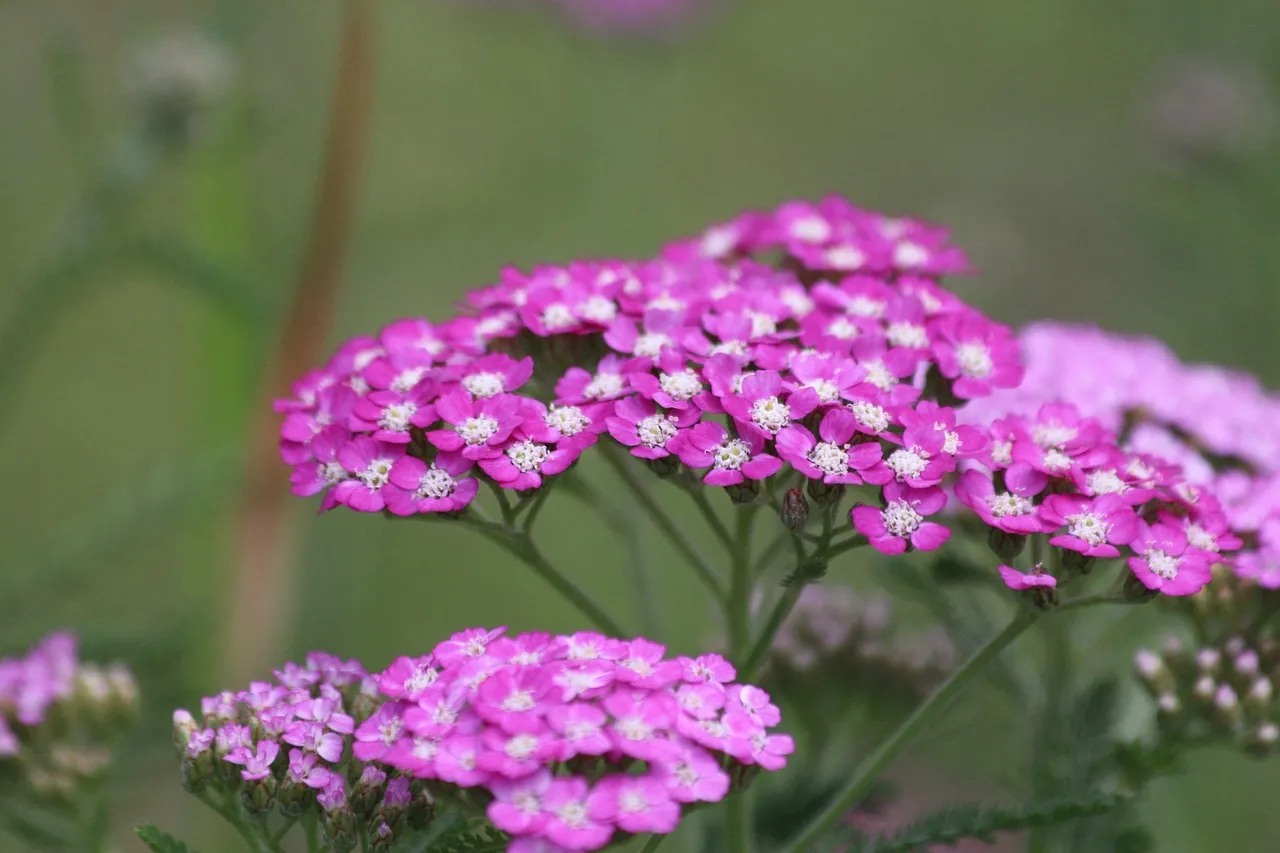
Achillea is one of the most versatile and reliably long-flowering perennials for alkaline, free-draining soil. The flat-topped flower heads in shades from pure white through yellow, apricot, pink, and deep red provide a wide horizontal plane of colour that contrasts beautifully with the vertical spikes of salvias and delphiniums.
In its native habitat, yarrow grows in poor, thin, calcareous grasslands across Europe and Central Asia, which means alkaline chalk garden conditions replicate its homeland almost exactly. Achillea is genuinely drought-tolerant once established and will thrive in the shallowest, driest chalk gardens where many other perennials would struggle through summer.
Achillea is drought-tolerant, long-flowering and thrives in alkaline, free-draining chalk garden conditions
‘Terracotta’ is a beautiful cultivar whose flowers open in warm salmon-orange and fade through the season to a softer buff, creating a multi-toned effect in a single plant. ‘Cerise Queen’ gives vivid magenta-pink flowers over a particularly long season. Walther Funcke’ is an RHS AGM plant producing rich orange-red flowers that age attractively as the season progresses. The ferny, aromatic foliage is attractive in its own right and remains ornamental even when the plant is not in flower. Divide achillea every two to three years in spring to keep it vigorous, as clumps tend to die out in the centre if left undisturbed for too long.
🌿 At A Glance: Achillea
Botanical Name
Achillea millefolium and cultivars
Plant Type
Hardy herbaceous perennial
UK Hardiness
H7
Height / Spread
60cm to 90cm / 45cm to 60cm
Flowering Period
June to September
Ideal pH Range
7.0 to 8.5
Best Conditions
Well-drained, alkaline to neutral soil; full sun; low fertility; drought-tolerant
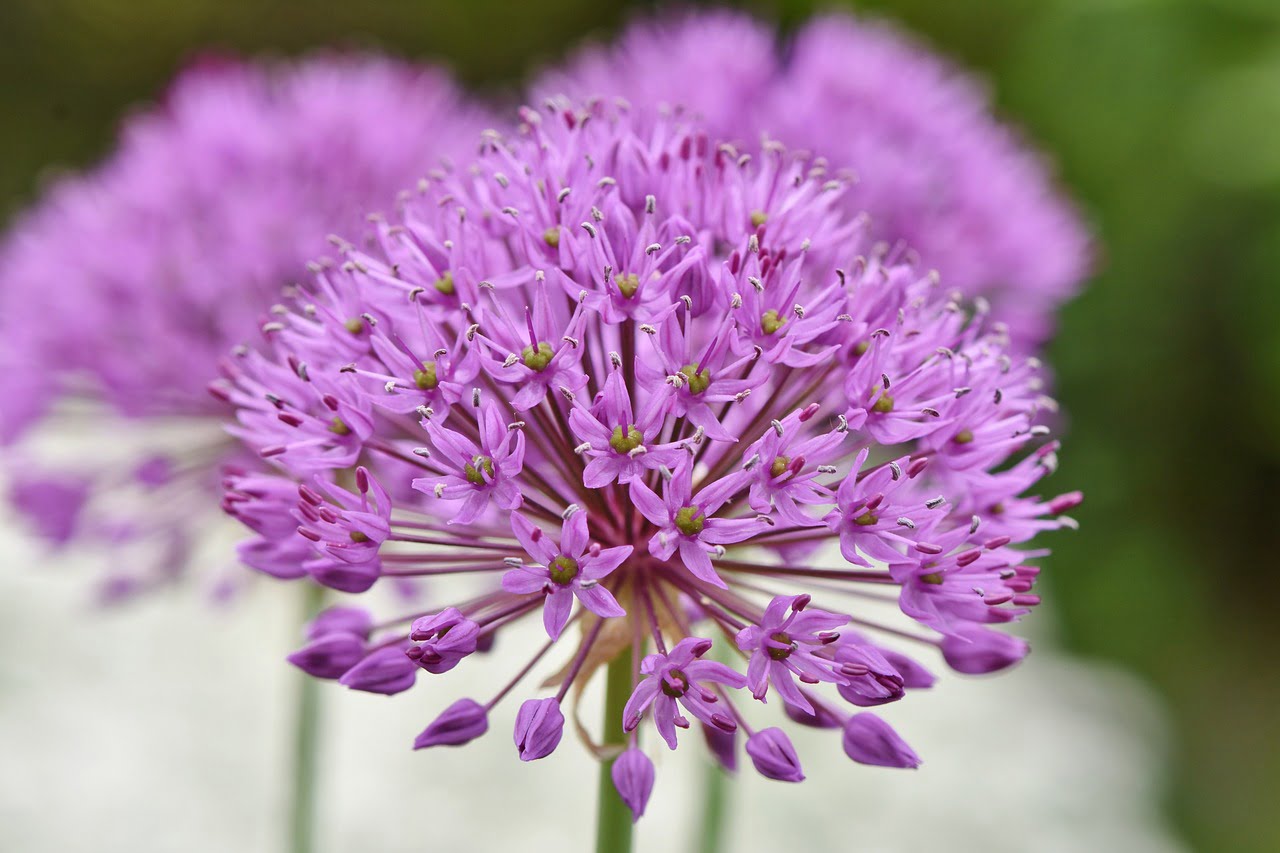
Alliums are one of the most architecturally exciting plants you can grow in an alkaline garden, producing perfectly spherical flower heads on tall, upright stems that create a bold geometric statement from May through to July. They evolved in the thin, limestone-based soils of central Asia and the Middle East, which makes the free-draining alkaline chalk garden an almost perfect analogue of their homeland.
Alliums evolved in thin, limestone-based soils and are among the most architecturally striking plants for alkaline gardens
The combination of alliums rising through lower-growing perennials such as hardy geraniums or nepeta is one of the classic plant partnerships of the modern naturalistic garden, and it works especially well on alkaline, well-drained soil.
Allium hollandicum ‘Purple Sensation’ produces rich violet-purple globes in May on 80cm stems and is one of the most widely planted alliums in UK gardens for good reason. Allium stipitatum ‘Mount Everest’ gives pristine white globes that look exceptional against dark foliage backgrounds. For truly spectacular scale, Allium giganteum produces football-sized purple heads on stems reaching 1.2 metres, creating a genuinely theatrical effect in a summer border.
Plant bulbs in autumn to a depth of approximately three times the diameter of the bulb, and allow the foliage to die back naturally after flowering before removing it, so the bulb can replenish its energy reserves. Alliums naturalise reliably in alkaline, well-drained ground and will gradually increase in number over years, giving you more display for no additional investment.
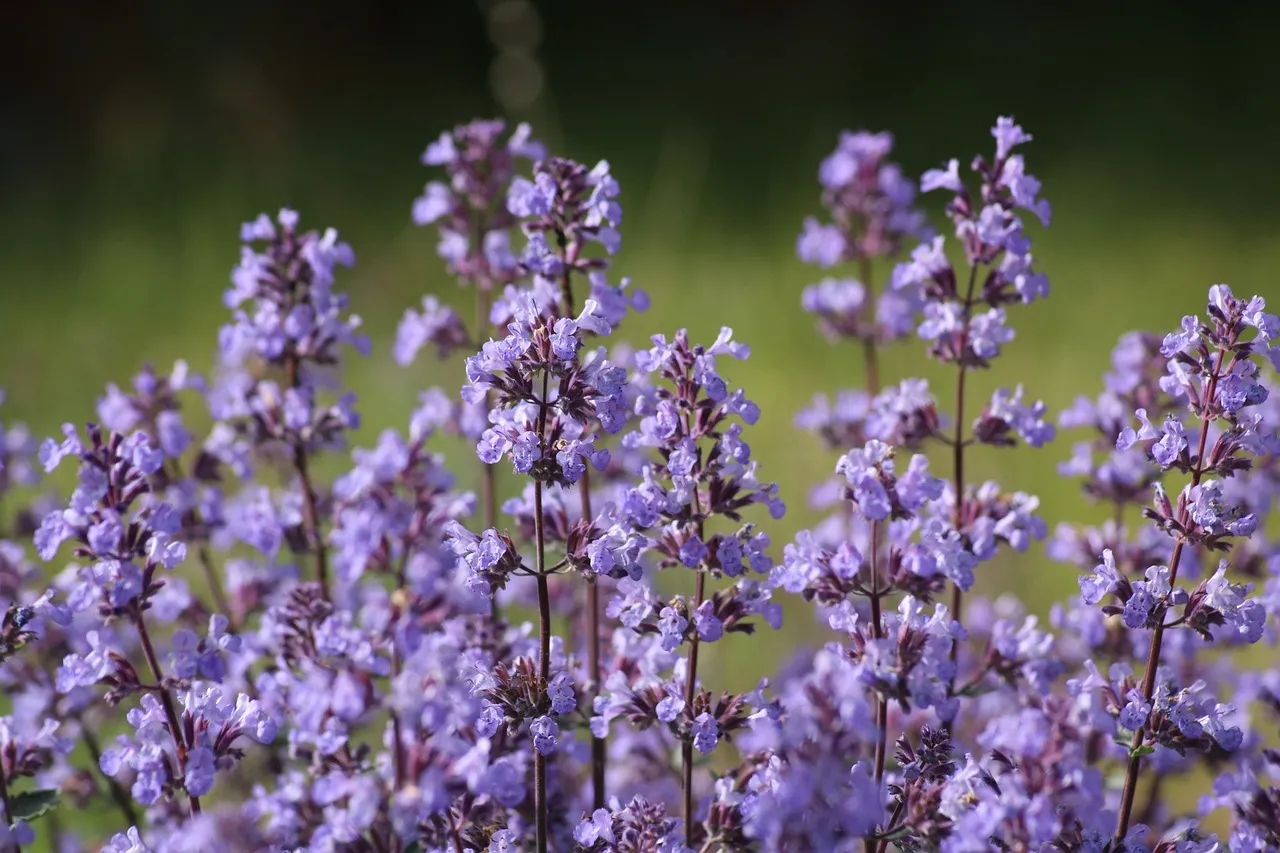
Nepeta is one of the most useful and underappreciated perennials for alkaline, well-drained conditions, producing a seemingly endless succession of small lavender-blue flower spikes from May right through to October if the spent growth is cut back hard after the first flush.
The softly aromatic, silver-grey foliage is attractive even when the plant is not in flower and provides an excellent foil for stronger colours in a border. As a low-maintenance edging plant for alkaline soil, nepeta is essentially unbeatable, and I recommend it constantly for sunny borders on chalk where clients want something reliable from late spring to first frost.
Nepeta flowers from May to October in alkaline conditions and is one of the finest long-season perennials for chalk gardens
‘Walker’s Low’ is the standard cultivar for most UK borders, reaching 60 to 75cm with a slightly sprawling habit that softens the front of a border beautifully. ‘Six Hills Giant’ grows larger, to around 90cm, with a more upright habit and larger individual flowers. For a compact form in smaller gardens or at the very edge of a path, ‘Junior Walker’ stays below 40cm and flowers with equal prolificacy.
Cut all nepeta stems back to 10cm above ground in late June or early July after the first flush fades, water if conditions are dry, and it will regrow and reflower within four to six weeks. This mid-season cut-back is the single most important maintenance act that keeps Nepeta performing at its best through the whole season.
🌿 At A Glance: Nepeta
Botanical Name
Nepeta x faassenii
Plant Type
Hardy herbaceous perennial
UK Hardiness
H6
Height / Spread
40cm to 90cm / 45cm to 75cm
Flowering Period
May to October (with mid-season cut-back)
Ideal pH Range
7.0 to 8.0
Best Conditions
Well-drained alkaline to neutral soil; full sun; low fertility
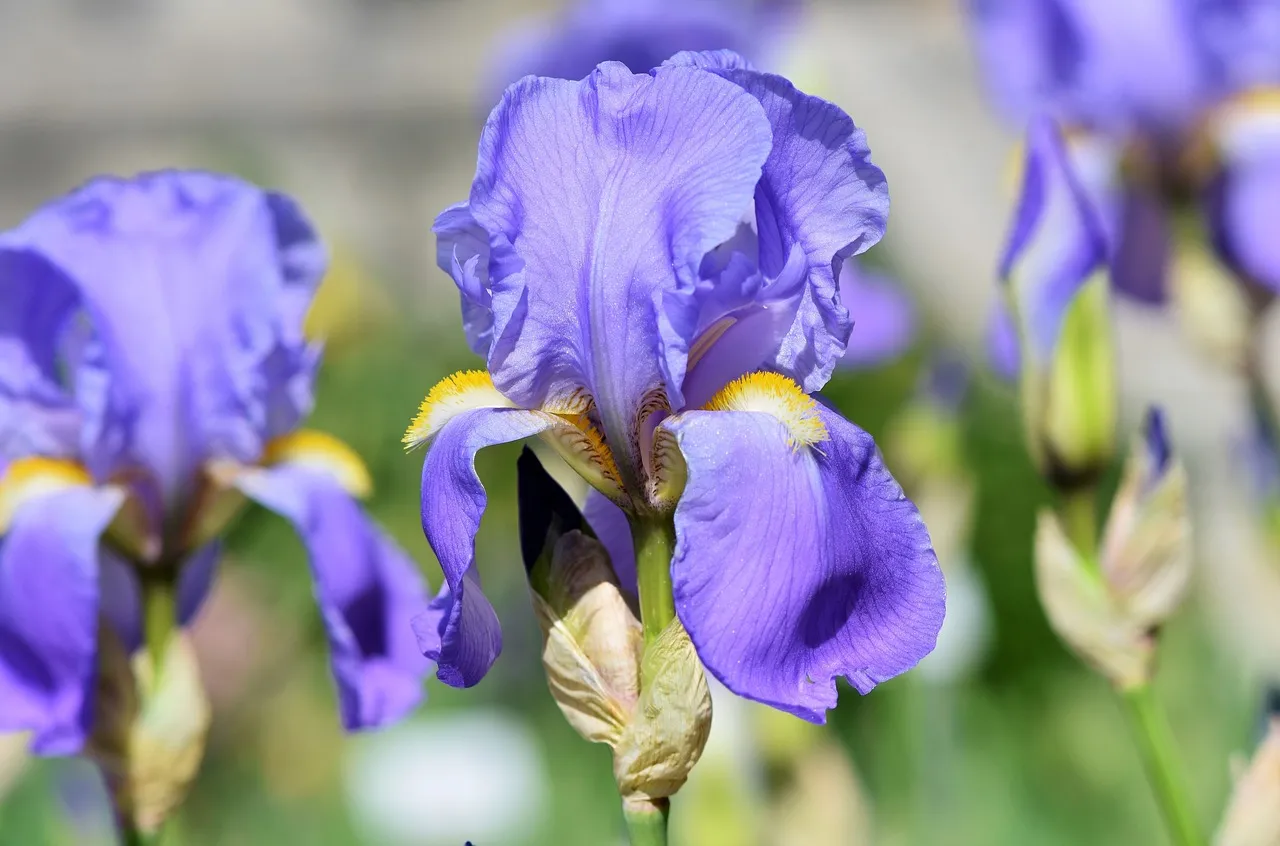
Bearded irises are calcicoles in the truest sense: they originated in the thin, stony, sun-baked limestone soils of the Mediterranean region and have evolved every aspect of their physiology for these conditions. The thick rhizomes need to bake in summer sunshine, which is why the standard advice is to plant them with the top of the rhizome exposed at the soil surface rather than buried.
On a warm, south-facing chalk bank, bearded irises will produce a display of flower in May and June that is genuinely breathtaking, with colours ranging across every shade from pure white and palest lemon through to deep maroon, midnight blue, and near-black.
Bearded irises are born calcicoles, thriving in the thin, sun-baked, alkaline conditions of a chalk bank or sunny border
The choice of named cultivars available is extraordinary, running to thousands of registered varieties in every conceivable colour combination. For a reliable starting point, ‘Jane Phillips’ gives a classic mid-blue with superb fragrance. ‘Florentina’ is the historical iris used for the production of orris root, with ghostly pale lavender-white flowers that have been cultivated since the Renaissance. ‘Superstition’ produces the deepest, near-black purple available in any bearded iris. Plant rhizomes in July to August in the sunniest position available, in sharply drained, alkaline soil with minimal competition from other plants. Lift and divide bearded iris every three to four years to prevent the centre of the clump dying out and restore vigorous flowering.
🌿 At A Glance: Bearded Iris
Botanical Name
Iris germanica cultivars
Plant Type
Hardy rhizomatous perennial
UK Hardiness
H6
Height / Spread
60cm to 1m / 30cm to 60cm
Flowering Period
May to June
Ideal pH Range
7.0 to 8.5
Best Conditions
Well-drained, alkaline soil; full sun; rhizomes at surface; hot position
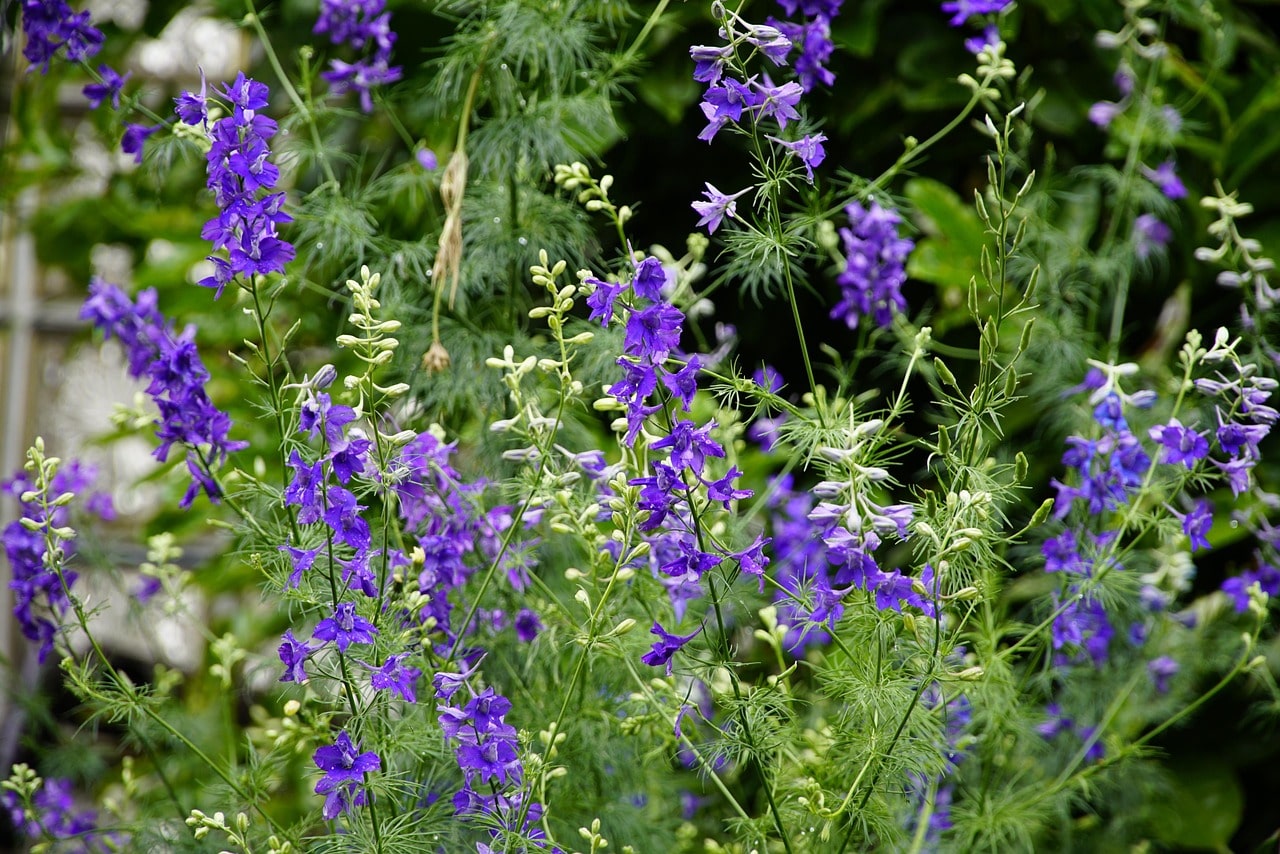
Delphiniums are perhaps the most imposing of all classic border perennials, with those enormous, sky-reaching spikes of flower in shades from the palest sky blue through to the deepest midnight indigo, and they perform at their very best in deep, rich, alkaline to neutral soil in full sun. The extraordinary height and colour intensity of a well-grown delphinium in June is one of the most dramatically beautiful things in the British garden, and alkaline soil in good heart, well mulched with organic matter, delivers exactly the growing conditions that allow them to reach their potential.
However, get ready with the stakes as these plants tend to grow too vigorously and need support before they bend and snap, Ninjas!
Delphiniums reach their full potential in rich, alkaline to neutral soil in full sun
The Pacific Giant hybrids produce the largest flower spikes, reaching 1.8 metres or more, in the full range from white through sky blue, cornflower blue, violet, and deep purple. The Belladonna group is slightly shorter, at around 1.2 metres, with a more branching habit that some gardeners find easier to manage without staking. ‘Black Knight’ gives a particularly deep, near-indigo purple with a contrasting dark eye.
As I’ve said, staking delphiniums before the stems reach 30cm is essential, as the flower spikes are heavy and snap easily in the wind; use bamboo canes with individual ties rather than generic ring stakes for the best results. Cut spikes back to ground level after the first flowering, and feed well; a second, smaller flush of flowers often appears in late summer.
🌿 At A Glance: Delphinium
Botanical Name
Delphinium spp.
Plant Type
Hardy herbaceous perennial
UK Hardiness
H5 to H6
Height / Spread
1.2m to 1.8m+ / 60cm to 90cm
Flowering Period
June to July (second flush August to September)
Ideal pH Range
7.0 to 8.0
Best Conditions
Deep, fertile, alkaline to neutral soil; full sun; sheltered from wind; consistent moisture
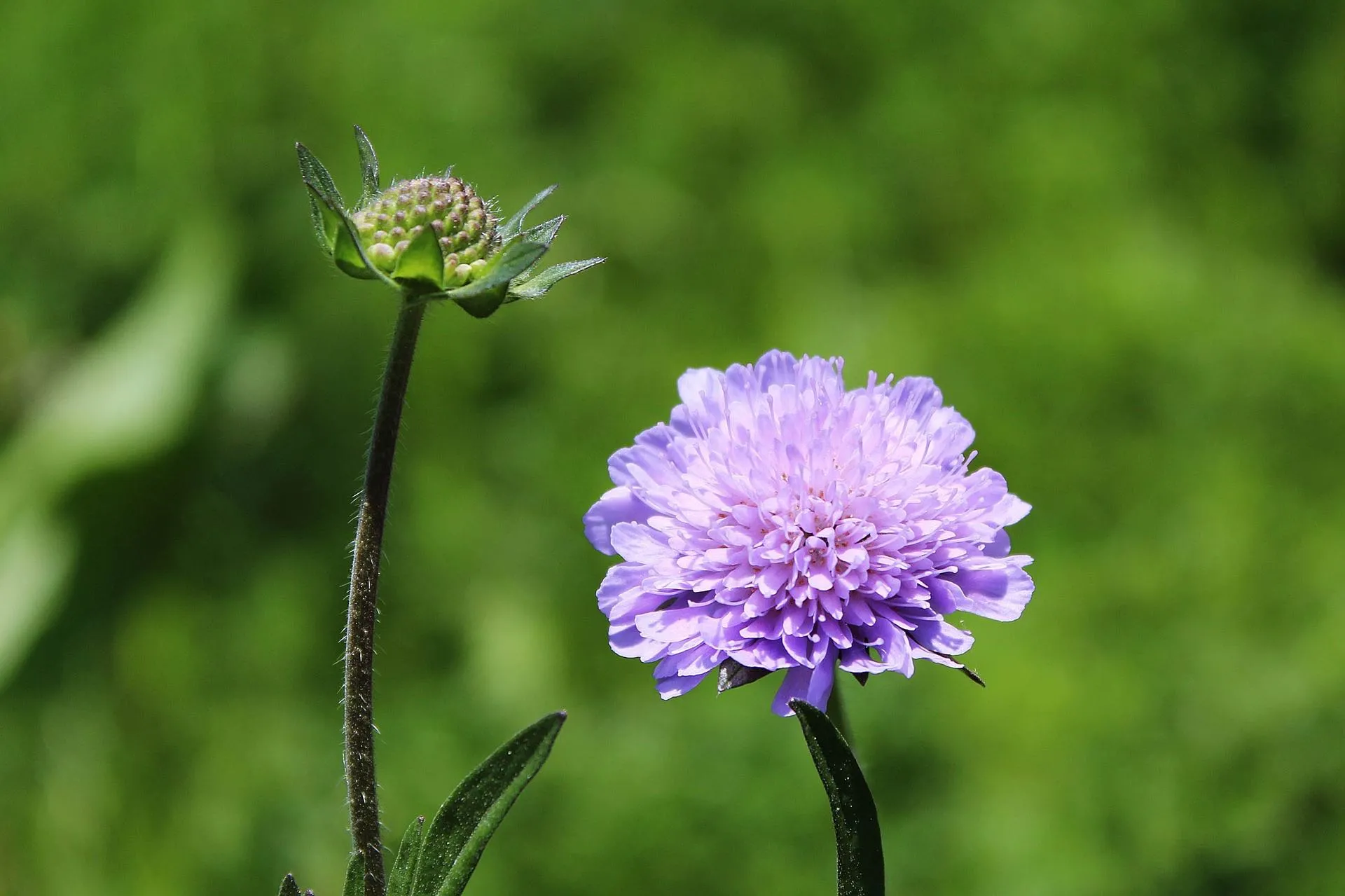
Scabious is a plant of chalk downland in its natural habitat, where it grows in the thin, sun-baked turf of calcareous grassland across southern England alongside wild thyme, rockroses, and horseshoe vetch. Taking this plant and growing it in an alkaline garden border is essentially recreating its native conditions, which is why it performs so consistently and reliably on lime-rich soil. The soft, pincushion-like flowers on long, wiry stems in lavender-blue, dusky pink, or cream are absolute magnets for pollinators, and scabious will attract bees and butterflies for months from June onwards.
Scabious is a native chalk downland plant that flowers for months in alkaline garden conditions
Scabiosa caucasica ‘Fama Blue’ produces large, lavender-blue flowers on 60cm stems and is an exceptional cut flower as well as being ornamental in the border. Knautia macedonica ‘Melton Pastels’ gives smaller, darker crimson-purple flowers in a more naturalistic, branching style that suits prairie-inspired planting schemes. For a vigorous and very long-flowering option, Knautia arvensis, the wild field scabious, will naturalise enthusiastically in alkaline turf or a meadow area, flowering from June all the way to October. Deadhead regularly to extend the flowering season and prevent unwanted self-seeding. In the right alkaline conditions scabious self-seeds modestly, gradually filling a border with additional plants that cost you nothing.
🌿 At A Glance: Scabious
Botanical Name
Scabiosa caucasica, Knautia macedonica
Plant Type
Hardy herbaceous perennial
UK Hardiness
H5 to H7
Height / Spread
45cm to 90cm / 30cm to 60cm
Flowering Period
June to October
Ideal pH Range
7.0 to 8.5
Best Conditions
Well-drained, alkaline to neutral soil; full sun; low to moderate fertility
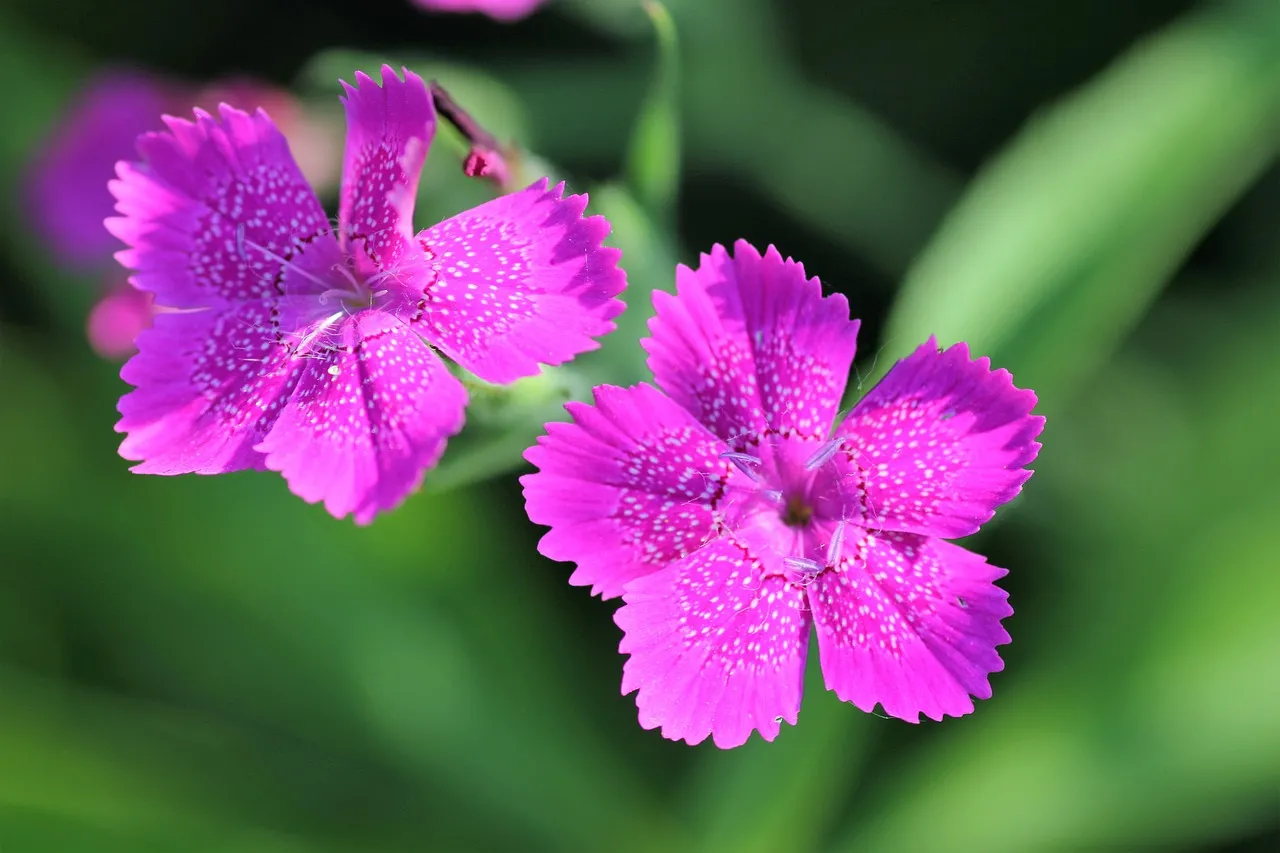
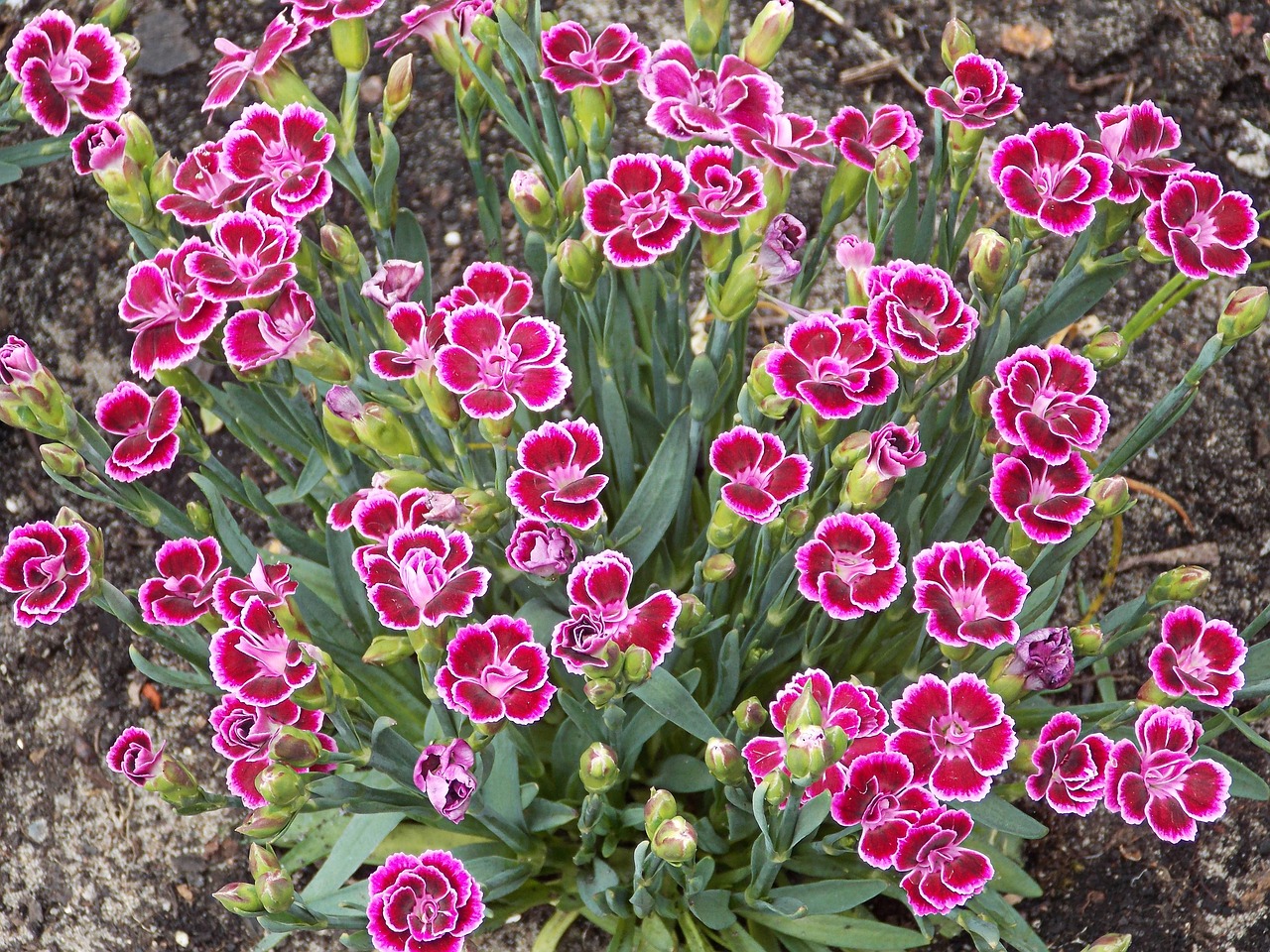
Dianthus, the pinks and carnations, are devoted calcicoles that have grown on chalk and limestone in Britain since before garden cultivation began. The wild maiden pink, Dianthus deltoides, carpets chalk banks with deep pink flowers in June and July. The alpine and rockery forms thrive on the thin, sharply drained soils produced by broken limestone. Even the modern garden border pinks that fill garden centres every spring are at their most vigorous and long-lived on alkaline, freely draining ground. If you have genuinely chalky soil, dianthus will live, spread, and flower with a persistence and vigour you won’t achieve on heavier or more acidic ground.
Dianthus are devoted calcicoles that thrive on chalk and limestone, producing fragrant flowers over a long season
‘Doris’ is the classic UK border pink, with pale salmon-pink, double flowers carrying a darker eye, a superb spicy clove fragrance, and a compact, reliable habit. ‘Gran’s Favourite’ produces white flowers with deep magenta edging and lacing, and is a show bench standard that does equally well in the open border. ‘Memories’ gives large, semi-double white blooms with a soft pink flush.
All benefit from having the spent flower stems removed promptly to encourage a second flush, and from an annual trim of the foliage mat in late summer to keep the plants compact and productive. Dianthus are drought-tolerant and genuinely thrive with neglect on alkaline soil: excessive feeding or watering encourages lush, disease-prone growth at the expense of flowers.
🌿 At A Glance: Dianthus
Botanical Name
Dianthus spp.
Plant Type
Hardy perennial or biennial
UK Hardiness
H5 to H7
Height / Spread
15cm to 60cm / 20cm to 45cm
Flowering Period
May to August
Ideal pH Range
7.0 to 8.5
Best Conditions
Sharply drained, alkaline soil; full sun; low fertility; drought-tolerant
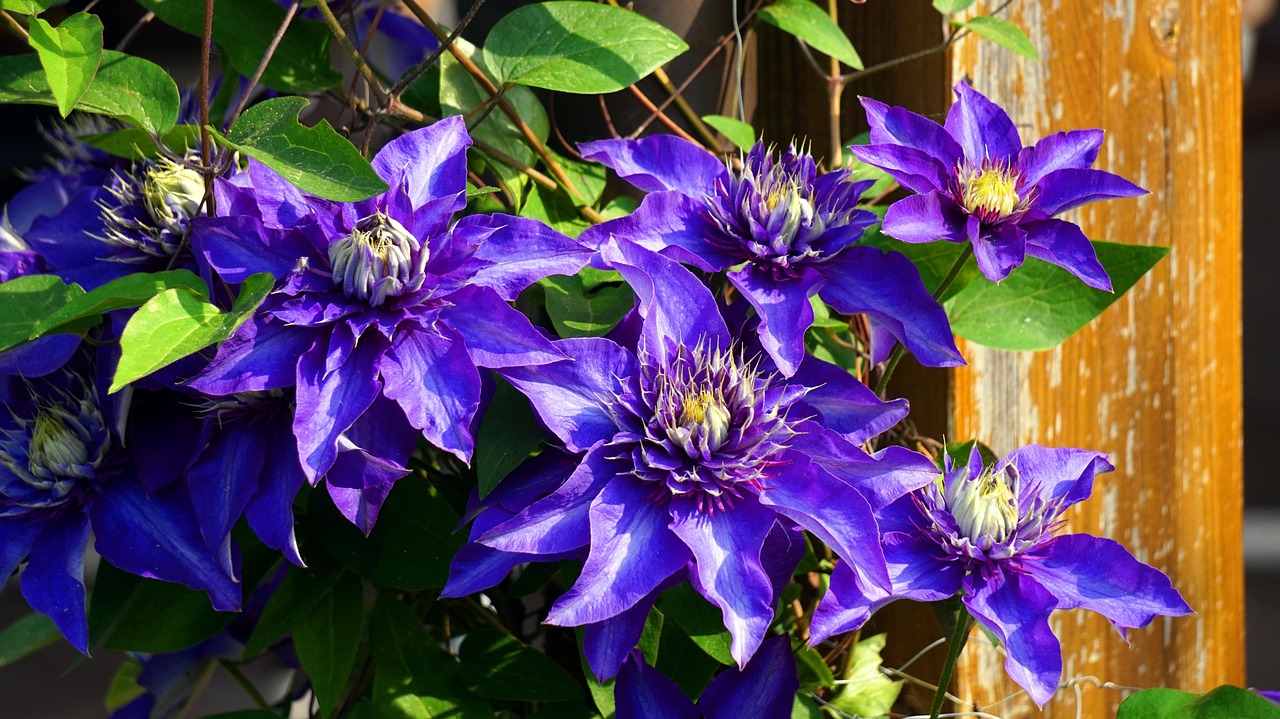
Clematis is the classic alkaline-soil climber, and the expression “clematis likes its feet in the shade and its head in the sun” is well known to most gardeners, but less well appreciated is the fact that it also wants its roots in alkaline, calcium-rich soil. This is a plant that has evolved in limestone and chalk habitats across the Northern Hemisphere, and the wild clematis, Clematis vitalba (Old Man’s Beard), drapes itself over chalk downland hedgerows across the south of England so prolifically that it is considered a thuggish weed.
Clematis evolved in limestone and chalk habitats and is among the finest climbers for alkaline UK gardens
The garden cultivars channel that extraordinary vigour into spectacular flower displays. On alkaline ground, clematis will establish and flower with greater reliability than on acid soil, and many of the finest specimens I’ve seen in client gardens have been growing through chalk banks and over stone walls in exactly the conditions the plant was made for.
Clematis montana is the most vigorous and free-flowering of all clematis, producing masses of single white or pink flowers in May on the previous year’s growth, and will cover a fence, wall, or large tree in a remarkably short time. For the large-flowered hybrids, ‘Jackmanii’ remains one of the finest purple clematis ever raised, flowering reliably on alkaline ground from July to September. ‘Nelly Moser’ gives pale pink flowers with a darker stripe and is one of the most recognisable clematis of the twentieth-century English garden. ‘Bill MacKenzie’ produces small, thick-petalled yellow flowers in late summer followed by decorative, silky seed heads that persist into winter.
Plant clematis with the crown of the plant 5 to 10cm below soil level, which helps it recover if it contracts clematis wilt by allowing new shoots to emerge from below ground.
🌿 At A Glance: Clematis
Botanical Name
Clematis spp.
Plant Type
Hardy deciduous or semi-evergreen climber
UK Hardiness
H4 to H7 depending on species
Height / Spread
2m to 12m depending on species and support
Flowering Period
Species and cultivar dependent; March to November
Ideal pH Range
7.0 to 8.5
Best Conditions
Alkaline, well-drained soil; roots shaded; top growth in full sun; support for climbing
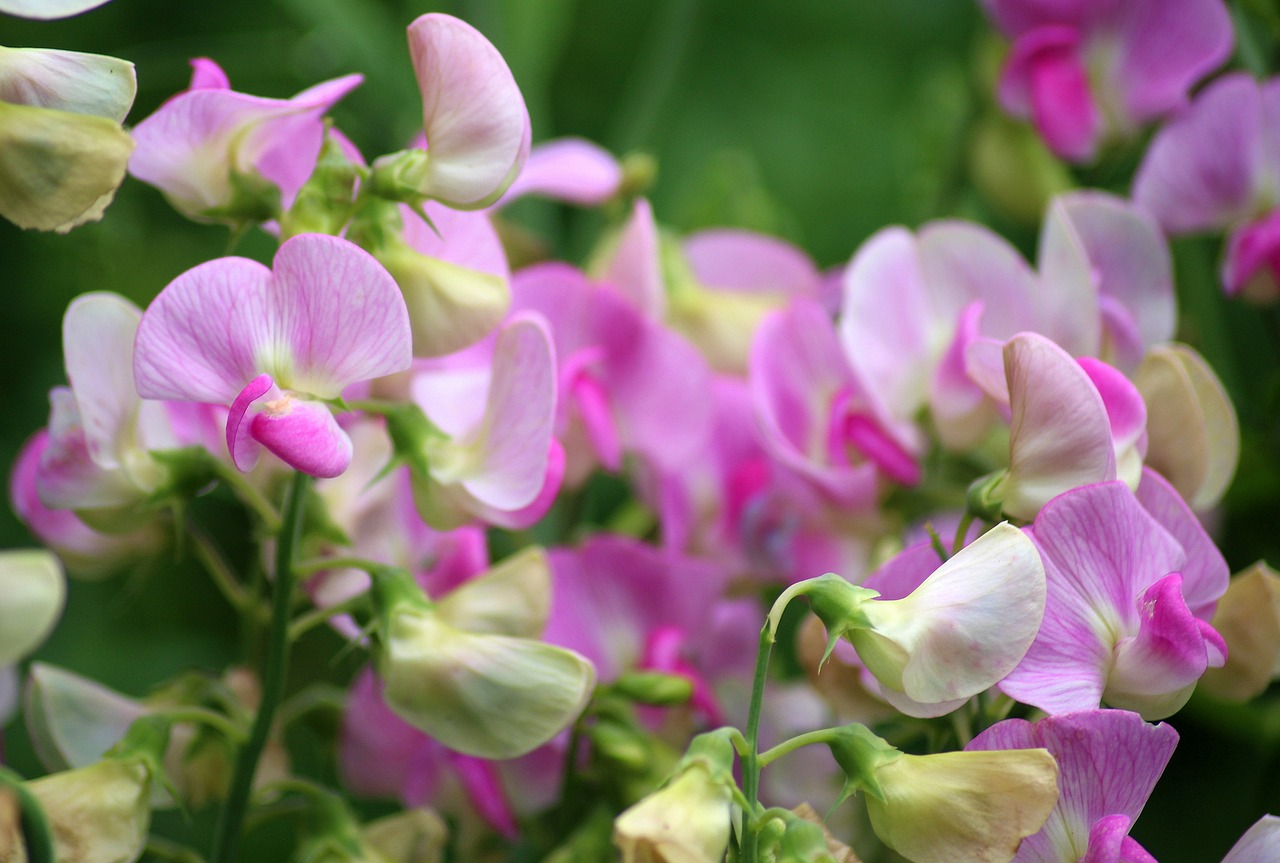
Sweet peas are among the most gloriously fragrant annual climbers in cultivation, and they perform at their absolute best in deep, fertile, alkaline to neutral soil that has been enriched with plenty of organic matter. As legumes, they fix atmospheric nitrogen through their root nodules and appreciate the calcium-rich environment of chalk soil, which supports vigorous root development. The combination of the most intensely fragrant cut flowers available for the summer vase and the ease of growing on alkaline ground makes sweet peas one of the finest annual choices for a chalk garden.
Sweet peas thrive in deep, alkaline soil and produce the most exquisitely fragrant cut flowers of the summer garden
The old-fashioned Spencer types, such as ‘Matucana’ with its intense maroon and purple flowers and extraordinary fragrance, or ‘Painted Lady’, one of the oldest sweet pea varieties still in cultivation with bicoloured pink and white blooms, are among the most beautiful and fragrant forms available. For a scent-first approach, look for the ‘Old Fashioned Mixed’ series, which sacrifices some flower size for far superior fragrance compared to modern exhibition types.
Sow seed in October or November for spring planting out, or in February to March in a cool greenhouse. Pick flowers religiously, every two to three days, to prevent the plants from setting seed, which stops flowering abruptly; a basket of sweet peas in the house in July is one of gardening’s simplest and greatest pleasures.
🌿 At A Glance: Sweet Pea
Botanical Name
Lathyrus odoratus
Plant Type
Hardy annual climber
UK Hardiness
H4 (sow under cover; plant out after last frosts)
Height / Spread
Up to 2m / 30cm to 60cm with support
Flowering Period
June to September (if picked regularly)
Ideal pH Range
7.0 to 8.0
Best Conditions
Deep, fertile, alkaline to neutral soil; full sun; consistent moisture; support for climbing
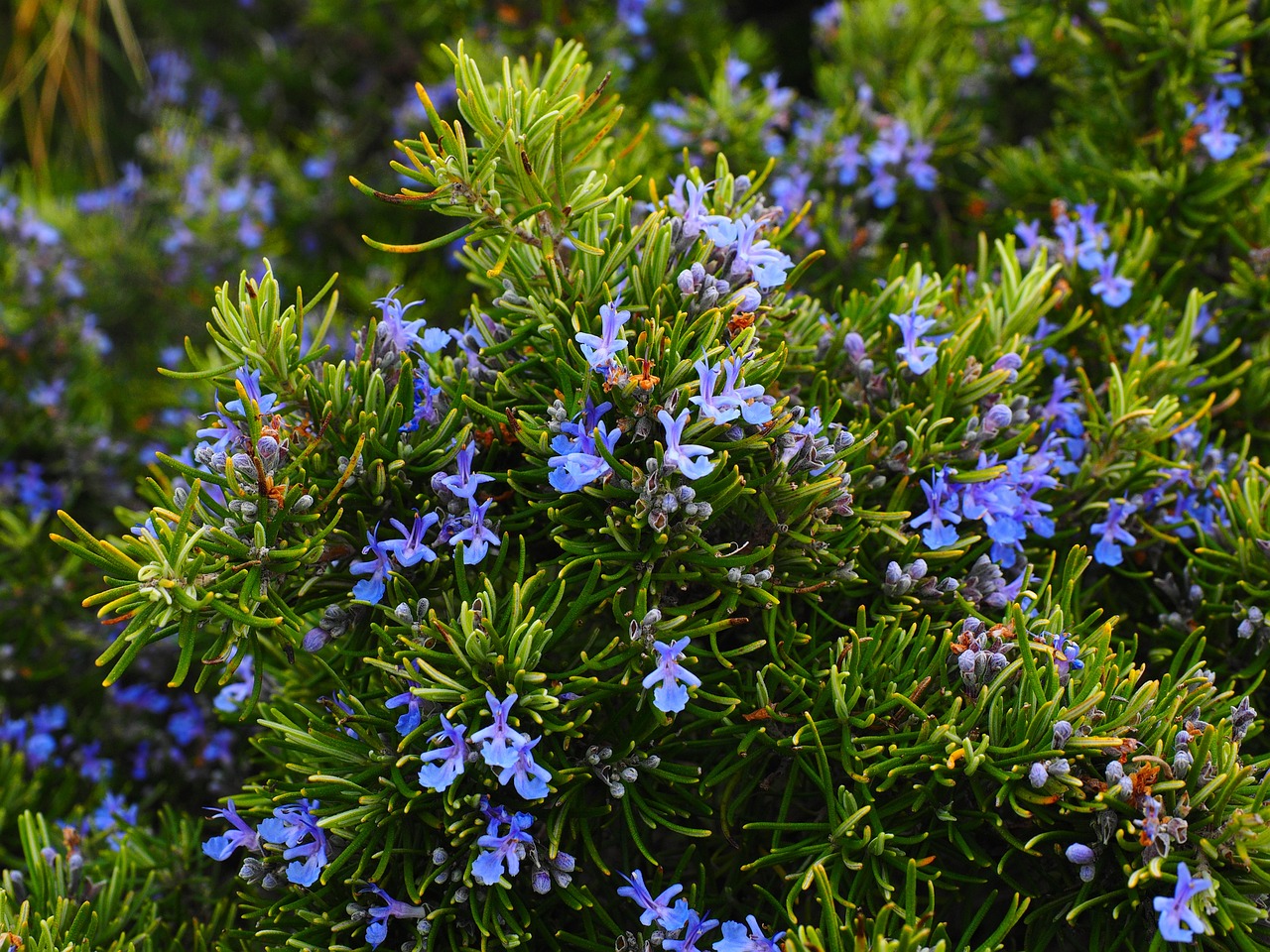
Rosemary, recently reclassified as Salvia rosmarinus, is one of the finest culinary herbs for alkaline, sharply drained soil and will grow into a substantial, long-lived shrub of real ornamental value in the right conditions. Native to the coastal limestone cliffs and garrigue of the Mediterranean, it has evolved in conditions where alkaline, calcium-rich, rapidly draining, nutrient-poor soils are the norm, and it performs in these conditions with a vigour and longevity that no other growing medium can match. It’s also a plant used in witchcraft and the occult, too!
On a warm, south-facing chalk bank or a raised bed built over chalk, rosemary will grow as a true perennial shrub lasting fifteen years or more, filling the air with its extraordinary resinous fragrance and providing culinary harvest year-round.
Rosemary is a Mediterranean native perfectly adapted to alkaline, sharply drained chalk conditions
‘Miss Jessopp’s Upright’ is the most widely available form, with a strong, vertical habit reaching 1.5 metres that makes it useful as a structural element in a border as well as a culinary herb. ‘Tuscan Blue’ gives particularly large, bright blue flowers and a slightly broader habit. The prostrate form ‘Jackman’s Prostrate’ is excellent for trailing over walls or the edge of raised beds, creating a waterfall effect of deep green foliage with pale blue winter flowers. The single most common mistake with rosemary on UK soils is overwatering: in alkaline, free-draining conditions this plant thrives on neglect, and waterlogging in winter is far more likely to kill it than drought in summer.
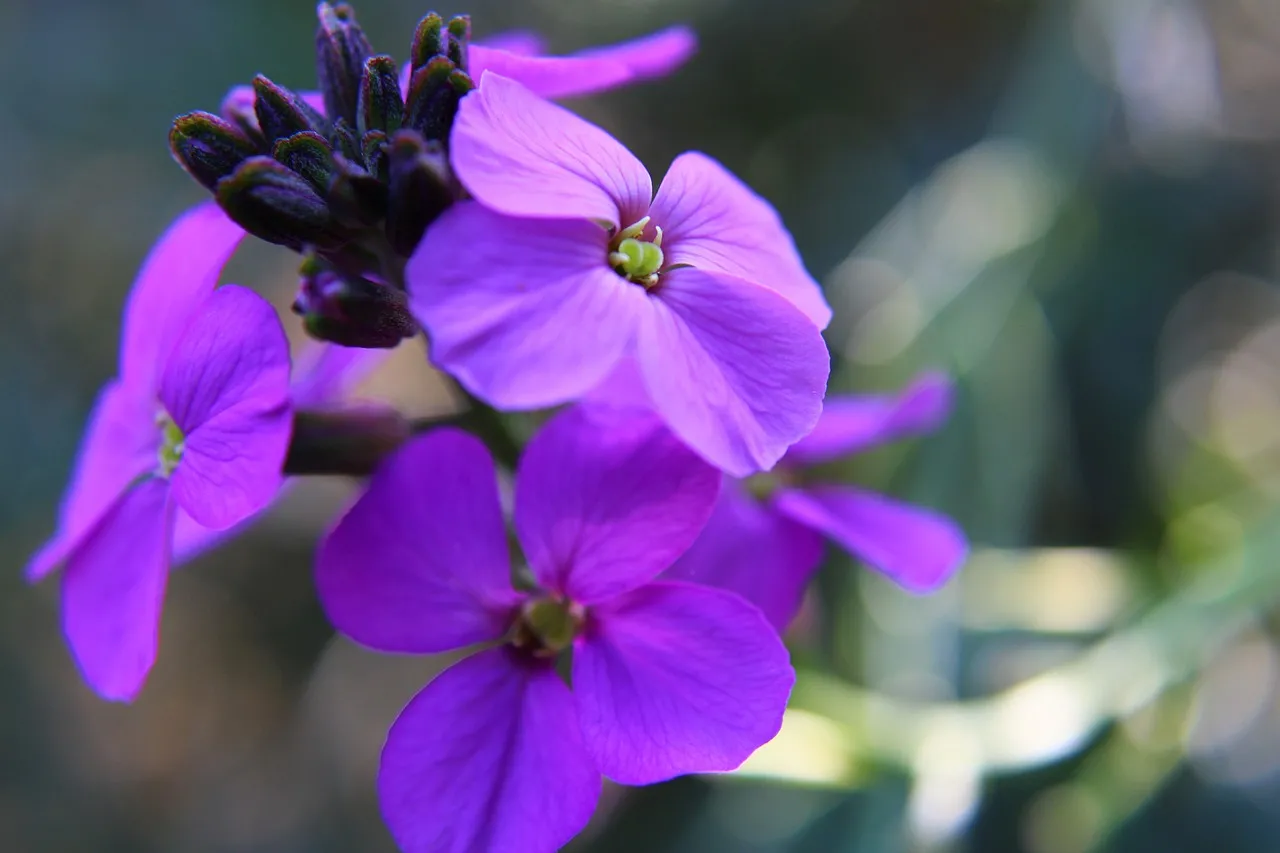
Wallflowers are among the most cheerful and fragrant harbingers of spring in the British garden, and they are named for their tendency to colonise the lime-mortar joints of old stone walls, which is perhaps the clearest possible signal of their affinity for alkaline conditions.
They bloom from March through to May in shades from the deepest blood-orange and crimson through yellow, cream, lavender, and purple, and the spicy-sweet fragrance they produce on warm spring afternoons is one of the most beautiful scents in the gardening calendar. Wallflowers perform particularly well on alkaline, chalky soil where the free drainage and lime content recreates the old stone wall habitat they love.
Erysimum is named for its habit of colonising limestone walls and thrives in alkaline conditions from late winter onwards
Biennial wallflowers grown as spring bedding provide the classic performance described above. For a perennial alternative that flowers for far longer, Erysimum ‘Bowles’s Mauve’ is one of the best garden perennials available in any category: an evergreen shrublet that produces soft mauve-purple flowers for ten months of the year or more, from late winter through to late autumn, with scarcely a pause. It is not long-lived, typically three to four years, but roots easily from cuttings, so it perpetuates itself with minimal effort.
‘Bowles’s Mauve’ is genuinely one of the longest-flowering garden plants in existence, and on alkaline, free-draining ground it gives outstanding value from a small space.
🌿 At A Glance: Wallflower / Erysimum
Botanical Name
Erysimum cheiri and Erysimum cvs.
Plant Type
Biennial or short-lived evergreen perennial
UK Hardiness
H4 to H5
Height / Spread
30cm to 60cm / 30cm to 50cm
Flowering Period
March to May (biennial); near year-round (Bowles’s Mauve)
Ideal pH Range
7.0 to 8.5
Best Conditions
Sharply drained, alkaline soil; full sun; low fertility
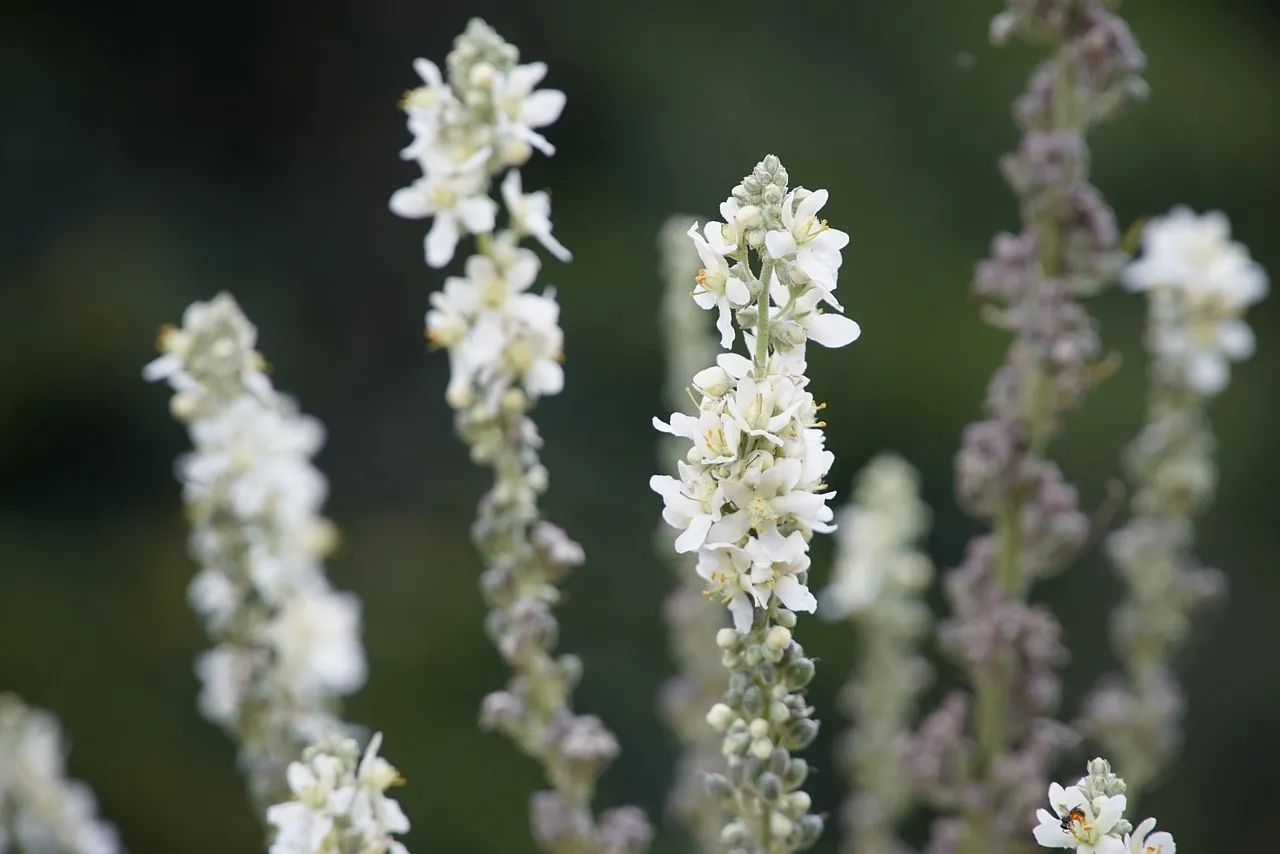
Verbascum is one of those plants that looks as if it has grown straight out of the chalk downland into your garden, which is essentially what has happened with many of the garden forms: the great mullein, Verbascum thapsus, is a native British plant of chalk banks, quarry faces, and thin, stony alkaline soils, producing its imposing 2-metre spires of yellow flowers from June to August.
Verbascum is a native plant of chalk banks and thin limestone soils, perfectly suited to alkaline garden conditions
The garden hybrids extend the colour range into apricot, salmon, pink, and deep wine-red, while retaining the same preference for sun-baked, alkaline, free-draining conditions. Verbascum’s combination of bold architectural presence, exceptional drought tolerance, and affinity for alkaline ground makes it one of the most useful plants for difficult, thin chalk situations where other perennials would struggle.
‘Gainsborough’ is a classic hybrid verbascum with pale primrose-yellow flowers on branching, 1.2-metre stems, held above large silver-grey basal rosettes that are attractive even when the plant is not in flower. ‘Helen Johnson’ gives unusual apricot-bronze flowers that complement warm, sunset-toned planting schemes beautifully. Mont Blanc’ produces pristine white flowers that brighten borders considerably in summer. Most verbascums are short-lived perennials or biennials that self-seed freely in alkaline, open soil conditions, creating new plants to replace those that exhaust themselves after two or three years of flowering. Leave some seed heads at the end of the season to allow self-seeding, and you’ll maintain a self-perpetuating colony without any further effort or expense.
🌿 At A Glance: Verbascum
Botanical Name
Verbascum spp.
Plant Type
Hardy biennial or short-lived perennial
UK Hardiness
H5 to H6
Height / Spread
60cm to 2m / 30cm to 60cm
Flowering Period
June to August
Ideal pH Range
7.0 to 8.5
Best Conditions
Sharply drained, alkaline soil; full sun; poor fertility; self-seeds freely
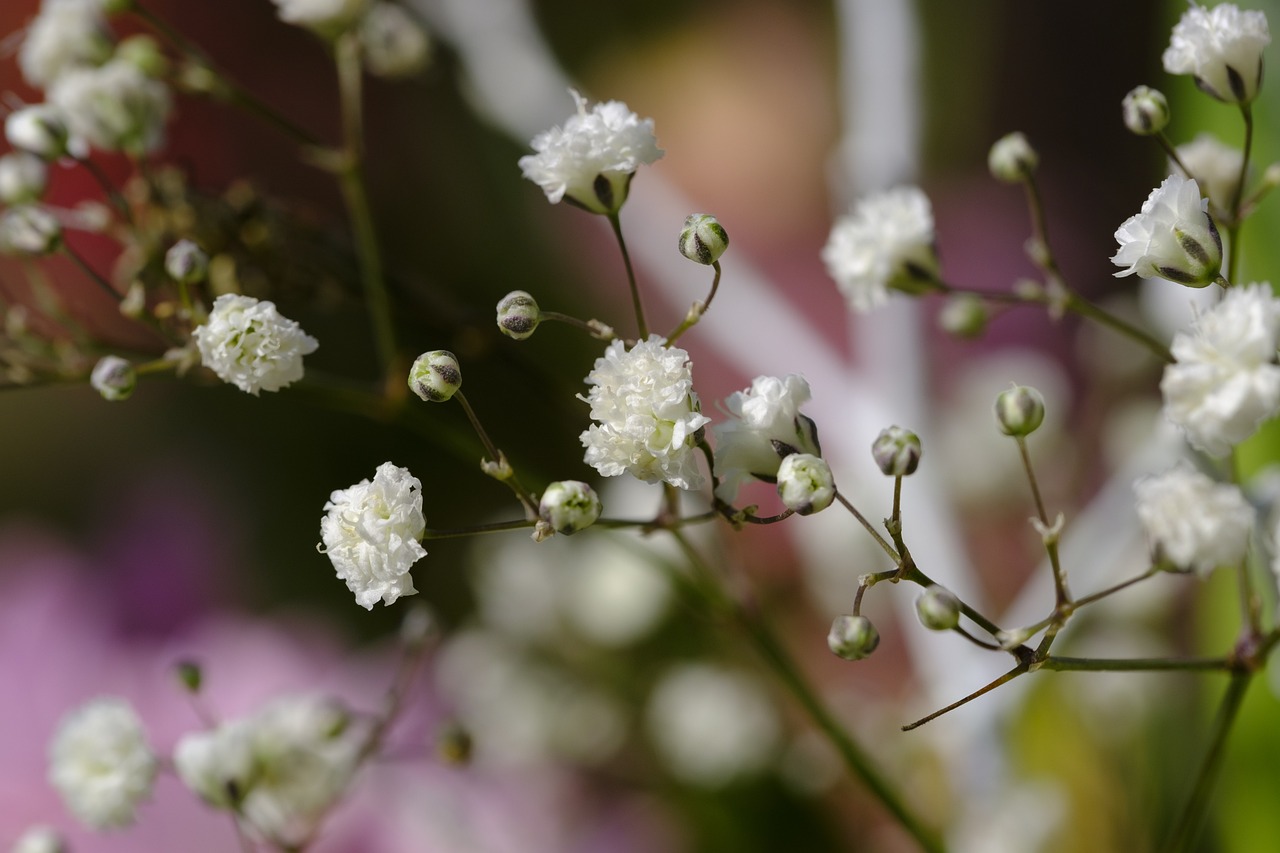
Gypsophila’s botanical name means “lover of chalk” and it earns that name emphatically: this is a plant that has evolved for the most freely drained, calcium-rich, thin limestone soils available, and it performs in an alkaline UK garden with a lightness and abundance that is genuinely difficult to achieve any other way. The clouds of tiny white or pale pink flowers from June to August create a mist-like effect in borders that softens neighbouring plants and connects different colour elements in a planting scheme with extraordinary grace. Gypsophila is the plant that makes everything around it look better, and it will only give you this effect if the soil is alkaline and the drainage is sharp.
Gypsophila’s very name means chalk-lover, and it produces its finest display on alkaline, sharply drained soil
Bristol Fairy’ is the classic double white form, producing the largest and most substantial flower clouds, and is the gypsophila used by florists worldwide as a cut flower companion. ‘Flamingo’ gives pale pink double flowers on slightly shorter stems. The annual form Gypsophila elegans is worth sowing directly into chalk borders in spring for a quick-flowering display from June, and it self-seeds reliably in free-draining alkaline conditions to maintain a colony across years. Plant gypsophila with an aspect of full sun and resist any temptation to improve the soil with compost or feed: excess fertility produces abundant leafy growth at the expense of the flower clouds that make this plant worth growing.
🌿 At A Glance: Gypsophila
Botanical Name
Gypsophila paniculata
Plant Type
Hardy herbaceous perennial
UK Hardiness
H5
Height / Spread
60cm to 1.2m / 60cm to 90cm
Flowering Period
June to August
Ideal pH Range
7.0 to 8.5
Best Conditions
Sharply drained, alkaline soil; full sun; poor to moderate fertility; deep root run
Growing the right plants for your soil pH means half the battle is already won, but there are still a few practices that will help you get the most from an alkaline garden, particularly on shallow chalk where drought and low fertility can be limiting factors.
Organic matter is your most valuable investment on alkaline soil, particularly on shallow chalk. Chalky soils are often low in organic matter because it decomposes rapidly in alkaline conditions, so mulching generously every spring with well-rotted garden compost, leaf mould, or composted bark helps retain moisture, feeds soil biology, and gradually builds up the soil depth. It won’t change your pH, but it makes the growing environment significantly more hospitable for a wider range of plants.
💡 Top Tip
If leaves on any plant in your alkaline garden start to yellow between the veins while the veins themselves remain green, that’s lime-induced chlorosis: the plant cannot absorb iron at your soil’s pH. The solution is twofold: apply sequestered iron as a liquid drench around the roots, and consider replacing the plant with a more lime-tolerant alternative. Sequestered iron treats the symptom, but if the plant is genuinely a calcifuge, it will keep struggling regardless.
Watering strategy matters particularly on shallow chalk, which drains so rapidly that plants can exhaust available moisture within days of rain in summer. A thick organic mulch, 7 to 10cm of composted material applied to the soil surface in spring, dramatically reduces moisture loss and moderates soil temperature through the hottest months. This single act does more good for a dry chalk garden than almost anything else you can do.
Feeding alkaline garden plants requires care because high-nitrogen, general-purpose fertilisers can encourage lush, soft growth on already fertile alkaline soil that then becomes more susceptible to disease. Most of the plants in this guide actually prefer low to moderate fertility. For plants that do benefit from feeding, choose a balanced granular fertiliser applied in spring, or a liquid seaweed feed during the growing season, which provides trace elements in a form accessible even at higher pH values.
Your subscription could not be saved. Please try again.
Your subscription has been successful.
Frequently Asked Questions About Plants for Alkaline Soil
What pH is considered alkaline soil in the UK?
Any soil with a pH above 7.0 is technically alkaline. In UK gardens, alkaline soils most commonly fall between 7.0 and 8.5. Soils between 7.0 and 7.5 are mildly alkaline and will grow a very wide range of plants. Soils between 7.5 and 8.0 are typical of chalky or limestone-derived ground, and soils above 8.0 are strongly alkaline and require the most lime-tolerant plant choices.
How do I know if my soil is alkaline?
A soil testing kit from any garden centre gives a reliable pH reading for under £10. You can also look for indicators in the existing flora: white chalky stones or lumps in the soil, wild clematis (Old Man’s Beard) growing in nearby hedgerows, wild marjoram or ox-eye daisies establishing spontaneously, and lavender or clematis thriving vigorously in neighbouring gardens all suggest alkaline conditions. In the UK, chalk and limestone-based alkaline soils are most common across the Chilterns, South Downs, North Downs, Yorkshire Wolds, and Cotswolds.
Can I make my alkaline soil more acidic?
On genuinely chalky soil, lowering pH permanently is practically impossible. The free calcium carbonate in chalk neutralises any acidifying treatment rapidly, and the RHS is explicit that it is not practical to reduce alkalinity in chalk-based soils using sulphur because the quantities required over the time needed would be financially and practically prohibitive. The far more effective approach is to choose plants that genuinely thrive in your conditions. For individual acid-loving plants, use large containers filled with ericaceous compost and water exclusively with collected rainwater.
What plants should I avoid on alkaline soil?
Calcifuge or acid-loving plants that will struggle or fail on alkaline ground include rhododendrons, azaleas, camellias, blueberries, pieris, heathers (Calluna), most magnolias, and Japanese acers (which prefer neutral to slightly acidic conditions). These plants develop lime-induced chlorosis on alkaline soil: the leaves yellow between the veins, growth slows, and the plant gradually declines regardless of how well you care for it in other respects.
Is alkaline soil good or bad for gardening?
Alkaline soil is neither good nor bad in absolute terms. It suits an enormous and varied range of plants, including many of the most beautiful and coveted in cultivation: lavender, clematis, lilac, bearded iris, alliums, delphiniums, scabious, and many more. The limitations are real but specific: you cannot grow ericaceous plants successfully in the open ground. The advantages are equally real: exceptional drainage, quick spring warm-up, a large selection of Mediterranean and downland plants that genuinely thrive, and freedom from certain soil-borne diseases that are more prevalent in acid conditions.
Do roses grow well on alkaline soil?
Yes. Roses are generally well adapted to neutral to mildly alkaline conditions and perform perfectly well at pH up to around 7.5 to 8.0. Many of the finest rose gardens in England are on slightly alkaline soils. Very strongly alkaline chalk soils above pH 8.0 can cause some chlorosis in roses, which can be addressed with sequestered iron and generous organic matter mulching. On strongly chalky ground, robust shrub roses and rugosa types tend to be more reliable than modern hybrid teas.
Which alkaline-soil plants are best for wildlife?
Alkaline soil gardens can be exceptional for wildlife, particularly pollinators. The best choices include buddleja (outstanding for butterflies), nepeta and salvia (bees), achillea and scabious (a wide range of pollinators including specialist bees), alliums (bees in great numbers), and clematis montana (early pollinators). Verbascum and wallflowers also provide valuable early-season pollen. Field maple and beech provide food and habitat for a wide range of birds, invertebrates, and mammals if space permits.
What are the signs that a plant is struggling with alkaline soil?
The classic symptom is interveinal chlorosis: the leaf tissue between the veins turns yellow while the veins themselves remain green. This is caused by the plant’s inability to absorb iron and manganese at high pH values. You may also see stunted growth, poor flowering, leaf drop, and dieback of young shoots. If you see these symptoms on an otherwise well-watered and fed plant, test your soil pH before assuming any other cause. The solution is either a sequestered iron drench or, more permanently, replacing the plant with a lime-tolerant alternative.
Design the Garden You’ve Always Wanted
Ready to stop guessing and start designing with confidence? My Garden Design for Beginners online course takes you from blank canvas to brilliant layout, step by step.
I’m Lee Burkhill, award-winning garden designer and BBC1’s Garden Rescue presenter, and I’ve built this course around the same principles I use for every client garden, practical, honest, and designed to actually work in the real world.
In 20 hours of flexible online study you’ll cover:
Design principles that make any garden work
How to select and arrange plants like a professional
Styles and layouts to suit every size and shape of space
Video lessons, real-world case studies, quizzes, and a certificate on completion, all for just £199.
Enrol today and start designing your dream garden.
29
Garden Design Examples for Small Gardens: 30 Design Templates & Planting Plans
Garden Design Examples for Small Gardens: 30 Design Templates & Planting Plans: In this online gardening course, I’ll walk you through 30 fantastic garden designs, explaining the logic behind the layout, the plant choices, and take-home tips for applying them in your own garden.
Weekend Garden Makeover: A Crash Course in Design for Beginners
Learn how to transform and design your own garden with Lee Burkhills crash course in garden design. Over 5 hours Lee will teach you how to design your own dream garden. Featuring practical design examples, planting ideas and video guides. Learn how to design your garden in one weekend!
Garden Design for Beginners: Create Your Dream Garden in Just 4 Weeks
Garden Design for Beginners Online Course: If you want to make the career jump to becoming a garden designer or to learn how to design your own garden, this is the beginner course for you. Join me, Lee Burkhill, an award-winning garden designer, as I train you in the art of beautiful garden design.
Alkaline soil is not a problem to overcome. It is an opportunity to grow some of the finest plants in cultivation, many of them among the most fragrant, most dramatically coloured, and most structurally impressive that a UK garden can offer. Test your pH before you spend anything on plants, identify clearly whether you’re working with mild alkalinity or genuine chalk, and then choose from the plants in this guide that genuinely love those conditions.
The 22 plants covered here represent a fraction of what’s available on alkaline soil, but they cover all the key categories: structural trees and large shrubs in beech, field maple, lilac, buddleja, philadelphus, weigela, and cistus; long-season perennials in salvia, achillea, alliums, nepeta, iris, delphinium, scabious, dianthus, and gypsophila; elegant climbers in clematis and sweet pea; productive culinary plants in rosemary; and architectural biennial statements in verbascum and wallflower.
Work with your alkaline soil rather than against it and you’ll spend less time, less money, and less effort while growing a garden that is genuinely remarkable.
Happy Gardening! If you’ve found this guide useful, I’d love to hear how you get on with your alkaline soil planting. You can find me over on Instagram, YouTube, and the Garden Ninja forum, where I answer questions from the gardening community every week.
Your subscription could not be saved. Please try again.
Your subscription has been successful.
Lee Burkhill
Lee Burkhill, known as the Garden Ninja, is an award-winning garden designer and horticulturist with over 30 years of gardening experience and 15 years as a professional garden designer. A qualified RHS (Royal Horticultural Society) professional, Lee specialises in sustainable garden design and practical horticultural advice. He designs and presents on BBC1’s Garden Rescue and in leading gardening publications.